
 English
 Español
 русский
 Français
 عربى
عربىIn modern retail, logistics, food service, hospitality, healthcare, and document handling environments, fast and reliable printing is not merely a convenience; it is a requirement for operational continuity. ECO Thermal Paper is designed for businesses that need clear, efficient, and adaptable thermal printing performance for temporary labels, small bills, receipts, identification documents, and short-term information tags. As a thermal paper product engineered for self-adhesive applications, it combines print responsiveness, practical adhesive compatibility, liner flexibility, and production consistency in a way that helps converters, distributors, printers, and end users achieve dependable results across varied working conditions.
This article introduces ECO Thermal Paper from a product-centered perspective, explaining its application value, material structure, technical options, packaging forms, competitive advantages, and the manufacturing strengths behind it. It also highlights the capabilities of Suzhou Piaozhihua Composite Material Technology Co., Ltd., a specialized manufacturer of high-grade self-adhesive label materials with more than two decades of production experience, integrated gluing, laminating, and cutting lines, strong OEM and ODM capabilities, an internal testing laboratory, and annual production capacity exceeding 280 million square meters.
Content
- 1 Understanding ECO Thermal Paper
- 2 Product Structure and Available Options
- 3 Application Fields and Practical Benefits
- 4 Key Advantages Over Competing Thermal Label Materials
- 5 Advanced Manufacturing Processes Behind the Product
- 6 Why Manufacturing Experience Matters
- 7 Sustainability and Eco-Oriented Product Thinking
- 8 Customization for OEM and ODM Projects
- 9 Performance Considerations for Buyers
- 10 Packaging and Delivery Strength
- 11 Competitive Value for Converters and Distributors
- 12 Company Strengths Supporting Product Reliability
- 13 Quality, Integrity, Innovation, and Responsibility in Practice
- 14 How ECO Thermal Paper Supports Operational Efficiency
- 15 Guidance for Storage and Handling
- 16 Q&A Section
- 16.1 Q1: What is ECO Thermal Paper mainly used for?
- 16.2 Q2: Does ECO Thermal Paper require ink, toner, or ribbon?
- 16.3 Q3: What is the standard material structure?
- 16.4 Q4: What adhesive options are available?
- 16.5 Q5: Can this product be used in cold environments?
- 16.6 Q6: What liner choices are available?
- 16.7 Q7: What sizes can be supplied?
- 16.8 Q8: What makes this product competitive?
- 16.9 Q9: Can customers request OEM or ODM customization?
- 16.10 Q10: Why is packaging important for ECO Thermal Paper?
- 17 Conclusion
- 18 References
- 19 Product: ECO Thermal Paper
Understanding ECO Thermal Paper
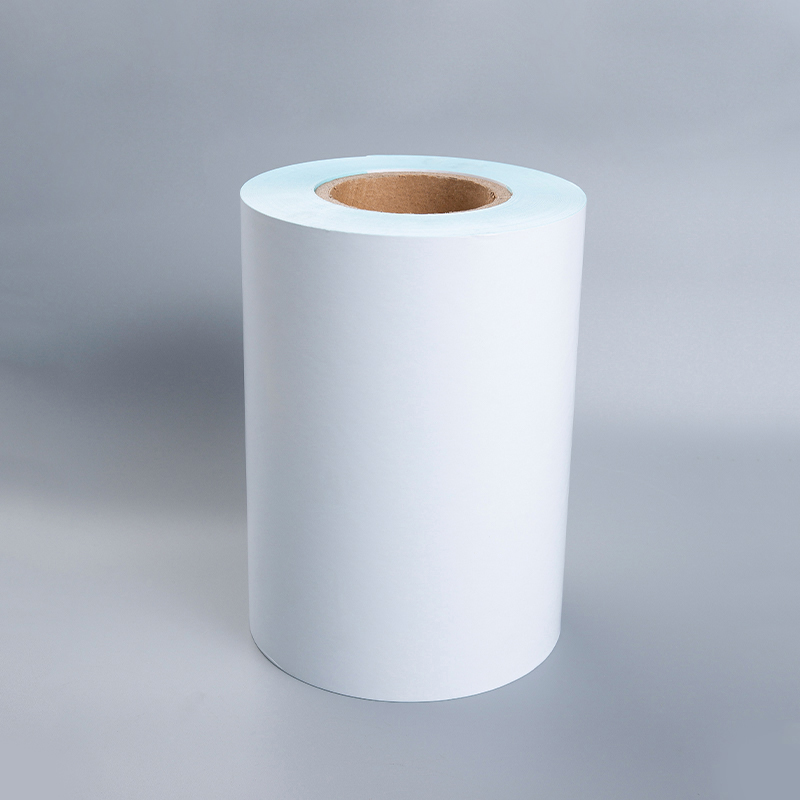
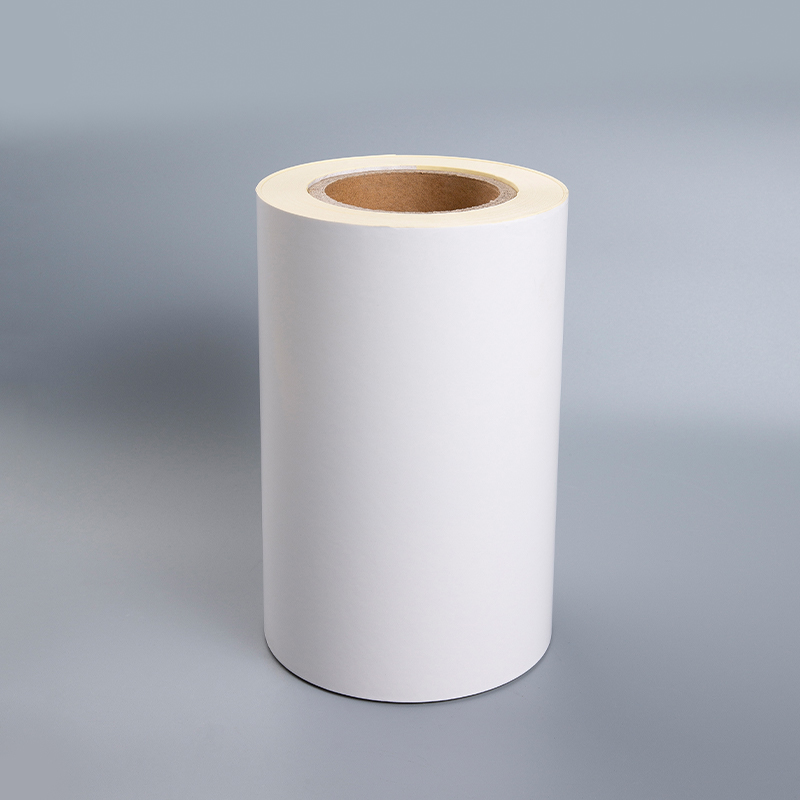
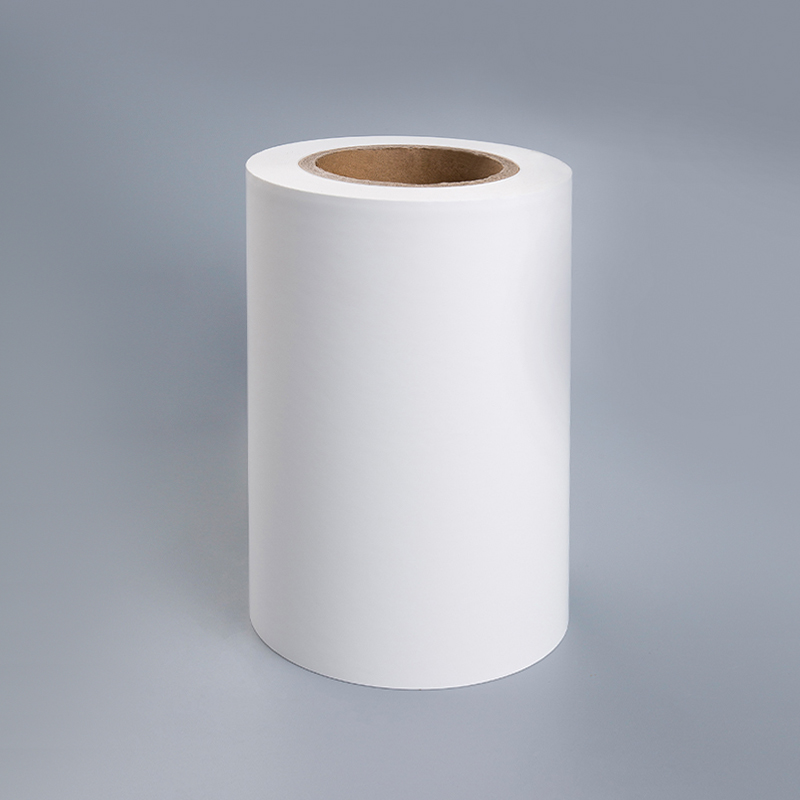
ECO Thermal Paper is a thermal printing face material used in self-adhesive label constructions. The product described here uses 70gsm ECO Thermal Paper as the face material, which can be combined with different adhesive systems and liners depending on the intended application. Thermal paper does not require ink, toner, or ribbon during printing. Instead, it reacts to heat from the thermal print head, producing readable text, barcodes, numbers, graphics, or transaction information quickly and efficiently.
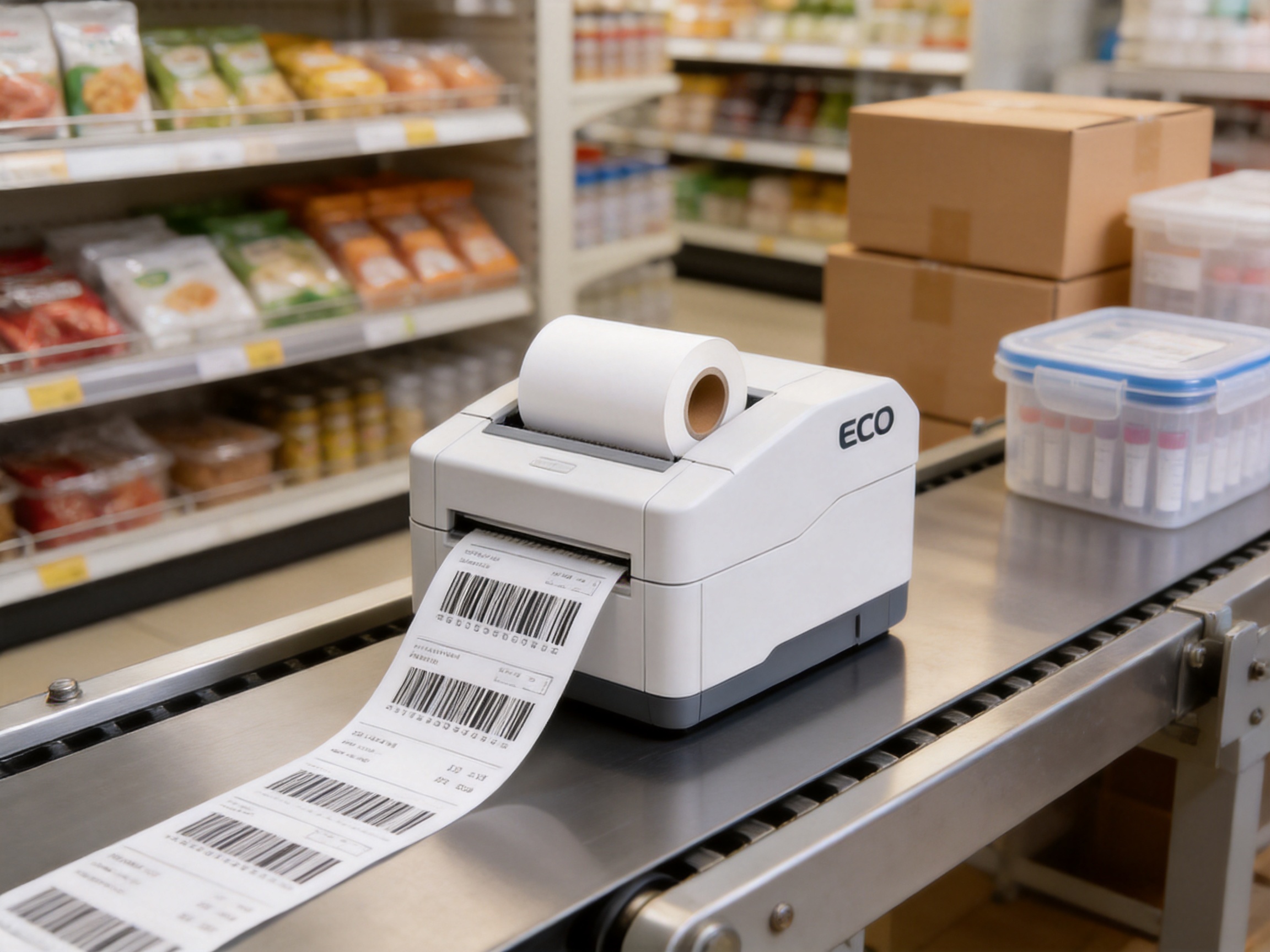
This feature makes thermal paper highly suitable for environments where speed, convenience, and frequent printing are essential. In supermarkets, it can be used for pricing labels, weighing labels, promotion tags, and short-term product identification. In catering and food delivery, it can support order labels, queue receipts, kitchen notes, and temporary dispatch labels. In hotels, it can serve as guest service receipts, luggage notes, reservation tags, or temporary internal labels. In healthcare, it may be applied to temporary document marking, sample identification, patient-related records, and process labels where fast printing is required. In logistics, it is useful for sorting labels, shipping notes, warehouse identification, and distribution documents.
The product is especially relevant where the printed information does not need to remain permanent for many years, but must remain clear and functional throughout the expected service period. For many businesses, temporary labeling is an enormous part of daily operations. A product label may only need to last until checkout. A logistics label may only need to remain readable during storage, handling, transport, and delivery. A receipt may need to record a transaction clearly at the moment of sale and remain readable for customer reference. ECO Thermal Paper addresses these practical demands with a combination of printability and convertibility.
Product Structure and Available Options
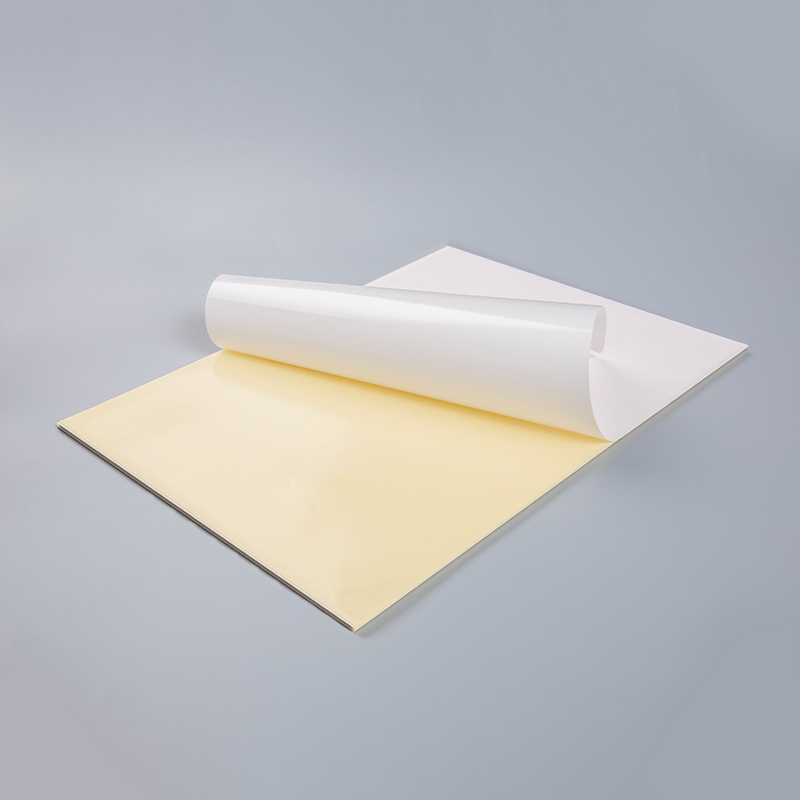
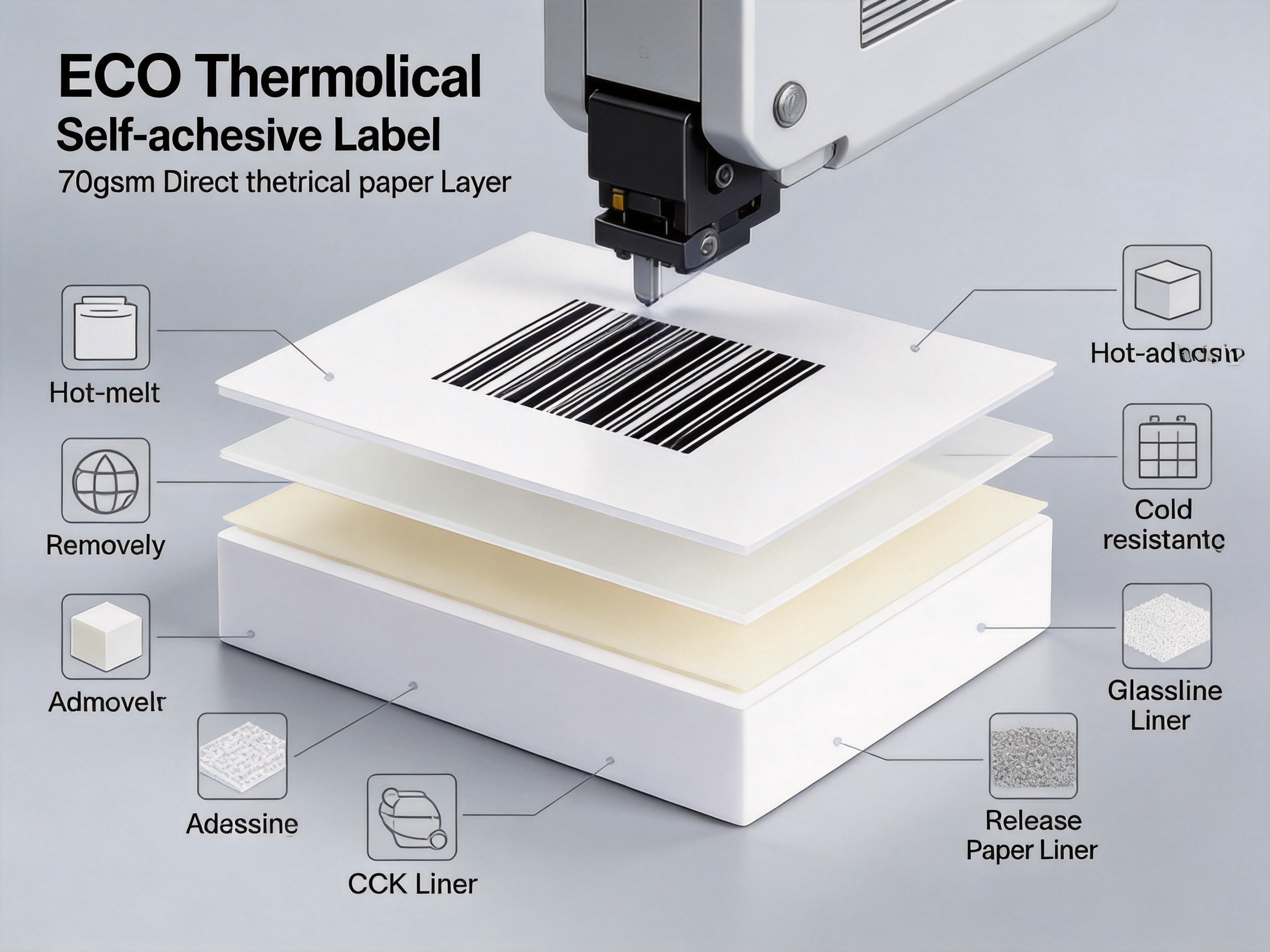
A self-adhesive thermal label material generally consists of a thermal paper face, adhesive layer, and release liner. Each component influences the final performance. The face material determines printing quality and surface response. The adhesive determines bonding behavior on different substrates and in different temperatures. The liner controls die-cutting, converting stability, release performance, and label dispensing efficiency.
The core configuration includes 70gsm ECO Thermal Paper, hotmelt adhesive, and 85g white release paper. This is a practical and widely applicable structure for many standard temporary labeling and receipt-related uses. However, one important advantage of this product is the availability of multiple adhesive and liner alternatives. Customers can choose waterbased adhesive, solvent adhesive, removable adhesive, anti-freeze adhesive, cryogenic adhesive, or tyre-grade rubber adhesive depending on the end-use environment. They can also choose from glassine paper, release paper, art paper, or CCK liner in different grammages.
The availability of multiple combinations allows the same thermal paper solution to be adjusted for a wide range of industrial requirements. For example, a logistics customer may prioritize strong adhesion to corrugated cartons and reliable barcode scanning. A food storage customer may require anti-freeze or cryogenic adhesive for chilled or frozen environments. A retail customer may prefer removable adhesive for temporary promotional labels. A converter may select a specific liner thickness or release level to match high-speed die-cutting and automatic label dispensing systems.
Item |
Specification and Options |
Practical Value |
Face Material |
70gsm ECO Thermal Paper |
Supports direct thermal printing for labels, receipts, bills, and temporary documents without ribbon, ink, or toner. |
Standard Adhesive |
Hotmelt Adhesive |
Provides practical bonding strength for many daily label applications. |
Optional Adhesives |
Waterbased, solvent, removable, anti-freeze, cryogenic, and tyre-grade rubber adhesive |
Allows customization for different surfaces, temperature conditions, removability needs, and industrial environments. |
Standard Liner |
85g White Release Paper |
Offers stable release performance and handling for self-adhesive label production. |
Optional Liners |
50g, 60g, 80g, 100g, and 120g glassine paper; 60g, 120g, and 140g release paper; 140g and 165g art paper; 50g, 80g, 90g, and 120g CCK liner |
Supports different converting, die-cutting, printing, and dispensing requirements. |
Jumbo Roll Width |
1000mm, 1020mm, 1080mm, and 1530mm |
Matches common converting operations and enables efficient slitting into finished label rolls. |
Sheet Size |
A4, A3, 20 x 30, 21 x 30, 24 x 36, 50cm x 70cm, 70cm x 100cm, and customized sizes |
Supports flexible supply for sheet-fed printing, distribution, sampling, and special project needs. |
Packaging |
Roll or sheet packing, carton packing, and sea-transit-worthy poly-wood pallet packing |
Protects product quality during storage, domestic shipment, and international transport. |
Application Fields and Practical Benefits
ECO Thermal Paper is highly suitable for temporary labels, small bills, receipts, and other documents that need quick printing and convenient handling. The most common application areas include supermarkets, catering, hotels, medical services, logistics, warehousing, and distribution. These fields share several characteristics: high print frequency, demand for readable information, need for quick identification, and pressure to reduce operational delays.
Supermarkets and Retail Environments
Supermarkets rely heavily on thermal printing. Weighing scales print labels for produce, meat, seafood, bakery products, and prepared foods. Cash registers generate receipts. Shelf operations require temporary price labels, discount marks, and internal handling tags. ECO Thermal Paper supports these tasks by offering fast thermal image formation and compatibility with adhesive systems suitable for retail surfaces.
Retail labels must often present barcodes, prices, product names, dates, batch information, and promotional data. If print contrast is poor or adhesive performance is unstable, checkout errors, scanning failures, and customer dissatisfaction may occur. A stable thermal paper material helps reduce these risks. For retailers and label converters, the ability to choose suitable liner and adhesive combinations also improves production flexibility.
Catering, Food Service, and Hospitality
Restaurants, cafes, delivery platforms, bakeries, hotels, and catering service providers use thermal paper for receipts, kitchen orders, customer notes, food packaging labels, delivery labels, and temporary identification. These applications often demand fast printing during peak hours. The printed information must be easy for staff to read, and labels must adhere sufficiently to packaging, cups, cartons, bags, or order sheets.
ECO Thermal Paper can be configured with different adhesives to meet different service conditions. For standard dry packaging, hotmelt adhesive may be appropriate. For special food storage or cold-chain conditions, anti-freeze or cryogenic adhesive options may be selected. For temporary promotional or service labels that should not leave difficult residue, removable adhesive can be considered. This adaptability gives food service operators and label suppliers a practical advantage.
Medical and Healthcare Uses
Healthcare environments need labels and documents that are clear, fast to produce, and easy to manage. Thermal printing is often used for temporary process labels, sample identification, medical records, appointment notes, inventory tags, and internal routing labels. In such settings, legibility is essential. A barcode or patient-related instruction must be printed with sufficient clarity to avoid confusion.
While final suitability depends on each medical facility’s standards and validation procedures, the availability of controlled face material, adhesive options, and liner structures helps converters produce labels that align with specific healthcare workflows. Consistency from batch to batch is particularly important for healthcare-related label materials, and advanced manufacturing control plays a direct role in maintaining that consistency.
Logistics, Warehousing, and Distribution
Logistics operations require labels that can be produced quickly and applied to cartons, envelopes, plastic bags, pallets, containers, and sorting documents. Barcodes and tracking numbers must remain scannable through handling, storage, and transportation. ECO Thermal Paper supports these requirements by enabling direct thermal printing and flexible adhesive selection.
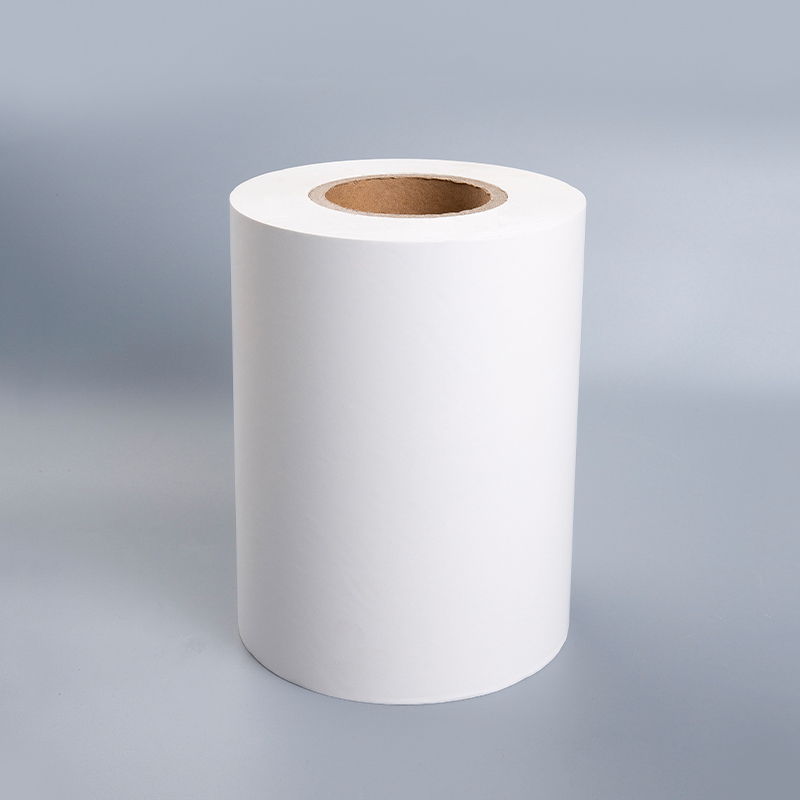
For general warehouse labels, a standard adhesive may be sufficient. For cold-chain logistics, frozen storage, or low-temperature transportation, anti-freeze or cryogenic adhesive may be more appropriate. For rough industrial surfaces, special rubber adhesive options may improve adhesion. The availability of jumbo roll widths such as 1000mm, 1020mm, 1080mm, and 1530mm also supports efficient converting into different roll sizes for logistics printers.
Key Advantages Over Competing Thermal Label Materials
In a competitive label material market, customers look for more than a basic thermal paper. They need stable quality, flexible specifications, dependable supply, professional customization, and reliable after-sales support. ECO Thermal Paper distinguishes itself through a combination of product design, available material options, production scale, quality control, and manufacturer experience.
Advantage 1: Broad Adhesive Compatibility
Many thermal label materials are offered with limited adhesive choices. This can restrict customers to one general-purpose solution, even when their actual application demands special performance. ECO Thermal Paper is available with hotmelt adhesive as a standard option and with waterbased, solvent, removable, anti-freeze, cryogenic, and tyre-grade rubber adhesive options. This range makes it easier to match the label material to real-world conditions.
Hotmelt adhesive is often selected for practical bonding strength and fast tack. Waterbased adhesive may be preferred in applications where formulation balance and processing conditions suit customer needs. Solvent adhesive can support demanding bonding requirements. Removable adhesive is useful for temporary labels that need clean removal. Anti-freeze and cryogenic adhesives are valuable for cold storage and chilled or frozen goods. Tyre-grade rubber adhesive is designed for challenging industrial surfaces where stronger tack may be required.
Advantage 2: Multiple Liner Choices for Converting Efficiency
The release liner is sometimes underestimated, but it plays a major role in label converting. A stable liner helps maintain die-cutting accuracy, smooth waste stripping, reliable rewinding, and efficient label dispensing. ECO Thermal Paper can be paired with 85g white release paper as a standard liner, and with different glassine papers, release papers, art papers, and CCK liners depending on customer requirements.
This wide liner selection gives converters more control over processing. Thin liners may support roll length and material efficiency. Heavier liners may improve dimensional stability or handling. Glassine liners are widely used in labelstock because of their smoothness and release characteristics. CCK liners are useful for certain applications requiring dimensional stability and moisture resistance. By offering these options, the product helps customers optimize both label performance and production efficiency.
Advantage 3: Flexible Roll and Sheet Supply
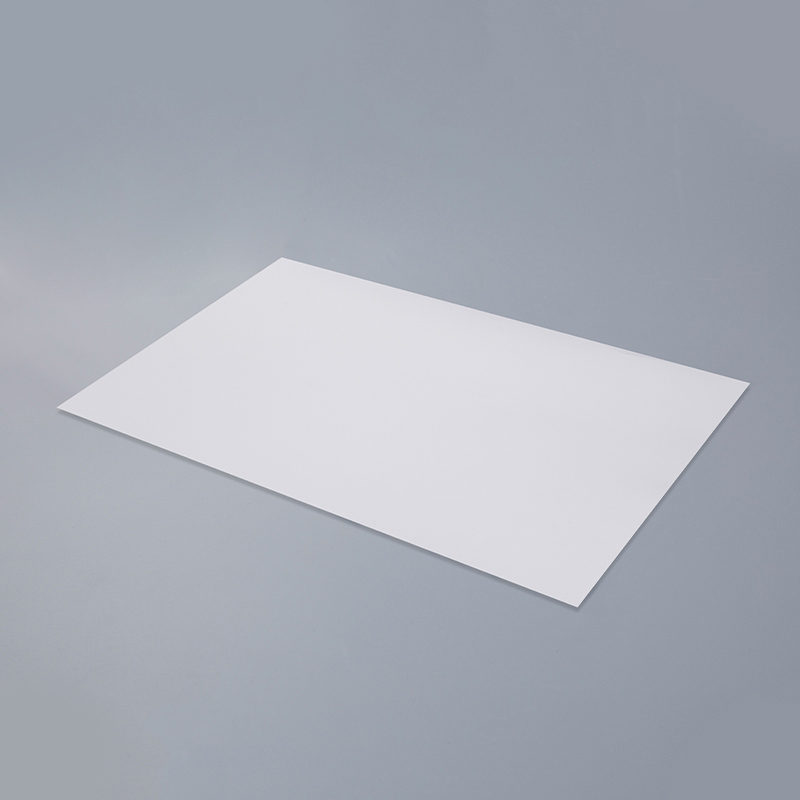
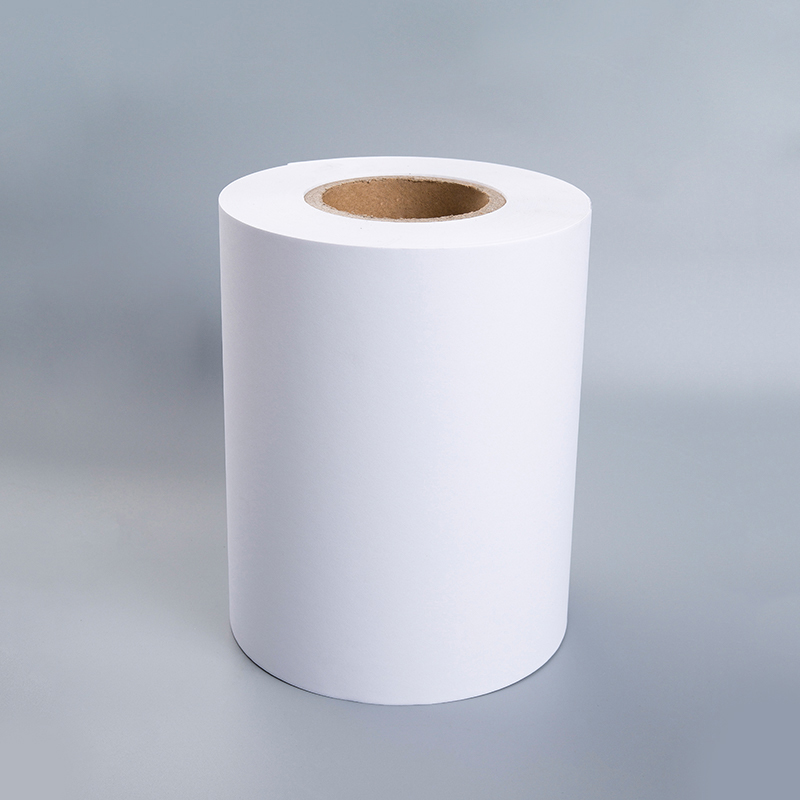
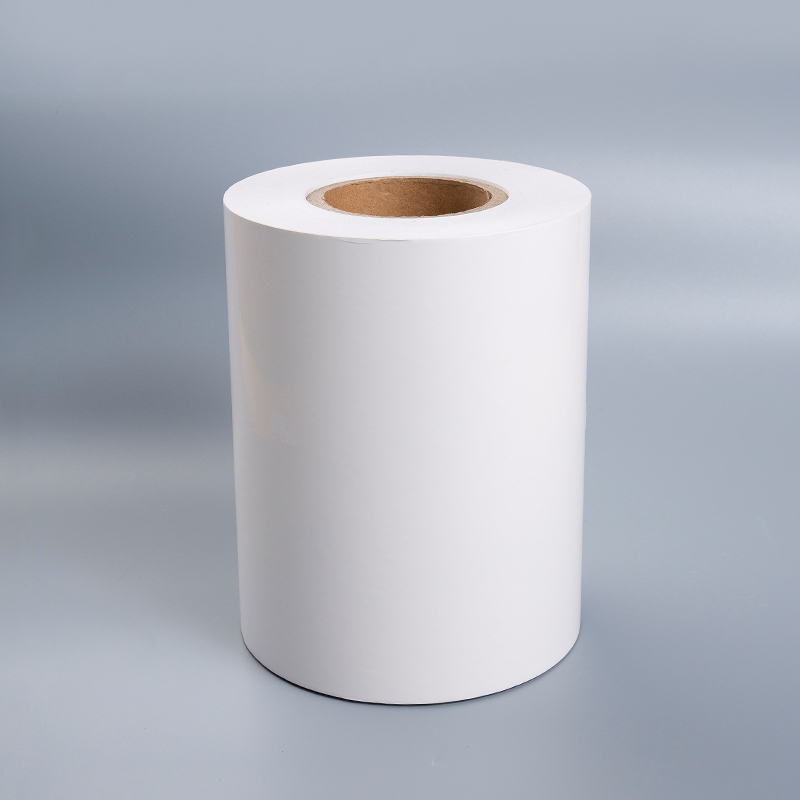
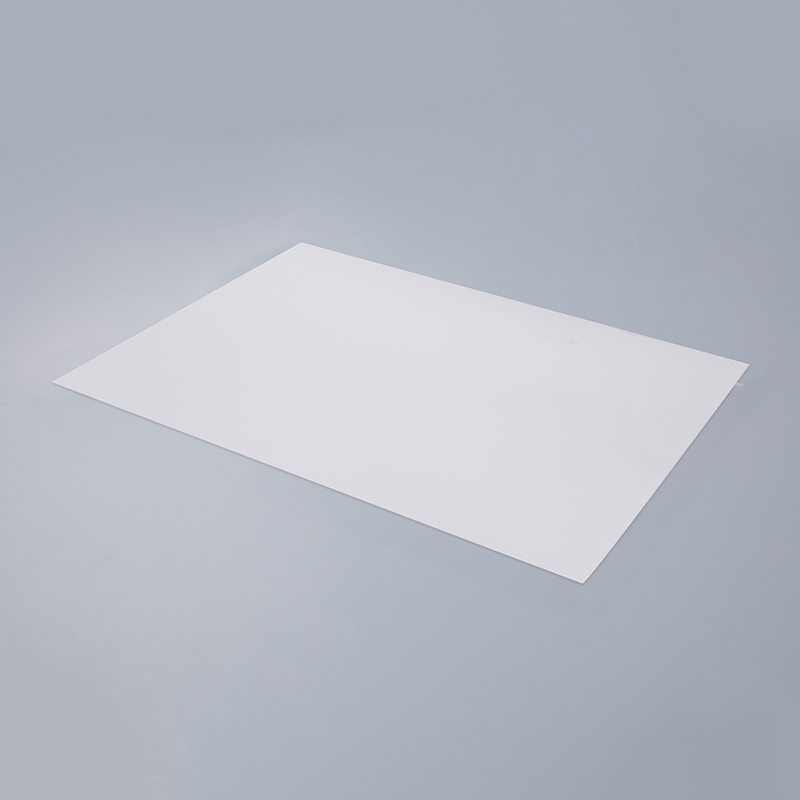
Some customers need jumbo rolls for high-volume converting, while others need sheets for printing, sampling, or specialized distribution. ECO Thermal Paper is available in jumbo roll widths of 1000mm, 1020mm, 1080mm, and 1530mm. Sheet sizes include A4, A3, 20 x 30, 21 x 30, 24 x 36, 50cm x 70cm, 70cm x 100cm, and customized dimensions.
This supply flexibility reduces the need for customers to adapt their processes around rigid material formats. Instead, the material can be supplied closer to the customer’s actual production needs. Large converters can slit jumbo rolls into many finished roll sizes. Printers and distributors can select sheets for short runs or special projects. Customization helps reduce waste, improve workflow, and make procurement easier.
Advantage 4: Practical Packaging for Domestic and International Transport
Label materials can be damaged by improper packing, pressure, moisture, impact, and poor pallet stability. ECO Thermal Paper can be supplied with sea-transit-worthy poly-wood pallet packing and carton packing. Both roll and sheet formats are available from stock. For sheet packing, 100 sheets per ream can be packed with a strong PE-coated kraft paper wrapper. Strong pallets are wrapped with stretch film and fastened with plastic fastening belts.
This packaging approach is especially important for international customers. During sea transport, goods may face humidity changes, long shipping periods, handling vibration, and stacking pressure. Strong palletization and protective wrapping help preserve material quality until arrival. Better packaging reduces customer risk, lowers damage claims, and supports smoother production planning.
Advantage 5: Integrated Manufacturing and Stable Supply
A product’s performance depends not only on raw materials but also on manufacturing control. Suzhou Piaozhihua Composite Material Technology Co., Ltd. operates a full range of production lines, including gluing, laminating, and cutting. The company’s annual production capacity exceeds 280 million square meters, placing it among the leading self-adhesive product manufacturers in China. This scale supports stable supply for both domestic and international customers.
Integrated production also improves control over product consistency. When gluing, laminating, and cutting processes are coordinated under one manufacturing system, quality issues can be identified and corrected more efficiently. Production planning can be more responsive, customization can be more practical, and delivery reliability can be improved. For customers who require repeated orders and consistent batch quality, integrated manufacturing is a major advantage.
Advanced Manufacturing Processes Behind the Product
The performance of ECO Thermal Paper is closely connected to the manufacturer’s production technology. Self-adhesive thermal label material requires precise coating, stable lamination, controlled drying or curing conditions depending on adhesive type, and accurate slitting or sheeting. Even small variations in coating weight, adhesive uniformity, release level, or roll tension can affect the final label performance.
Gluing Process Control
The gluing process applies adhesive to the label material structure. The adhesive layer must be uniform enough to ensure consistent bonding, converting, and dispensing. Uneven adhesive application can lead to weak spots, adhesive bleeding, curling, die-cutting difficulty, or inconsistent peel performance. Advanced gluing lines help regulate coating amount, web speed, temperature, and drying or processing conditions.
Because ECO Thermal Paper can be supplied with different adhesive types, process knowledge is essential. Hotmelt adhesive requires different handling from waterbased or solvent adhesive. Removable adhesive must balance adhesion and clean removal. Anti-freeze and cryogenic adhesives must be formulated and coated to perform under low-temperature conditions. A manufacturer with long-term experience in multiple adhesive systems can provide more reliable product matching for customer applications.
Laminating Precision
Lamination combines the face material, adhesive, and liner into a stable self-adhesive construction. During this process, tension control and alignment are very important. If the web is not properly controlled, the material may show wrinkles, bubbles, curling, edge defects, or uneven release behavior. For thermal paper, the surface must also be protected from unnecessary damage or contamination, as print quality depends on surface consistency.
Advanced laminating equipment supports stable contact between layers and maintains roll quality. Good lamination helps the material run smoothly during printing and converting. It also contributes to predictable label release from the liner. For automatic labeling equipment, consistent lamination can reduce label dispensing errors and production interruptions.
Cutting, Slitting, and Sheet Conversion
After lamination, materials may be supplied as jumbo rolls, slit rolls, or sheets. Cutting and slitting require accuracy, clean edges, controlled tension, and proper roll hardness. Poor slitting can create dust, edge tearing, telescoping rolls, or printer feeding problems. Poor sheet cutting can create size variation, skew, or stacking difficulty.
The availability of many roll widths and sheet sizes depends on reliable finishing equipment. ECO Thermal Paper can be supplied in standard jumbo roll widths and customized sheet formats, which requires a flexible finishing system. For converters, accurate roll width and stable winding reduce waste and improve production speed. For sheet users, accurate dimensions improve feeding, storage, and handling.
Quality Testing and Inspection
Quality control is a critical part of label material production. Suzhou Piaozhihua Composite Material Technology Co., Ltd. maintains its own testing laboratory and advanced inspection equipment to ensure product quality. Testing may include checks related to adhesive performance, release force, coating consistency, surface appearance, thickness, grammage, print response, dimensional stability, and converting behavior.
An internal laboratory gives the manufacturer the ability to evaluate materials before shipment and support customer development projects. It also enables faster response when customers require customized solutions. If a customer needs a label material for a specific surface, temperature range, or converting process, testing can help identify the most suitable adhesive and liner combination.
Why Manufacturing Experience Matters
Self-adhesive label materials may look simple from the outside, but they are composite products with many interacting variables. Face material, adhesive chemistry, coating weight, liner release, moisture balance, roll tension, cutting precision, packaging, and storage conditions all influence performance. A manufacturer with more than 20 years of OEM manufacturing experience can use accumulated knowledge to solve practical problems and deliver stable results.
Suzhou Piaozhihua Composite Material Technology Co., Ltd. has built its expertise through long-term specialization in high-grade self-adhesive labels. The company integrates research and development, production, sales, and after-sales service. Its product sales outlets cover many regions, and its marketing network extends to the United States, Germany, Japan, South Korea, Brazil, Mexico, Russia, the Middle East, and other markets across Asia, Europe, the Americas, Africa, and beyond.
International market experience is important because different customers often have different printers, climates, storage conditions, regulatory expectations, packaging preferences, and converting habits. A manufacturer that serves many markets gains broader application knowledge. This helps improve recommendations, customization, and problem-solving for ECO Thermal Paper and related label materials.
Sustainability and Eco-Oriented Product Thinking
The term “ECO” in ECO Thermal Paper reflects a product positioning aligned with sustainable development and environmental protection goals. The company’s brand positioning emphasizes sustainable development and environmental responsibility, including eco-friendly solutions involving face materials, adhesives, and backing papers. In the label industry, sustainability is not a single feature; it involves material selection, production efficiency, waste reduction, packaging optimization, and customer-specific solutions.
For many customers, direct thermal printing itself can offer operational simplicity because it does not require ribbons, toner, or ink cartridges during printing. This can reduce consumable complexity in suitable applications. In addition, customized roll or sheet sizes can reduce unnecessary trimming waste. Proper liner selection can improve converting efficiency and reduce production rejects. Reliable quality control can reduce defective batches and repeated production. Strong packaging can reduce transport damage and material waste.
Sustainability also depends on honest product matching. A label material should be suitable for its intended life cycle. For temporary labels and receipts, using a product designed for temporary information needs can be more practical than over-engineering the label construction. By providing different adhesives and liners, the manufacturer helps customers select materials based on real performance needs rather than relying on a one-size-fits-all approach.
Customization for OEM and ODM Projects
OEM and ODM capabilities are valuable in the label material industry because customers often have specialized requirements. A retail chain may require a particular thermal sensitivity, adhesive tack, roll width, and label dispensing behavior. A logistics company may need a construction optimized for barcode scanning and carton adhesion. A medical distributor may require specific sheet formats and strict quality consistency. A converter may need a liner that performs well on high-speed die-cutting equipment.
Suzhou Piaozhihua Composite Material Technology Co., Ltd. accepts OEM and ODM services and can produce products based on customer drawings or samples. Its professional research and development team, multiple patents, internal testing laboratory, and advanced inspection equipment provide technical support for customized product development. This is a major advantage over suppliers that only sell standard catalog items.
Customization can involve adhesive selection, liner selection, roll width, sheet size, packaging method, release performance, and product structure. It can also involve production trial support, sample testing, and adjustment based on customer feedback. For customers who need private label supply, special converting formats, or long-term supply agreements, a manufacturer with integrated production and technical service is a stronger partner.
Performance Considerations for Buyers
When selecting ECO Thermal Paper, buyers should consider the full application environment rather than only comparing price per square meter. The correct product configuration depends on several questions: What printer will be used? Is the product printed as a label, receipt, bill, or sheet? What surface will the label be applied to? Will the label face cold, moisture, friction, oil, or rough handling? How long must the information remain readable? Will the material be die-cut, slit, sheeted, or automatically dispensed?
If the label is used in general retail environments, a standard hotmelt adhesive construction may provide suitable performance. If the label is used in frozen storage, anti-freeze or cryogenic adhesive may be needed. If the label must be removed after temporary use, removable adhesive may be more appropriate. If the material runs on high-speed converting equipment, liner selection and release performance should be carefully confirmed. If the product is exported, pallet packing and moisture protection should be specified clearly.
A professional supplier can help customers evaluate these factors. Instead of treating thermal paper as a simple commodity, customers benefit from selecting a manufacturer that understands the entire label material system. This approach reduces trial-and-error costs and improves long-term production reliability.
Packaging and Delivery Strength
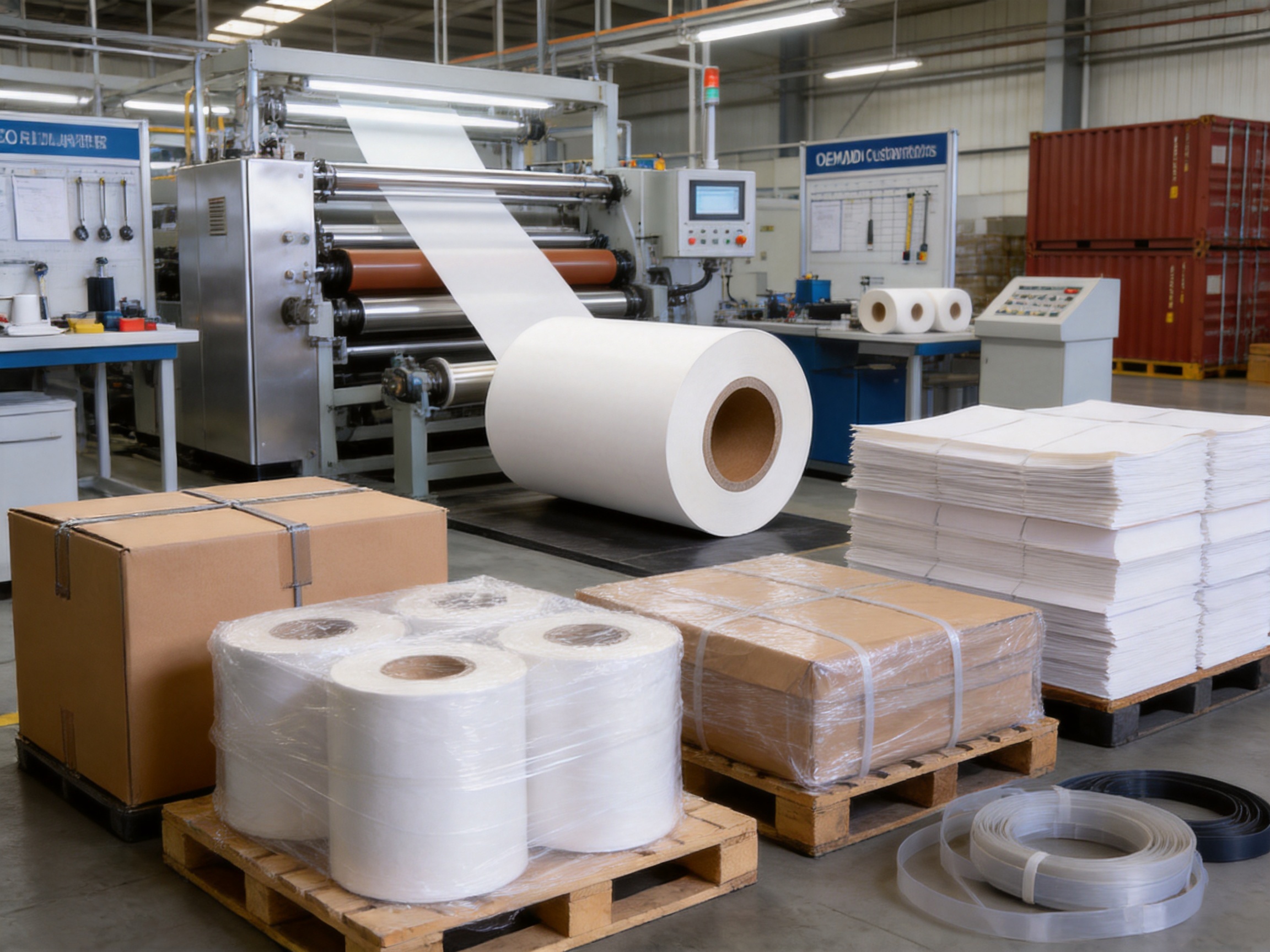
Packaging is an important extension of product quality. ECO Thermal Paper can be packed for roll or sheet supply from stock, with suitable sea-transit-worthy poly-wood pallet packing and carton packing. For sheet products, 100 sheets per ream can be packed with a strong PE-coated kraft paper wrapper. Strong pallets are wrapped with stretch film and fastened with plastic fastening belts.
This packaging system provides several benefits. First, it helps protect against moisture and surface contamination. Second, it improves pallet stability during handling and shipping. Third, it helps keep rolls or sheets organized and ready for warehouse management. Fourth, it supports export shipments by reducing the risk of damage during long-distance transport.
For importers, distributors, and converters, packaging quality can directly influence profitability. Damaged edges, crushed rolls, moisture exposure, or unstable pallets can create waste before production even begins. A supplier that pays attention to packaging demonstrates a broader commitment to customer value.
Competitive Value for Converters and Distributors
Converters and distributors need products that support both technical performance and commercial efficiency. ECO Thermal Paper offers strong value because it is not limited to one narrow specification. The product can be supplied in jumbo roll widths suitable for conversion, or in sheets for more specialized use. Adhesives and liners can be selected according to the market segment. Packaging can support domestic and export logistics.
For converters, the key benefits include stable roll quality, available liner options, adhesive customization, and reliable jumbo roll supply. These factors support efficient die-cutting, printing, slitting, and rewinding. For distributors, the key benefits include broad application coverage, flexible size availability, and the ability to serve customers in retail, catering, hospitality, healthcare, and logistics. For end users, the key benefits include fast printing, clear temporary information, and practical adhesive performance.
Compared with competitors that offer only standard thermal labelstock, ECO Thermal Paper provides a more adaptable product platform. Its value lies not only in the face material but also in the complete self-adhesive construction and the manufacturing system behind it.
Company Strengths Supporting Product Reliability
Suzhou Piaozhihua Composite Material Technology Co., Ltd. is located at No. 16 Weixin Road, Shuangfeng Town, Taicang City, Suzhou City, Jiangsu Province, China. The company specializes in high-grade self-adhesive labels and integrates research and development, production, sales, and after-sales service. With a full range of production lines, including gluing, laminating, and cutting, it has developed annual production capacity of more than 280 million square meters.
The company has built a strong domestic sales network covering Shanghai, Ningbo, Hangzhou, Chengdu, Harbin, Wuhan, Chongqing, Guangzhou, Changsha, Beijing, and numerous franchise chains. Internationally, it has established market coverage in many countries and regions, including the United States, Germany, Japan, South Korea, Brazil, Mexico, Russia, and the Middle East. This broad market presence reflects the company’s ability to support diverse customer needs and long-term stable supply relationships.
The company’s core values include quality, integrity, innovation, win-win cooperation, and responsibility. These values are reflected in product development, quality management, and customer service. Its quality manufacturing concept has guided development for more than 20 years and has earned customer recognition. For ECO Thermal Paper customers, these strengths translate into more consistent products, better customization, and more dependable partnership.
Quality, Integrity, Innovation, and Responsibility in Practice
Quality means pursuing excellence in material selection, coating control, lamination, finishing, inspection, and packaging. For ECO Thermal Paper, quality is visible in print performance, adhesive stability, liner release, roll condition, sheet accuracy, and shipment protection. A quality-focused manufacturer does not only inspect finished goods; it controls the process from raw material selection through delivery.
Integrity means sincerity and trustworthiness. In business-to-business supply, integrity includes accurate product information, realistic performance recommendations, consistent order fulfillment, and honest communication when special conditions must be considered. Thermal label materials are often used in high-volume daily operations, so buyers need a supplier they can trust.
Innovation means improving products and processes to meet changing market needs. The label industry is evolving as customers demand more eco-conscious options, better converting efficiency, special adhesives, and customized structures. A professional research and development team with multiple patents helps the manufacturer respond to these trends.
Win-win cooperation means supporting the customer’s success while building long-term partnership. For ECO Thermal Paper, this may involve helping customers choose the right adhesive, adjust sizes, optimize packaging, or develop a special product based on samples. Responsibility means taking ownership of product quality, after-sales service, and sustainable development goals.
How ECO Thermal Paper Supports Operational Efficiency
Operational efficiency is a central reason customers choose thermal paper. Direct thermal printing is fast and convenient because it eliminates ribbon replacement and simplifies printer maintenance in suitable applications. When combined with a self-adhesive structure, the printed output can be applied immediately to products, cartons, documents, packaging, or service items.
In a supermarket, faster label printing supports shorter queues and smoother product handling. In a restaurant, fast order printing supports kitchen coordination and delivery accuracy. In a warehouse, efficient barcode printing supports inventory control and shipment tracking. In a hospital or clinic, clear temporary labels support workflow organization. ECO Thermal Paper contributes to these efficiencies by providing a reliable material base for everyday printing.
However, speed only matters if the printed information is usable. A low-quality material may cause print fading, poor barcode contrast, feeding problems, adhesive failure, or liner release issues. These problems create hidden costs in reprinting, relabeling, labor, scanning errors, and customer complaints. By focusing on stable product construction and manufacturing quality, ECO Thermal Paper helps reduce these hidden operational costs.
Guidance for Storage and Handling
Like most thermal paper and self-adhesive label materials, ECO Thermal Paper should be stored and handled properly to preserve performance. Materials should generally be kept in clean, dry, temperature-controlled conditions away from direct sunlight, excessive heat, high humidity, strong chemicals, and pressure deformation. Rolls should be stored in a way that protects edges and prevents crushing. Sheets should remain wrapped until use to reduce moisture variation and contamination.
Before full-scale production, customers should test the product under actual printing, converting, application, and storage conditions. This is especially important for special adhesives, cold-chain use, removable labels, industrial surfaces, and medical or food-related workflows. Proper testing helps confirm that the selected construction meets the intended requirement.
When customers work with the manufacturer’s technical and sales team, they can receive guidance on product selection, packaging, and customization. This collaboration improves the likelihood of successful application and reduces unnecessary material changes later.
Q&A Section
Q1: What is ECO Thermal Paper mainly used for?
ECO Thermal Paper is mainly used for printing temporary labels, small bills, receipts, and other short-term documents. It is suitable for supermarkets, catering, hotels, medical services, logistics, warehousing, and similar industries that require fast and readable thermal printing.
Q2: Does ECO Thermal Paper require ink, toner, or ribbon?
No. ECO Thermal Paper is designed for direct thermal printing, which means the printed image is produced by heat from the thermal print head. This makes printing convenient and efficient for many temporary label and receipt applications.
Q3: What is the standard material structure?
The standard configuration includes 70gsm ECO Thermal Paper as the face material, hotmelt adhesive, and 85g white release paper as the liner. Other adhesive and liner combinations are available depending on customer needs.
Q4: What adhesive options are available?
Available adhesive options include hotmelt adhesive, waterbased adhesive, solvent adhesive, removable adhesive, anti-freeze adhesive, cryogenic adhesive, and tyre-grade rubber adhesive. These options allow the product to match different application surfaces and temperature conditions.
Q5: Can this product be used in cold environments?
Yes, cold-environment applications can be supported by selecting suitable anti-freeze or cryogenic adhesive options. Customers should test the chosen construction under actual cold storage or transportation conditions before large-scale use.
Q6: What liner choices are available?
The standard liner is 85g white release paper. Optional liners include several grammages of glassine paper, release paper, art paper, and CCK liner. Liner selection can be adjusted according to die-cutting, printing, dispensing, and handling requirements.
Q7: What sizes can be supplied?
Jumbo roll widths include 1000mm, 1020mm, 1080mm, and 1530mm. Sheet sizes include A4, A3, 20 x 30, 21 x 30, 24 x 36, 50cm x 70cm, 70cm x 100cm, and customized sizes.
Q8: What makes this product competitive?
Its competitiveness comes from flexible adhesive and liner options, practical roll and sheet formats, strong export packaging, integrated manufacturing, advanced quality inspection, OEM and ODM customization, and the production strength of an experienced self-adhesive material manufacturer.
Q9: Can customers request OEM or ODM customization?
Yes. The manufacturer accepts OEM and ODM services and can produce products based on customer drawings or samples. Customization may include adhesive type, liner type, size, packaging, and product structure.
Q10: Why is packaging important for ECO Thermal Paper?
Proper packaging protects the thermal paper and self-adhesive construction from moisture, pressure, edge damage, contamination, and transport risks. Sea-transit-worthy poly-wood pallet packing, carton packing, PE-coated kraft wrappers, stretch film, and plastic fastening belts help preserve product quality during delivery.
Conclusion
ECO Thermal Paper is a practical and adaptable solution for businesses that need fast, reliable thermal printing for temporary labels, receipts, small bills, and short-term documents. Its value comes from more than the thermal face paper alone. The complete self-adhesive construction can be customized with different adhesives, liners, roll widths, sheet sizes, and packaging methods to meet the requirements of supermarkets, catering businesses, hotels, medical services, logistics companies, converters, distributors, and printers.
Compared with many competing thermal label materials, ECO Thermal Paper offers broader configuration flexibility and stronger manufacturing support. Adhesive options such as removable, anti-freeze, cryogenic, and tyre-grade rubber adhesive help extend the product into specialized applications. Liner options support converting efficiency and dispensing reliability. Roll and sheet supply formats provide commercial flexibility. Strong export packaging protects goods during transport.
Behind the product, Suzhou Piaozhihua Composite Material Technology Co., Ltd. provides integrated gluing, laminating, and cutting capabilities, an annual production capacity of more than 280 million square meters, an internal testing laboratory, advanced inspection equipment, more than 20 years of OEM manufacturing experience, professional research and development strength, and broad domestic and international market coverage. These strengths help ensure that ECO Thermal Paper can be supplied not only as a product, but as a dependable material solution for modern label and document printing needs.
References
1. Handbook of Pressure-Sensitive Adhesive Technology, edited by Donatas Satas.
2. Labels and Labeling Technology: Materials, Applications, and Production Practices, industry technical literature.
3. Direct Thermal Printing Materials and Performance Considerations, thermal paper application guide.
4. Pressure-Sensitive Labelstock Converting and Quality Control, manufacturing reference materials.
5. Packaging Guidelines for Paper-Based and Self-Adhesive Materials in International Transport, logistics and packaging practice reference.