
 English
 Español
 русский
 Français
 عربى
Domestic Kraft Paper
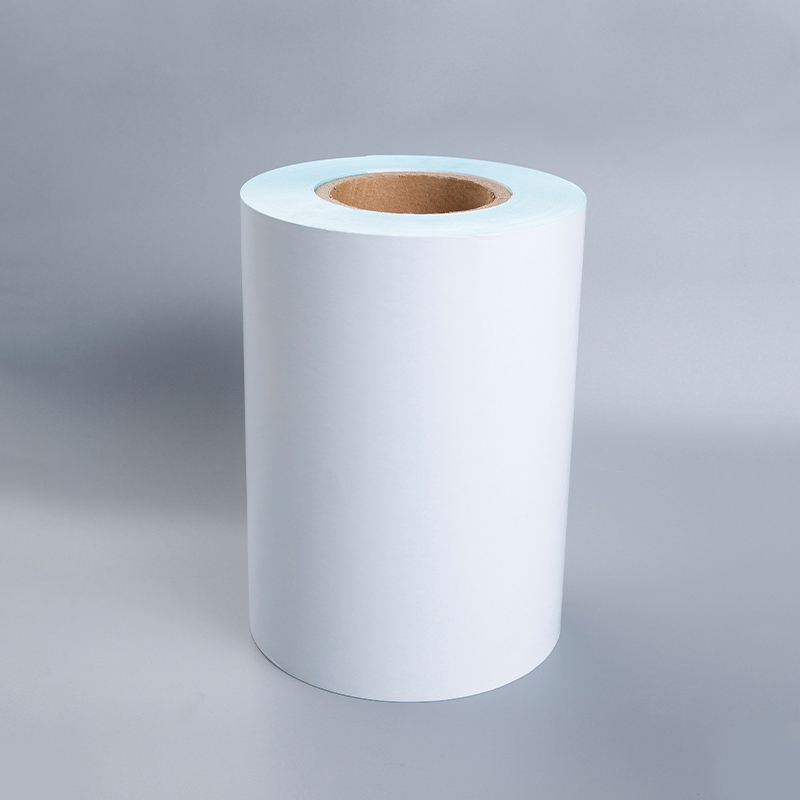
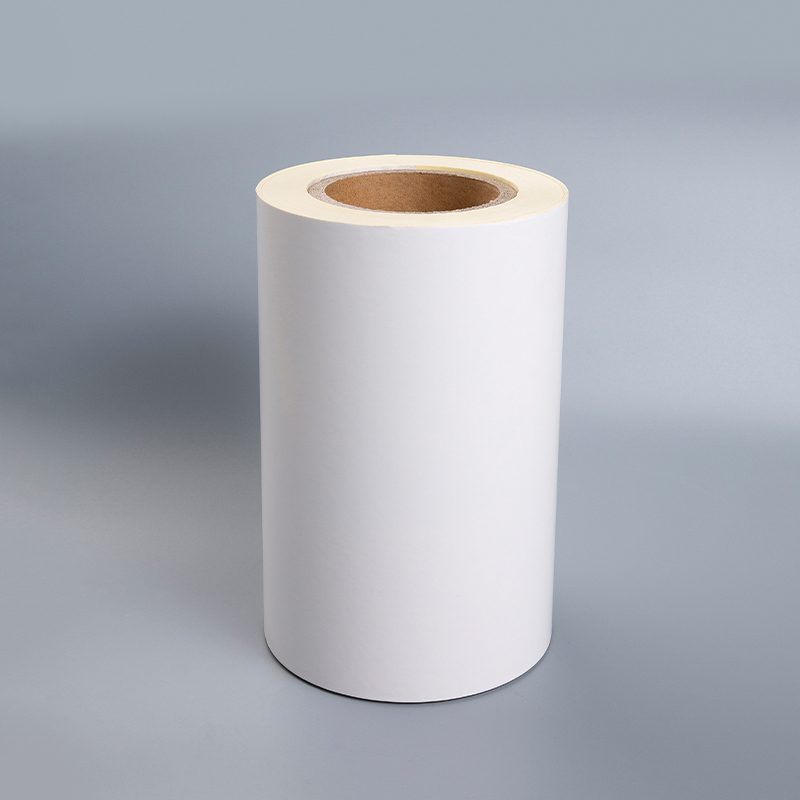
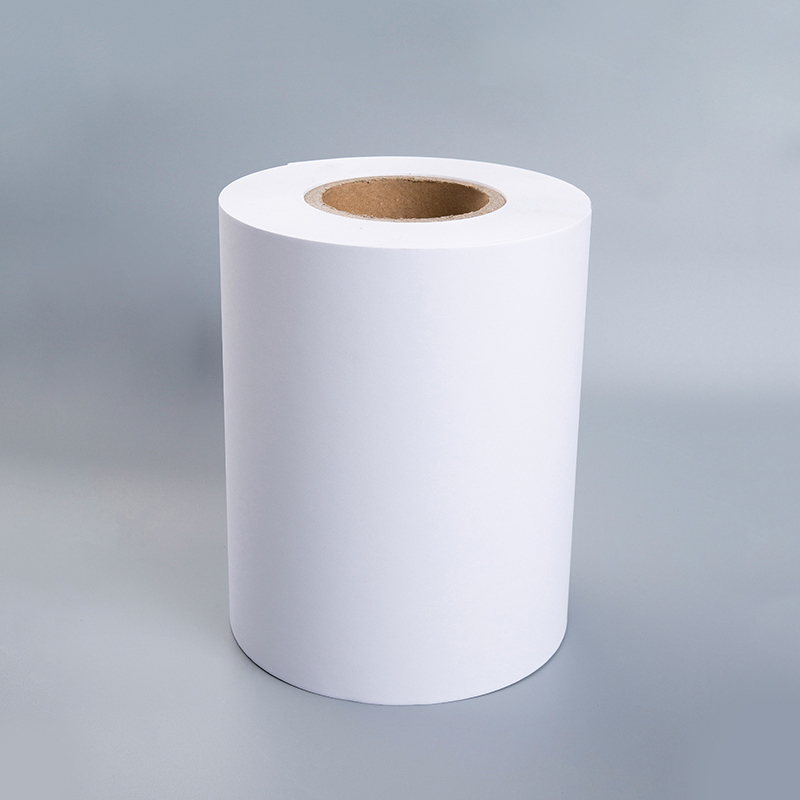
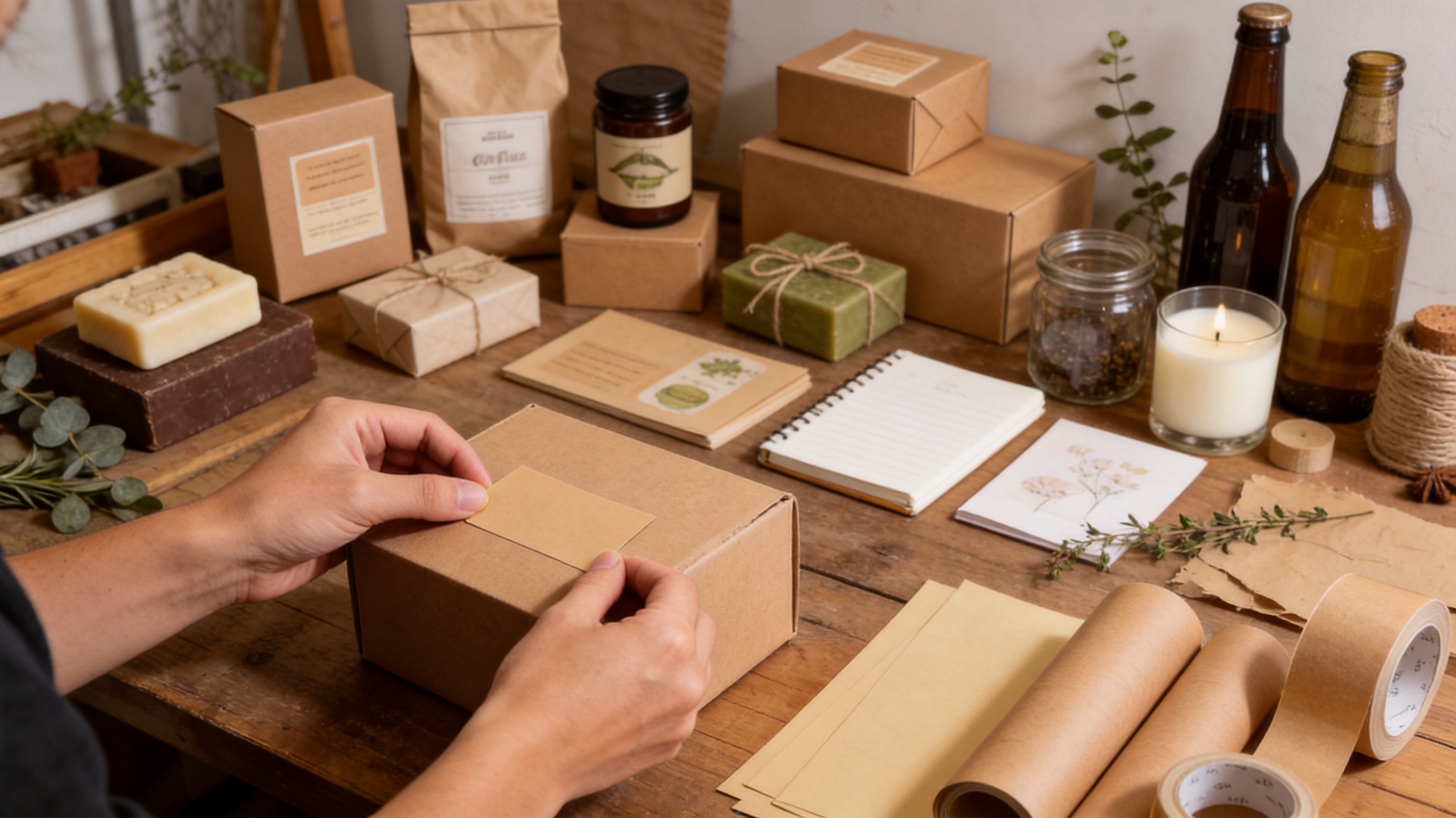
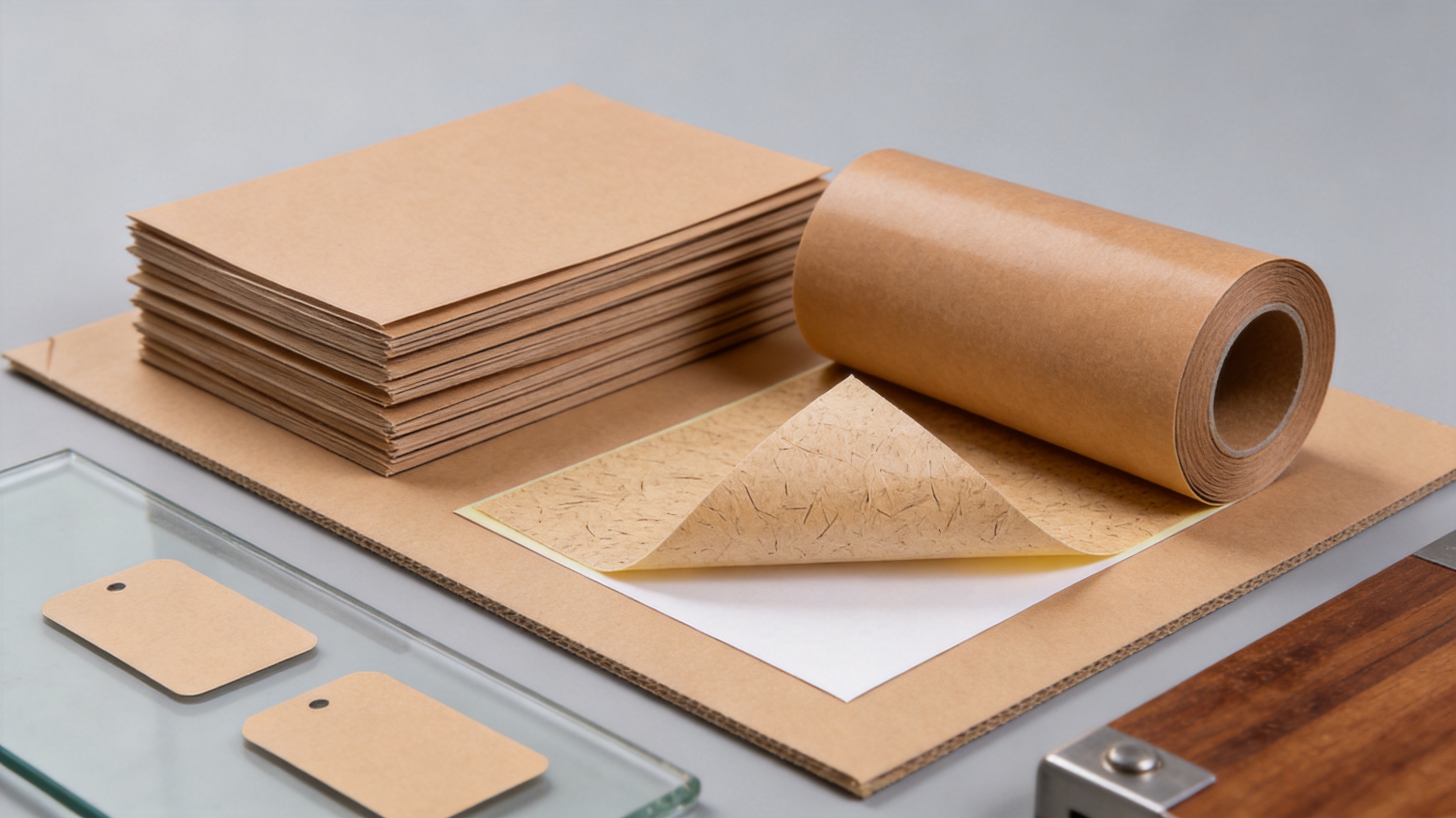
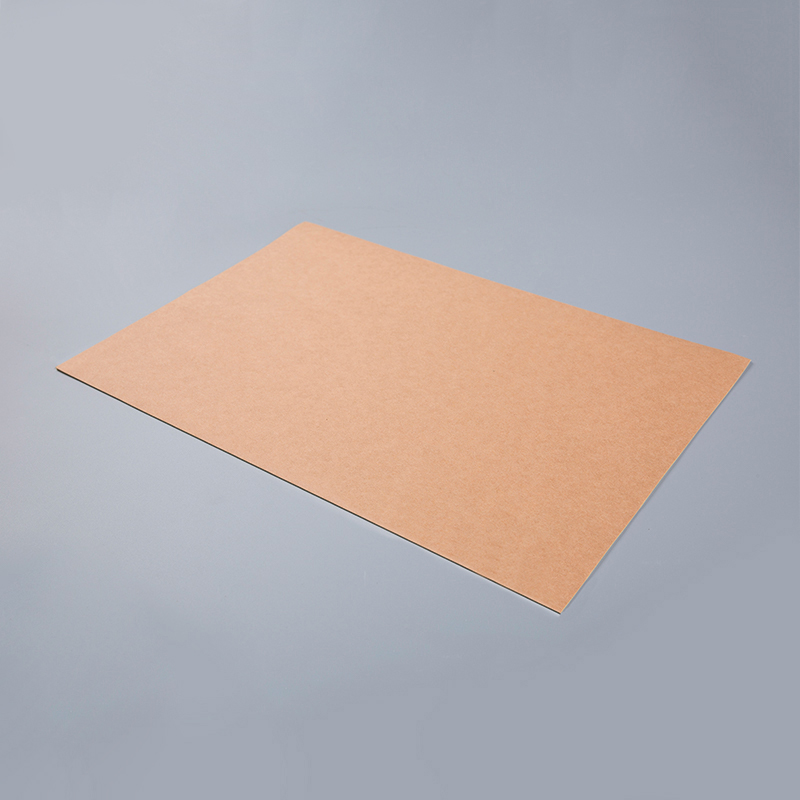
Domestic kraft paper is a practical and distinctive self-adhesive material designed for users who need the natural appearance of kraft paper together with reliable adhesive performance. Combining an 80gsm imported kraft paper face with a pressure-sensitive adhesive and a release liner, this material offers a balanced solution for decorative labels, packaging applications, handmade products, branding projects, and general-purpose identification.
Unlike ordinary decorative paper, self-adhesive kraft paper provides a convenient adhesive surface that can be applied directly to paperboard, cartons, glass, plastic, metal, wood, and many other commonly used substrates. It eliminates the need for additional glue in many applications, helping users simplify production, reduce handling steps, and achieve a clean and consistent appearance.
The warm brown tone, visible paper texture, and natural visual character of kraft paper make it especially attractive for brands that want to communicate authenticity, simplicity, craftsmanship, sustainability, or an artisan-oriented identity. At the same time, the material can be configured with multiple adhesive and liner options, allowing manufacturers, converters, printers, and packaging companies to select a construction that matches their application requirements.
Produced by Suzhou Piaozhihua Composite Material Technology Co., Ltd., the product benefits from integrated capabilities in adhesive coating, laminating, slitting, sheeting, research and development, quality inspection, and customized production. With more than two decades of manufacturing experience and an annual production capacity exceeding 280 million square meters across its self-adhesive product range, the company is equipped to support both standard stock requirements and customized OEM or ODM projects.
Content
- 1 Understanding Domestic Kraft Paper
- 2 Key Product Structure
- 3 Product Specifications
- 4 Advantages Over Conventional Label Materials
- 5 Applications of Self-Adhesive Kraft Paper
- 6 Manufacturing Process and Technical Strengths
- 7 Packaging, Storage, and Delivery
- 8 How to Select the Right Construction
- 9 Comparison with Self-Adhesive Film
- 10 Why Choose an Experienced Manufacturing Partner
- 11 Customization Options
- 12 Sustainability and Responsible Material Development
- 13 Recommended Application Workflow
- 14 Frequently Asked Questions
- 14.1 What is domestic kraft paper used for?
- 14.2 What is the standard face material?
- 14.3 Which adhesive is supplied as standard?
- 14.4 Can the material be used in a freezer?
- 14.5 Is the kraft paper waterproof?
- 14.6 Can it be printed?
- 14.7 Can the adhesive be removed?
- 14.8 What liner options are available?
- 14.9 What roll widths are available?
- 14.10 What sheet sizes are available?
- 14.11 How are the sheets packed?
- 14.12 Can the supplier produce according to samples or drawings?
- 14.13 How should customers test the product?
- 15 Conclusion
- 16 References
- 17 Product: Domestic Kraft Paper
Understanding Domestic Kraft Paper
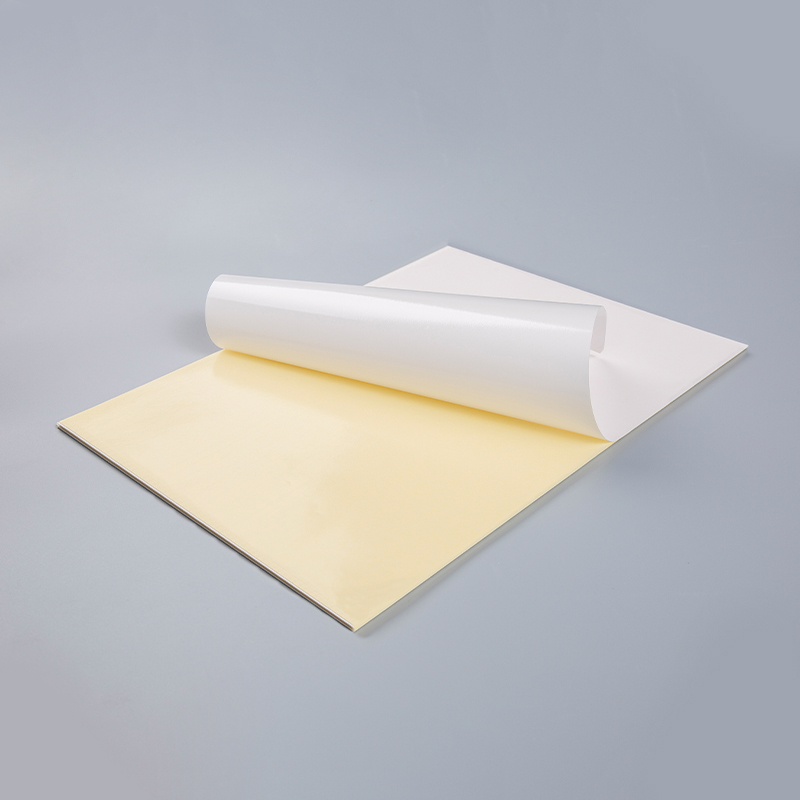
Domestic kraft paper in this product category refers to a kraft-paper-faced self-adhesive material intended for conversion into labels, stickers, packaging seals, decorative pieces, and other adhesive products. The structure normally includes three principal layers: a kraft paper face material, an adhesive layer, and a release liner.
The face material supplies the visual and printing surface. The adhesive creates the bond between the label or sticker and the selected substrate. The release liner protects the adhesive before use and allows the finished product to be stored, transported, die-cut, printed, and dispensed with greater convenience.
The standard face material is 80gsm imported kraft paper. This weight provides a useful combination of flexibility, handling strength, and paper presence. It is substantial enough to create a visible kraft-paper effect while remaining suitable for sheet and roll converting. Depending on the customer’s equipment and end-use requirements, the material can be supplied in jumbo rolls or converted sheets.
Because the paper surface has a natural fiber appearance, it can provide a more tactile and premium impression than plain white label stock. This is valuable for small businesses, handmade brands, food producers, wineries, craft manufacturers, retailers, and packaging designers seeking an understated but recognizable material identity.
Key Product Structure
Kraft Paper Face Material
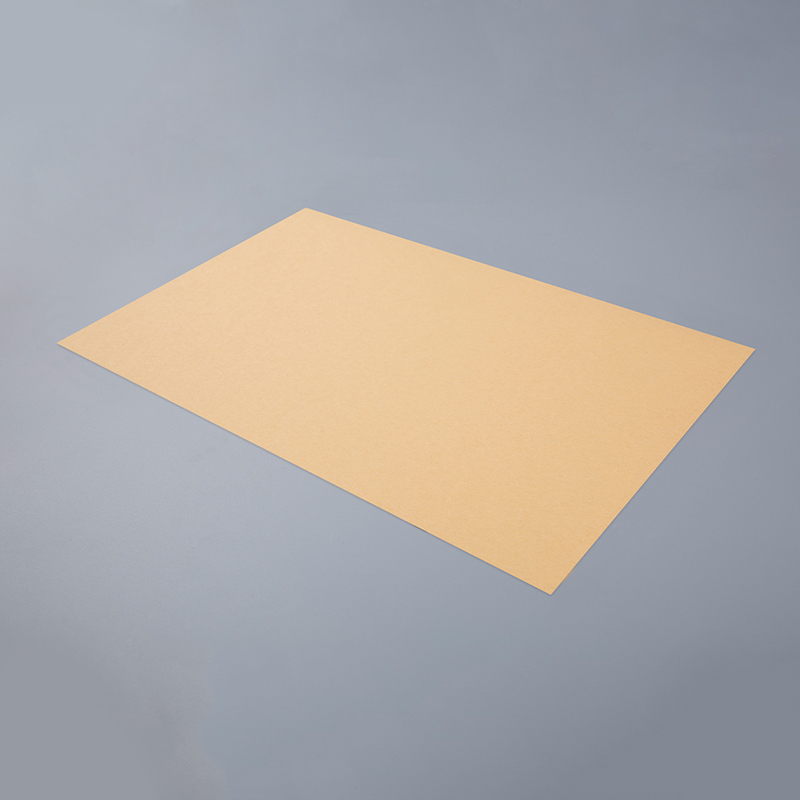
The kraft paper face is the visible layer of the product. Its natural color and paper texture can help packaging and labels stand apart from highly coated or synthetic alternatives. The face material is suitable for applications where a warm, organic, or handmade appearance is preferred.
The 80gsm construction is appropriate for a broad range of labels and decorative uses. It can be processed into individual stickers, roll labels, packaging seals, product tags, gift labels, and craft pieces. It also supports sheet-format applications for users who prefer manual cutting, digital printing, or short-run production.
Kraft paper can be printed with suitable equipment and ink systems, although customers should evaluate the desired color effect, ink absorption, drying behavior, and surface finish before large-scale production. The natural brown background may influence printed colors, which can be an advantage when a muted or vintage appearance is desired.
Adhesive Layer
Adhesive selection is one of the most important factors in self-adhesive material performance. Different substrates, temperatures, application speeds, storage conditions, and service environments require different adhesive characteristics. To address these variations, the product range supports hotmelt adhesive, water-based adhesive, solvent adhesive, removable adhesive, anti-freeze adhesive, cryogenic adhesive, and tyre-grade rubber adhesive options.
Hotmelt adhesive is commonly selected when strong initial tack and efficient coating performance are required. It can be useful for general packaging, labeling, and industrial applications where rapid bonding is important.
Water-based adhesive can be considered for applications that prioritize a water-based coating system and a more conventional adhesive formulation. It may be suitable for selected paper, packaging, and general labeling uses, subject to substrate compatibility and environmental conditions.
Solvent adhesive is available for applications requiring particular bonding characteristics or performance on challenging surfaces. The final choice should be based on the substrate, operating temperature, required durability, and customer production conditions.
Removable adhesive is intended for applications where the label or sticker needs to be removed with reduced residue or without permanently damaging the receiving surface. This can be useful for temporary promotional labels, repositionable decoration, event materials, and selected retail applications.
Anti-freeze and cryogenic adhesives are designed for demanding low-temperature conditions. These options can be considered for products exposed to cold storage, refrigerated logistics, frozen goods, laboratory environments, or other temperature-sensitive applications. Actual performance depends on the material construction, application temperature, storage duration, substrate, and exposure conditions.
Tyre-grade rubber adhesive is available for specialized applications in which high tack and strong adhesion are required on rubber-related surfaces. This option demonstrates the flexibility of the manufacturer’s adhesive portfolio beyond ordinary paper labeling.
Release Liner
The release liner protects the adhesive layer during storage and transport while supporting smooth die-cutting, peeling, and application. The standard construction uses 85g white release paper, while alternative liner materials are available for specific processing and performance requirements.
Available liner options include 50g, 60g, 80g, 100g, and 120g glassine paper; 60g, 120g, and 140g release paper; 140g and 165g art paper; and 50g, 80g, 90g, and 120g CCK liner. These options allow customers to adjust the release characteristics, stiffness, appearance, converting behavior, and compatibility with different production lines.
A suitable liner can improve feeding stability, reduce production interruptions, and support accurate die-cutting. For high-speed processing or complex label shapes, liner selection should be considered together with adhesive coat weight, face material thickness, die-cutting pressure, and dispensing method.
Product Specifications
| Item | Standard or Available Specification | Application Significance |
|---|---|---|
| Face material | 80gsm imported kraft paper | Natural appearance, tactile paper character, and suitable flexibility for labels and decorative products |
| Standard adhesive | Hotmelt adhesive | Strong initial tack and efficient bonding for many general applications |
| Alternative adhesives | Water-based, solvent, removable, anti-freeze, cryogenic, and tyre-grade rubber adhesive | Allows construction to be matched to temperature, substrate, removability, and performance needs |
| Standard liner | 85g white release paper | Protects the adhesive and supports handling, converting, and application |
| Alternative liners | Glassine, release paper, art paper, and CCK liner in several weights | Provides flexibility for printing, die-cutting, stiffness, and release requirements |
| Jumbo roll widths | 1000mm, 1020mm, 1080mm, and 1530mm | Suitable for industrial converting and customized slitting |
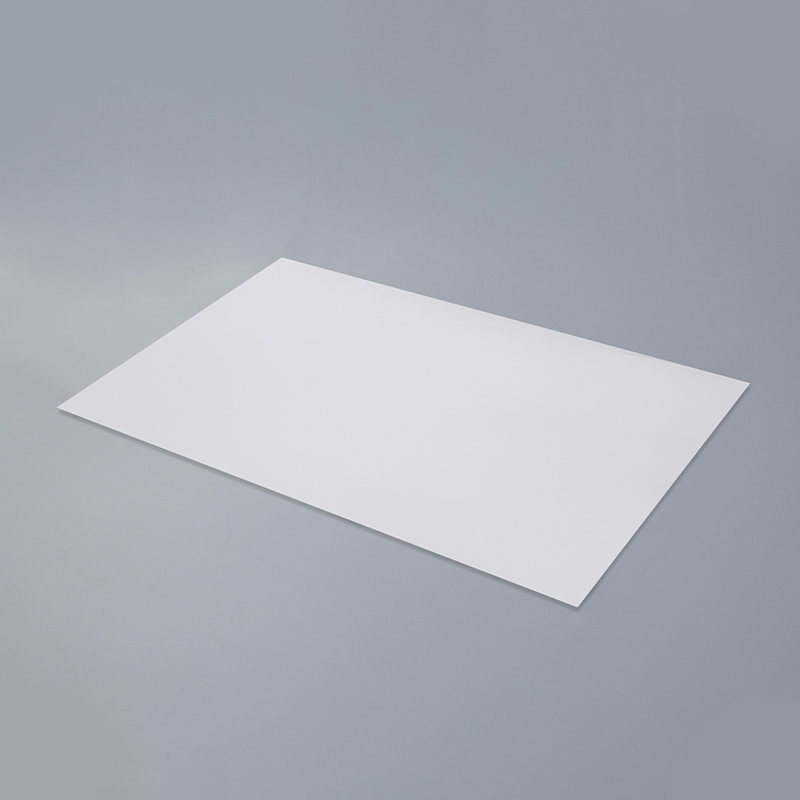
| Sheet sizes | A4, A3, 20cm × 30cm, 21cm × 30cm, 24cm × 36cm, 50cm × 70cm, and 70cm × 100cm | Supports digital printing, manual production, craft work, and commercial sheet applications |
| Customization | Customized sizes and constructions available | Helps customers align the material with equipment and final-product requirements |
Advantages Over Conventional Label Materials
Natural Appearance and Brand Differentiation
One of the clearest advantages of kraft paper is its visual identity. White paper labels are widely used and effective, but they can appear conventional when a brand wants a more distinctive presentation. Kraft paper introduces a warm, earthy tone that may help products look more handcrafted, environmentally conscious, traditional, or premium.
This visual effect is especially useful for coffee, tea, bakery products, wine, craft beverages, handmade soap, candles, gifts, stationery, organic products, and boutique retail packaging. A kraft label can communicate a sense of simplicity without requiring complex graphics or heavy coatings.
Convenient Self-Adhesive Application
Traditional kraft paper often requires liquid glue, double-sided tape, or an additional adhesive transfer step. Self-adhesive kraft paper is supplied with the adhesive already integrated into the construction. Users can peel the liner and apply the label or sticker directly, improving convenience in both manual and automated processes.
This structure can reduce the amount of equipment required for small production runs. It is also useful for businesses that produce customized packaging in variable quantities, because labels can be printed, cut, and applied as needed without preparing a separate gluing process.
Flexible Conversion Formats
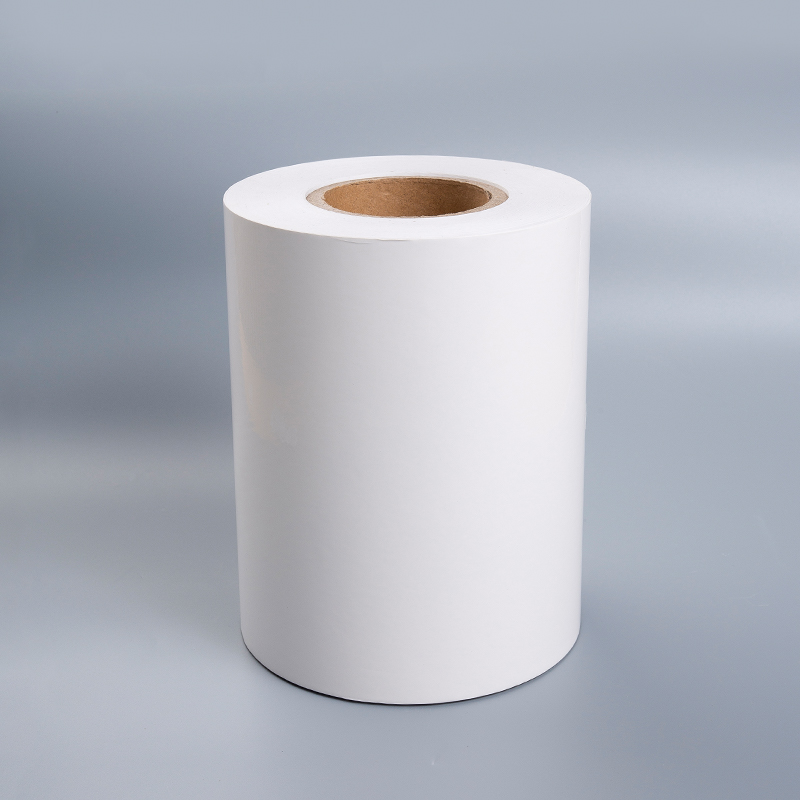
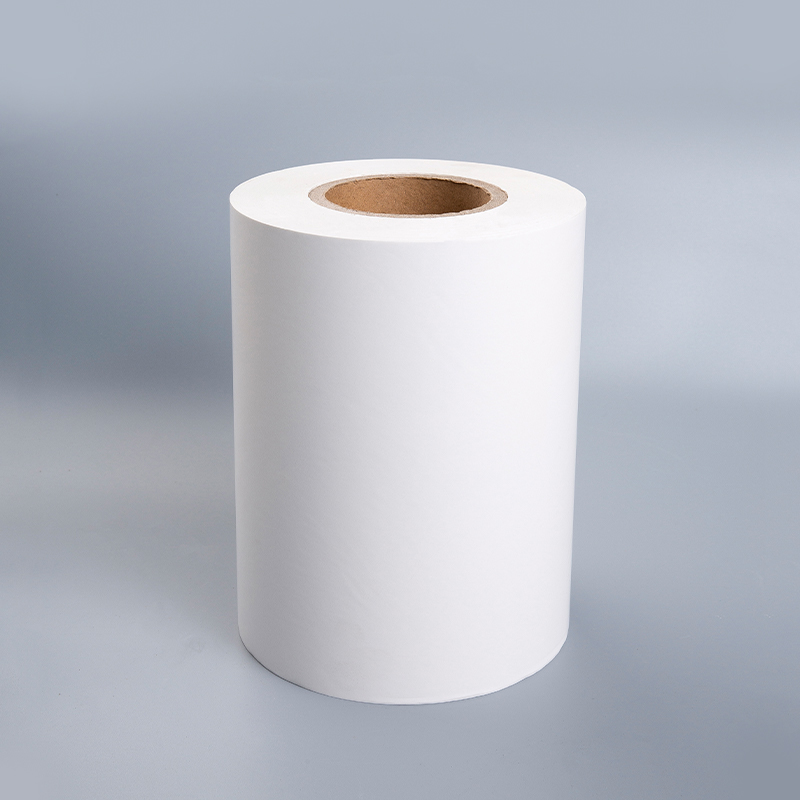
The product is available in jumbo rolls and sheets. Roll stock is appropriate for converters, label manufacturers, and packaging operations using slitting, rewinding, flexographic printing, digital roll printing, or automated labeling equipment. Sheet stock is suitable for office printing, digital production, craft workshops, short-run packaging, and manual application.
The availability of multiple roll widths and sheet sizes allows customers to reduce material waste and select a format that matches their equipment. Customized dimensions can further improve production efficiency, especially when customers have fixed die sizes, sheet feeders, or specialized packaging formats.
Broad Adhesive Selection
Many generic self-adhesive papers are supplied with only one adhesive option. This can limit their use in environments involving cold temperatures, difficult substrates, temporary labeling, or specialized industrial bonding. The availability of multiple adhesive technologies makes this kraft paper range more adaptable.
Customers can select a general-purpose adhesive for ordinary labels, a removable adhesive for temporary uses, a low-temperature formulation for refrigerated or frozen conditions, or a stronger specialized adhesive for demanding substrates. This approach helps avoid using an unsuitable adhesive simply because it is the only available option.
Suitable for Short Runs and Custom Designs
Kraft paper is well suited to short-run and customized packaging. Small companies frequently need changing product names, seasonal artwork, limited-edition labels, and personalized designs. Sheet-format self-adhesive kraft paper can support these requirements without requiring large minimum quantities of pre-converted labels.
It is also useful for handmade production, where the visual irregularity and tactile quality of paper contribute to the product experience. Users can combine printed information with handwritten notes, stamps, embossing, illustrations, or other decorative techniques.
Balance Between Paper Character and Practical Performance
Some highly decorative materials prioritize appearance but are difficult to process. Others are easy to convert but lack the visual character needed for premium packaging. This product aims to balance the two requirements by combining a recognizable kraft-paper surface with a structured adhesive and liner system.
The result is a material that can function as both a decorative element and a practical label. It can identify a product, carry printed information, close a package, reinforce a brand message, or add a finished appearance to an otherwise plain carton or bag.
Applications of Self-Adhesive Kraft Paper
Handmade Products and Creative Projects
Handmade enthusiasts often use kraft paper stickers to decorate notebooks, albums, diaries, scrapbooks, greeting cards, gift boxes, and craft projects. The paper texture complements natural materials such as cardboard, cotton, jute, wood, recycled paper, and fabric.
Because the material is self-adhesive, it can be applied without preparing a separate glue layer. This is convenient for home users, creative studios, school projects, and small workshops. Labels can be cut into simple rectangles, circles, strips, or custom shapes, depending on the desired design.
Kraft stickers can also be used as writing surfaces. Users may print a logo or border and leave space for a product name, date, batch number, price, or personal message. The contrast between printed graphics and the natural kraft background can create a friendly, informal appearance.
Packaging Box Decoration
In high-quality packaging, kraft adhesive material can add texture and visual depth to cartons, folding boxes, gift packages, envelopes, and paper bags. It can be applied as a logo label, closure seal, decorative band, information panel, or tamper-evident element when the construction is designed for that purpose.
Packaging designers can use kraft labels to enhance plain stock boxes without ordering fully printed cartons. This may be helpful for businesses that change product lines frequently or need flexible packaging for different markets. A single carton style can be adapted with different kraft labels for product names, flavors, sizes, or seasonal campaigns.
The material can also support a layered packaging design. For example, a plain kraft carton may be combined with a darker printed label, a simple black logo, or a contrasting color seal. The natural face material provides a stable visual foundation for minimalist branding.
Food and Beverage Labels
Kraft paper self-adhesive material can be used for selected food, beverage, wine, coffee, tea, bakery, and specialty product labels. It can help communicate a natural, traditional, or small-batch product image.
Food-related applications require careful evaluation. The label construction should be selected according to the packaging surface, refrigeration conditions, moisture exposure, oil contact, storage duration, printing method, and regulatory requirements. If the label will be used in chilled or frozen logistics, an anti-freeze or cryogenic adhesive may be considered where appropriate.
Customers should also confirm whether the material is intended for direct or indirect food contact. The suitability of the complete label system depends on the face material, adhesive, ink, coating, and application environment, not only on the kraft paper itself.
Wine, Craft Beverage, and Specialty Product Labels
Wine bottles, craft beer containers, spirits packaging, and specialty beverages often benefit from labels that convey a crafted or premium image. Kraft paper can help brands create a softer and more tactile appearance than synthetic film labels.
For these products, surface curvature, condensation, refrigeration, bottle handling, and moisture resistance must be considered. The adhesive selection and label design should be tested on the intended container before commercial production. When the application requires water resistance or extended outdoor exposure, customers may need a protective coating or an alternative face material.
Craft, Gift, and Retail Labels
Gift shops, florists, stationery retailers, and handmade product sellers can use self-adhesive kraft paper for price labels, thank-you stickers, product seals, wrapping-paper decoration, and customized gift messages.
Retailers can create a consistent brand image by using the same kraft label construction across multiple product categories. A common label format can identify products while allowing different printed designs for soaps, candles, accessories, food items, or decorative goods.
Industrial and General Identification
Although kraft paper is often associated with decorative products, it can also be used for general identification, carton marking, internal organization, and selected industrial labels. The appropriate adhesive can be chosen according to whether the label must remain permanently attached, be removed later, or perform under cold conditions.
For demanding industrial environments involving abrasion, chemicals, outdoor exposure, high humidity, or prolonged sunlight, customers should compare kraft paper with synthetic face materials such as self-adhesive film. Kraft paper is most appropriate when paper appearance, printability, and a natural surface are more important than extreme environmental resistance.
Manufacturing Process and Technical Strengths
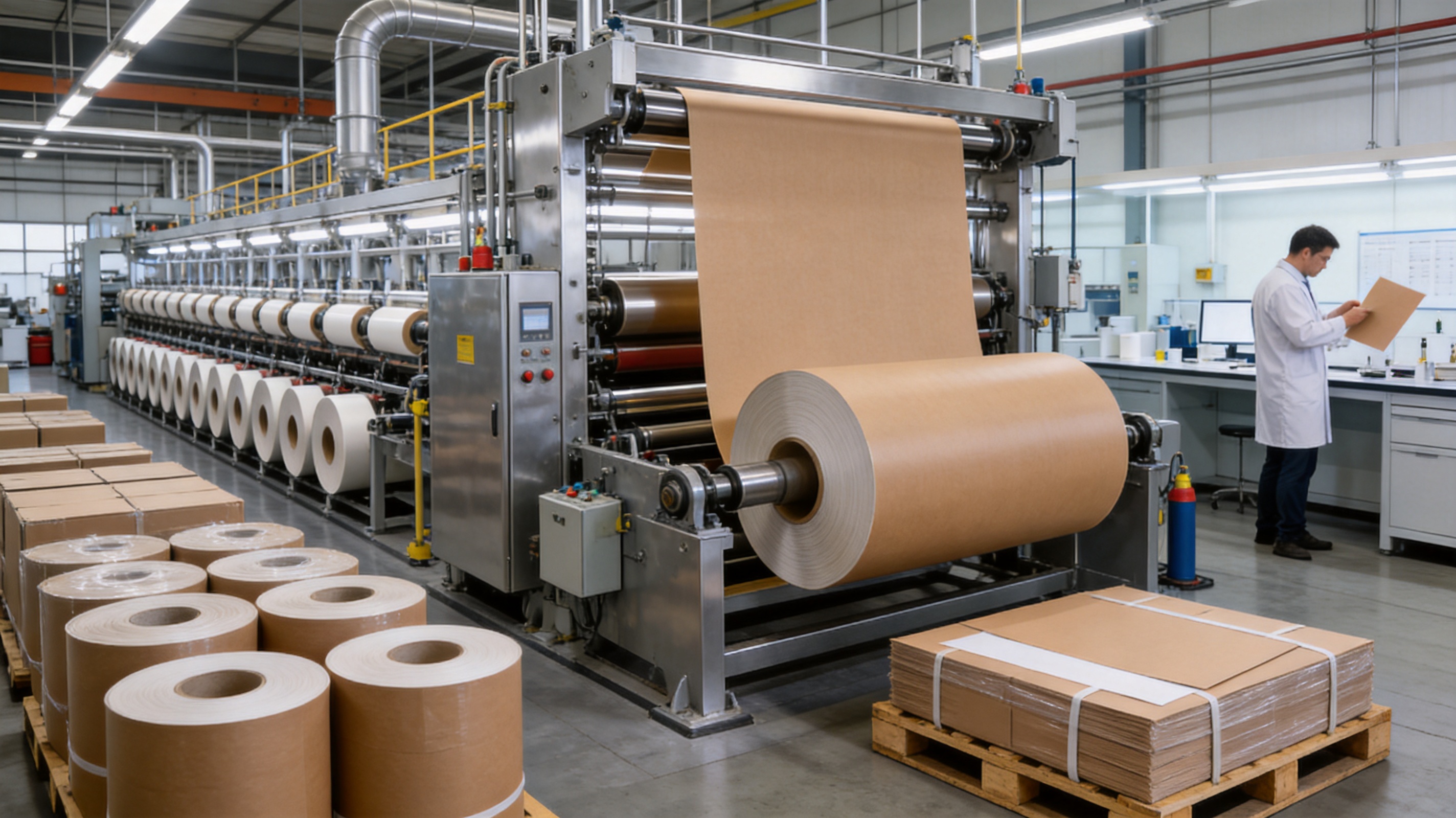
Integrated Coating Capability
The manufacturer operates production lines covering gluing, laminating, and cutting. This integrated structure provides greater control over the relationship between the face material, adhesive, and liner. Instead of treating each component as an isolated product, the production team can manage the complete composite construction.
Adhesive coating requires control over coating uniformity, coat weight, temperature, viscosity, line speed, and drying or cooling conditions. Consistency in these factors is important because uneven adhesive distribution can affect initial tack, final adhesion, die-cutting, liner release, and label application.
Integrated coating capability also makes it easier to develop different adhesive constructions for different end uses. Hotmelt, water-based, solvent, removable, low-temperature, and specialized rubber adhesives may require different process settings and quality-control methods.
Laminating and Composite Control
Laminating joins the face material, adhesive system, and release liner into a stable composite. Proper lamination helps prevent wrinkling, bubbles, delamination, curling, and uneven tension. It also contributes to smooth unwinding and reliable feeding during downstream conversion.
For sheet products, lamination quality affects flatness and cutting accuracy. For roll products, it affects winding consistency, roll hardness, edge alignment, and performance on slitting and labeling equipment. The company’s production experience across these formats supports the manufacture of materials for different customer workflows.
Slitting and Sheet Cutting
Jumbo rolls can be slit into narrower widths according to customer requirements. Available jumbo roll widths include 1000mm, 1020mm, 1080mm, and 1530mm, while customized widths may be discussed for specific production programs.
Slitting is not simply a dimensional operation. Edge quality, web tension, roll alignment, winding pressure, and roll stability all influence how the material performs on a customer’s equipment. Clean edges can reduce dust, feeding problems, and label separation issues during further processing.
Sheet conversion supports A4, A3, 20cm × 30cm, 21cm × 30cm, 24cm × 36cm, 50cm × 70cm, and 70cm × 100cm formats, with customized sizes available. Accurate sheet cutting helps customers obtain consistent dimensions for digital printers, office printers, die-cutting systems, and manual production.
Quality Inspection and Testing
The company maintains its own testing laboratory and uses inspection equipment to support product quality. In self-adhesive material production, laboratory and in-process testing may cover face material appearance, basis weight, adhesive coating, release performance, peel adhesion, tack, shear resistance, dimensional stability, and roll or sheet condition.
Testing requirements vary according to the selected construction. A removable adhesive should be evaluated differently from a permanent adhesive. A cryogenic adhesive must be assessed under low-temperature conditions. A label for glass, cardboard, plastic, or rubber may require different adhesion testing because substrate surface energy and texture influence performance.
Quality control should therefore combine standard inspection procedures with application-specific evaluation. This helps customers receive a material that is not only visually consistent but also better matched to its intended use.
Research and Development
The company reports strong OEM and ODM capabilities supported by a professional research and development team and multiple patents. These capabilities are important for customers that need more than a standard kraft label material.
Customized development may involve changing the adhesive type, adjusting the liner, selecting a different face material, modifying roll width, optimizing sheet size, or designing a construction for a particular application. Customers can provide drawings, samples, performance specifications, or packaging requirements for evaluation.
Research and development also supports continued improvement in environmental performance. The company’s product-development approach includes eco-friendly solutions involving face materials, adhesives, and backing papers. This enables customers to explore more sustainable constructions while still considering adhesion, printability, converting performance, and product durability.
Packaging, Storage, and Delivery
Self-adhesive materials must be protected from moisture, dust, compression, excessive heat, and mechanical damage during transport. The product can be supplied with sea-transit-worthy poly-wood pallet packing and carton packing for rolls or sheets available from stock.
Sheet products are packed at 100 sheets per ream. Each ream is packed with a strong PE-coated kraft paper wrapper. This packaging method helps protect the sheets from handling damage and supports organized storage for distributors, printers, and end users.
Strong pallets are wrapped with stretch film and fastened with plastic fastening belts. This approach helps stabilize the cargo during loading, unloading, and sea transportation. Proper palletization is particularly important for large rolls and sheet stacks, where movement or edge impact could affect product quality.
Customers should store the material in a clean and dry indoor environment. Direct sunlight, high humidity, extreme heat, and sudden temperature changes should be avoided. Rolls and sheets should remain in their original protective packaging until they are ready for processing. Before use, the material should be allowed to reach the operating environment so that the face, adhesive, and liner can stabilize.
For long-distance shipping, customers should communicate their destination, transportation method, required packing standard, roll or sheet format, and expected storage period. These details help the supplier recommend appropriate packaging and shipping arrangements.
How to Select the Right Construction
Consider the Substrate
The receiving surface is a primary factor in adhesive selection. Kraft labels may be applied to corrugated board, coated paper, glass, plastic, metal, wood, rubber, or painted surfaces. Smooth, clean, dry surfaces are generally easier to bond than dusty, textured, oily, or low-energy surfaces.
Customers should identify the substrate before ordering. If the surface is curved, flexible, rough, or contaminated by moisture or oil, a different adhesive may be required. Application trials should be performed using the actual packaging or product surface whenever possible.
Consider Temperature
Application temperature and service temperature are not always the same. A label may be applied in a warm factory and then stored in a refrigerator, freezer, warehouse, or outdoor location. Adhesive performance must be evaluated across the complete temperature range.
For cold-chain applications, standard hotmelt or general-purpose adhesive may not provide the desired result. Anti-freeze or cryogenic adhesive options should be considered, followed by testing under the planned storage and transport conditions.
Consider Removability
Permanent labels are designed to remain attached, while removable labels are intended to be taken off more easily. The choice depends on whether the packaging will be reused, whether a temporary promotion is involved, or whether the receiving surface must remain clean.
Removability can be affected by storage time, temperature, surface type, ink, coating, and exposure to moisture. A label that is removable from glass may behave differently on cardboard or painted metal. Practical testing is essential before making a final selection.
Consider Printing and Finishing
The customer should determine whether the material will be printed by digital, laser, inkjet, flexographic, offset, or another process. Printing compatibility can depend on the kraft paper surface, adhesive construction, liner stiffness, sheet flatness, and printer feeding system.
Other considerations include die-cutting, kiss-cutting, perforation, embossing, numbering, variable-data printing, overprinting, and protective coating. The planned finishing process should be communicated to the supplier so the material can be selected or customized accordingly.
Comparison with Self-Adhesive Film
Self-adhesive kraft paper and self-adhesive film serve different priorities. Kraft paper offers a natural, printable, tactile, and paper-based appearance. Film generally offers better resistance to water, tearing, abrasion, and some outdoor conditions. The choice should be based on the application rather than on a simple assumption that one material is universally better.
| Performance Consideration | Self-Adhesive Kraft Paper | Self-Adhesive Film |
|---|---|---|
| Appearance | Natural, warm, paper-like, and artisan-oriented | Smooth, clean, and often more uniform |
| Tactile effect | Distinct paper texture and traditional feel | Plastic or synthetic surface feel |
| Typical brand message | Craft, natural, handmade, simple, or premium | Modern, durable, technical, or moisture-resistant |
| Water resistance | Depends on coating and construction; generally limited compared with film | Usually stronger for wet or humid conditions |
| Printing and decoration | Suitable for many paper-based printing and craft techniques | Suitable for film-compatible printing systems |
| Best-fit applications | Packaging decoration, handmade goods, stationery, gift labels, and selected product labels | Outdoor labels, wet environments, durable industrial labels, and high-abrasion applications |
The manufacturer’s broader product portfolio includes self-adhesive paper, self-adhesive film, special label materials, and silicone release paper. This range allows customers to compare materials within one supply relationship and select the construction that best matches the performance requirements of each product line.
Why Choose an Experienced Manufacturing Partner
Buying self-adhesive material is not only a matter of selecting a face paper. The adhesive, liner, converting format, packaging method, and quality-control process all influence the final result. An experienced manufacturer can help customers avoid mismatches between the material and their equipment or application environment.
Suzhou Piaozhihua Composite Material Technology Co., Ltd. has more than 20 years of OEM manufacturing experience in self-adhesive products. The company combines research and development, production, sales, and after-sales service, giving customers access to technical support throughout the purchasing process.
The company’s annual production capacity exceeds 280 million square meters. This capacity supports regular supply programs, export orders, and large-volume customer requirements. At the same time, its production lines for gluing, laminating, and cutting can support different roll and sheet specifications.
The company has developed sales and service coverage in domestic and international markets. Its business network extends across Asia, Europe, the Americas, Africa, the Middle East, and other regions. International customers can therefore work with a supplier familiar with export logistics, product customization, packaging requirements, and long-term supply coordination.
The manufacturer also reports a position among the leading self-adhesive product companies in China. Its capabilities include OEM and ODM production based on customer drawings or samples, professional technical support, laboratory testing, inspection equipment, and after-sales service.
Customization Options
Customized production can be valuable when standard material does not meet a customer’s equipment or application requirements. Possible customization areas include face material, adhesive type, liner, roll width, sheet size, packaging, and converting format.
For example, a customer may require a particular jumbo roll width to match a slitting machine. Another customer may need a specific sheet dimension for a digital printer. A refrigerated food producer may need a low-temperature adhesive, while a retailer may prefer a removable construction for temporary promotional labels.
Customers can provide product drawings, physical samples, technical data, packaging images, target substrates, storage conditions, or performance expectations. These details help the technical team understand the complete application rather than recommending a material based only on appearance.
Before placing a large order, customers should request samples and conduct application trials. Testing should include printing, cutting, peeling, application, storage, and removal where relevant. It is also useful to test the material after exposure to the actual temperature, humidity, handling, and packaging conditions expected in the finished product.
Sustainability and Responsible Material Development
Kraft paper is often selected by brands seeking a more natural and responsible visual language. However, appearance alone does not determine environmental performance. The complete construction includes the face paper, adhesive, release liner, inks, coatings, packaging, transportation, and end-of-life treatment.
The company focuses on sustainable development and environmental protection through the development of eco-friendly solutions for face materials, adhesives, and backing papers. This integrated approach is useful for customers that want to improve the environmental profile of their labels while maintaining the required converting and bonding performance.
Customers should define their sustainability objectives clearly. These may include increasing the paper content, selecting a suitable adhesive system, reducing unnecessary packaging, improving material yield, or choosing a liner appropriate for existing recycling practices. The correct solution depends on local regulations, collection systems, product requirements, and customer claims.
It is important to avoid treating one material as suitable for every sustainability objective. A paper-based label may be preferable for some packaging systems, while a film label may deliver longer service life and reduce replacement frequency in another application. Responsible selection should consider the full product life cycle and actual performance needs.
Recommended Application Workflow
Step One: Define the End Use
Identify whether the product will be used for handmade decoration, packaging, product identification, food labeling, wine labeling, retail stickers, industrial marking, or another purpose. Clarify whether the label is permanent, removable, decorative, informational, or functional.
Step Two: Identify the Receiving Surface
Record the substrate type, surface texture, curvature, cleanliness, coating, and flexibility. If possible, provide a sample of the actual surface to the supplier for evaluation.
Step Three: Confirm Environmental Conditions
List the application temperature, storage temperature, humidity, refrigeration or freezing requirements, outdoor exposure, expected service period, and possible contact with oil, water, chemicals, or abrasion.
Step Four: Select the Format
Choose jumbo roll material, converted rolls, or sheets. Match the format to the printer, cutter, label applicator, or manual production method. Confirm the required width, length, core size, outer diameter, sheet size, and packaging method.
Step Five: Test the Complete Construction
Evaluate the material using the actual printing equipment, die-cutting method, substrate, and application process. Check print quality, liner release, adhesive bonding, edge lifting, curling, residue, and storage stability.
Step Six: Confirm Commercial Production
After successful testing, confirm the approved construction, technical specifications, tolerance requirements, packaging, shipping terms, inspection standards, and delivery schedule. Maintaining an approved reference sample can help support consistency in future orders.
Frequently Asked Questions
What is domestic kraft paper used for?
It is used for handmade stickers, notebook and album decoration, packaging box labels, gift packaging, food labels, wine labels, craft product labels, retail stickers, and selected general identification applications.
What is the standard face material?
The standard face material is 80gsm imported kraft paper. Alternative constructions may be discussed according to customer requirements and application conditions.
Which adhesive is supplied as standard?
Hotmelt adhesive is listed as the standard adhesive option. Water-based, solvent, removable, anti-freeze, cryogenic, and tyre-grade rubber adhesives are also available.
Can the material be used in a freezer?
Cold-temperature applications require a suitable adhesive construction and application test. Anti-freeze or cryogenic adhesive options may be considered for refrigerated and frozen environments, but the final choice should be verified under actual conditions.
Is the kraft paper waterproof?
Standard kraft paper is not automatically waterproof. Its moisture resistance depends on the face material, coating, adhesive, liner, and complete label construction. For wet or highly humid conditions, customers should request testing or compare the product with self-adhesive film.
Can it be printed?
It can be used for many printing and decoration processes, but compatibility depends on the printer, ink, surface characteristics, and sheet or roll format. Customers should conduct a printing trial before mass production.
Can the adhesive be removed?
A removable adhesive option is available. Removability depends on the receiving surface, storage duration, temperature, humidity, and application conditions. Testing is recommended for every important substrate.
What liner options are available?
Available options include 85g white release paper, glassine paper from 50g to 120g, release paper from 60g to 140g, art paper from 140g to 165g, and CCK liner from 50g to 120g.
What roll widths are available?
Jumbo roll widths include 1000mm, 1020mm, 1080mm, and 1530mm. Customized widths may be available depending on the production requirement.
What sheet sizes are available?
Available sheet sizes include A4, A3, 20cm × 30cm, 21cm × 30cm, 24cm × 36cm, 50cm × 70cm, and 70cm × 100cm. Customized sheet sizes can also be discussed.
How are the sheets packed?
Sheets are packed at 100 sheets per ream, with each ream protected by a strong PE-coated kraft paper wrapper. Pallets are wrapped with stretch film and secured with plastic fastening belts.
Can the supplier produce according to samples or drawings?
Yes. The manufacturer provides OEM and ODM services and can evaluate production based on customer drawings, samples, technical specifications, and application requirements.
How should customers test the product?
Customers should test the material on the actual substrate using the planned printer, cutter, applicator, and storage conditions. Testing should evaluate printing, cutting, liner release, initial tack, final adhesion, edge lifting, curling, residue, and environmental performance.
Conclusion
Domestic kraft paper provides a strong combination of visual appeal, adhesive convenience, format flexibility, and application versatility. Its 80gsm kraft face creates a warm and natural appearance, while the available adhesive and liner options allow the material to be adapted to general labels, decorative packaging, handmade products, short-run printing, cold-temperature applications, and selected industrial uses.
Compared with ordinary kraft paper, the self-adhesive construction simplifies application. Compared with conventional white label stock, it offers stronger visual differentiation and a more tactile brand presentation. Compared with self-adhesive film, it provides a paper-based appearance that is often better suited to craft, natural, and premium packaging concepts.
The product is supported by integrated gluing, laminating, slitting, and cutting capabilities; laboratory testing; professional research and development; OEM and ODM services; customized formats; and export-oriented packaging. These strengths enable Suzhou Piaozhihua Composite Material Technology Co., Ltd. to provide more than a standard roll of label stock. The company can work with customers to develop a complete self-adhesive material solution based on the substrate, adhesive, liner, printing process, temperature, packaging format, and final use.
For product inquiries, sample requests, or customized specifications, customers may contact the manufacturer through its sales department. The company is located at No. 16 Weixin Road, Shuangfeng Town, Taicang City, Suzhou City, Jiangsu Province, China. Contact details include info@piaozhihua.com, +86-13621727329, +86-512-53419666, and +86-512-53416667.
References
1. Product technical information supplied for 80gsm kraft paper self-adhesive material, including adhesive and liner options.
2. Product packaging and delivery specifications supplied for roll and sheet products.
3. Company manufacturing information concerning gluing, laminating, cutting, laboratory testing, research and development, OEM, and ODM services.
4. General principles of pressure-sensitive adhesive selection, including substrate compatibility, temperature resistance, removability, tack, and peel adhesion.
5. General packaging-material guidance concerning storage, palletization, moisture protection, transport stability, and application testing.