
 English
 Español
 русский
 Français
 عربى
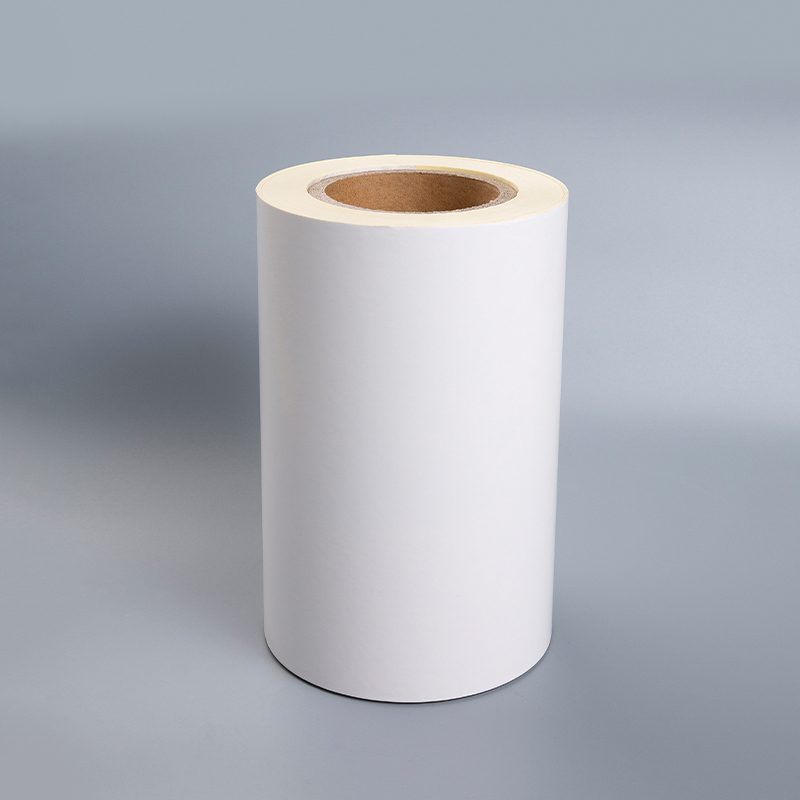
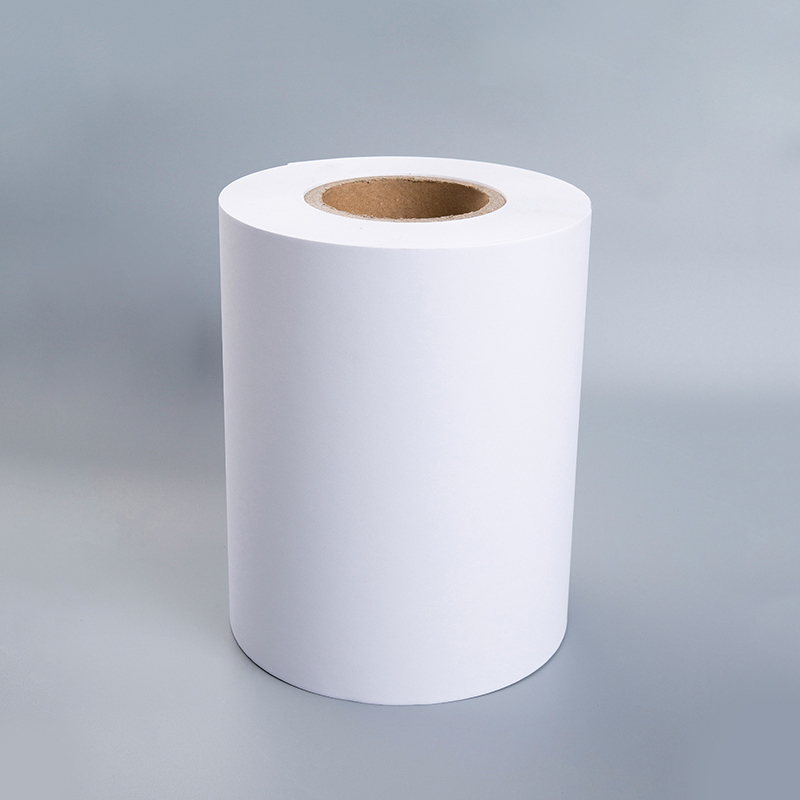
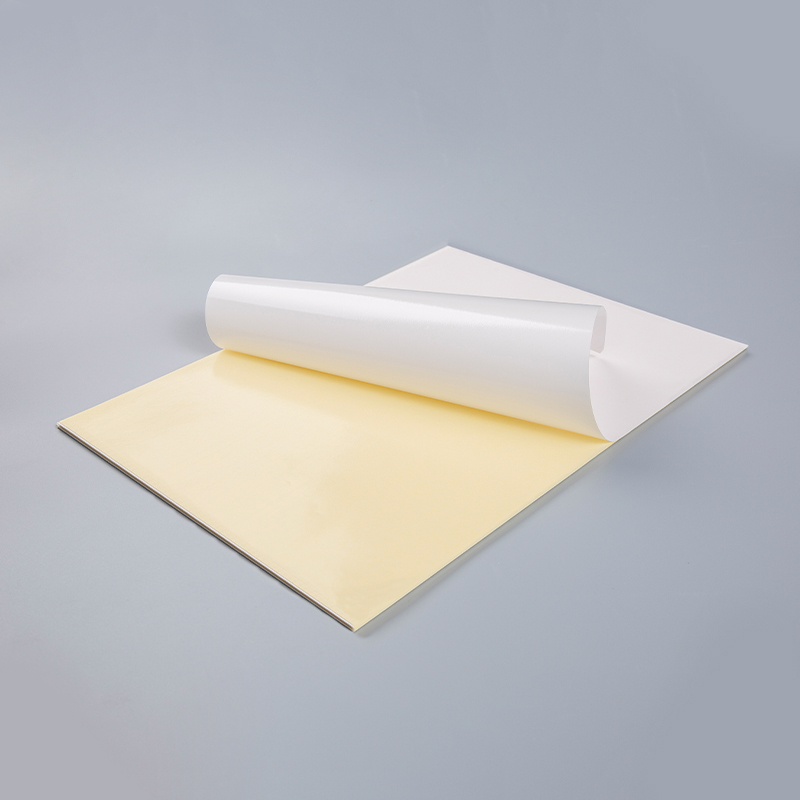
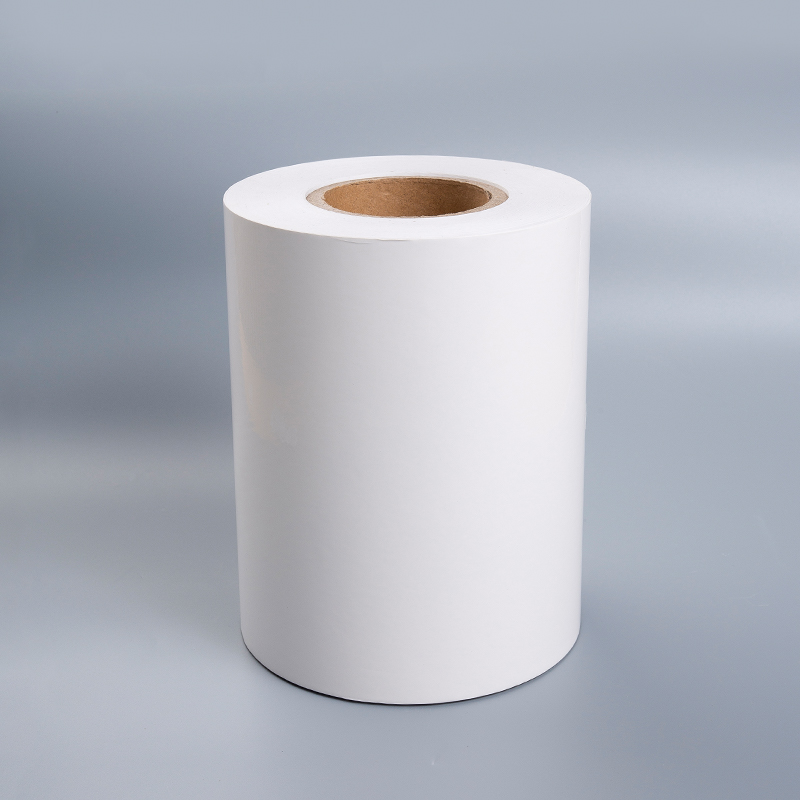
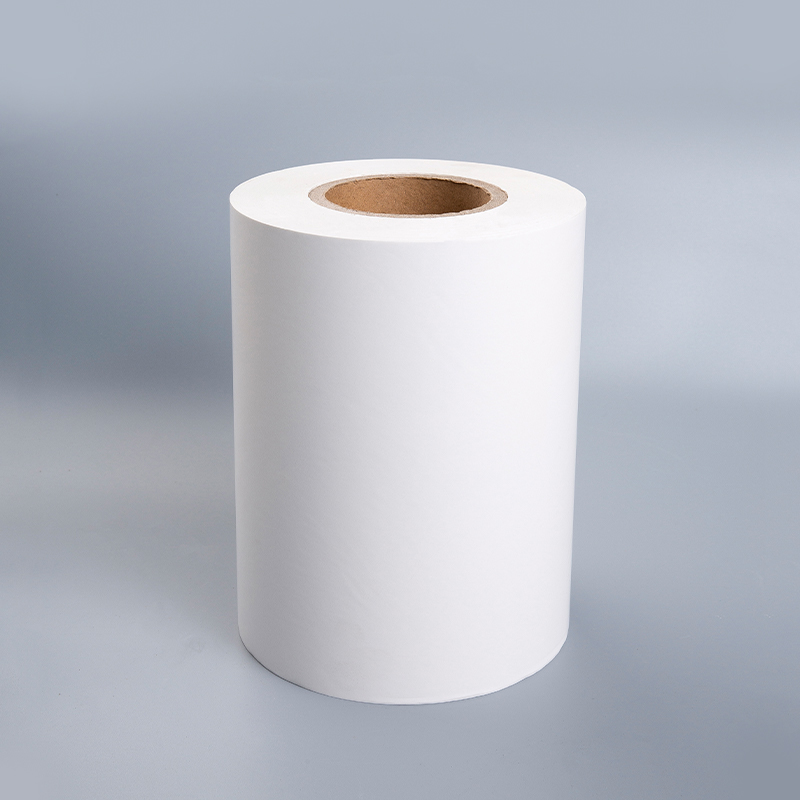
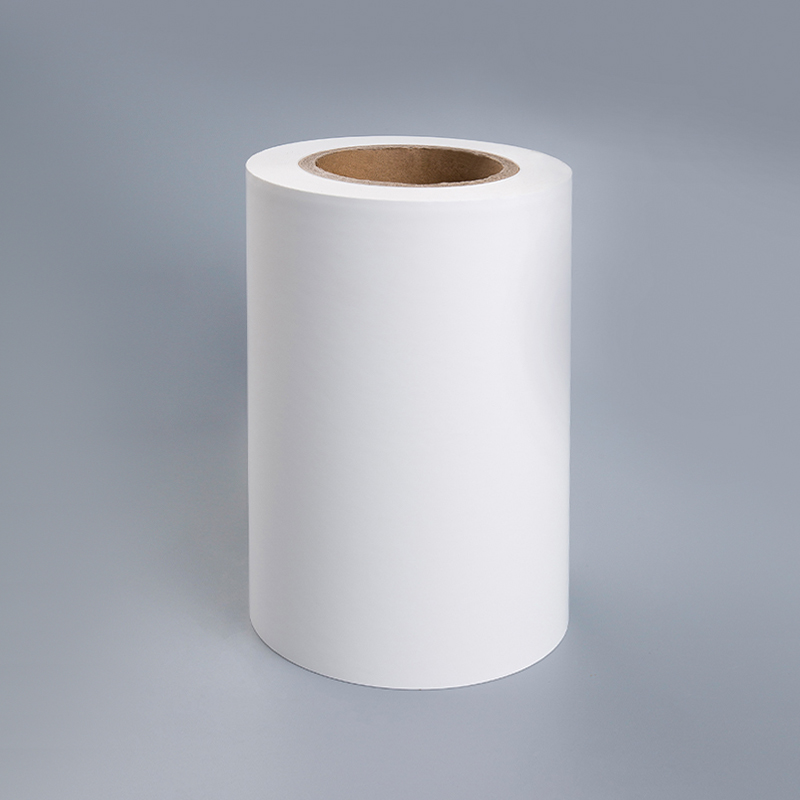
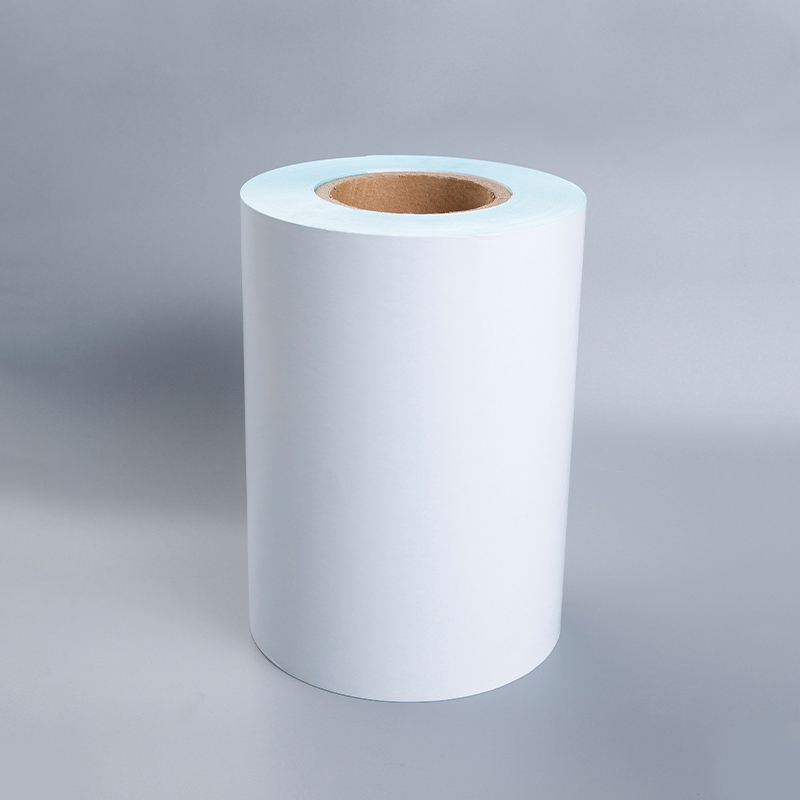
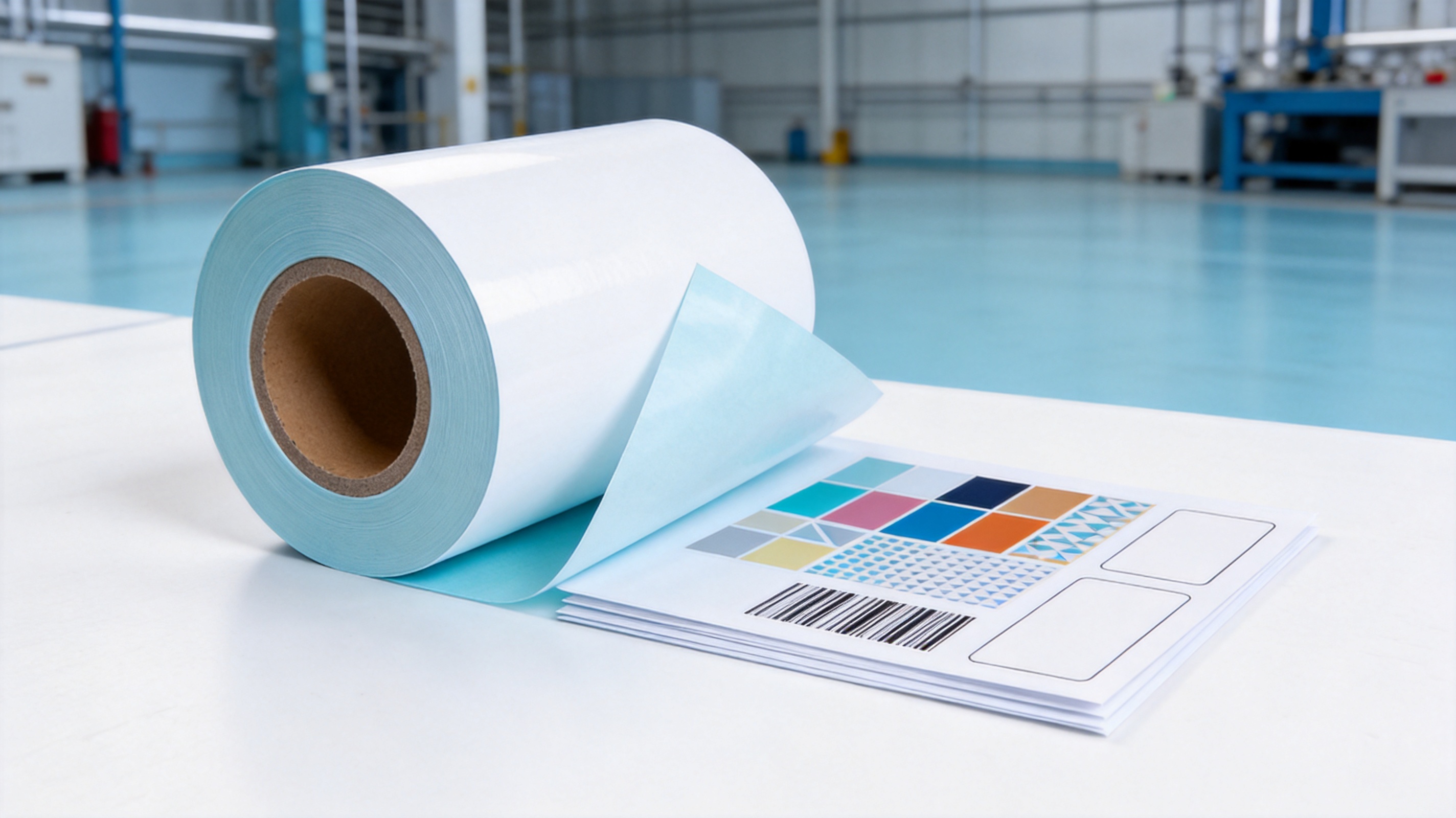
Semi-glossy self-adhesive paper with a blue glassine liner is a versatile label and graphic-printing material developed for customers who need a balance of visual quality, reliable adhesion, easy converting, and efficient handling. It combines a smooth semi-glossy paper face, a pressure-sensitive adhesive layer, and a blue glassine release liner. This three-layer construction supports high-quality color printing while allowing labels to be stored, transported, die-cut, and applied with consistency.
The product is suitable for a wide range of applications, including product labels, packaging labels, trademarks, advertising materials, samples, book covers, illustrations, promotional graphics, and other printed communications. Its semi-glossy surface offers a refined appearance without the excessive reflectivity associated with some highly glossy materials. As a result, it can present colors clearly while maintaining a professional and practical finish.
Manufactured by Suzhou Piaozhihua Composite Material Technology Co., Ltd., the material is available in multiple adhesive formulations, face-stock weights, liner options, roll widths, and sheet sizes. These options allow buyers to select a construction that matches the requirements of their printing process, application surface, storage conditions, and final product design.
Content
- 1 1. Product Structure and Functional Design
- 2 2. Printing and Visual Advantages
- 3 3. Adhesive Selection for Different Applications
- 4 4. Blue Glassine Liner Advantages in Converting and Handling
- 5 5. Available Sizes and Customization
- 6 6. Manufacturing Process and Technical Strength
- 7 7. Manufacturing Capacity and Supply Reliability
- 8 8. Advantages Compared with Less Specialized Alternatives
- 9 9. Application Areas
- 10 10. Packaging, Delivery, and Storage
- 11 11. Sustainability and Responsible Product Development
- 12 12. Quality Management and Customer Service
- 13 13. How to Select the Correct Construction
- 14 14. Frequently Asked Questions
- 14.1 Q1: What is semi-glossy paper with a blue glassine liner?
- 14.2 Q2: What are the main applications of this product?
- 14.3 Q3: What face-material weights are available?
- 14.4 Q4: Is the blue glassine liner the only liner option?
- 14.5 Q5: Which adhesive should be selected?
- 14.6 Q6: Can the material be supplied in sheets?
- 14.7 Q7: Can it be supplied in jumbo rolls?
- 14.8 Q8: Is this material suitable for digital printing?
- 14.9 Q9: Can the adhesive be removable?
- 14.10 Q10: Are low-temperature adhesive options available?
- 14.11 Q11: Can the product be customized for OEM or ODM projects?
- 14.12 Q12: How is the sheet product packed?
- 14.13 Q13: What manufacturing processes are available?
- 14.14 Q14: What information should be provided when requesting a quotation?
- 15 15. Conclusion
- 16 References
- 17 Product: Semi Glossy Paper With Blue Glassine Liner
1. Product Structure and Functional Design
A self-adhesive label material must perform several functions at the same time. The face material must accept ink and display graphics attractively. The adhesive must create a stable bond with the target surface. The liner must protect the adhesive before use and release smoothly during dispensing or application. The semi-glossy paper with blue glassine liner is designed around these three coordinated layers.
1.1 Semi-Glossy Paper Face Material
The face material is a semi-glossy paper engineered for printed communication. Its surface is smoother than ordinary uncoated paper, which helps printed images appear cleaner and more defined. At the same time, it avoids the highly reflective appearance of a mirror-like gloss surface. This makes it suitable for labels and printed pieces that must look attractive under different lighting conditions.
The face stock is appropriate for color printing because its surface can support strong color reproduction and clear image presentation. Product names, logos, barcodes, illustrations, promotional graphics, and detailed packaging information can be printed with a polished visual effect. The paper can also be used for high-grade book covers, color pictures, product samples, and advertising materials.
Available face-material weights include 65 gsm, 80 gsm, 105 gsm, 128 gsm, 157 gsm, 200 gsm, and 250 gsm. The selection of weight gives customers flexibility when balancing appearance, stiffness, die-cutting performance, and overall label cost. Lighter constructions may be suitable for standard label applications, while heavier grades can provide a more substantial feel for premium packaging, presentation materials, and rigid product identification.
1.2 Pressure-Sensitive Adhesive Layer
The adhesive layer is positioned between the semi-glossy paper and the release liner. It is designed to remain protected until the liner is removed, then form contact with the selected substrate under normal application pressure. The appropriate adhesive must be selected according to the surface energy, texture, temperature, humidity, application speed, and expected service environment of the finished label.
Water-based acrylic adhesive is available for customers seeking a widely applicable adhesive system with a balanced profile. Hot melt adhesive can be selected for applications that require strong initial tack and efficient processing. Solvent adhesive is available where specific bonding performance or demanding conditions require that technology. Removable adhesive is suitable when a label must be removed with reduced residue or without permanently damaging the receiving surface.
Additional options include anti-freeze adhesive, cryogenic adhesive, and tyre-grade rubber adhesive. These specialized choices help address cold-chain logistics, low-temperature storage, laboratory or industrial environments, and tyre-labeling applications. Selecting the adhesive during the design stage is important because the same face material may behave differently when applied to cardboard, plastic, glass, metal, painted surfaces, rubber, or other substrates.
1.3 Blue Glassine Release Liner
The standard liner is an 80 g blue glassine liner. Glassine is a dense, smooth, translucent paper commonly used as a release backing for self-adhesive materials. Its smooth structure supports clean adhesive coating and consistent release. The blue color makes the liner visually distinct from the face material, which can help operators identify the backing during converting, label application, inspection, and waste separation.
The liner protects the adhesive from contamination, premature bonding, moisture exposure during ordinary handling, and mechanical damage. When the label is ready to be applied, the liner can be removed to expose the adhesive. A consistent release profile is particularly important for automatic dispensing, roll-to-roll converting, die-cutting, matrix stripping, and high-volume label production.
Other liner options are available, including 50 g, 60 g, 100 g, and 120 g glassine paper; 60 g, 90 g, 120 g, and 140 g release paper; 140 g and 165 g art paper; and 50 g, 80 g, 90 g, and 120 g CCK liner. These options allow the construction to be adjusted for stiffness, die-cutting requirements, sheet feeding, roll handling, application equipment, and customer preference.
Semi Glossy Paper With Blue Glassine Liner
2. Printing and Visual Advantages
The most visible advantage of semi-glossy self-adhesive paper is its ability to combine effective color presentation with a practical surface finish. A label often functions as both an information carrier and a marketing tool. It must communicate product information while also contributing to shelf appeal, brand recognition, and perceived product quality.
The semi-glossy surface helps printed colors appear vivid and balanced. Images can show clear tonal transitions, and text can remain legible when printed at appropriate resolution. Fine lines, decorative elements, product illustrations, and small packaging details can be presented with a clean appearance. For this reason, the material is well suited to high-grade book covers, illustrations, color pictures, product advertising, samples, packaging, and trademarks.
Compared with basic uncoated paper, semi-glossy paper can offer a more finished appearance and improved visual consistency. Compared with very high-gloss materials, it can provide a softer reflection that makes the printed content easier to view from different angles. This balanced appearance is valuable for retail labels, promotional pieces, and packaging that may be displayed under strong store lighting.
2.1 Compatibility with Digital and Conventional Printing
The material can be considered for a variety of printing workflows, subject to press compatibility and customer testing. Its smooth face supports digital printing and other color-printing processes where the quality of the paper surface affects image detail. It can also be integrated into conventional commercial printing operations when the selected ink, coating, drying conditions, and press settings are appropriate.
For digital printing, operators should confirm printer specifications, toner or ink compatibility, fuser temperature, drying behavior, and sheet or roll feeding requirements. For flexographic, offset, or other conventional processes, the printer should evaluate ink adhesion, drying time, rub resistance, and color density. Pre-production testing remains advisable, especially when the finished labels will be exposed to moisture, abrasion, freezing temperatures, or high humidity.
2.2 Support for Premium Product Presentation
A label can strongly influence a customer’s first impression. Semi-glossy paper provides a clean and professional surface that can support premium product positioning without requiring a more complex filmic construction. It may be used for food and beverage packaging, household products, personal-care goods, stationery, promotional merchandise, retail packaging, and industrial identification, provided that the selected construction is appropriate for the intended use.
The paper face also provides a familiar tactile impression. Some customers prefer the natural feel of paper over the fully synthetic feel of plastic film. For brands that want a paper-based appearance, semi-glossy self-adhesive paper can create a visually refined label while preserving the practical benefits of a pressure-sensitive construction.
3. Adhesive Selection for Different Applications
Adhesive performance is influenced by more than nominal tack. A reliable label construction must be matched to the substrate and operating environment. Important considerations include surface cleanliness, application temperature, service temperature, exposure to moisture, expected removal behavior, contact time, and the level of stress placed on the label.
3.1 Water-Based Acrylic Adhesive
Water-based acrylic adhesive is a versatile choice for many general-purpose labeling applications. It can provide a balanced combination of adhesion and processing performance. It may be appropriate for paperboard, cartons, selected plastics, glass, and other relatively smooth surfaces after suitable trials.
This adhesive option can be attractive to customers who value a common, adaptable adhesive system for large-volume production. Its performance should still be evaluated against the actual substrate, because surface coatings, dust, oil, condensation, and low surface energy can affect bonding.
3.2 Hot Melt Adhesive
Hot melt adhesive is available for applications where fast bonding and strong initial tack are important. It can be useful in high-speed packaging operations and on surfaces where rapid contact is required. The final performance depends on the adhesive formulation, the application temperature, the substrate, and the storage environment.
When using hot melt constructions, customers should consider the temperature range of storage and use. Very high temperatures may affect adhesive flow, while very low temperatures may affect flexibility and tack. Testing under expected conditions helps confirm suitability.
3.3 Solvent Adhesive
Solvent adhesive can be selected for demanding applications requiring particular bonding characteristics. It may provide strong adhesion to challenging substrates or under more severe service conditions, depending on the formulation. Customers should work with the manufacturer to identify the appropriate grade and confirm regulatory, printing, converting, and application requirements.
3.4 Removable Adhesive
Removable adhesive is intended for applications where labels may need to be repositioned or removed. It can be considered for temporary promotions, retail information, reusable containers, temporary identification, and other products where permanent bonding is not desirable.
Removability is affected by dwell time, temperature, surface type, aging, and environmental exposure. A label that removes cleanly from one surface may behave differently on another. Therefore, customers should test both immediate removal and removal after the expected service period.
3.5 Specialty Adhesives
Anti-freeze and cryogenic adhesives are available for low-temperature applications. These products may be used in cold-chain logistics, refrigerated products, laboratory containers, medical-related identification, and other situations where standard adhesives may lose performance at low temperatures. The specific temperature range and application procedure should be confirmed before production.
Tyre-grade rubber adhesive is available for tyre-related labeling applications. Rubber surfaces can present special bonding challenges because of curvature, surface composition, additives, and handling conditions. A dedicated adhesive grade can help address the requirements of tyre identification and related industrial uses.
4. Blue Glassine Liner Advantages in Converting and Handling
The liner is not merely a temporary backing. It affects the performance of the entire label construction during manufacturing and use. A liner that is too weak, too flexible, too stiff, or inconsistent in release can create problems during die-cutting, stripping, dispensing, and application.
The 80 g blue glassine liner provides a practical combination of smoothness, backing support, and release performance for many standard label constructions. Its distinct color makes it easy to recognize during production. Operators can visually distinguish the backing from the semi-glossy face stock, which may support quality inspection and reduce handling errors.
Glassine’s smooth surface can help create a consistent interface with the adhesive. This is important because variations in release can influence label peeling, automatic dispensing, matrix removal, and the amount of force required during application. A controlled release profile can also help reduce label lifting, liner tearing, or interruptions in converting operations.
4.1 Die-Cutting and Matrix Stripping
Self-adhesive label materials are frequently die-cut into individual shapes while the liner remains intact. The cutting depth must be controlled so that the face material and adhesive are cut without unnecessarily damaging the liner. A suitable liner can provide stable support during this process.
After die-cutting, the surrounding matrix may be removed from the liner. Smooth liner behavior and appropriate adhesive selection can help maintain label integrity during matrix stripping. Customers producing intricate shapes, small labels, or closely spaced layouts should conduct trials with their actual die specifications and machine settings.
4.2 Roll Dispensing and Sheet Feeding
Roll constructions can be supplied for automated labeling and continuous converting. Sheet constructions can be supplied for digital printing, manual application, office processing, and commercial print workflows. The best format depends on equipment, production volume, label dimensions, storage space, and application method.
For roll applications, customers should consider roll diameter, core size, winding direction, splice requirements, web tension, and machine compatibility. For sheet applications, flatness, cutting accuracy, packaging protection, and printer feeding performance are important. The available liner and face-stock combinations can be adjusted to meet these operational needs.
5. Available Sizes and Customization
The product is available in jumbo rolls and sheets. Standard jumbo roll widths include 1000 mm, 1020 mm, 1080 mm, and 1530 mm. These widths can support different slitting plans and help customers optimize material utilization according to their press or converting equipment.
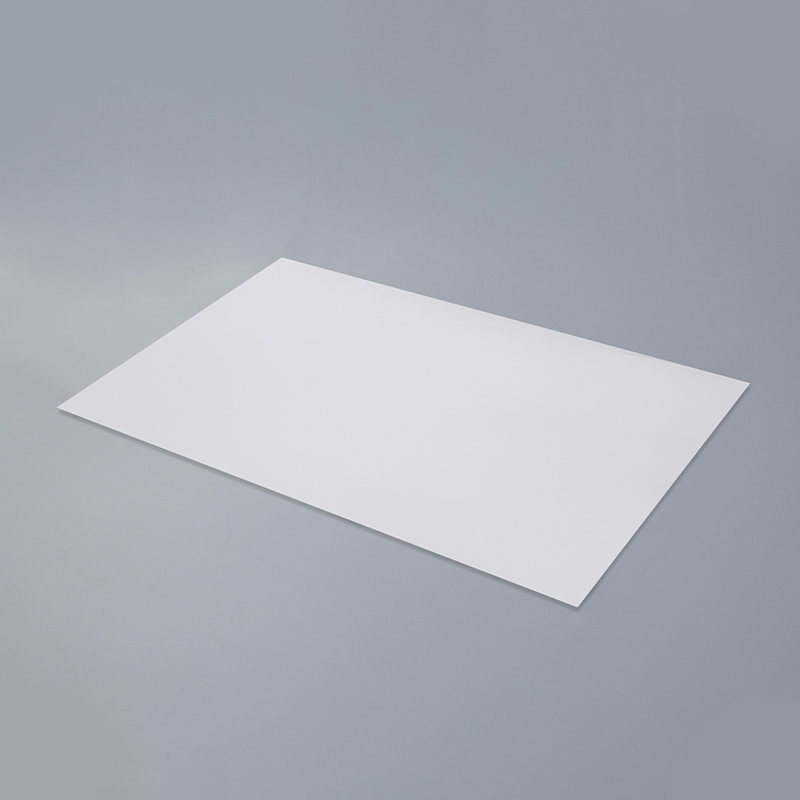
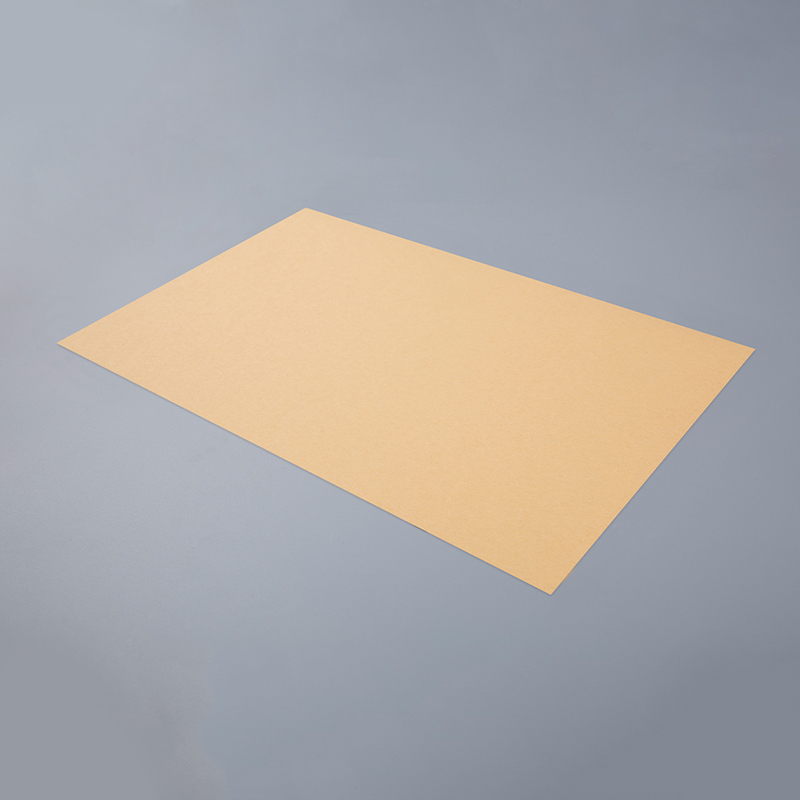
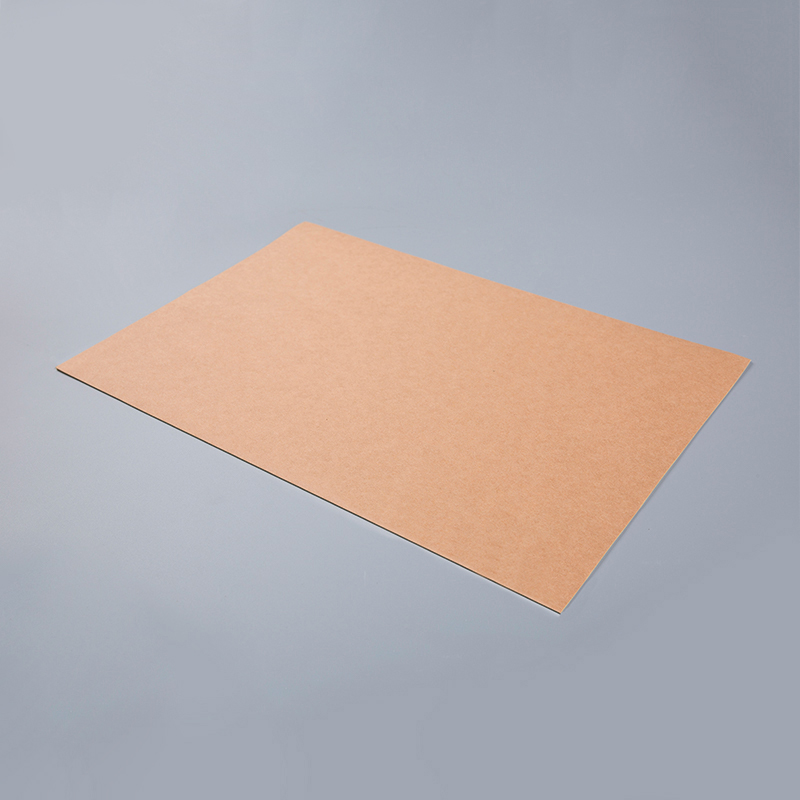
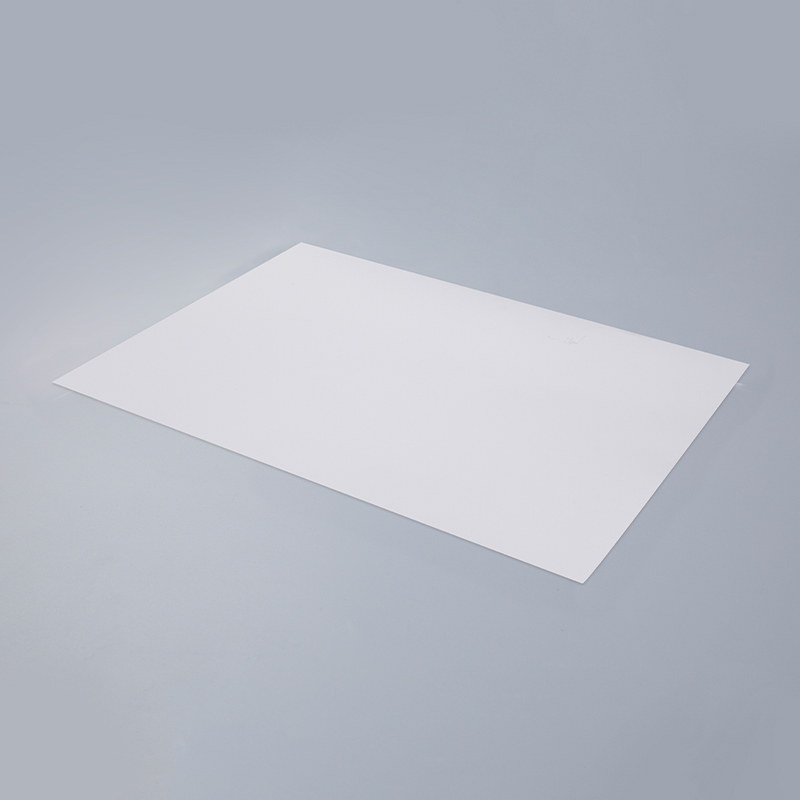
Available sheet sizes include A4, A3, 20 cm by 30 cm, 21 cm by 30 cm, 24 cm by 36 cm, 50 cm by 70 cm, and 70 cm by 100 cm. Customized sizes can also be discussed according to customer requirements. Custom sizing may help reduce trimming waste, improve press layout, simplify downstream cutting, and align the material with specific packaging or labeling equipment.
| Item | Available Specification | Typical Selection Considerations |
|---|---|---|
| Face material | 65, 80, 105, 128, 157, 200, and 250 gsm semi-glossy paper | Appearance, stiffness, printing method, label structure, and product positioning |
| Standard adhesive | Water-based acrylic adhesive | General-purpose labeling and balanced adhesion |
| Other adhesives | Hot melt, solvent, removable, anti-freeze, cryogenic, and tyre-grade rubber adhesive | Temperature, substrate, removal needs, application speed, and service environment |
| Standard liner | 80 g blue glassine liner | General label converting, visual identification, and smooth release |
| Other liners | 50/60/100/120 g glassine; 60/90/120/140 g release paper; 140/165 g art paper; 50/80/90/120 g CCK liner | Stiffness, feeding, die-cutting, dispensing, and customer process requirements |
| Jumbo roll widths | 1000, 1020, 1080, and 1530 mm | Press width, slitting plan, production efficiency, and material utilization |
| Sheet sizes | A4, A3, 20 x 30 cm, 21 x 30 cm, 24 x 36 cm, 50 x 70 cm, and 70 x 100 cm | Printer format, finished label layout, cutting plan, and handling method |
Customization can include face-stock weight, adhesive type, liner grade, roll width, sheet size, packaging format, and other construction details. Customers should provide information about the substrate, printing process, label dimensions, service temperature, expected storage conditions, application speed, and removal requirements. This information allows the manufacturer to recommend a more suitable construction rather than treating every order as a standard product.
6. Manufacturing Process and Technical Strength
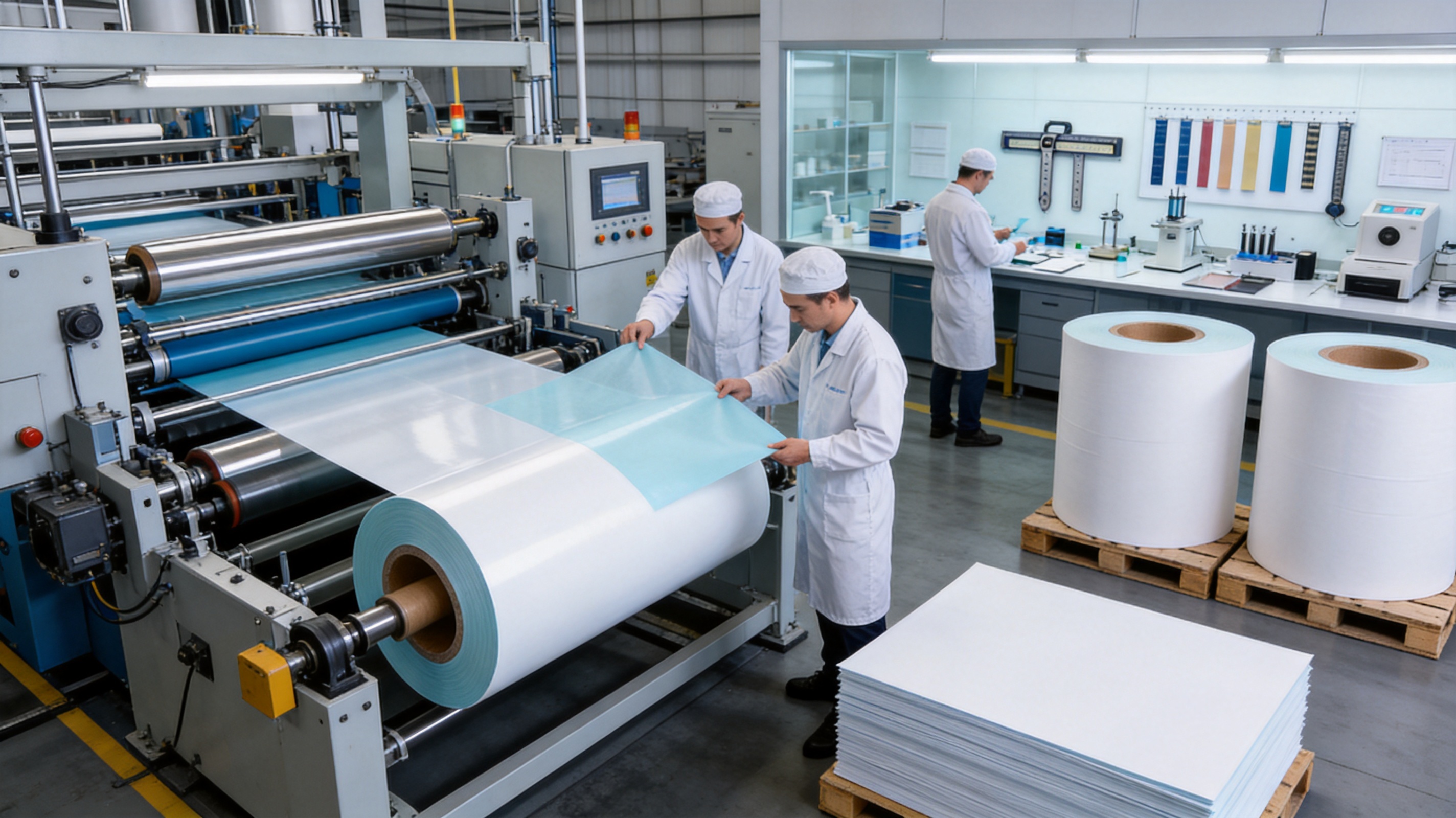
Suzhou Piaozhihua Composite Material Technology Co., Ltd. specializes in self-adhesive label materials and integrates research and development, production, sales, and after-sales service. Its manufacturing capabilities include gluing, laminating, and cutting. These processes are central to producing a stable, consistent, and application-ready self-adhesive material.
6.1 Adhesive Coating
Adhesive coating is a critical production stage. The adhesive must be distributed across the web with appropriate uniformity and controlled coating weight. Excessive variation can affect tack, peel adhesion, label dispensing, and final appearance. The selected coating process must also be compatible with the adhesive chemistry and the absorbency or surface characteristics of the face material.
Production controls may include monitoring coating conditions, web tension, drying or curing parameters, surface cleanliness, and roll winding. Maintaining stable operating conditions helps reduce defects such as streaks, bubbles, uneven adhesive coverage, contamination, edge build-up, and inconsistent release behavior.
6.2 Lamination
Lamination brings the face material, adhesive layer, and release liner together. The process must ensure that the layers are aligned and bonded appropriately without introducing wrinkles, air pockets, telescoping, or excessive tension. Lamination quality influences the appearance of the material and its performance during printing, die-cutting, and application.
For semi-glossy paper with blue glassine liner, accurate lamination helps preserve the smooth printed face and supports a consistent adhesive-liner interface. It also helps ensure that the finished jumbo roll can be slit and converted with predictable results.
6.3 Slitting and Cutting
After coating and lamination, the material may be slit into customer-specified widths or cut into sheets. Precision in this stage is important for press feeding, label alignment, roll winding, and customer productivity. Edge quality, width tolerance, roll hardness, winding condition, and sheet squareness can all influence downstream performance.
The company offers both roll and sheet supply. This supports customers with different production models, from large-scale automated label converting to short-run digital printing and manual packaging operations.
6.4 Quality Inspection and Testing
Quality inspection should address both appearance and functional performance. Typical inspection considerations include face-stock uniformity, basis weight, surface cleanliness, adhesive coverage, liner integrity, roll dimensions, sheet dimensions, winding quality, and packaging condition.
Depending on the product grade and customer application, additional tests may evaluate peel adhesion, tack, shear resistance, release force, printing compatibility, temperature performance, and resistance to handling. Testing can be adapted to the specific adhesive and substrate combination.
The company reports having its own testing laboratory and advanced inspection equipment. These resources support production verification, development work, customized product evaluation, and ongoing quality management. A laboratory-based approach is valuable because self-adhesive materials often require more than a visual inspection to confirm suitability.
7. Manufacturing Capacity and Supply Reliability
The company has full production lines covering gluing, laminating, and cutting, with an annual production capacity of more than 280 million square meters. This capacity supports both standard product supply and larger volume programs. It can also provide a foundation for more stable delivery planning when customers require recurring shipments.
Production scale can create several practical advantages. It may support more efficient raw-material planning, better equipment utilization, greater process experience, and improved ability to manage different product specifications. A broad production base can also help the manufacturer serve customers across multiple industries and geographic markets.
However, capacity alone is not sufficient for a successful label-material program. Customers also need communication, technical coordination, specification management, packaging discipline, and after-sales support. The company’s integrated business model combines production with sales, research and development, and customer service to address these needs.
With more than 20 years of OEM manufacturing experience, the company can produce according to customer drawings, samples, or defined technical requirements. OEM and ODM services can be useful for distributors, printing companies, packaging manufacturers, and brand owners that require a private specification or a construction not available as an off-the-shelf product.
8. Advantages Compared with Less Specialized Alternatives
Customers evaluating self-adhesive materials often compare specialized label stock with basic paper, general-purpose adhesive sheets, or constructions designed for a different application. Semi-glossy paper with a blue glassine liner can offer several advantages when the application requires coordinated performance across printing, adhesion, release, and converting.
8.1 More Balanced Appearance than Ordinary Paper
Ordinary uncoated paper may be economical, but it may not provide the same smooth visual effect or color presentation. The semi-glossy face offers a more refined appearance for product labels, illustrations, advertising pieces, and packaging. This can help customers achieve a more consistent presentation without moving to a fully synthetic or high-gloss construction.
8.2 More Application Flexibility than a Single Adhesive Grade
A single adhesive formula cannot meet every application requirement. The availability of water-based acrylic, hot melt, solvent, removable, anti-freeze, cryogenic, and tyre-grade rubber adhesives gives customers more opportunity to match the label to its operating conditions. This flexibility can reduce the risk of selecting an adhesive based only on price or general availability.
8.3 More Liner Choices than a Fixed Construction
Different converting machines and applications require different liner characteristics. A standard 80 g blue glassine liner is suitable for many uses, but customers can also select other glassine, release paper, art paper, or CCK liner grades. This is beneficial when a project requires additional stiffness, a different feeding behavior, specific die-cutting support, or a different material balance.
8.4 Better Support for Customized Production
Some suppliers provide only fixed widths, fixed sizes, or limited adhesive options. A manufacturer with gluing, laminating, and cutting capabilities can offer more practical customization. Roll widths, sheet sizes, face weights, adhesive formulations, liner types, and packaging formats can be discussed as part of the product design.
8.5 Stronger Technical Support for OEM and ODM Projects
OEM and ODM projects require more than supplying a standard roll. They may involve sample evaluation, construction design, testing, production approval, packaging confirmation, and repeat-order control. A professional R&D team, testing laboratory, and experienced production staff can help customers develop a material that fits their specific printing and application process.
9. Application Areas
9.1 Product and Packaging Labels
The material can be used for product labels on cartons, boxes, containers, bottles, promotional packages, and retail goods. Its semi-glossy face can display product names, images, instructions, barcodes, and decorative graphics. The adhesive should be selected according to the packaging substrate and expected storage environment.
9.2 Advertising and Promotional Materials
Promotional labels and advertising stickers benefit from an attractive printed surface and flexible size options. The material can be supplied in sheets for digital printing or in rolls for continuous production. Custom shapes and sizes can be produced through downstream die-cutting.
9.3 Book Covers and Illustrations
The product information identifies high-grade book covers and illustrations as suitable applications. Heavier face-stock options may be considered where a stronger or more substantial paper feel is required. The final construction should be evaluated for bending, edge handling, printing, and any coating or finishing process used by the printer.
9.4 Samples and Trademarks
Product samples and trademarks often require clear graphics and a professional appearance. The semi-glossy surface can help logos, symbols, and sample information stand out. Sheet sizes can be selected to support small-format production, while jumbo rolls can be used by larger printing and converting facilities.
9.5 Cold-Temperature and Industrial Identification
When labels are exposed to freezing or cryogenic conditions, standard adhesive may not be sufficient. Anti-freeze and cryogenic adhesive options are available for consideration. Industrial users should provide detailed information about application temperature, storage temperature, condensation, substrate material, and required service life.
9.6 Tyre-Related Labeling
Tyre-grade rubber adhesive is available for applications involving rubber surfaces. The curved geometry and material composition of tyres can make bonding more demanding than bonding to smooth paperboard. A dedicated adhesive grade and application trial can help determine whether the construction meets the required performance.
10. Packaging, Delivery, and Storage
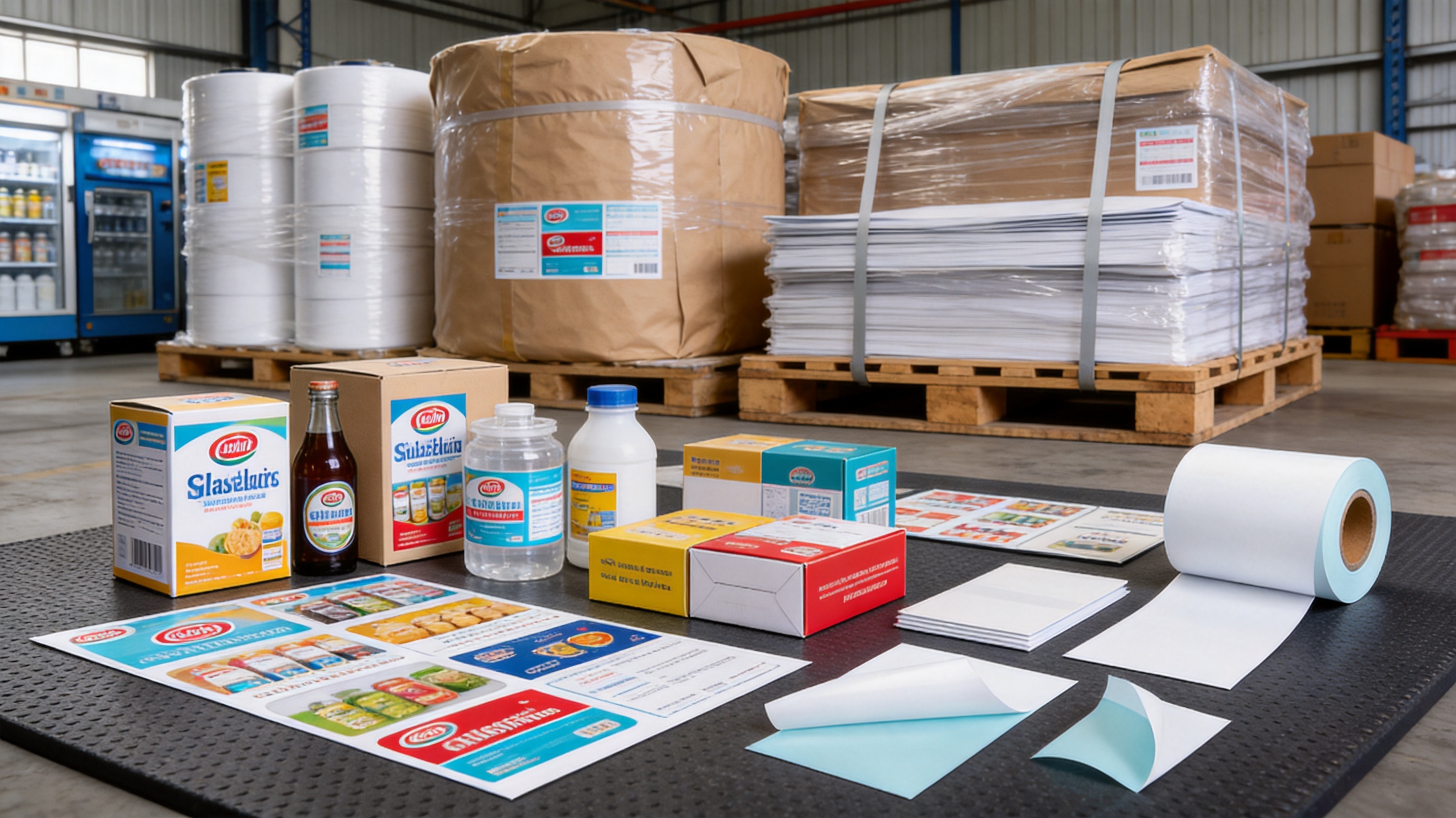
The product is suitable for sea-transit-worthy packaging using poly-wood pallets and carton packing. Both roll and sheet formats can be supplied from stock, subject to product specification, order quantity, and availability. Packaging is designed to protect the material during handling, transportation, and storage.
For sheet products, 100 sheets are packed per ream. Each ream is wrapped with strong PE-coated kraft paper. This packaging helps protect the paper from ordinary dust, handling damage, and environmental exposure during shipment. Ream packaging also supports counting, warehouse organization, and customer distribution.
Strong pallets are wrapped with stretch film and fastened with plastic fastening belts. Pallet protection is important because self-adhesive materials can be affected by crushing, edge damage, moisture, and deformation. Stable pallet packing can help preserve the condition of rolls and sheets during sea transport and warehouse handling.
Customers should store the material in a clean, dry environment away from direct sunlight, excessive heat, and rapid temperature changes. Rolls and sheets should remain in their protective packaging until they are ready for processing. Before printing or application, the material may need to acclimatize to the production environment, especially after long-distance transportation or exposure to different climatic conditions.
Storage recommendations may vary according to adhesive type and liner construction. Customers should follow the manufacturer’s technical guidance and use a first-in, first-out inventory system where practical. Long storage periods can affect adhesive performance, so production planning should consider the recommended shelf life and actual warehouse conditions.
11. Sustainability and Responsible Product Development
Paper-based self-adhesive materials can support customers who prefer a paper appearance or are seeking alternatives to fully synthetic label constructions. Sustainability performance depends on the complete product system, including face material, adhesive, liner, printing ink, coatings, packaging, waste management, and the recycling infrastructure available in the target market.
The company identifies sustainable development and environmental protection as important elements of its brand positioning. Its development work includes eco-friendly solutions involving face materials, adhesives, and backing papers. Customers seeking a more environmentally considerate label construction can discuss material selection and application requirements with the manufacturer.
It is important to select sustainability solutions based on the actual end use. A material that reduces plastic content may still require evaluation for adhesive compatibility, recyclability, durability, food-contact requirements, or disposal conditions. Responsible product development therefore involves balancing environmental objectives with reliable performance and regulatory compliance.
12. Quality Management and Customer Service
Reliable label material depends on consistency from one shipment to the next. Variations in face-stock weight, adhesive coating, release force, roll hardness, or sheet dimensions can create problems for printers and converters. A supplier with integrated production and testing capabilities can help customers establish clearer specifications and more stable repeat ordering.
The company’s stated strengths include a professional R&D team, multiple patents, advanced inspection equipment, an internal testing laboratory, and more than 20 years of OEM experience. These capabilities support both standard product production and the development of customized constructions.
After-sales service is also important. If a customer experiences printing, die-cutting, dispensing, or bonding problems, the supplier should be able to review the material specification, application conditions, machine settings, and storage history. A technically informed response can help identify whether the issue relates to the material, the equipment, the substrate, or the process.
The company has developed direct sales networks in numerous Chinese cities and marketing networks across international regions including North America, Europe, Asia, Latin America, Russia, and the Middle East. This international experience can help support customers with different packaging practices, climate conditions, order structures, and technical expectations.
13. How to Select the Correct Construction
Choosing the correct semi-glossy self-adhesive paper begins with the finished label rather than the material catalog alone. Customers should define the label size, shape, printing process, application surface, service temperature, storage environment, expected durability, and whether the label must be permanent or removable.
13.1 Define the Printing Method
Identify whether the material will be used for digital printing, offset printing, flexographic printing, or another process. Confirm the printer’s acceptable paper weight, sheet dimensions, roll specifications, ink requirements, drying conditions, and feeding characteristics.
13.2 Define the Substrate
Paperboard, glass, plastic, metal, painted surfaces, rubber, and corrugated packaging can require different adhesive behavior. Surface cleanliness and surface energy should be considered. If the label will be applied to a curved or textured surface, the adhesive and face-stock flexibility should be evaluated through testing.
13.3 Define Environmental Conditions
Specify whether the product will face refrigeration, freezing, cryogenic exposure, humidity, outdoor conditions, abrasion, oils, chemicals, or elevated temperatures. These conditions may determine the adhesive grade, face material, liner, and protective finishing requirements.
13.4 Define Converting Requirements
Provide information about die-cutting, matrix stripping, slitting, sheeting, dispensing, automatic application, and label spacing. A suitable liner can improve process stability, while the face-stock weight can influence cutting depth and finished label rigidity.
13.5 Define Delivery Format
Choose jumbo rolls, narrower rolls, or sheets according to the production process. Standard widths and sizes may provide faster preparation, while custom dimensions may improve material utilization. Packaging requirements should also be specified for sea freight, warehouse storage, and internal distribution.
14. Frequently Asked Questions
Q1: What is semi-glossy paper with a blue glassine liner?
It is a pressure-sensitive self-adhesive material consisting of a semi-glossy paper face, an adhesive layer, and an 80 g blue glassine release liner. The face material is designed for attractive color printing, while the liner protects the adhesive until application.
Q2: What are the main applications of this product?
It can be used for product labels, packaging labels, trademarks, advertising materials, product samples, book covers, illustrations, color pictures, and other printed promotional or identification materials.
Q3: What face-material weights are available?
Available semi-glossy paper weights include 65 gsm, 80 gsm, 105 gsm, 128 gsm, 157 gsm, 200 gsm, and 250 gsm. The most suitable weight depends on printing, stiffness, label design, and application requirements.
Q4: Is the blue glassine liner the only liner option?
No. The standard construction uses an 80 g blue glassine liner, but other glassine papers, release papers, art papers, and CCK liners are available in different weights.
Q5: Which adhesive should be selected?
The selection depends on the substrate and service conditions. Water-based acrylic is a general-purpose option, while hot melt, solvent, removable, anti-freeze, cryogenic, and tyre-grade rubber adhesives are available for more specific requirements.
Q6: Can the material be supplied in sheets?
Yes. Available sheet sizes include A4, A3, 20 cm by 30 cm, 21 cm by 30 cm, 24 cm by 36 cm, 50 cm by 70 cm, and 70 cm by 100 cm. Customized sizes can also be discussed.
Q7: Can it be supplied in jumbo rolls?
Yes. Standard jumbo roll widths include 1000 mm, 1020 mm, 1080 mm, and 1530 mm. Other requirements may be evaluated according to production capability and order specifications.
Q8: Is this material suitable for digital printing?
It can be considered for digital printing, but compatibility should be confirmed with the specific printer, ink or toner system, drying process, sheet format, and finishing requirements. A production trial is recommended before large-scale use.
Q9: Can the adhesive be removable?
Yes. Removable adhesive is available for applications where labels may need to be removed or repositioned. Removal performance depends on the surface, temperature, dwell time, and environmental exposure, so testing is recommended.
Q10: Are low-temperature adhesive options available?
Yes. Anti-freeze and cryogenic adhesive options are available for applications involving refrigerated, frozen, or extremely low-temperature conditions. The customer should provide the expected temperature range and application procedure.
Q11: Can the product be customized for OEM or ODM projects?
Yes. The company offers OEM and ODM services and can develop products based on customer drawings, samples, or technical requirements. Customization may involve the face material, adhesive, liner, dimensions, packaging, and delivery format.
Q12: How is the sheet product packed?
Typically, 100 sheets are packed per ream, and each ream is wrapped with strong PE-coated kraft paper. Pallets are protected with stretch film and plastic fastening belts for transportation.
Q13: What manufacturing processes are available?
The company operates production lines for gluing, laminating, and cutting. These capabilities support the manufacture of roll and sheet materials in standard and customized specifications.
Q14: What information should be provided when requesting a quotation?
Customers should provide the face-material weight, adhesive type, liner preference, roll or sheet format, dimensions, estimated quantity, printing process, application substrate, temperature conditions, and packaging requirements. This information helps the manufacturer recommend a suitable construction.
15. Conclusion
Semi-glossy self-adhesive paper with a blue glassine liner is a flexible solution for customers seeking attractive printing, dependable label handling, and a broad choice of adhesive and liner constructions. Its smooth semi-glossy face supports color reproduction for packaging, advertising, illustrations, book covers, product samples, and trademarks. The blue glassine liner protects the adhesive and supports converting, dispensing, and application operations.
The product’s key advantage is its adaptable construction. Customers can select among multiple face-stock weights, adhesive technologies, liner grades, jumbo roll widths, and sheet sizes. This flexibility makes it possible to design a material around the actual printing process and application environment rather than relying on a single fixed specification.
Suzhou Piaozhihua Composite Material Technology Co., Ltd. supports this product with integrated gluing, laminating, and cutting capabilities, a reported annual production capacity of more than 280 million square meters, an internal testing laboratory, advanced inspection equipment, OEM and ODM experience, and a professional research and development team. These strengths provide a foundation for stable supply, technical customization, and long-term customer cooperation.
For the best result, buyers should evaluate the complete label construction, including the face material, adhesive, liner, printing system, application surface, storage conditions, and final service environment. With suitable specification selection and pre-production testing, semi-glossy self-adhesive paper with a blue glassine liner can provide a practical combination of visual quality, manufacturing efficiency, and application performance.
References
1. Product specification information for semi-glossy paper with blue glassine liner, including face materials, adhesives, liners, sizes, applications, and packaging.
2. Technical information concerning pressure-sensitive adhesive label construction, including face stock, adhesive coating, and release liner functions.
3. General principles of paper coating, laminating, slitting, die-cutting, and converting for self-adhesive label materials.
4. General guidance for evaluating adhesive performance on paper, plastic, glass, metal, rubber, and temperature-sensitive substrates.
5. Packaging and transportation considerations for roll and sheet-based paper products.
6. Manufacturer-provided company information concerning OEM, ODM, research and development, testing, production capacity, and international supply experience.