
 English
 Español
 русский
 Français
 عربى
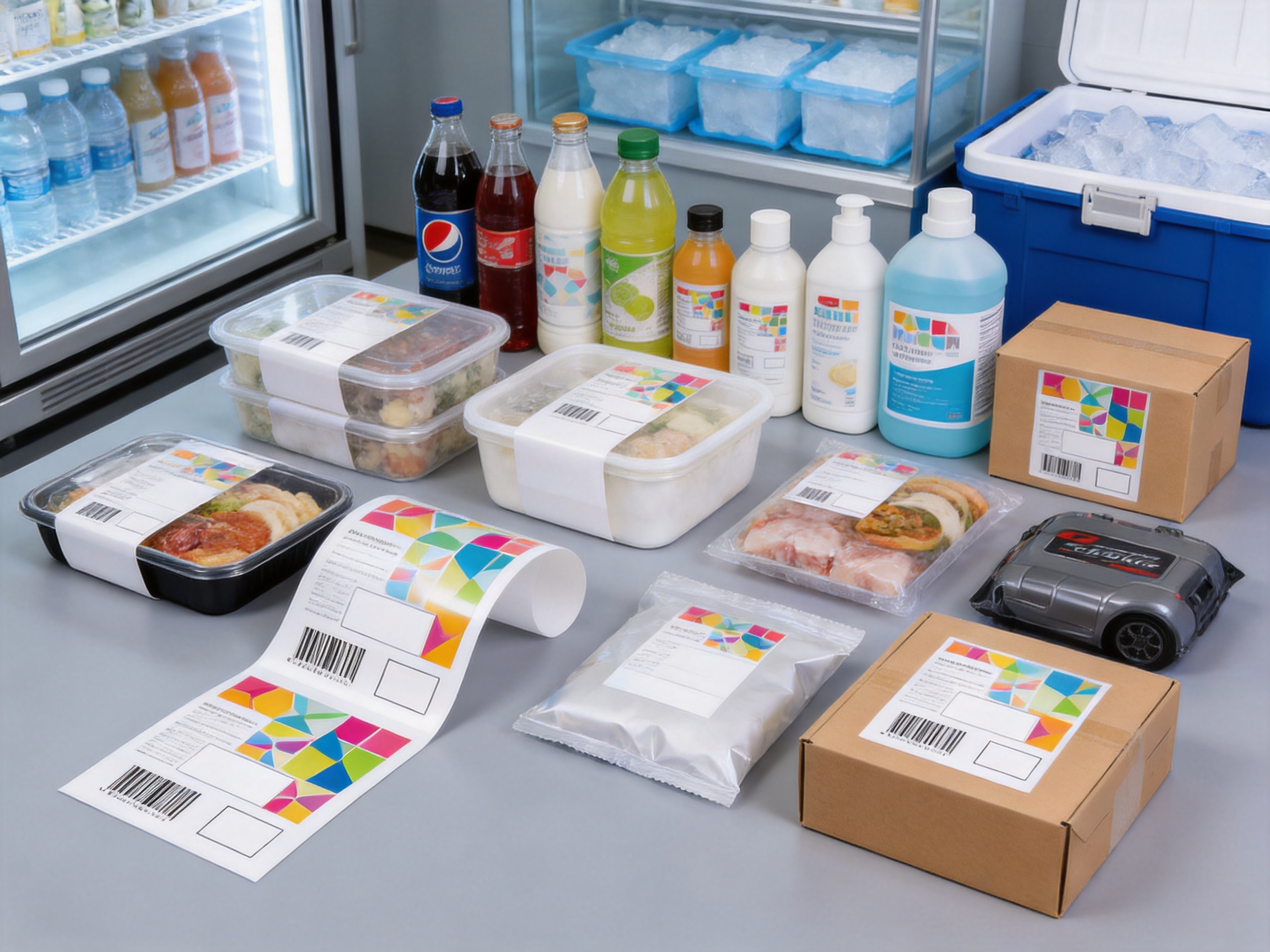
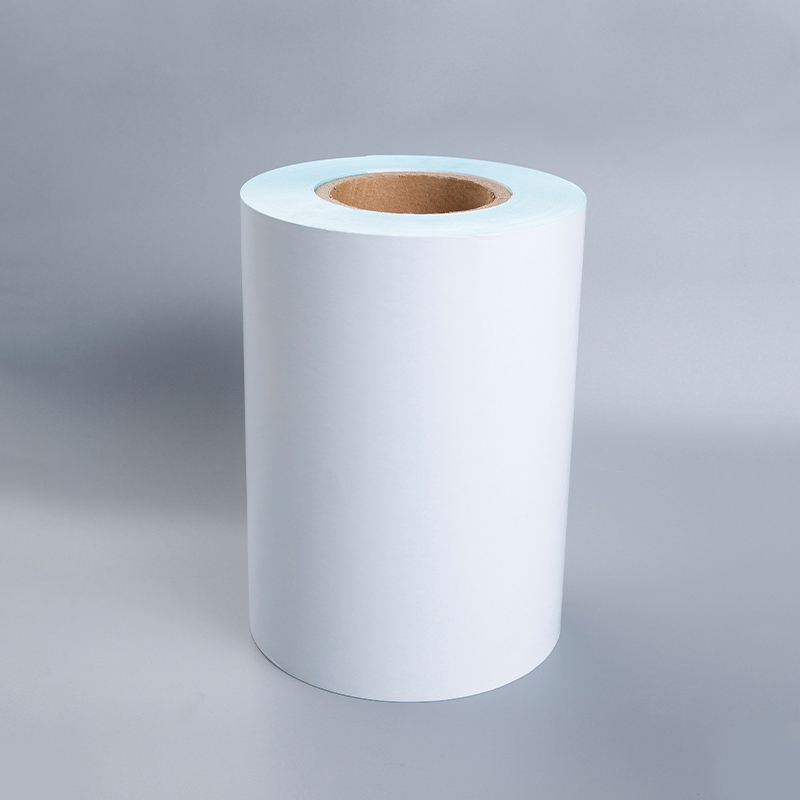
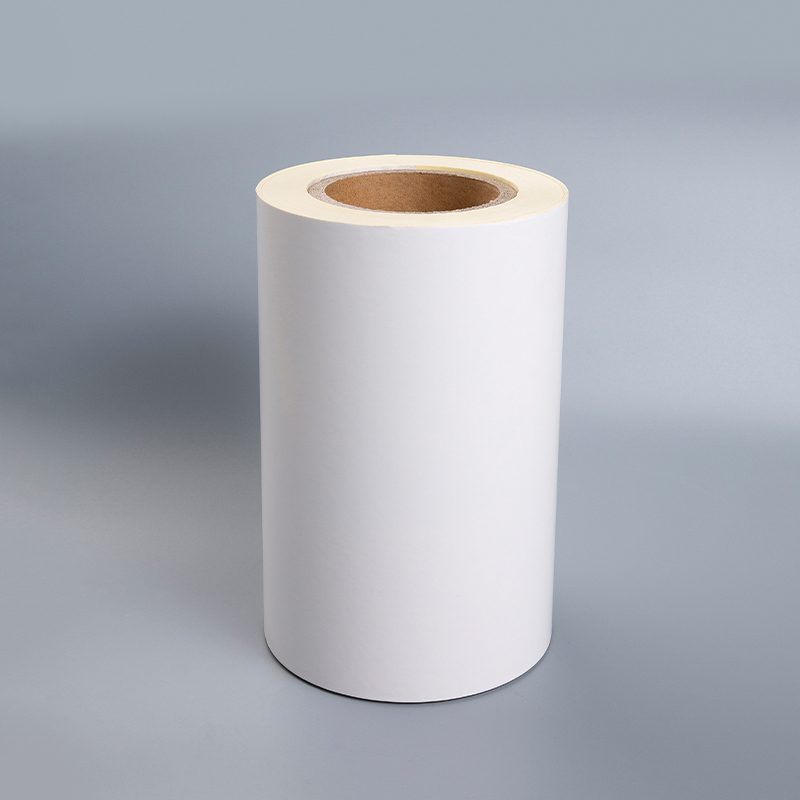
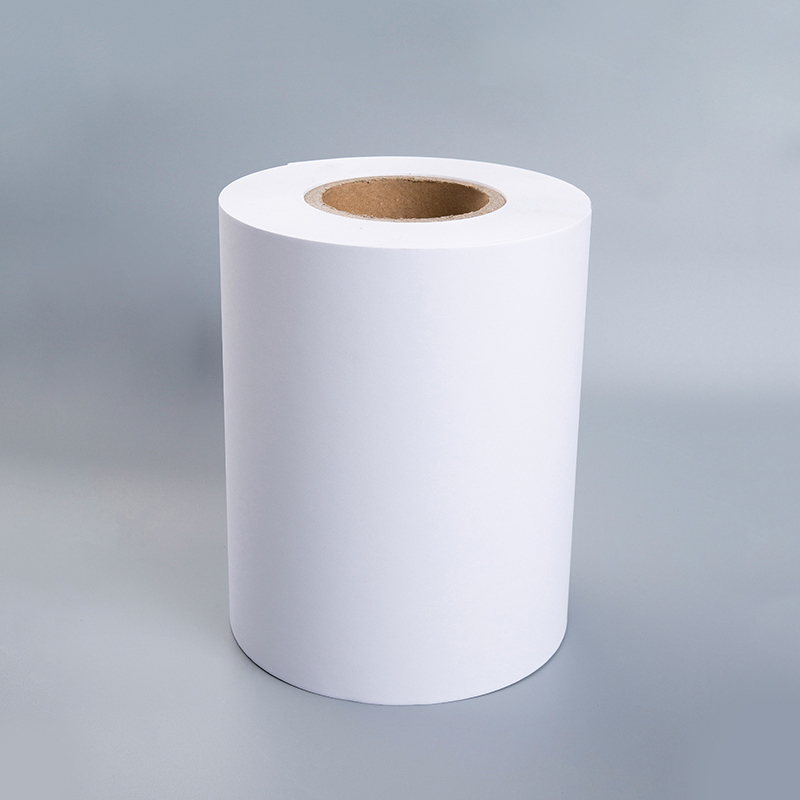
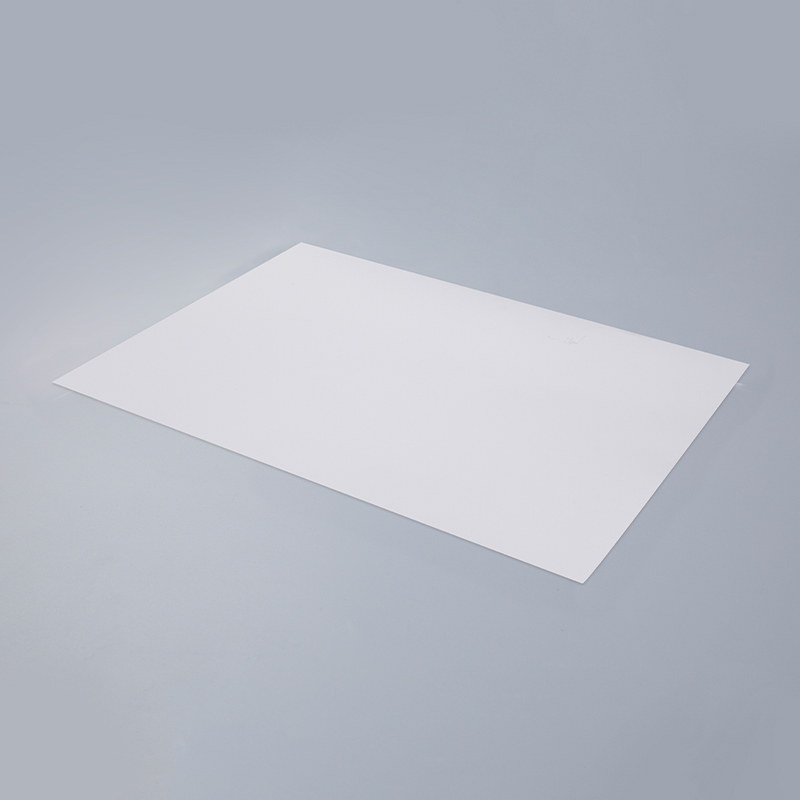
Self-adhesive materials must perform consistently across printing, converting, application, storage, transport, and end use. When labels are exposed to low temperatures, moisture, condensation, handling, or changing environmental conditions, an ordinary adhesive construction may not provide sufficient reliability. Anti-freeze adhesive gloss white polypropylene in sheet form is designed for applications where strong adhesion and a clean, attractive appearance are required even in cold or challenging conditions.
This material combines a glossy white polypropylene face stock, a specialized anti-freeze adhesive, and a release liner engineered to support efficient die cutting, printing, dispensing, and application. It is suitable for a wide range of labels and packaging projects, including daily chemical products, food-related packaging, cosmetics, automotive soft packaging, posters, and general product identification.
The product is manufactured by Suzhou Piaozhihua Composite Material Technology Co., Ltd., a Chinese producer specializing in self-adhesive labels and composite materials. The company integrates research and development, adhesive coating, laminating, slitting, sheeting, sales, and after-sales support. Its production capabilities, testing resources, customization options, and experience in international supply make this material a practical choice for converters, printers, packaging companies, and brand owners.
Content
- 1 Understanding Anti-Freeze Gloss White PP in Sheet
- 2 Construction of the Self-Adhesive Material
- 3 Key Advantages Over Conventional Label Materials
- 4 Typical Applications
- 5 Printing and Converting Considerations
- 6 Available Specifications
- 7 Manufacturing Process and Quality Control
- 8 Why Manufacturer Capability Matters
- 9 Comparison with Alternative Materials
- 10 Environmental and Sustainability Considerations
- 11 Storage, Handling, and Application Guidance
- 12 Customization and Technical Support
- 13 Business Value for Converters and Brand Owners
- 14 Quality, Service, and Long-Term Supply
- 15 Frequently Asked Questions
- 15.1 What is anti-freeze gloss white PP in sheet?
- 15.2 What is the standard face material thickness?
- 15.3 Can the material be used for food packaging?
- 15.4 Which printing methods are suitable?
- 15.5 Can cold stamping be applied?
- 15.6 What liner is supplied as standard?
- 15.7 What sheet sizes are available?
- 15.8 Can the product be supplied in rolls?
- 15.9 Is the adhesive permanent or removable?
- 15.10 Is anti-freeze adhesive the same as cryogenic adhesive?
- 15.11 Can the material be used on plastic packaging?
- 15.12 How should the sheets be stored?
- 15.13 What packaging is used for delivery?
- 15.14 Can the manufacturer provide OEM and ODM services?
- 15.15 How should a buyer select the correct construction?
- 16 Conclusion
- 17 References
- 18 Product: Anti-Freeze Adhesive Gloss White Pp In Sheet
Understanding Anti-Freeze Gloss White PP in Sheet
Anti-freeze gloss white PP in sheet is a sheeted self-adhesive material based on biaxially oriented polypropylene, commonly abbreviated as BOPP. The polypropylene film is stretched in two directions during manufacturing, helping create a balanced structure with useful dimensional stability, surface smoothness, and mechanical strength.
The face material has a glossy white appearance. This gives printed labels a clean, bright, and commercially attractive surface while providing an effective background for colors, text, barcodes, graphics, logos, and product information. The white surface can also improve visual contrast, which is important for small type, warning information, ingredient statements, and machine-readable codes.
The adhesive is formulated for anti-freeze performance. In practical terms, this means the adhesive is intended to maintain dependable bonding when labels are applied to products or packaging that may be exposed to cold temperatures. This is particularly relevant for refrigerated products, cold-chain logistics, frozen storage, chilled beverages, temperature-sensitive goods, and applications where condensation may occur during handling.
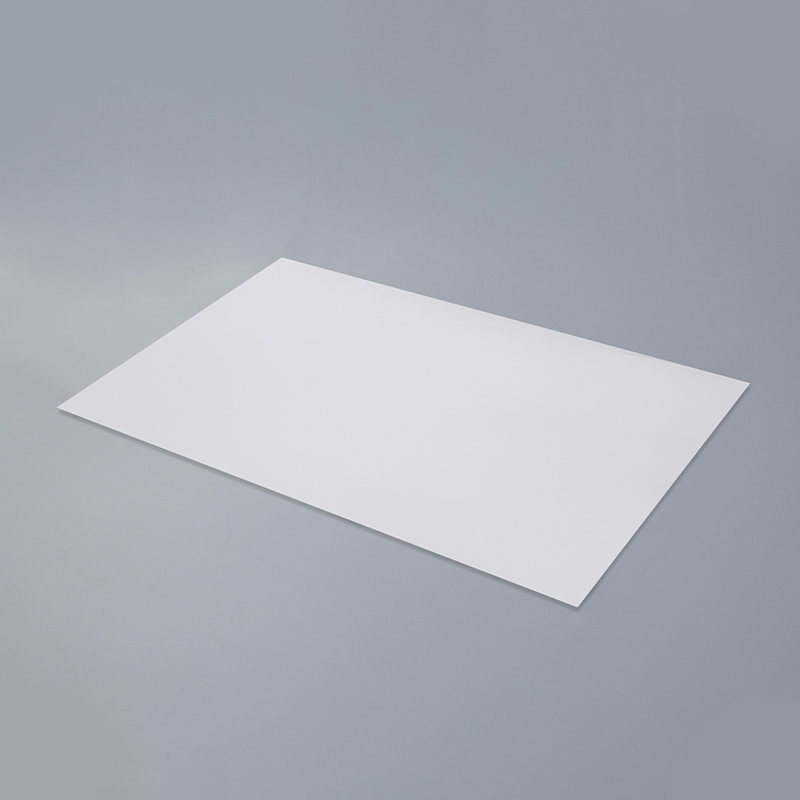
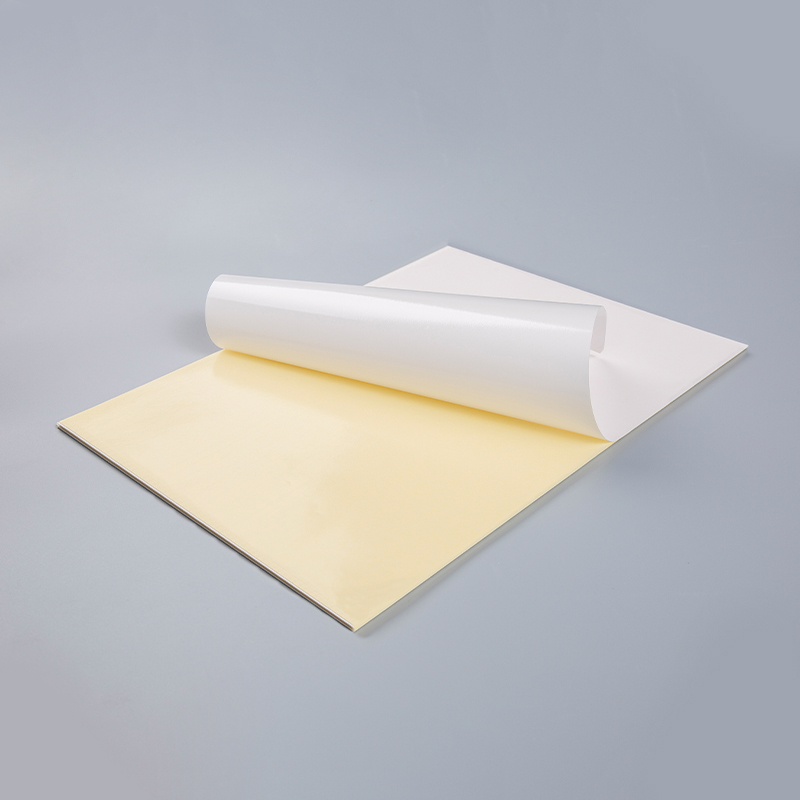
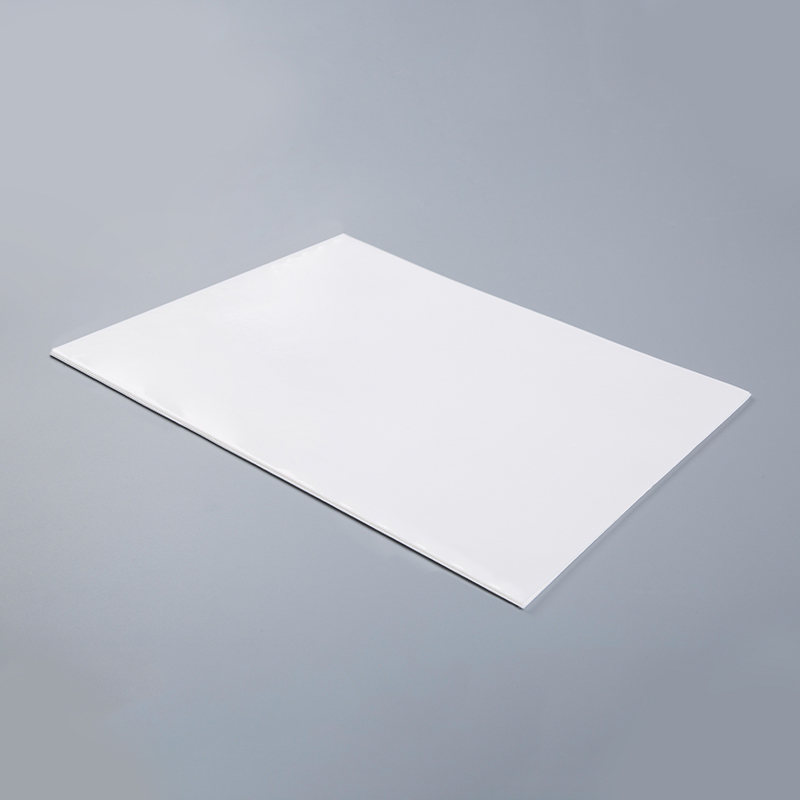
The material is supplied in sheets rather than only in rolls. Sheet supply can be advantageous for digital printing, offset printing, screen printing, short-run production, manual application, and customers whose equipment is designed for pre-cut or flat-fed media. Standard sizes such as A4, A3, 20 x 30 cm, 21 x 30 cm, 24 x 36 cm, 50 x 70 cm, and 70 x 100 cm are available, while customized dimensions can also be discussed according to project requirements.
The standard face stock is 60-micron gloss white PP. Alternative 95-micron and 100-micron constructions are also available. This range allows buyers to balance flexibility, stiffness, opacity, durability, and application requirements rather than relying on one fixed specification for every project.
Construction of the Self-Adhesive Material
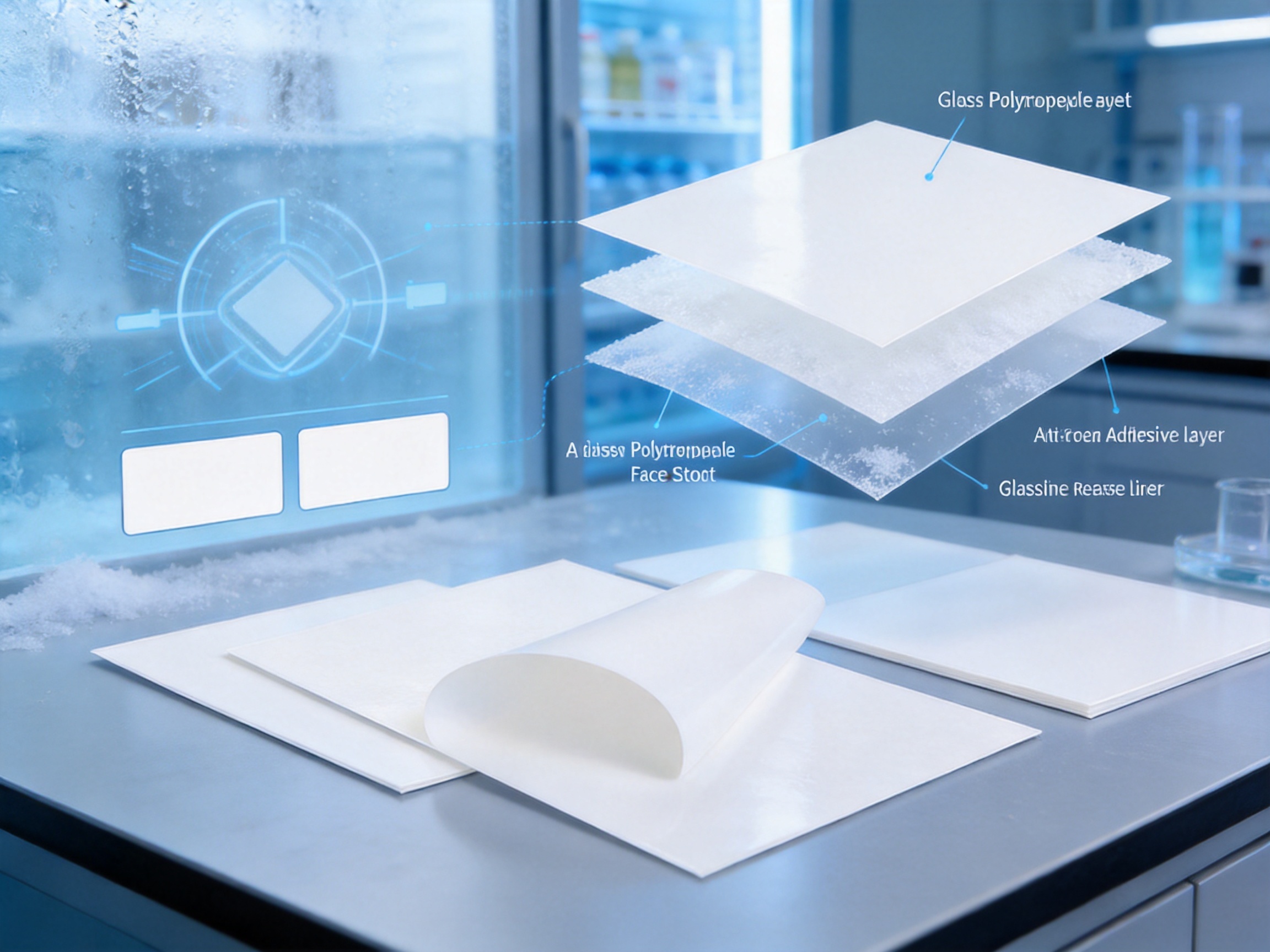
A self-adhesive sheet is a functional composite made from three primary components: the face material, the adhesive layer, and the release liner. Each layer contributes to the final performance of the product.
Gloss White Polypropylene Face Stock
The face stock is a 60-micron gloss white polypropylene film in the standard construction. Polypropylene is valued in label and packaging applications because it combines relatively low weight with useful resistance to moisture and everyday handling. Its smooth surface supports high-quality printed results and helps create a polished appearance.
The gloss finish can enhance color density and image impact. For packaging designers, this means that product graphics may appear sharper and more vibrant than they would on a dull or highly absorbent surface. The bright white base also provides a consistent visual field, which is helpful when labels must match across different packaging formats.
Biaxial orientation contributes to the material’s balanced film structure. A properly controlled orientation process can improve tensile characteristics and dimensional behavior, supporting converting operations such as sheeting, die cutting, trimming, and label production. The film remains lightweight while offering more resistance to tearing and handling damage than many conventional paper label materials.
Anti-Freeze Adhesive
The adhesive layer is the central feature of this product. It is selected for applications in which the label may need to adhere under low-temperature conditions or to surfaces affected by refrigeration and condensation. Adhesive performance depends on the substrate, application temperature, dwell time, surface cleanliness, pressure, and final service environment, so suitability should always be confirmed through testing.
Compared with a general-purpose adhesive, an anti-freeze adhesive is intended to provide more reliable initial tack and bonding behavior in cold-use situations. This can help reduce common problems such as edge lifting, corner release, partial detachment, label bubbling, and loss of identification during storage or transport.
The standard construction uses anti-freeze adhesive, but additional adhesive options are available. These include water-based adhesive, hot-melt adhesive, solvent adhesive, removable adhesive, cryogenic adhesive, and tyre-grade rubber adhesive. The availability of different adhesive systems gives purchasers flexibility when a project involves unusual substrates, special regulatory requirements, removability, high-speed application, or extreme temperature conditions.
Release Liner
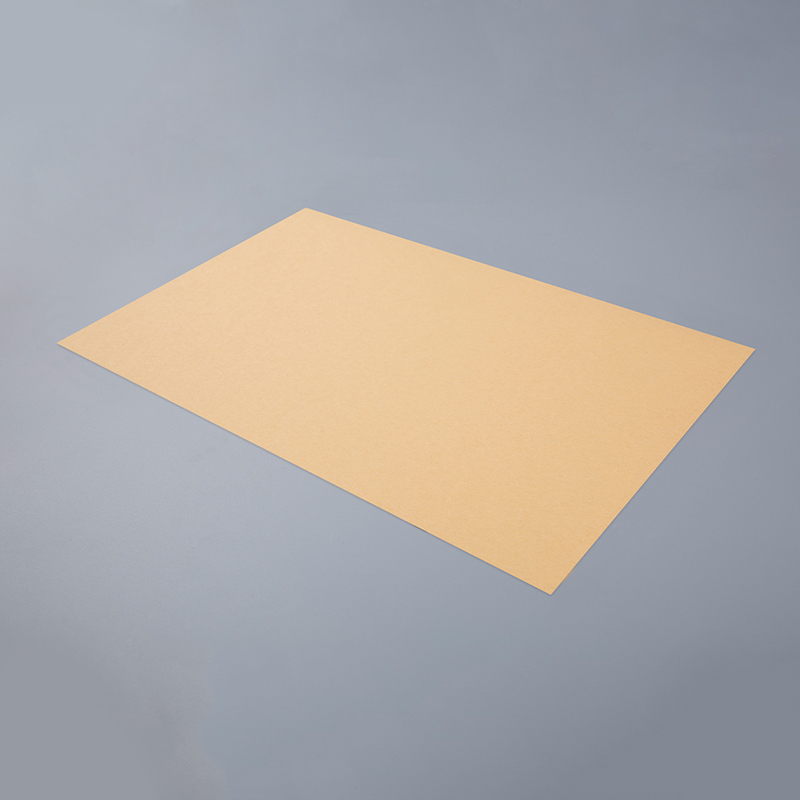
The release liner protects the adhesive before application and supports the controlled removal of labels or sheets during converting and use. The standard liner is 60-gram white glassine paper. Glassine is smooth and translucent, with a surface suitable for release coating and efficient handling in label production.
Other liner options include 50-, 80-, 100-, and 120-gram glassine paper. Release paper options are available in 60, 85, 120, and 140 grams. Customers can also request 140-gram or 165-gram art paper, as well as 50-, 80-, 90-, and 120-gram CCK liners. The appropriate liner can be selected according to sheet stiffness, feeding performance, die-cutting requirements, packaging method, and application equipment.
The liner is more than a temporary backing. Its caliper, stiffness, smoothness, release force, and dimensional stability can influence the performance of the entire label construction. A suitable liner helps prevent premature release, facilitates clean label stripping, and supports flat, stable sheets during storage and printing.
Key Advantages Over Conventional Label Materials
Reliable Performance in Cold Conditions
The primary advantage of the product is its anti-freeze adhesive system. Conventional paper labels or standard adhesives may lose tack when applied to chilled surfaces or may fail when moisture develops on the substrate. The anti-freeze construction is intended to address this challenge and support stronger adhesion in cold-use environments.
This benefit is important for food packaging, refrigerated beverages, cold storage containers, medical or laboratory products, and logistics labels that may travel through different temperature zones. A label that remains attached helps preserve product information, traceability, warning instructions, and brand presentation throughout the distribution cycle.
Moisture-Resistant Film Face
Paper face materials can absorb moisture, wrinkle, soften, or lose visual quality when exposed to water and condensation. The polypropylene face stock offers a film-based alternative for applications where moisture resistance is more important than the tactile character of paper.
The PP face can help labels maintain a cleaner appearance during chilled storage and routine handling. It is also useful for packaging that may be exposed to splashes, damp storage areas, or repeated contact with humid air. Although total package performance depends on the substrate, ink, adhesive, and environmental conditions, a polypropylene face is generally well suited to moisture-sensitive labeling work.
Glossy White Appearance
The bright glossy surface provides strong shelf appeal. It supports crisp typography, clear graphics, and vivid color reproduction. For consumer products, appearance is often closely connected with perceived quality, and a smooth white film label can offer a more premium look than a basic uncoated paper label.
The surface is also versatile for branding and information design. It can accommodate large graphic areas, small text, product icons, barcodes, regulatory content, and variable data. When used with compatible inks and printing processes, it offers a flexible platform for both decorative and functional labels.
Multiple Printing Compatibility
The material can be used with UV ink, relief plate printing, flexographic printing, screen printing, and other suitable printing methods. This gives converters and print service providers more freedom to use existing equipment and select a process according to volume, image complexity, ink requirements, and finishing expectations.
Cold stamping performance is also described as excellent. Cold stamping can add metallic effects, highlights, decorative borders, and premium visual details without requiring a traditional hot-stamping process. This can be useful for cosmetic packaging, promotional products, specialty food labels, and high-visibility consumer packaging.
Before full production, printers should confirm ink adhesion, drying or curing conditions, rub resistance, barcode readability, and color consistency. Polypropylene films commonly require inks formulated for non-porous surfaces. Correct ink selection and surface preparation are important for achieving durable printed results.
Sheet-Format Flexibility
Sheeted material is convenient for digital printing, sample production, short runs, prototyping, and customers without roll-fed label equipment. It can be supplied in widely used sheet sizes or converted into a custom format for a particular printer, die cutter, or packaging operation.
Sheet production can also simplify inventory management for some customers. Instead of investing in large rolls for every design, a business may order suitable quantities of sheets for different product versions, seasonal graphics, test markets, or personalized labels. This is particularly helpful for small and medium-sized projects where flexibility and low waste are important.
Options for Different Production Requirements
The material is not restricted to one face thickness or one liner. Available options include 60, 95, and 100 microns for the gloss white PP face, multiple adhesive technologies, and several liner grades. This makes it easier to develop a construction that matches the needs of a specific application.
For example, a lightweight 60-micron face may be suitable for general product labels, while a thicker film may be selected when greater stiffness or a more substantial appearance is needed. A heavier liner may be preferred for flat-sheet handling, while a lighter liner may support material savings or specific die-cutting requirements.
Typical Applications
Food and Beverage Labels
Food and beverage packaging often experiences refrigeration, condensation, wet handling, and repeated movement through distribution channels. A gloss white PP sheet with anti-freeze adhesive can be used for product identification, promotional graphics, batch information, warning messages, and secondary packaging labels.
Potential applications include chilled food containers, refrigerated drinks, frozen goods, prepared meals, sauces, dairy-related packaging, and foodservice products. The final construction should be evaluated for the actual package surface, storage temperature, regulatory requirements, and intended contact conditions. Where direct food contact is possible, the complete material and ink system must meet applicable regulations.
Cosmetic and Personal Care Packaging
Cosmetic packaging places strong emphasis on visual quality. Gloss white PP can provide a bright, smooth surface for containers, boxes, tubes, jars, and flexible packs. It is suitable for brand graphics, product descriptions, usage instructions, ingredient information, and decorative effects.
Cosmetic products may also be stored in bathrooms, warehouses, vehicles, and retail environments where humidity and handling vary. The film face can help preserve the label’s appearance in conditions where paper may be more vulnerable to moisture. Cold-resistant adhesive options can be useful when products are stored or transported in low-temperature environments.
Daily Chemical Products
Daily chemical products include household cleaners, personal hygiene products, laundry products, and other frequently handled consumer goods. Their labels may encounter water, splashes, abrasion, variable temperatures, and repeated contact with hands or packaging equipment.
A glossy film face can improve visual durability and create a clean product appearance. The anti-freeze adhesive can support applications requiring stable bonding during cold storage or transport. For products containing oils, solvents, or aggressive chemicals, the complete construction should be tested for resistance to the specific formulation.
Automotive Soft Packaging
Automotive products and components may use flexible packaging, protective bags, service labels, maintenance labels, and identification materials. These applications can involve warehouses, outdoor transport, temperature fluctuations, and mechanical handling.
Polypropylene’s lightweight and flexible structure is suitable for many soft-packaging formats. Depending on the substrate and service conditions, the material can be used for product identification, logistics information, branding, or instructions. A customized adhesive and liner may be selected where the package surface or application process requires special performance.
Posters and Promotional Printing
The material can also be used in posters and other printed products. The white gloss surface provides an attractive background for promotional images and text, while the sheet format supports flatbed printing and short-run production.
For temporary promotional projects, removable adhesive may be considered instead of anti-freeze adhesive. For longer-term displays or cold-environment promotions, a permanent or anti-freeze construction may be more appropriate. The selection should reflect the display surface, expected removal time, exposure conditions, and desired visual life.
General Product and Logistics Labels
Many industrial and commercial products require labels that remain legible during storage and shipment. These may include cartons, containers, components, tools, equipment, and packaged goods. The material can support product names, serial numbers, barcodes, handling instructions, and inventory information.
For logistics labels, print quality and adhesive reliability are both important. A label that detaches can lead to identification errors, scanning problems, or delays. The anti-freeze option provides an advantage when goods move through refrigerated or winter conditions, although the exact performance should be validated on the intended substrate.
Printing and Converting Considerations
Surface Preparation
Polypropylene is a non-porous film, so ink and coating selection must be appropriate for the surface. Printers should confirm that the chosen ink system provides adequate adhesion, drying or curing, scratch resistance, and chemical resistance. UV inks are specifically identified as suitable, and flexographic, relief plate, and screen printing processes can also be used with compatible formulations.
Before production, the surface should be clean and free from dust, oil, moisture, and other contaminants. Improper storage or excessive humidity can affect print quality and adhesive behavior. The material should be allowed to reach the printing room’s ambient conditions before use when temperature differences are significant.
Color and Image Quality
The glossy white face offers a strong base for process colors, spot colors, photographs, illustrations, and variable data. Designers should consider how the gloss level affects contrast and reflections, particularly when labels will be viewed under strong retail lighting or scanned by optical devices.
Color trials are recommended when exact brand matching is important. Different ink systems, curing settings, press speeds, and finishing treatments can influence the final appearance. A production proof can help confirm color density, small text clarity, barcode performance, and the visual effect of cold stamping or other embellishments.
Cold Stamping and Finishing
Cold stamping can be used to add metallic elements to labels and packaging. It may emphasize a logo, product name, border, seal, or decorative pattern. Because film surfaces and adhesive constructions vary, the printer should test foil transfer, registration, adhesion, and rub resistance before committing to a large production run.
Other possible finishing operations may include die cutting, kiss cutting, laminating, varnishing, embossing, and slitting. The specific process should be selected according to the sheet size, liner grade, label geometry, adhesive behavior, and equipment capability.
Die Cutting and Sheet Handling
The liner provides support during die cutting and label stripping. Proper die pressure is essential. Excessive pressure may cut into the liner, while insufficient pressure may leave incomplete cuts or make labels difficult to remove. The optimum setting depends on the face thickness, adhesive coat weight, liner, die condition, and machine speed.
Sheet flatness is important for digital and flatbed printing. Sheets should be packed securely and protected from excessive humidity, direct sunlight, dust, and mechanical damage. The supplier’s available carton and pallet packing helps support safe transportation of sheeted products and reduces the risk of bending or contamination.
Available Specifications
The following table summarizes the principal specifications and options described for this material.
| Item | Standard Specification | Available Options |
|---|---|---|
| Face material | 60-micron gloss white PP | 95-micron and 100-micron PP |
| Adhesive | Anti-freeze adhesive | Water-based, hot-melt, solvent, removable, cryogenic, and tyre-grade rubber adhesive |
| Standard liner | 60-gram white glassine paper | 50, 80, 100, and 120-gram glassine paper |
| Release paper | Available according to project requirements | 60, 85, 120, and 140 grams |
| Art paper liner | Available according to project requirements | 140 and 165 grams |
| CCK liner | Available according to project requirements | 50, 80, 90, and 120 grams |
| Jumbo roll widths | Common widths include 1000, 1020, 1080, and 1530 mm | Other arrangements may be discussed |
| Sheet sizes | A4, A3, 20 x 30 cm, 21 x 30 cm, 24 x 36 cm | 50 x 70 cm, 70 x 100 cm, and customized sizes |
| Printing compatibility | UV ink, relief plate, flexographic, and screen printing | Other suitable processes subject to testing |
Manufacturing Process and Quality Control
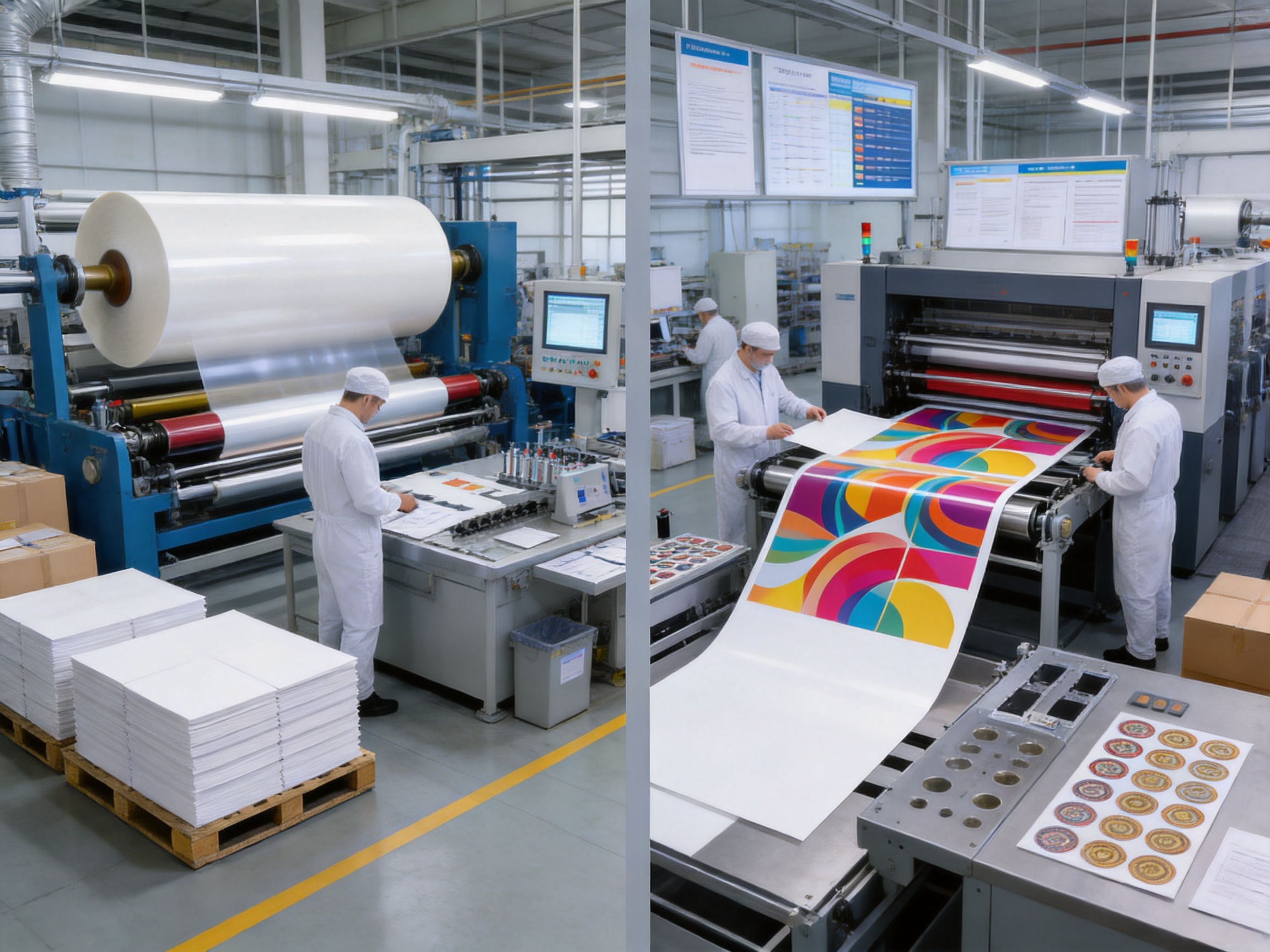
The performance of a self-adhesive material depends on controlled production at every stage. A high-quality label construction cannot be achieved by focusing only on the face film. Adhesive coating, lamination, curing or setting, slitting, sheeting, inspection, packaging, and storage all influence the finished product.
Research and Development
Suzhou Piaozhihua Composite Material Technology Co., Ltd. operates as a manufacturer integrating research and development with production and sales. The company has more than 20 years of OEM manufacturing experience and supports customized solutions based on customer drawings, samples, and project specifications.
Its research and development activities include work on face materials, adhesives, release liners, and composite constructions. This integrated approach is valuable because changing one layer can affect the performance of the others. For example, an adhesive suitable for a paper liner may behave differently on a heavier release paper or a CCK liner. Material development must therefore consider the entire construction.
The company also reports strong ODM and OEM capabilities, a professional research and development team, multiple patents, and an in-house testing laboratory. These resources help support product development, performance evaluation, and customer-specific modifications.
Adhesive Coating
Adhesive coating is a critical manufacturing step. The adhesive must be applied evenly across the web or sheet to achieve consistent tack, peel adhesion, coating weight, and aging behavior. Variations in coating can lead to weak areas, adhesive ooze, liner release problems, or inconsistent label application.
For anti-freeze products, coating control is especially important because the adhesive must provide suitable performance across a broader temperature range. The manufacturing process must account for viscosity, coat weight, drying or curing conditions, web tension, and environmental control.
Laminating
Laminating joins the face material, adhesive, and release liner into a stable composite. Correct lamination pressure and alignment help minimize wrinkles, air entrapment, telescoping, edge damage, and uneven bonding. A well-controlled laminate supports later sheeting, die cutting, printing, and application.
Material compatibility is also important. The face film, adhesive, and liner must interact properly during storage and use. The manufacturer’s ability to offer multiple liners and adhesive systems indicates that the lamination process can be adapted to different customer requirements.
Cutting and Sheeting
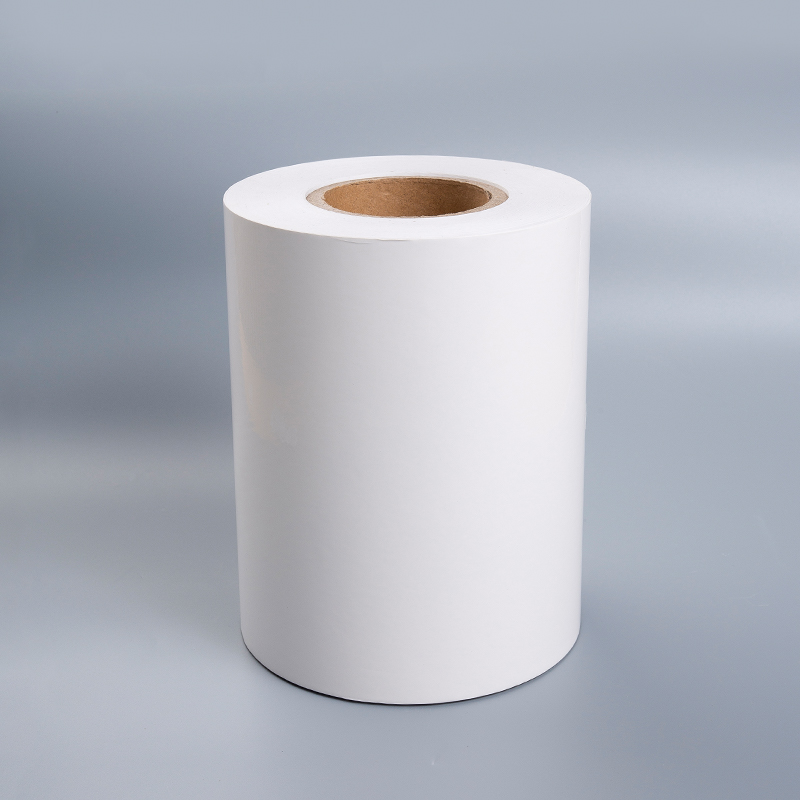
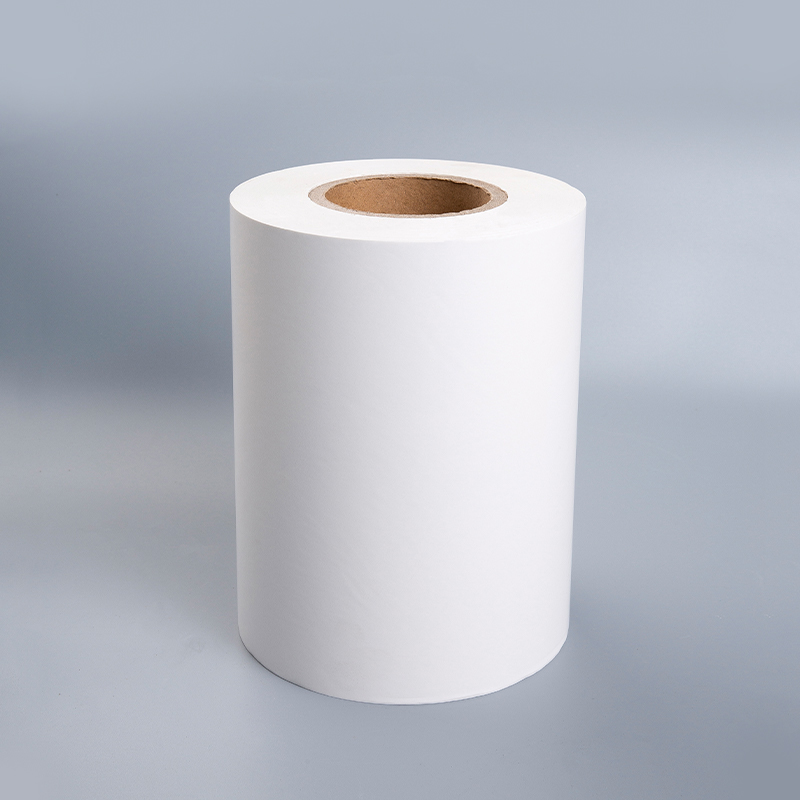
After coating and lamination, the material may be converted into jumbo rolls, narrower rolls, or sheets. Slitting and sheeting must be performed accurately to maintain width, length, squareness, edge quality, and sheet flatness.
Accurate sheeting is especially important for digital printers and automated feeders. Poorly cut sheets may cause feeding interruptions, registration errors, jams, or inconsistent stack handling. Controlled production helps ensure that ordered sheets are convenient to use in commercial printing and packaging operations.
Testing and Inspection
The manufacturer states that it operates its own testing laboratory and uses advanced inspection equipment. Testing may include visual inspection, dimensional checks, adhesive evaluation, release-force measurement, printability assessment, and inspection for coating or lamination defects.
Depending on the project, customers may request performance validation for low-temperature application, substrate adhesion, aging, moisture exposure, peel strength, tack, and print durability. Such testing is particularly important for products used in food, cold-chain, cosmetics, logistics, and automotive environments.
Packaging and Delivery
The product can be packed for sea transport using poly-wood pallets and cartons. Roll or sheet packaging is available from stock according to the order format. Sheets are described as being packed at 100 sheets per ream, with each ream wrapped in strong PE-coated kraft paper.
Strong pallets are wrapped with stretch film and secured with plastic fastening belts. This packaging system helps protect the material from dust, moisture, compression, movement, and edge damage during transport. Proper packaging is particularly important for sheeted self-adhesive materials because bent corners, crushed edges, and humidity exposure can affect feeding and application.
Anti-Freeze Adhesive Gloss White Pp In Sheet
Why Manufacturer Capability Matters
Purchasing self-adhesive material from an integrated manufacturer can offer advantages over buying separate face stock, adhesive products, and liners from unrelated suppliers. When one company controls coating, laminating, cutting, inspection, and packaging, it can coordinate the material structure and respond more efficiently to technical issues.
Integrated production may also simplify communication. Customers can discuss face thickness, adhesive type, liner grade, sheet size, printing process, packaging method, and application conditions with one technical partner. This reduces the risk that specifications are passed inaccurately between several suppliers.
The manufacturer’s stated annual production capacity exceeds 280 million square meters. This scale can support regular commercial supply, larger orders, and continuity for customers who need dependable replenishment. At the same time, the company’s OEM and ODM experience supports customized products rather than only standard catalog items.
The company also maintains sales and service coverage in numerous Chinese cities and has developed an international marketing network serving customers in Asia, Europe, the Americas, Africa, and other regions. International experience can be useful when customers require export packing, documentation, product customization, technical communication, and long-term supply coordination.
Another important strength is product breadth. The company specializes in self-adhesive labels and related composite materials, including different face stocks, adhesives, and backing papers. This broad product focus allows it to support multiple label programs instead of treating each project as an isolated purchase.
Comparison with Alternative Materials
Compared with Standard Paper Labels
Paper labels are often economical and easy to print, but they may be less suitable for moisture, condensation, and cold environments. They can absorb water, wrinkle, tear, or lose their visual quality when exposed to damp conditions. Gloss white PP offers a film-based alternative with a cleaner surface and better suitability for many wet or chilled applications.
Paper may still be preferable when a natural texture, high opacity, easy recyclability in a specific system, or very low cost is the principal requirement. The best choice depends on the product and application environment. Anti-freeze gloss white PP is most valuable when cold-temperature adhesion, moisture resistance, and premium appearance are important.
Compared with General-Purpose PP Adhesive
A standard PP label construction may provide a suitable film face but lack the adhesive performance needed for cold application. If labels are applied to refrigerated surfaces, a general-purpose adhesive may show reduced tack or delayed bonding. The anti-freeze adhesive option is developed specifically to improve reliability in such conditions.
However, not every application requires anti-freeze performance. For products stored at room temperature, a conventional permanent or removable adhesive may be more economical. The benefit of this product is the ability to select a cold-resistant adhesive when the service conditions justify it.
Compared with Clear Film
Clear films are useful when a no-label appearance or transparent design is required. Gloss white PP is different because it provides a solid white background. This improves contrast and allows printed colors to remain visible on dark, colored, or visually complex packages.
For labels containing substantial text, barcodes, nutritional information, or warning content, the white face may provide more reliable readability than a transparent film. It also gives designers a predictable background for consistent brand reproduction.
Compared with Other Plastic Films
Different plastic films offer different combinations of flexibility, stiffness, clarity, chemical resistance, and dimensional behavior. Polypropylene is an attractive option when lightweight construction, moisture resistance, gloss, and general label durability are required.
The availability of several thicknesses and liner choices allows the construction to be adjusted without changing to an entirely different material family. This can simplify procurement and help maintain a consistent appearance across product lines.
Environmental and Sustainability Considerations
Environmental performance should be evaluated across the complete label system, including face material, adhesive, liner, ink, packaging, converting waste, and end-of-life treatment. A film label may reduce product damage or replacement caused by label failure, but it must also be considered within the relevant recycling and waste-management system.
The manufacturer states that its brand positioning includes sustainable development and environmental protection. Its development work covers eco-friendly solutions involving face materials, adhesives, and backing papers. Customers seeking reduced environmental impact can discuss material selection, downgauging, adhesive options, packaging reduction, and production waste management with the supplier.
Material reduction may be possible when a thinner face stock and suitable liner provide adequate performance. However, downgauging should never compromise label function, application reliability, or product safety. Technical trials are needed before reducing thickness or changing the adhesive system.
Customers should also consider the liner. Release liners can represent a significant portion of label waste, particularly in high-volume applications. Selecting a liner that supports efficient die cutting and minimizes production waste may improve overall material efficiency. Recycling and disposal options depend on local facilities and the complete construction.
Storage, Handling, and Application Guidance
Self-adhesive sheets should be stored in a clean, dry environment away from direct sunlight, excessive heat, and large temperature fluctuations. The original packaging should remain intact until the material is ready for use. Stacks should be supported properly to prevent bending, crushing, or edge damage.
Before printing or application, the sheets should be conditioned to the working environment when they have been transported through significantly different temperatures. Sudden temperature changes can create condensation and may affect print quality, liner release, and adhesive performance.
The application surface should be clean, dry, and free from dust, grease, silicone contamination, and loose particles. Even a high-performance anti-freeze adhesive may not bond properly to a dirty, wet, highly textured, or low-energy surface. Applying firm, even pressure helps establish contact between the adhesive and substrate.
Cold-temperature performance should be verified using the actual package material and application conditions. Important test variables include substrate temperature, application pressure, dwell time, storage temperature, condensation, surface energy, and label geometry. A test using one package may not predict performance on another package with a different coating or texture.
Labels intended for refrigerated or frozen products should be tested after application and after exposure to the lowest expected temperature. Evaluation should include edge lifting, corner release, bubbling, shrinkage, ink durability, barcode scanning, and label appearance. The supplier can assist with selecting an appropriate adhesive and liner based on the results.
Customization and Technical Support
Customization is a major advantage for buyers whose products do not fit a standard label specification. Customers can request different face thicknesses, adhesive types, liners, roll widths, sheet sizes, and packaging arrangements. Custom sizes can be developed for specific printers, die cutters, package shapes, or application equipment.
Technical discussions should begin with a complete application profile. Useful information includes the substrate type, substrate color, surface finish, application temperature, final service temperature, humidity, expected storage period, label dimensions, printing process, ink system, dispensing method, and whether the label must be permanent or removable.
For international customers, it is also useful to provide the destination climate, transport conditions, packaging requirements, and expected order volume. This helps the manufacturer recommend a suitable combination of face material, adhesive, liner, and packing method.
OEM service can be useful when a customer already has a defined construction or sample. ODM service may be preferable when the customer wants the manufacturer to develop a solution from performance requirements. In either case, laboratory testing and production trials should be used to confirm the final specification.
Recommended Qualification Procedure
A practical qualification procedure begins with a review of the application. The supplier and customer should identify the surface, temperature range, moisture conditions, label dimensions, printing method, and service life.
The next step is to select a trial construction. For a cold application, this may include 60-micron gloss white PP, anti-freeze adhesive, and 60-gram glassine liner. If greater stiffness, different release behavior, or special converting performance is needed, a thicker face or alternative liner can be evaluated.
Printed samples should then be produced using the intended ink and finishing process. The samples should be applied to actual or representative packaging and exposed to relevant conditions. Results should be recorded rather than judged only by appearance immediately after application.
Finally, the approved construction should be documented with its face material, adhesive, liner, sheet size, printing recommendations, packaging method, and inspection requirements. This helps maintain consistency during repeat orders and prevents accidental substitution of a different material.
Business Value for Converters and Brand Owners
For label converters, this material can expand the range of applications served by an existing printing and finishing operation. Its compatibility with UV, flexographic, relief plate, and screen printing processes allows converters to produce decorative and functional labels using familiar technologies.
The sheet format can also support customer segments that require lower volumes, variable designs, or fast sample production. A converter may use standard sheets for prototypes and customized sheets for larger commercial programs. The availability of multiple thicknesses, adhesives, and liners provides additional opportunities to tailor quotations.
For brand owners, reliable adhesion can reduce the risk of unattractive or unreadable packaging. A label that stays in place supports brand presentation, product information, traceability, and consumer confidence. The glossy white PP surface can also create a consistent look across different package shapes and product categories.
For distributors, the manufacturer’s broad product range and export experience can simplify sourcing. Standard A4 and A3 formats may be suitable for general distribution, while jumbo rolls and customized sheet sizes can support industrial customers. Carton and pallet packing options help accommodate different delivery requirements.
Quality, Service, and Long-Term Supply
A self-adhesive material supplier should be evaluated not only by a single sample but also by its ability to maintain quality over repeated orders. Consistent coating, stable dimensions, accurate sheeting, reliable packaging, and responsive technical service are all important for commercial users.
Suzhou Piaozhihua Composite Material Technology Co., Ltd. reports more than two decades of manufacturing experience, production capacity exceeding 280 million square meters annually, and a nationwide and international sales network. These characteristics indicate an organization structured to support both standard products and customized supply programs.
The company’s stated quality philosophy emphasizes advanced inspection, an internal laboratory, continuous innovation, and customer service. Its values include quality, integrity, innovation, mutual benefit, and responsibility. For buyers developing long-term product lines, these factors can be as important as the initial material price.
Stable supply is particularly important for packaging materials because changing the face stock, adhesive, or liner can require new printing settings, application tests, regulatory reviews, and artwork approvals. Working with a manufacturer capable of maintaining a defined construction can reduce unnecessary requalification.
Frequently Asked Questions
What is anti-freeze gloss white PP in sheet?
It is a sheeted self-adhesive material made with a glossy white polypropylene face, anti-freeze adhesive, and a release liner. It is designed for labels and packaging that may require reliable adhesion in cold or refrigerated conditions.
What is the standard face material thickness?
The standard face material is 60-micron gloss white PP. 95-micron and 100-micron options are also available for applications requiring different stiffness, durability, or appearance.
Can the material be used for food packaging?
It can be used for suitable food packaging label applications, including chilled or refrigerated products, subject to confirmation of the complete construction, ink system, substrate, and applicable regulatory requirements. Direct food-contact applications require separate compliance evaluation.
Which printing methods are suitable?
The material is suitable for UV ink, relief plate, flexographic, screen, and other compatible printing methods. Printers should conduct an ink adhesion and durability test because polypropylene is a non-porous film.
Can cold stamping be applied?
Yes. The material is described as offering excellent cold-stamping performance. Trial production is recommended to verify foil transfer, registration, adhesion, and rub resistance for the selected equipment and design.
What liner is supplied as standard?
The standard liner is 60-gram white glassine paper. Other glassine, release paper, art paper, and CCK liner weights are available for customized requirements.
What sheet sizes are available?
Available sizes include A4, A3, 20 x 30 cm, 21 x 30 cm, 24 x 36 cm, 50 x 70 cm, and 70 x 100 cm. Customized sizes can also be discussed.
Can the product be supplied in rolls?
Yes. Jumbo roll widths include 1000, 1020, 1080, and 1530 mm. Roll and sheet packaging options are available according to the customer’s production requirements.
Is the adhesive permanent or removable?
The featured construction uses anti-freeze adhesive for cold-condition applications. Removable adhesive is also available when the label must be removed from the substrate without permanent bonding.
Is anti-freeze adhesive the same as cryogenic adhesive?
Not necessarily. Anti-freeze adhesive is intended for cold-temperature applications, while cryogenic adhesive is generally selected for more extreme low-temperature requirements. The correct option depends on the actual application and should be confirmed through testing.
Can the material be used on plastic packaging?
It can be used on many plastic packaging surfaces, but performance depends on the specific plastic, surface energy, texture, cleanliness, temperature, and coating. A test on the actual package is recommended before mass production.
How should the sheets be stored?
Store them in a clean, dry environment in their original packaging, protected from direct sunlight, excess humidity, large temperature changes, pressure, and edge damage. Allow the material to reach the working environment before printing when necessary.
What packaging is used for delivery?
Sheets can be packed at 100 sheets per ream, wrapped with strong PE-coated kraft paper, and placed on pallets protected with stretch film and plastic fastening belts. Carton and poly-wood pallet packing are available for rolls or sheets.
Can the manufacturer provide OEM and ODM services?
Yes. The company reports OEM and ODM capabilities and can develop or produce materials according to customer drawings, samples, and specified performance requirements.
How should a buyer select the correct construction?
The buyer should provide information about the substrate, application temperature, final service temperature, humidity, label size, printing method, dispensing process, required permanence, storage conditions, and regulatory needs. The supplier can then recommend the face, adhesive, and liner combination and arrange testing.
Conclusion
Anti-freeze gloss white PP in sheet is a versatile self-adhesive material for applications where appearance, moisture resistance, printability, and cold-temperature adhesion must work together. Its glossy white polypropylene face provides a bright and durable printing surface, while the anti-freeze adhesive is intended to improve bonding performance on chilled or cold-exposed products.
The availability of 60-, 95-, and 100-micron face materials, multiple adhesive technologies, several liner grades, standard sheet sizes, jumbo rolls, and customized dimensions makes the product suitable for a wide range of label and packaging programs. Its compatibility with UV, flexographic, relief plate, screen, and other printing methods gives converters practical production flexibility.
The manufacturing strength behind the material is equally important. Suzhou Piaozhihua Composite Material Technology Co., Ltd. integrates research and development, adhesive coating, laminating, cutting, testing, packaging, and customer service. More than 20 years of experience, an annual production capacity of over 280 million square meters, OEM and ODM capabilities, an in-house testing laboratory, and international supply experience support the company’s ability to deliver both standard and customized solutions.
For the best result, the final construction should be validated on the actual packaging and under the actual temperature, moisture, printing, and application conditions. When properly selected and tested, anti-freeze gloss white PP in sheet can help brands, converters, printers, and packaging suppliers achieve reliable labels with a clean professional appearance throughout demanding distribution environments.
References
1. Product specification information for anti-freeze adhesive gloss white PP in sheet, including face material, adhesive, liner, sizes, printing methods, and packaging options.
2. Manufacturer information regarding self-adhesive label production, adhesive coating, laminating, cutting, testing, OEM, ODM, and international supply capabilities.
3. General technical principles for pressure-sensitive adhesive selection, low-temperature bonding, release liners, and label converting.
4. General printing and converting guidance for polypropylene film labels, UV inks, flexographic printing, screen printing, die cutting, and cold stamping.
5. General packaging-material evaluation principles covering substrate preparation, temperature conditioning, moisture exposure, adhesion testing, and quality inspection.