
 English
 Español
 русский
 Français
 عربى
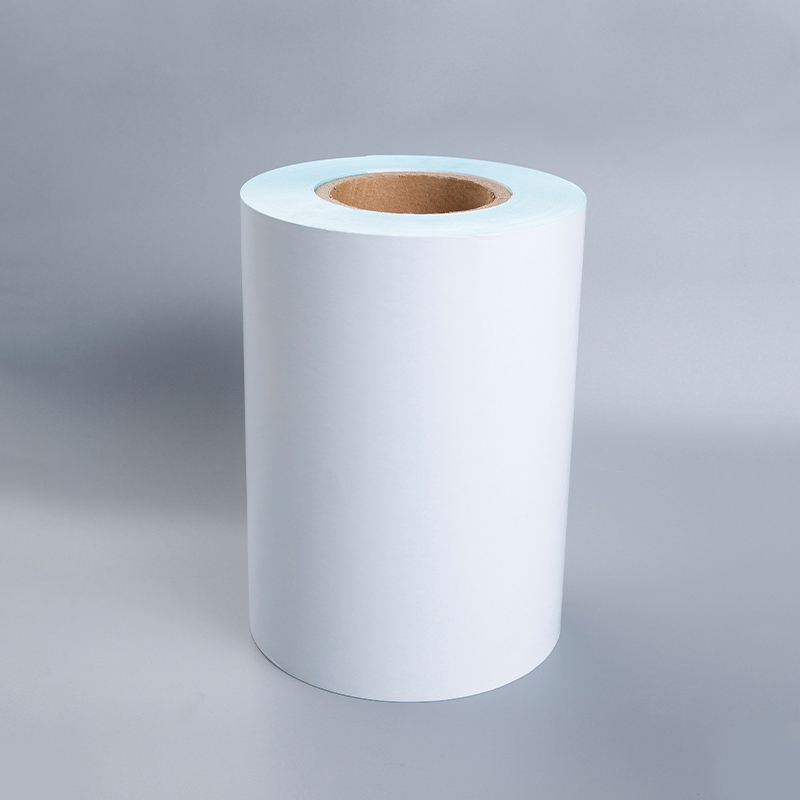
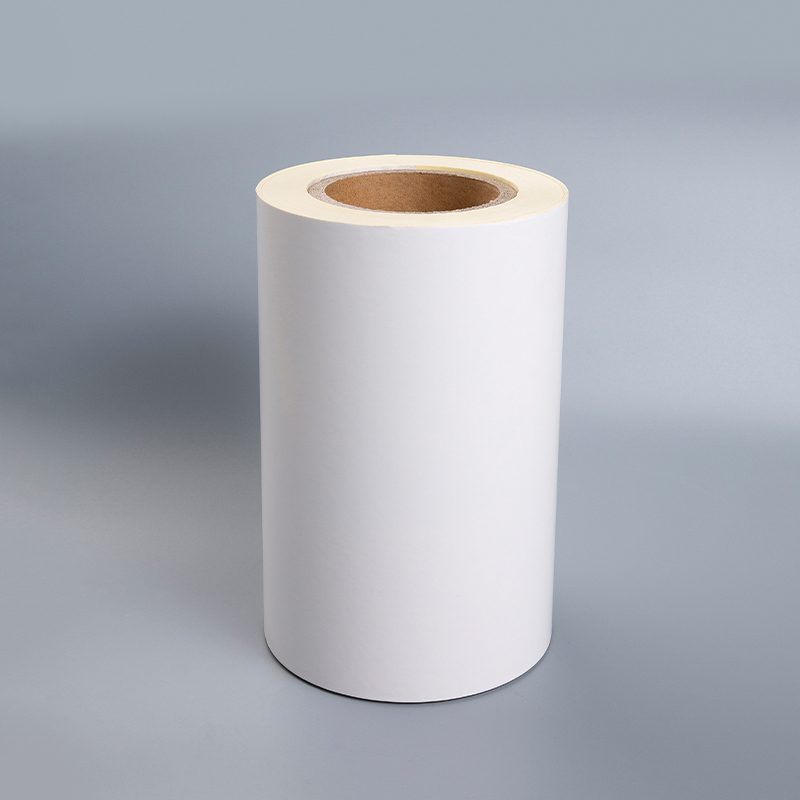
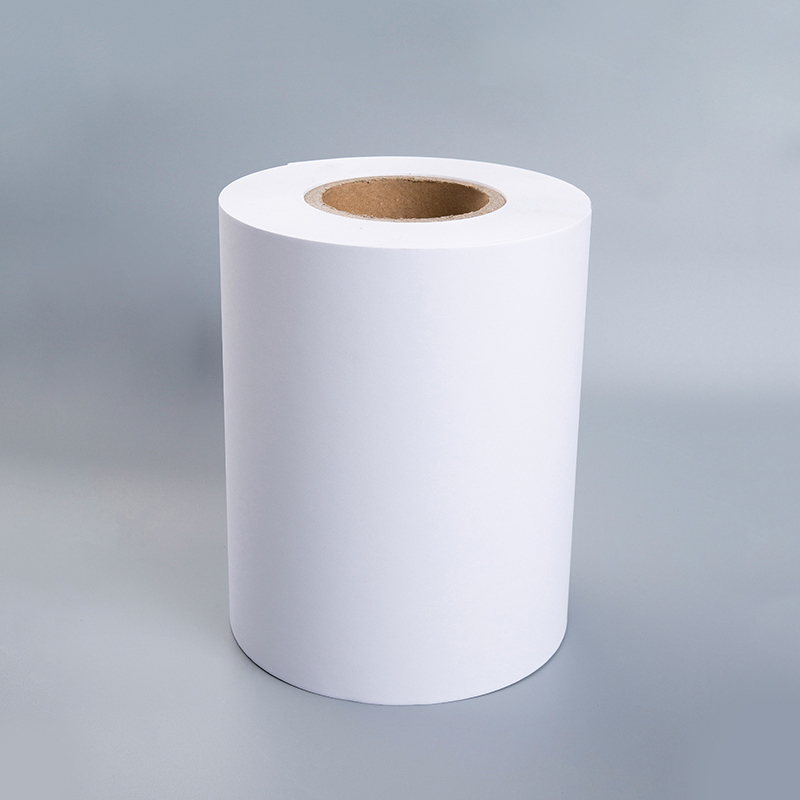
Plain holographic laser film in rolls is a versatile decorative and functional material designed for manufacturers that need visual impact, flexible converting options, and dependable performance in self-adhesive label applications. By combining a 50-micron plain holographic film face material with selectable adhesive systems and multiple liner options, this product provides a practical foundation for labels, packaging decoration, promotional materials, security-oriented graphics, and a wide range of printed products.
Unlike ordinary transparent, white, or metallic label films, holographic laser film creates a changing light effect across the surface. Depending on the viewing angle and lighting conditions, the film can display shifting reflections, colorful highlights, and a distinctive laser-like appearance. This visual effect helps products attract attention on retail shelves, improve brand presentation, and support customized packaging concepts without requiring a complicated substrate structure.
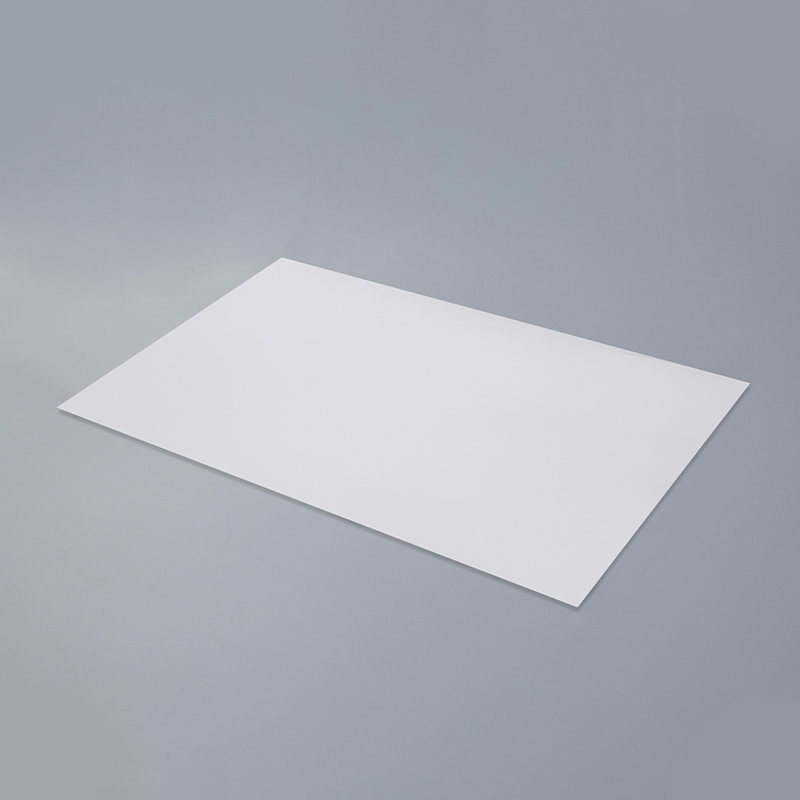
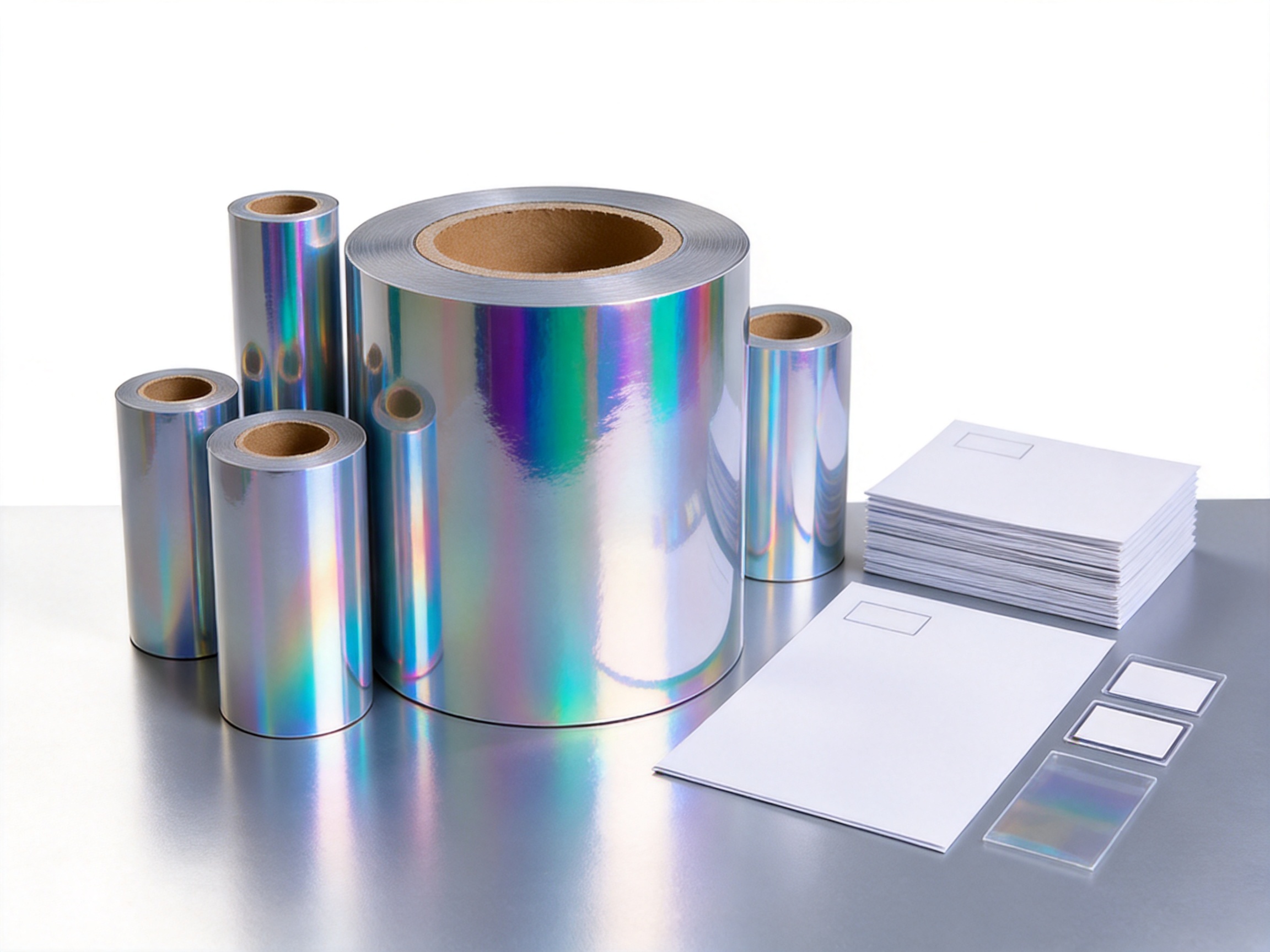
The roll format also gives converters considerable flexibility. Jumbo roll widths are available in 1000 mm, 1020 mm, 1080 mm, and 1530 mm, while sheet sizes can include A4, A3, 20 x 30 cm, 21 x 30 cm, 24 x 36 cm, 50 x 70 cm, and 70 x 100 cm. Customized dimensions can be developed according to production requirements. This makes the material suitable for both industrial roll-to-roll converting and sheet-based printing workflows.
For buyers comparing holographic label materials, the product’s main advantages are its adaptable construction, broad adhesive selection, liner compatibility, printing flexibility, and support from an experienced self-adhesive material manufacturer. These characteristics help customers balance appearance, application performance, production efficiency, and cost control.
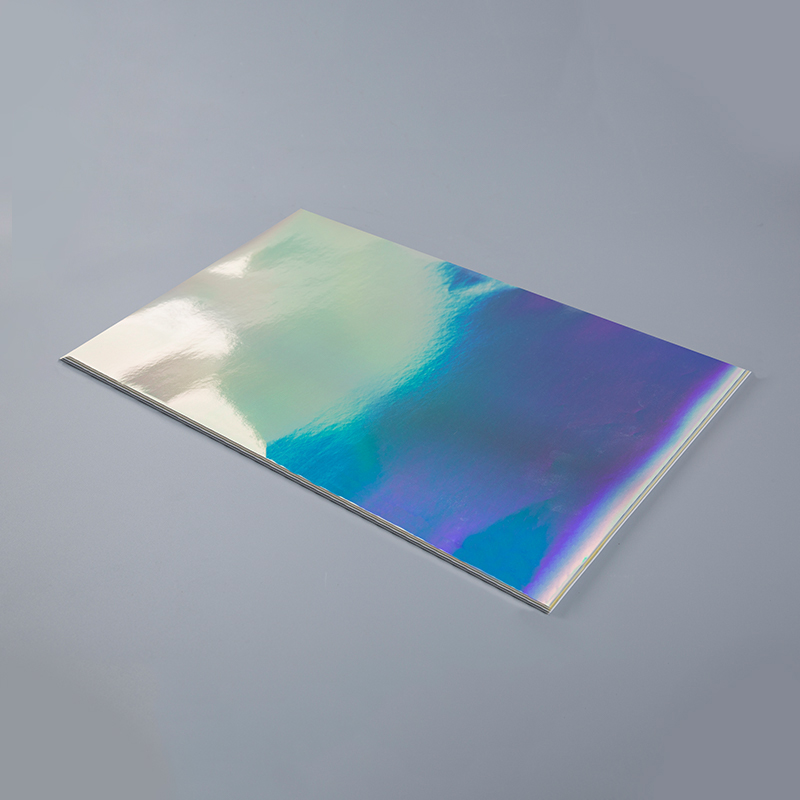
Plain Holographic Laser Film In Rolls
Content
- 1 1. Understanding Plain Holographic Laser Film
- 2 2. Key Product Advantages Compared with Conventional Label Materials
- 3 3. Printing and Converting Possibilities
- 4 4. Manufacturing Process and Technical Strengths
- 5 5. Applications Across Different Industries
- 6 6. Packaging, Delivery, and Storage
- 7 7. How to Select the Correct Specification
- 8 8. Quality and Performance Considerations
- 9 9. Sustainability and Responsible Material Development
- 10 10. Advantages of Working with an Integrated Manufacturer
- 11 11. Recommended Procurement Workflow
- 12 12. Frequently Asked Questions
- 12.1 Q1: What is plain holographic laser film?
- 12.2 Q2: What is the standard film thickness?
- 12.3 Q3: Which adhesives are available?
- 12.4 Q4: Can the material be supplied with different liners?
- 12.5 Q5: What roll widths are available?
- 12.6 Q6: Can the product be supplied in sheets?
- 12.7 Q7: Which printing methods can be used?
- 12.8 Q8: Is holographic film suitable for digital printing?
- 12.9 Q9: Can holographic film be used in cold environments?
- 12.10 Q10: Is this material suitable for tyre labels?
- 12.11 Q11: How should the material be stored?
- 12.12 Q12: Can the manufacturer provide OEM or ODM services?
- 12.13 Q13: What information should be included in an inquiry?
- 13 13. Conclusion
- 14 References
- 15 Product: Plain Holographic Laser Film In Rolls
1. Understanding Plain Holographic Laser Film
Plain holographic laser film is a filmic face material with a holographic or laser-reflective appearance. The word “plain” generally indicates that the film is supplied without a fixed printed design, repeating logo, or preselected decorative pattern on the visible surface. This allows customers to add their own graphics, colors, text, variable information, and branding during a subsequent printing process.
The unprinted surface is particularly useful for companies serving different markets or changing product lines. A converter can purchase one versatile base material and process it into labels or decorative pieces for multiple customers. Instead of maintaining a large inventory of preprinted holographic designs, the converter can print customized artwork when required.
The holographic appearance provides more than decoration. It can help create a visual distinction between an authentic product and ordinary packaging, strengthen shelf presence, and support premium positioning. In selected applications, the reflective effect may also contribute to a product’s anti-counterfeiting or brand-protection strategy. However, the exact security function depends on the final holographic structure, artwork, printing system, and application design.
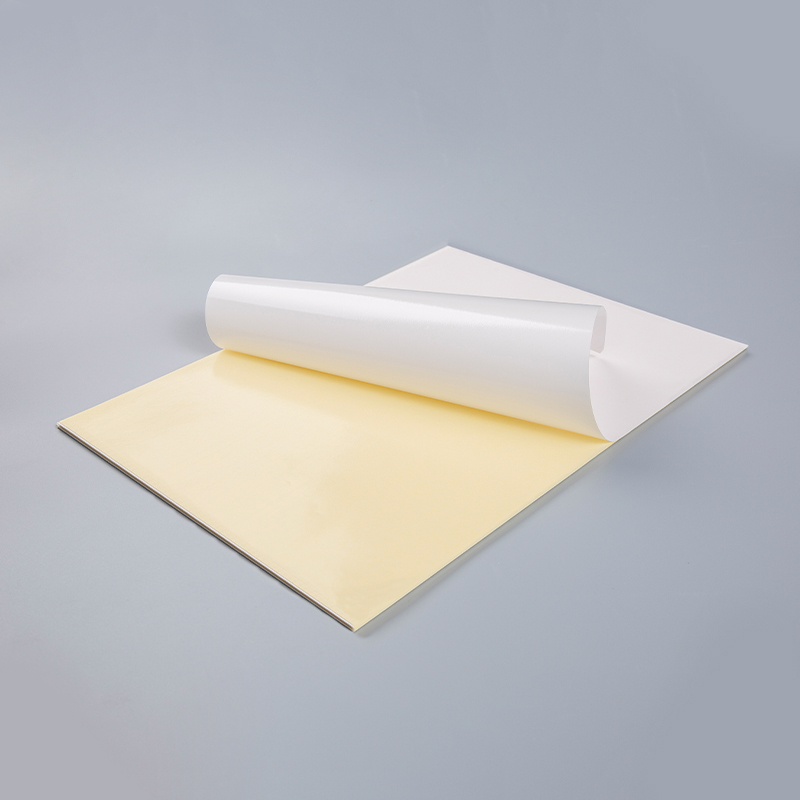
As a self-adhesive material, the product consists of three main functional layers:
1. A holographic laser film face material that provides the visible appearance and printing surface.
2. An adhesive layer selected according to the application, substrate, temperature, and required bonding strength.
3. A release liner that protects the adhesive before application and supports stable die-cutting, slitting, handling, and dispensing.
Each layer influences the final performance of the label. A visually attractive face material may not perform well if the adhesive is poorly matched to the application. Likewise, an appropriate adhesive may be difficult to process if the liner release characteristics are unsuitable. The availability of multiple face, adhesive, and liner combinations allows the complete construction to be adapted rather than forcing every customer to use one standard specification.
1.1 The Role of the Film Face Material
The listed standard construction uses 50-micron plain holographic film. This thickness offers a balance between visual effect, flexibility, handling strength, and material economy. It is thin enough for efficient converting while providing a more film-like structure than conventional paper label stock.
Film-based labels are often selected when the finished product may encounter moisture, handling, bending, or a demanding appearance requirement. The final resistance of a label depends on the complete construction and printing system, but a film face generally provides a useful foundation for applications where a paper face material may be less suitable.
1.2 Plain Surface for Custom Printing
The plain holographic surface gives customers more creative operating space. Printed graphics can be designed around the reflective background, allowing the holographic effect to remain visible in selected areas or to function as an overall visual base. Designers may use transparent inks, opaque inks, color overlays, white underprinting, variable data, or layered artwork to achieve different effects.
The final result depends on ink compatibility, surface treatment, printing pressure, drying conditions, and the selected printing method. For this reason, customers should confirm their intended process and conduct trials before mass production. The manufacturer can support specification discussions involving the face material, adhesive, liner, roll size, and converting requirements.
2. Key Product Advantages Compared with Conventional Label Materials
Plain holographic laser film offers several advantages over ordinary paper labels, standard clear films, and basic metallic films. The appropriate choice depends on the customer’s application, but the following benefits explain why holographic film is increasingly used in premium and attention-oriented label programs.
2.1 Stronger Visual Differentiation
Conventional white paper labels offer a familiar printing surface, but they may not provide sufficient visual distinction in crowded retail environments. Clear films can create a clean transparent effect, while silver films can deliver metallic brightness. Holographic laser film adds a changing, multidimensional appearance that can be more noticeable from different viewing angles.
This visual movement is valuable for product categories where packaging must communicate novelty, quality, technology, or premium value. It can be used for consumer goods, promotional labels, gift packaging, personal care products, specialty food packaging, event materials, and decorative applications.
2.2 Greater Design Flexibility
A preprinted decorative film has a fixed visual identity. In contrast, plain holographic film can be printed and converted into a variety of finished designs. Customers may change colors, artwork, text, logos, barcodes, batch information, and promotional messages without changing the base holographic film specification.
This flexibility is especially useful for contract converters, brand owners with frequent artwork changes, and companies serving multiple industries. It also helps reduce dependence on one fixed pattern, which can simplify inventory planning and support smaller customized orders.
2.3 Multiple Adhesive Choices
The standard information identifies water-based adhesive as an available option and also lists hot-melt, solvent, anti-freeze, removable, cryogenic, and tyre-grade rubber adhesive options. This is a significant advantage because the adhesive is one of the most application-sensitive components of a label material.
A water-based adhesive may be suitable for many general-purpose applications where balanced adhesion and processing are required. Hot-melt adhesive can be considered when high initial tack or fast bonding is important. Solvent adhesive may be selected for demanding substrates or specific resistance requirements. Removable adhesive is useful when labels must be taken off with less residue or surface damage.
Anti-freeze and cryogenic adhesives address low-temperature environments, while tyre-grade rubber adhesive is designed for the special surface and service conditions associated with tyre labeling. The correct adhesive should be selected after considering the application surface, surface energy, temperature range, humidity, storage period, label size, dispensing method, and expected service life.
2.4 Broad Liner Compatibility
The product can be supplied with several liner types and weights. The listed choices include 140-gram white release paper, 50-, 60-, 80-, 100-, and 120-gram glassine paper, 60-, 85-, and 120-gram release paper, 140- and 165-gram art paper, 50-, 80-, 90-, and 120-gram CCK liner, and transparent PET liners in 25, 36, 50, and 100 microns.
This range supports different converting and application needs. Paper liners can offer economical handling and a familiar converting structure. Glassine liners are commonly valued for smoothness and consistent caliper. CCK liners may be considered for applications requiring a clay-coated kraft-based structure. Transparent PET liners can provide dimensional stability and a clear liner appearance, which may be advantageous in specialized processing or inspection situations.
The correct liner affects die-cutting accuracy, matrix stripping, dispensing, roll stability, release force, storage, and operator handling. Offering multiple liner types enables customers to optimize the construction for their equipment rather than adapting equipment to a single fixed material.
2.5 Roll and Sheet Availability
Roll supply is important for high-volume converters because it supports slitting, flexographic printing, digital printing, rotary die-cutting, and other continuous processes. The available jumbo roll widths of 1000 mm, 1020 mm, 1080 mm, and 1530 mm provide options for different machine widths and cutting plans.
Sheet sizes such as A4, A3, 20 x 30 cm, 21 x 30 cm, 24 x 36 cm, 50 x 70 cm, and 70 x 100 cm extend the product’s usefulness to sheet-fed printing, office-format applications, commercial printing, and specialized packaging production. Customized sheet and roll sizes can help reduce waste and improve material utilization.
| Product Element | Available or Standard Option | Application Benefit |
|---|---|---|
| Face material | 50-micron plain holographic film | Reflective appearance, flexible design base, filmic structure |
| Adhesive | Water-based, hot-melt, solvent, anti-freeze, removable, cryogenic, tyre-grade rubber | Adaptation to different substrates and service conditions |
| Paper liner | White release paper, glassine, art paper, release paper, CCK liner | Choices for converting, handling, release, and cost requirements |
| Film liner | Transparent PET in 25, 36, 50, and 100 microns | Dimensional stability and specialized processing support |
| Jumbo roll widths | 1000, 1020, 1080, and 1530 mm | Compatibility with different production lines and cutting layouts |
| Sheet sizes | A4, A3, 20 x 30 cm, 21 x 30 cm, 24 x 36 cm, 50 x 70 cm, 70 x 100 cm | Support for sheet-fed and customized production |
3. Printing and Converting Possibilities
The manufacturer describes the material as compatible with a variety of printing methods, including flat printing, letterpress printing, combination printing, and other processes. The precise result depends on the press, ink system, surface preparation, artwork, and drying conditions, but the flexible construction allows customers to develop multiple product concepts.
3.1 Flat Printing
Flat printing methods can be used to apply graphics, text, and decorative elements across the holographic surface. Designers may use the film as a reflective background or selectively cover portions of it with opaque colors. The interaction between ink coverage and the holographic face can produce contrast between solid, semi-transparent, and reflective areas.
Flat printing can be appropriate for labels with relatively straightforward artwork, product information, promotional messages, or brand graphics. Before production, customers should test ink adhesion and drying because the holographic surface may behave differently from standard paper or untreated film.
3.2 Letterpress Printing
Letterpress printing can add a tactile or sharply defined effect to selected designs. It may be used for detailed text, decorative borders, logos, or premium packaging elements. When combined with a holographic background, the contrast between the dimensional print effect and the reflective film can create a distinctive appearance.
Printing pressure, plate preparation, ink selection, and registration must be controlled carefully. The converter should confirm that the selected material thickness and liner construction are suitable for the press and die-cutting workflow.
3.3 Combination Printing
Combination printing expands the creative possibilities by integrating two or more printing technologies or finishing steps. For example, a customer may combine conventional colored printing with variable digital information, specialty ink with standard process colors, or a printed design with additional coating or die-cutting.
This approach is useful when the label must combine brand consistency with variable data, short-run customization, or complex decorative details. The holographic film functions as a visual base while the selected printing and finishing technologies determine the final communication effect.
3.4 Digital Printing and Short Runs
The product category and company’s stated capabilities also support interest in digital printing paper and self-adhesive label materials. Digital printing can be valuable for short runs, multiple versions, customized packaging, prototypes, seasonal products, and variable information. Plain holographic film allows digital printers and converters to create distinctive labels without manufacturing a custom holographic pattern for every order.
Digital printing trials are recommended because printer manufacturers use different toner, inkjet, curing, and feeding systems. The customer should evaluate surface adhesion, color density, scratch resistance, feeding stability, curl, and finishing behavior under actual production conditions.
3.5 Die-Cutting and Slitting
Roll-format material can be slit into narrower widths or converted into labels of different shapes. Die-cutting may produce standard rectangles, circles, ovals, custom contours, peel-and-reseal formats, or decorative shapes. The release liner, adhesive coat weight, film thickness, and die settings all influence matrix removal and finished-label quality.
For high-speed production, stable web tension and consistent material caliper are important. The manufacturing process must control coating uniformity, winding quality, edge condition, and roll hardness so that the material can move smoothly through downstream equipment.
4. Manufacturing Process and Technical Strengths
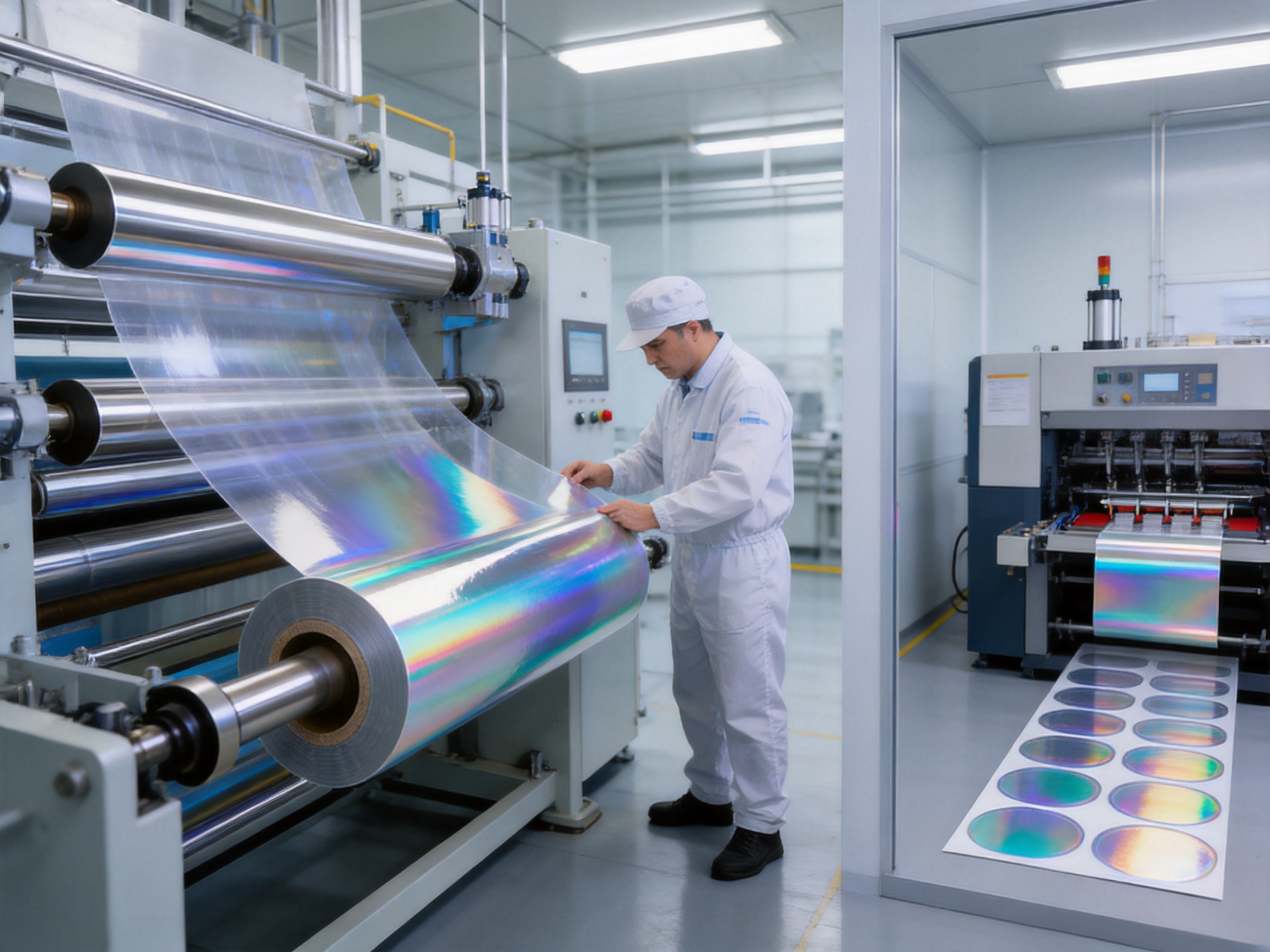
The company behind the product is Suzhou Piaozhihua Composite Material Technology Co., Ltd., a manufacturer specializing in self-adhesive labels and related composite materials. According to the supplied company information, the business integrates research and development, production, sales, and after-sales service. Its manufacturing scope includes gluing, laminating, and cutting, which are central processes for producing high-quality self-adhesive film materials.
4.1 Adhesive Coating
Adhesive coating is a critical step in the construction of self-adhesive film. The adhesive must be applied evenly across the web to support consistent bonding and reliable converting. Uneven coating can lead to weak adhesion, transfer problems, bubbles, edge lift, or inconsistent label performance.
Different adhesive chemistries require different coating, drying, curing, and handling conditions. A manufacturer with multiple adhesive options must be capable of managing these variables while maintaining stable coat weight and web quality. Water-based, hot-melt, solvent, removable, low-temperature, and specialty rubber adhesive systems may each require specific production controls.
For customers, this manufacturing capability offers an important advantage: the adhesive is treated as an engineered part of the finished product rather than as a generic attachment layer. The selection can be matched to the application instead of relying on one universal adhesive.
4.2 Lamination
Lamination joins the holographic film, adhesive structure, and release liner into a stable composite material. Proper lamination requires controlled alignment, pressure, web tension, and surface cleanliness. The objective is to produce a uniform construction that can be stored, transported, printed, die-cut, and applied without separation or processing instability.
For holographic materials, lamination quality also matters to visual appearance. Wrinkles, trapped air, contamination, uneven pressure, or web distortion can affect both the product’s appearance and its converting performance. A controlled lamination process helps preserve a smooth, attractive surface.
4.3 Slitting and Cutting
After coating and lamination, the jumbo web can be slit or cut into customer-specific roll widths and sheet formats. Accurate slitting helps maintain clean edges and consistent roll geometry. This is particularly important for converters using narrow-web presses, automated label applicators, or high-speed die-cutting equipment.
The company states that it has full production lines covering gluing, laminating, and cutting, as well as an annual production capacity of more than 280 million square meters. Such capacity can support both standard products and customized orders, although the final lead time and minimum order quantity should be confirmed for each specification.
4.4 Quality Inspection and Testing
The company also identifies its own testing laboratory and advanced inspection equipment as part of its quality assurance system. In self-adhesive material production, testing may include visual inspection, film thickness, basis weight, adhesive coat weight, release force, peel adhesion, tack, shear performance, dimensional stability, roll appearance, and packaging integrity.
Testing requirements should be connected to the customer’s real application. A label for a dry indoor environment may require a different performance profile from a label exposed to refrigeration, freezing temperatures, moisture, rough handling, or difficult surfaces. Product qualification should therefore include both laboratory checks and application trials.
4.5 Research and Development
The company reports strong research and development capabilities, multiple patents, and experience with OEM and ODM services. This is relevant to buyers who need more than an off-the-shelf material. A customized holographic label program may require a special liner, adhesive modification, roll dimension, sheet size, coating arrangement, or printing recommendation.
OEM and ODM support can shorten the process of converting a technical requirement into a production specification. Customers may provide drawings, samples, or performance targets for evaluation. The manufacturer can then recommend a face material, adhesive, liner, and processing format suitable for the intended use.
5. Applications Across Different Industries
Plain holographic laser film can be developed for diverse applications because its appearance, adhesive, liner, and dimensions can be configured in different ways. The following applications represent potential uses rather than limitations.
5.1 Consumer Product Labels
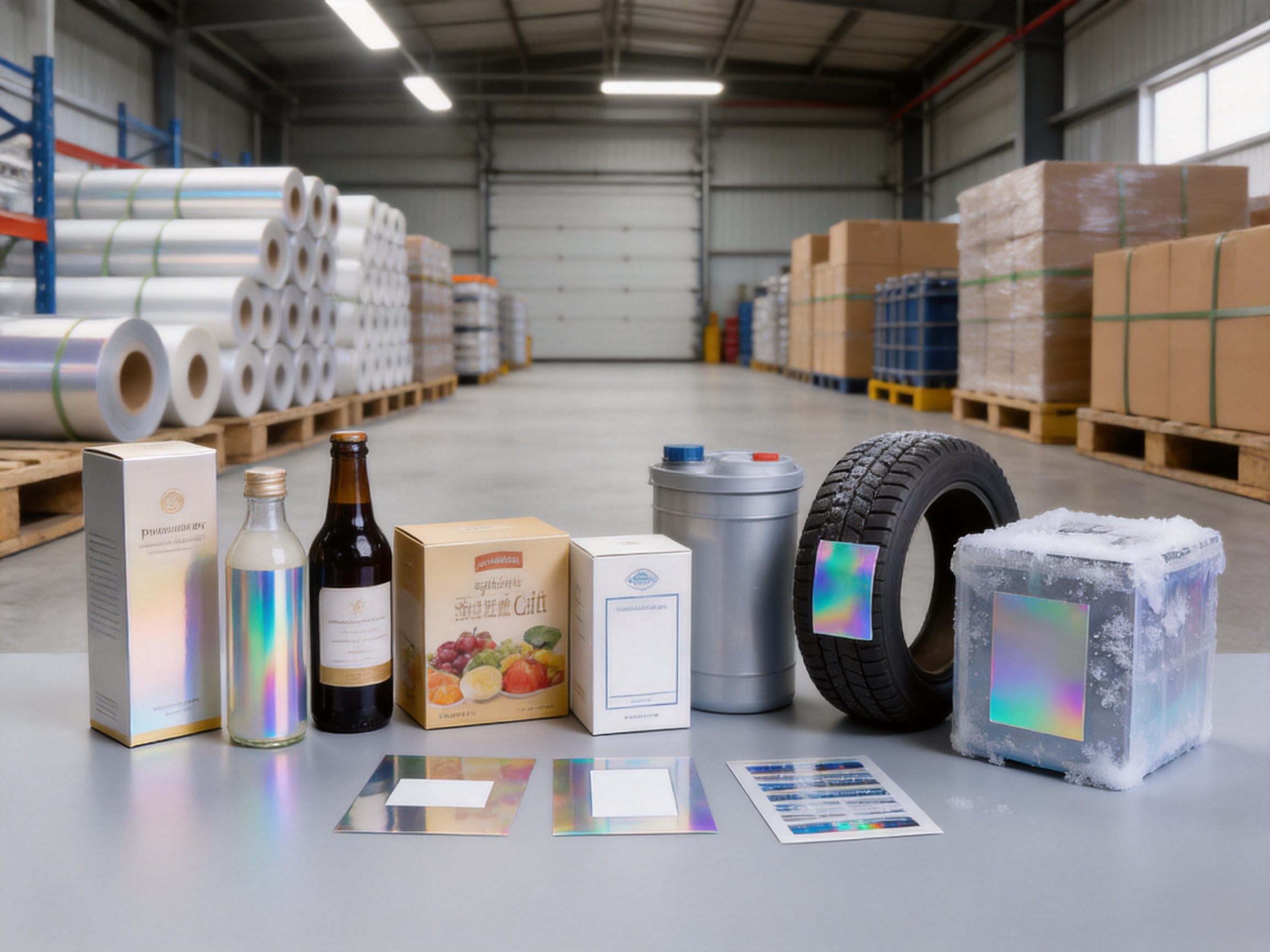
Consumer products often compete for attention through packaging design. Holographic labels can be used on bottles, cartons, boxes, jars, pouches, and promotional packs. They may communicate premium quality, innovation, limited-edition status, or a distinctive brand personality.
For these applications, the label construction should be selected according to the packaging substrate. Glass, coated paperboard, plastic containers, flexible packaging, and painted surfaces may require different adhesive behavior. The customer should also assess exposure to oils, moisture, condensation, refrigeration, and repeated handling.
5.2 Promotional and Event Materials
Promotional campaigns often require a strong visual effect and fast customization. Plain holographic film can be printed with campaign-specific information, QR codes, event details, limited-time offers, or seasonal graphics. Roll and sheet formats support both industrial label production and commercial print workflows.
Because the base material is plain, customers can produce different campaigns without ordering an entirely new decorative film pattern for every project. This can be helpful when the number of versions is high or the order quantities are moderate.
5.3 Premium Packaging
Premium packaging uses surface effects to create perceived value. A holographic laser background may be combined with opaque typography, metallic ink, selective varnish, embossing, or shaped die-cutting. The result can be used for cosmetics, personal care products, gift items, specialty foods, beverages, electronics accessories, and other products where presentation is important.
The final construction should be tested for scuffing, ink adhesion, label edge performance, and compatibility with automated application. If the product will be handled frequently, protective finishing may be considered to help preserve the visual effect.
5.4 Security-Oriented Brand Protection
Reflective and holographic effects are sometimes used as one element in a broader brand-protection system. They can make packaging more visually distinctive and may help consumers recognize authorized products. However, a holographic appearance alone should not be treated as a complete security solution. A high-security program may require serialized data, special inks, microtext, covert features, database control, or authentication tools.
For customers considering this use, the manufacturer can discuss the required appearance and construction, while the brand owner and security specialists should define the complete authentication strategy.
5.5 Tyre and Industrial Labeling
The availability of tyre-grade rubber adhesive indicates that the product family can be adapted for demanding industrial labeling requirements. Tyre surfaces can be difficult because of their texture, composition, curvature, and environmental exposure. Adhesive selection is therefore essential.
Industrial customers should provide information about the surface, storage conditions, application temperature, expected service temperature, label size, and required removal or permanence. The face material and liner should also be evaluated for printing, application equipment, and storage stability.
5.6 Low-Temperature and Cryogenic Applications
Anti-freeze and cryogenic adhesive options expand the potential application range into cold-chain, laboratory, medical, scientific, and specialized storage environments. Labels used in these settings may need to bond at low temperatures or remain attached after exposure to freezing conditions.
Such applications require careful validation. The customer should test the complete label on the actual container or package, under the complete temperature cycle, including condensation, freezing, thawing, and handling. A suitable adhesive option improves the likelihood of success, but application trials remain essential.
6. Packaging, Delivery, and Storage
Packaging quality protects the material from damage during handling and transportation. The listed packaging options include sea-transit-worthy poly-wood pallet packing and carton packing for rolls or sheets from stock. For sheet products, 100 sheets are packed per ream, with the ream wrapped in strong polyethylene-coated kraft paper.
The supplied packaging description also identifies strong pallets wrapped with stretch film and fastened with plastic fastening belts. This type of preparation helps stabilize the shipment and reduce the risk of movement during transportation. For export orders, packaging should be matched to the shipment method, container loading plan, destination climate, and expected transit time.
Self-adhesive materials should be stored in a clean, dry environment away from direct sunlight, excessive heat, moisture, and chemical contamination. Rolls should be kept in their original packaging until use whenever possible. Sudden temperature changes can affect adhesive behavior and may contribute to condensation, so the material should be conditioned before printing or converting.
Customers should also follow first-in, first-out inventory management and confirm recommended storage life with the supplier. The actual storage period may depend on the adhesive system, liner, packaging, warehouse conditions, and product construction.
7. How to Select the Correct Specification
Choosing a holographic self-adhesive material should begin with the finished application rather than with appearance alone. The following questions can help customers define the correct specification.
7.1 What Surface Will Receive the Label?
Identify whether the label will be applied to glass, coated paper, cardboard, polyethylene, polypropylene, PET, metal, rubber, painted surfaces, or another substrate. Surface energy, texture, curvature, cleanliness, and coating all influence adhesive performance.
7.2 What Temperature Conditions Are Expected?
Record the application temperature and the service temperature. If the label will be applied in a cold room, freezer, refrigerated warehouse, or laboratory environment, a conventional adhesive may not be sufficient. Anti-freeze or cryogenic options should be considered and tested.
7.3 Is the Label Permanent or Removable?
Permanent applications require long-term adhesion and resistance to edge lift. Removable applications require controlled bonding and acceptable residue performance. The customer should clearly state whether the label must be removed from glass, plastic, painted metal, packaging board, or another surface.
7.4 Which Printing Process Will Be Used?
Provide details about the printing press, ink type, curing method, web width, roll direction, printing speed, and finishing process. This helps the manufacturer recommend a compatible liner and surface construction. Digital, flat, letterpress, flexographic, and combination printing can impose different requirements.
7.5 What Roll or Sheet Format Is Required?
Specify the finished roll width, outer diameter, core size, winding direction, roll length, sheet dimensions, and packaging method. Using the correct width can improve nesting efficiency and reduce trim waste. Customized dimensions may be possible for special equipment or product layouts.
7.6 What Visual Effect Is Desired?
The customer should describe whether the holographic film will remain broadly visible, appear through transparent printed areas, or be integrated into a more complex design. Artwork samples, color targets, and printed proofs can help align expectations before bulk production.
8. Quality and Performance Considerations
Visual appearance is important, but a successful label must also perform consistently during printing, converting, application, storage, and use. A professional purchasing evaluation should include the following areas.
8.1 Surface Appearance
Inspect the film for uniform holographic effect, wrinkles, streaks, contamination, scratches, bubbles, edge damage, and unacceptable color variation. Because the material is decorative, visual consistency is especially important.
8.2 Adhesive Performance
Adhesive evaluation may include initial tack, peel adhesion, holding power, low-temperature adhesion, aging, residue, and resistance to the intended environment. Testing should be completed on the actual application substrate and under realistic conditions.
8.3 Converting Stability
Converters should examine web tension, roll hardness, liner release, die-cutting behavior, matrix stripping, slitting quality, and finished roll telescoping. A material that looks attractive but runs poorly can increase waste and reduce production efficiency.
8.4 Print Quality
Print trials should assess ink wetting, color density, registration, drying, scratch resistance, opacity, and the interaction between printed areas and the holographic background. Transparent and opaque inks may produce significantly different results.
8.5 Application Reliability
The label should be tested using the intended application method, whether manual, semi-automatic, or fully automatic. Evaluate dispensing, wrinkle formation, edge lift, bubbles, adhesion speed, and final appearance. Curved or textured products may require special consideration.
9. Sustainability and Responsible Material Development
The company describes its brand positioning as focused on sustainable development and environmental protection. Its stated development direction includes eco-friendly solutions involving face materials, adhesives, and backing papers. This is relevant to customers seeking to improve the environmental profile of their labeling programs.
Holographic film is a specialized visual material, so sustainability decisions should be considered across the entire product life cycle. Customers may evaluate material thickness, adhesive selection, liner type, production waste, packaging, transportation, and end-of-life handling. Lightweight constructions can reduce material consumption, while optimized roll widths may lower trim waste.
Environmental claims should be based on the complete construction and the customer’s local regulations. A film label, adhesive, and liner should be assessed together rather than judged by one component alone. Customers may request technical data, compliance information, and recommendations for reducing waste or improving material efficiency.
10. Advantages of Working with an Integrated Manufacturer
An integrated self-adhesive material manufacturer can provide advantages beyond basic product supply. When gluing, laminating, cutting, quality inspection, research and development, and customer service are managed within one organization, technical communication may be more direct.
First, integrated manufacturing allows the company to coordinate the face material, adhesive, and liner as one construction. This can reduce the risk of incompatibility between components.
Second, in-house converting and cutting support can help customers obtain customized jumbo widths, narrow rolls, or sheet formats. This is valuable when the customer’s equipment or product layout does not match standard sizes.
Third, research and development capabilities can support new application requirements. Customers may need a special adhesive, low-temperature performance, removable behavior, customized liner, or printing recommendation.
Fourth, the company’s stated annual capacity of more than 280 million square meters indicates substantial manufacturing scale. Capacity can be important for customers that require supply continuity, repeat orders, and coordinated delivery across multiple markets.
Fifth, the company reports more than 20 years of OEM manufacturing experience and a marketing network serving customers in Asia, Europe, the Americas, Africa, and other regions. International experience may help with export packaging, technical communication, product customization, and long-term supply planning.
11. Recommended Procurement Workflow
A structured procurement process can help customers achieve better results with plain holographic laser film.
Step one is to define the application. Provide the substrate, label size, temperature conditions, indoor or outdoor exposure, expected service life, and whether the label must be permanent or removable.
Step two is to define the printing and converting process. Identify the press type, ink system, printing speed, die-cutting method, finished roll specifications, and application equipment.
Step three is to select the construction. Choose the 50-micron holographic film, adhesive type, liner type, roll width, sheet size, and any special packaging requirements.
Step four is to request samples. Samples should be large enough for printing and application trials. If possible, provide the actual package or substrate for evaluation.
Step five is to complete testing. Review print quality, adhesion, converting behavior, environmental resistance, and storage performance. For specialty applications, test the material through the entire application and service cycle.
Step six is to confirm the technical specification. Document the face material, adhesive, liner, thickness, width, roll length, core, winding direction, packaging, inspection requirements, and acceptance criteria.
Step seven is to establish a repeat-order plan. Confirm production lead time, minimum order quantity, stock availability, shipment method, and the process for approving future changes.
12. Frequently Asked Questions
Q1: What is plain holographic laser film?
Plain holographic laser film is a film-based self-adhesive material with a reflective holographic appearance and no fixed customer-specific printed design. It can be printed and converted into customized labels, packaging decorations, promotional materials, and specialty products.
Q2: What is the standard film thickness?
The listed standard face material is 50 microns. Other construction details, including adhesive and liner, should be confirmed according to the application and order specification.
Q3: Which adhesives are available?
Available options include water-based adhesive, hot-melt adhesive, solvent adhesive, anti-freeze adhesive, removable adhesive, cryogenic adhesive, and tyre-grade rubber adhesive. The best choice depends on the substrate, temperature, permanence, and service conditions.
Q4: Can the material be supplied with different liners?
Yes. Listed liner choices include white release paper, glassine paper, release paper, art paper, CCK liner, and transparent PET liner. Different weights and PET thicknesses are available depending on the required construction.
Q5: What roll widths are available?
Listed jumbo roll widths are 1000 mm, 1020 mm, 1080 mm, and 1530 mm. Customized widths may be discussed according to production requirements.
Q6: Can the product be supplied in sheets?
Yes. Listed sheet sizes include A4, A3, 20 x 30 cm, 21 x 30 cm, 24 x 36 cm, 50 x 70 cm, and 70 x 100 cm. Customized sheet sizes are also available subject to confirmation.
Q7: Which printing methods can be used?
The material can be developed for different printing methods, including flat printing, letterpress printing, combination printing, and other suitable processes. Customers should conduct compatibility trials with their specific ink and printing equipment.
Q8: Is holographic film suitable for digital printing?
It may be suitable for digital printing applications, especially customized and short-run work, but the exact result depends on the digital printer, ink or toner system, curing method, and surface preparation. A print test is recommended before mass production.
Q9: Can holographic film be used in cold environments?
Special anti-freeze and cryogenic adhesive options are listed. The complete label should be tested on the actual container under the required temperature cycle, including application, storage, freezing, thawing, and handling conditions.
Q10: Is this material suitable for tyre labels?
A tyre-grade rubber adhesive option is listed, indicating that the product family can be adapted for tyre-related applications. Because tyre surfaces are demanding, customers should provide detailed application information and complete a practical trial.
Q11: How should the material be stored?
Store the material in a clean, dry environment away from direct sunlight, excessive heat, moisture, and contamination. Keep it in the original packaging where possible and allow it to reach the working environment before printing or converting.
Q12: Can the manufacturer provide OEM or ODM services?
The company reports OEM and ODM capabilities, including production based on customer drawings or samples. Customized face material, adhesive, liner, roll width, sheet size, and packaging requirements can be discussed with the technical and sales teams.
Q13: What information should be included in an inquiry?
An inquiry should include the application, substrate, label dimensions, adhesive requirement, printing process, temperature range, indoor or outdoor conditions, roll or sheet format, estimated quantity, packaging requirements, and destination. Providing samples or drawings can improve the accuracy of the recommendation.
13. Conclusion
Plain holographic laser film in rolls is a flexible self-adhesive material for customers seeking a combination of visual distinction, customized printing, and adaptable converting performance. Its 50-micron holographic film face provides a striking reflective effect, while the plain surface allows brand owners and converters to create their own graphics and product variations.
The broad selection of adhesives and liners is one of the product’s strongest technical advantages. Water-based, hot-melt, solvent, removable, anti-freeze, cryogenic, and tyre-grade rubber adhesive options allow the construction to be matched to different application conditions. Multiple paper and PET liner choices provide additional flexibility for printing, die-cutting, dispensing, storage, and handling.
Roll widths from 1000 mm to 1530 mm and a selection of sheet sizes support both industrial and commercial production. The material can be considered for consumer labels, premium packaging, promotional graphics, specialty printing, security-oriented designs, low-temperature applications, and industrial labeling.
Behind the product, Suzhou Piaozhihua Composite Material Technology Co., Ltd. offers integrated gluing, laminating, cutting, research and development, testing, OEM, and ODM capabilities. Its stated production capacity, laboratory resources, international market experience, and customized manufacturing approach can support customers that require more than a standard label material.
The best results come from selecting the complete construction according to the intended application. By defining the substrate, temperature, adhesive permanence, printing method, roll or sheet format, and service conditions in advance, customers can obtain a holographic label solution that combines appearance, production efficiency, and dependable performance.
References
1. Product specification information for plain holographic laser film in rolls, including film thickness, adhesive options, liner options, roll widths, and sheet sizes.
2. Manufacturer information for Suzhou Piaozhihua Composite Material Technology Co., Ltd., including production capabilities, OEM and ODM services, research and development, testing resources, and international supply experience.
3. General principles of pressure-sensitive adhesive label construction, including face materials, adhesive systems, release liners, coating, lamination, and converting.
4. General guidelines for printing, die-cutting, slitting, packaging, storage, and application testing of self-adhesive film materials.
5. General considerations for sustainable development in self-adhesive label materials, including substrate selection, adhesive design, liner optimization, packaging, and production waste reduction.