
 English
 Español
 русский
 Français
 عربى
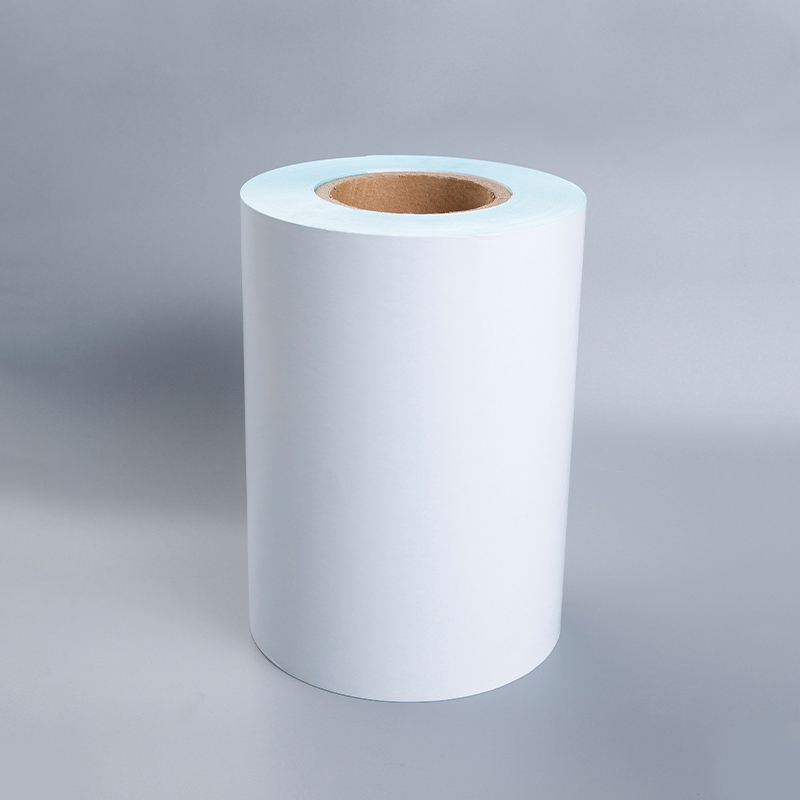
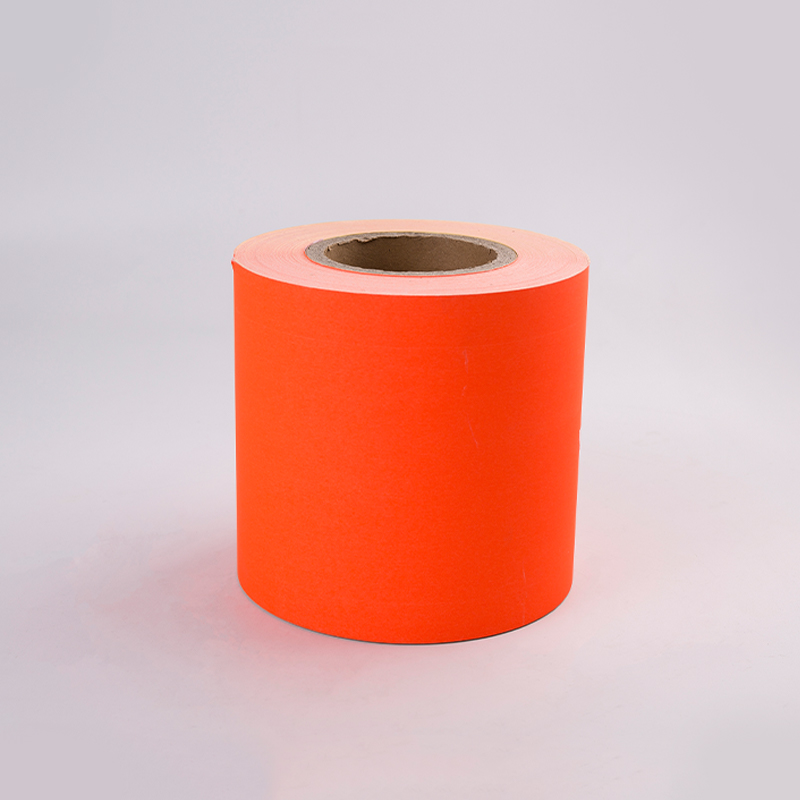
Fluorescent paper in rolls is a specialized self-adhesive label material designed for applications where visibility, color impact, printing performance, and reliable adhesion are equally important. Its bright fluorescent face material helps printed messages, warning symbols, promotional graphics, identification marks, and special labels attract attention more quickly than conventional white or pastel paper. Supplied in jumbo rolls and available with multiple adhesive and liner combinations, this material can be adapted to a wide range of converting, printing, packaging, and labeling requirements.
The product is manufactured from 80gsm fluorescent paper and can be configured with water-based, hotmelt, solvent, anti-freeze, removable, cryogenic, or tyre-grade rubber adhesive systems. A selection of release liners is also available, including yellow release paper, glassine paper, standard release paper, art paper, CCK liner, and transparent PET liner. This variety allows buyers to select a construction suited to the application environment, printing method, dispensing process, storage condition, and final surface.
Manufactured by Suzhou Piaozhihua Composite Material Technology Co., Ltd., the material is produced within an established self-adhesive manufacturing system that includes gluing, laminating, slitting, and cutting capabilities. With more than two decades of manufacturing experience, an annual production capacity of over 280 million square meters, an in-house testing laboratory, and OEM and ODM capabilities, the company provides both standard material supply and customized self-adhesive solutions.
Content
- 1 What Is Fluorescent Paper in Rolls?
- 2 Construction and Material Composition
- 3 Printing Compatibility
- 4 Applications of Fluorescent Paper in Rolls
- 5 Advantages Compared with Conventional Label Materials
- 6 Advanced Manufacturing Process
- 7 Quality and Production Strengths
- 8 Packaging and Delivery
- 9 How to Select the Correct Construction
- 10 Recommended Production and Application Practices
- 11 Technical Specification Overview
- 12 Environmental and Sustainability Considerations
- 13 Why Choose an Experienced Manufacturing Partner?
- 14 Frequently Asked Questions
- 14.1 What is the main benefit of fluorescent paper in rolls?
- 14.2 Can the material be used for bar codes?
- 14.3 Which printing processes are supported?
- 14.4 What adhesive options are available?
- 14.5 Is the material suitable for refrigerated applications?
- 14.6 Can it be used in cryogenic applications?
- 14.7 Can the labels be removed?
- 14.8 What liner choices can be supplied?
- 14.9 What jumbo roll widths are available?
- 14.10 Are sheets available as well as rolls?
- 14.11 Can the product be customized?
- 14.12 How should the material be stored?
- 14.13 Who manufactures this product?
- 15 Conclusion
- 16 References
- 17 Product: Fluorescent Paper In Rolls
What Is Fluorescent Paper in Rolls?
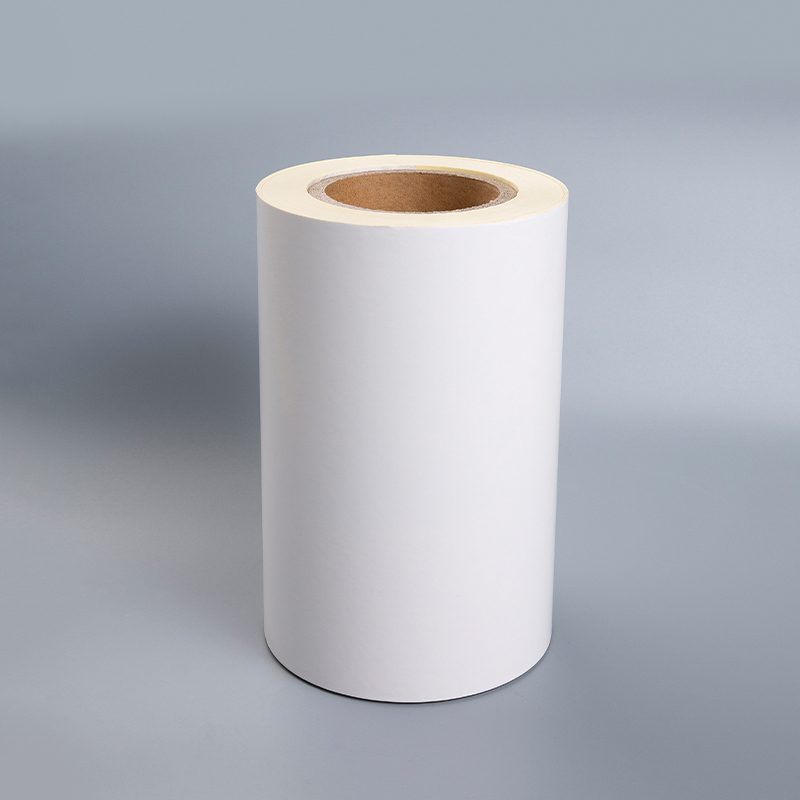
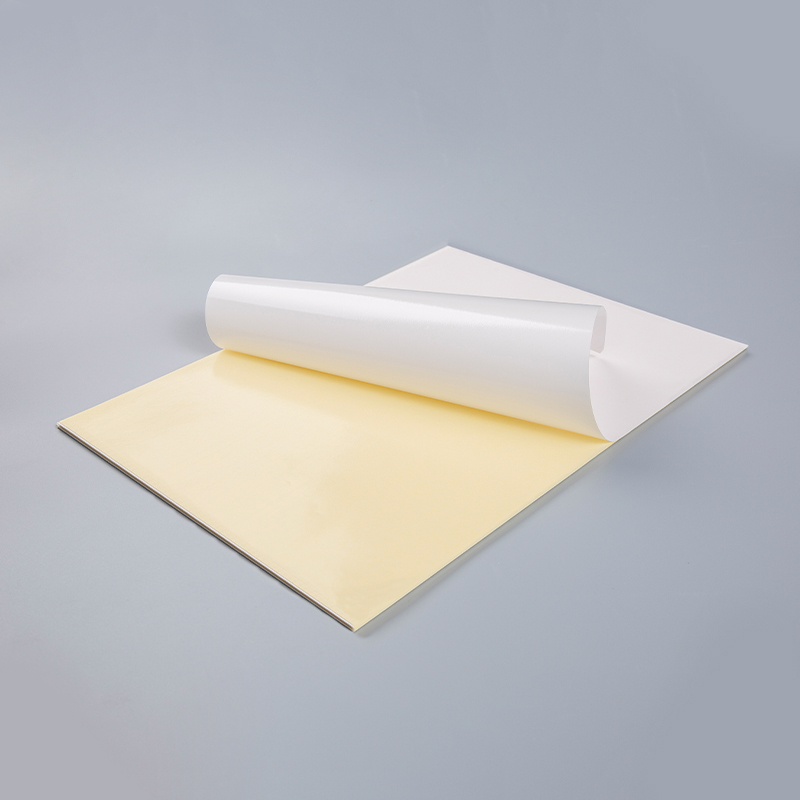
Fluorescent paper in rolls is a paper-based self-adhesive material consisting of three main layers: a fluorescent paper face stock, an adhesive coating, and a release liner. The face stock provides the highly visible colored surface. The adhesive bonds the label to the target substrate. The liner protects the adhesive during storage, transport, printing, and converting, and is removed when the label is applied.
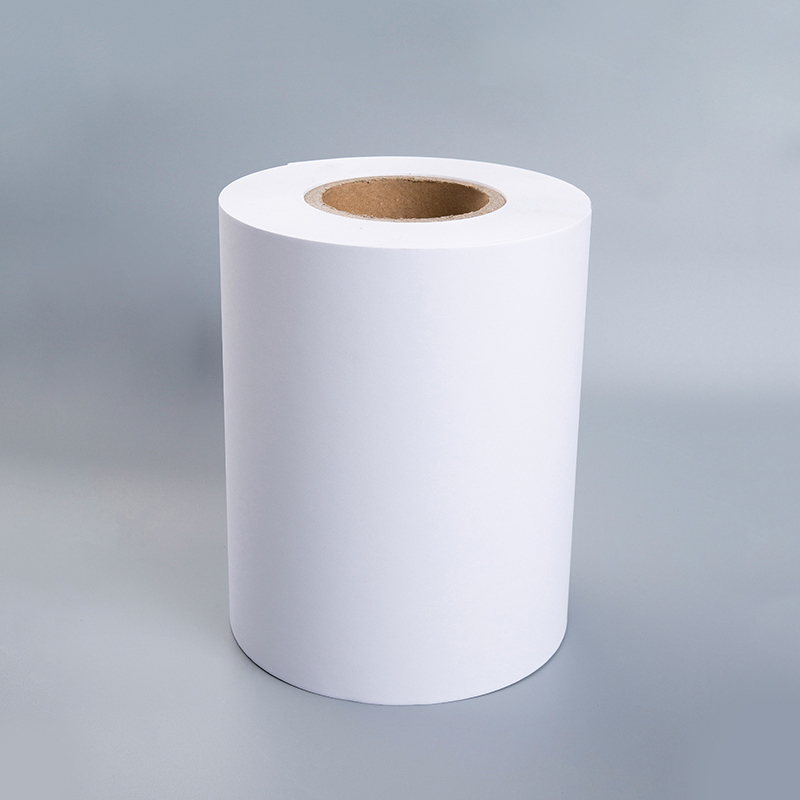
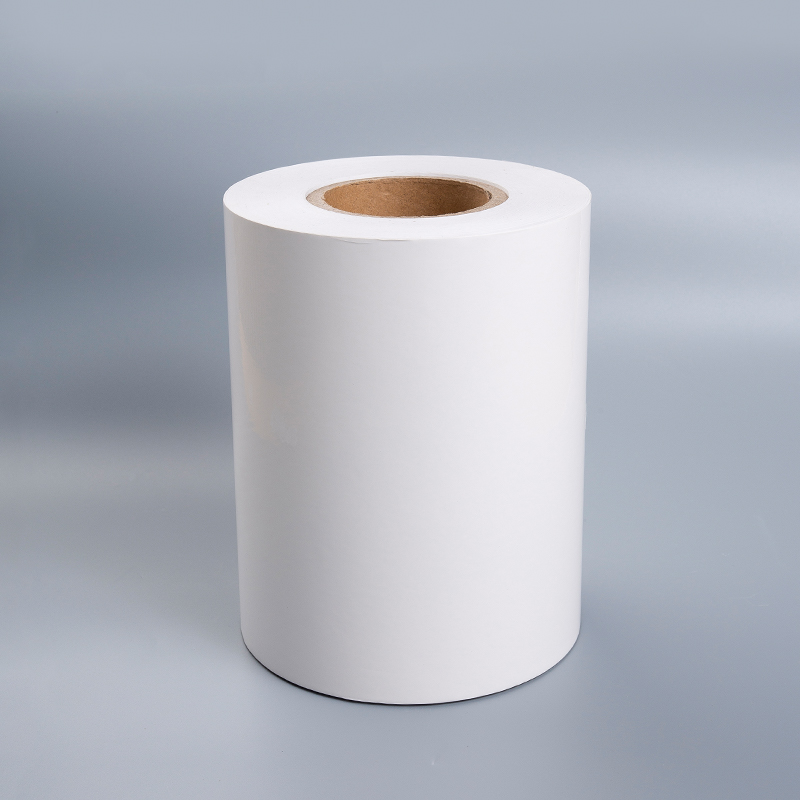
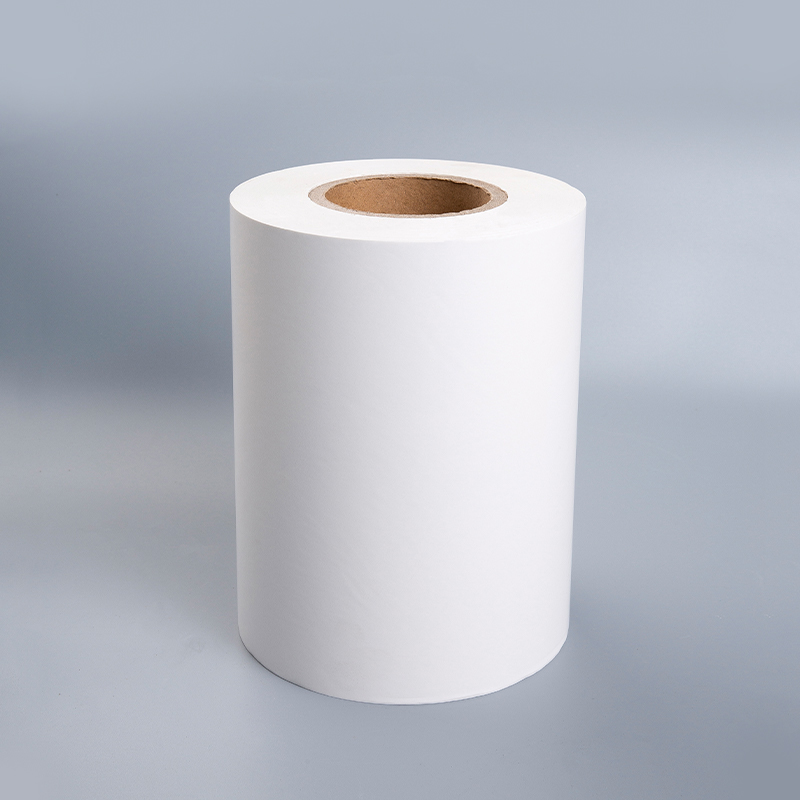
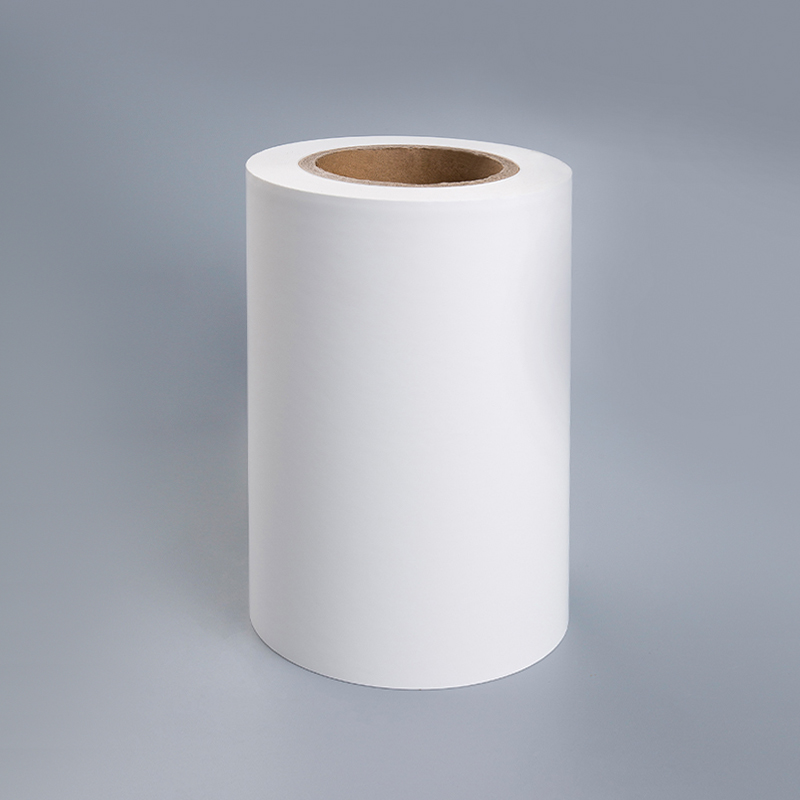
The product is supplied primarily as a jumbo roll, making it suitable for professional printing and label-converting operations. Jumbo roll widths include 1000mm, 1020mm, 1080mm, and 1530mm. These widths can be processed by printers, die-cutting facilities, slitting companies, and label manufacturers according to their equipment configuration and finished-label dimensions.
Fluorescent paper differs from ordinary colored paper because its visual effect is intended to produce a stronger, more energetic appearance. The material can be used to improve the noticeability of printed information in retail, industrial, public, promotional, and safety-related environments. It is particularly suitable when a label must stand out from surrounding packaging, signs, documents, or equipment.
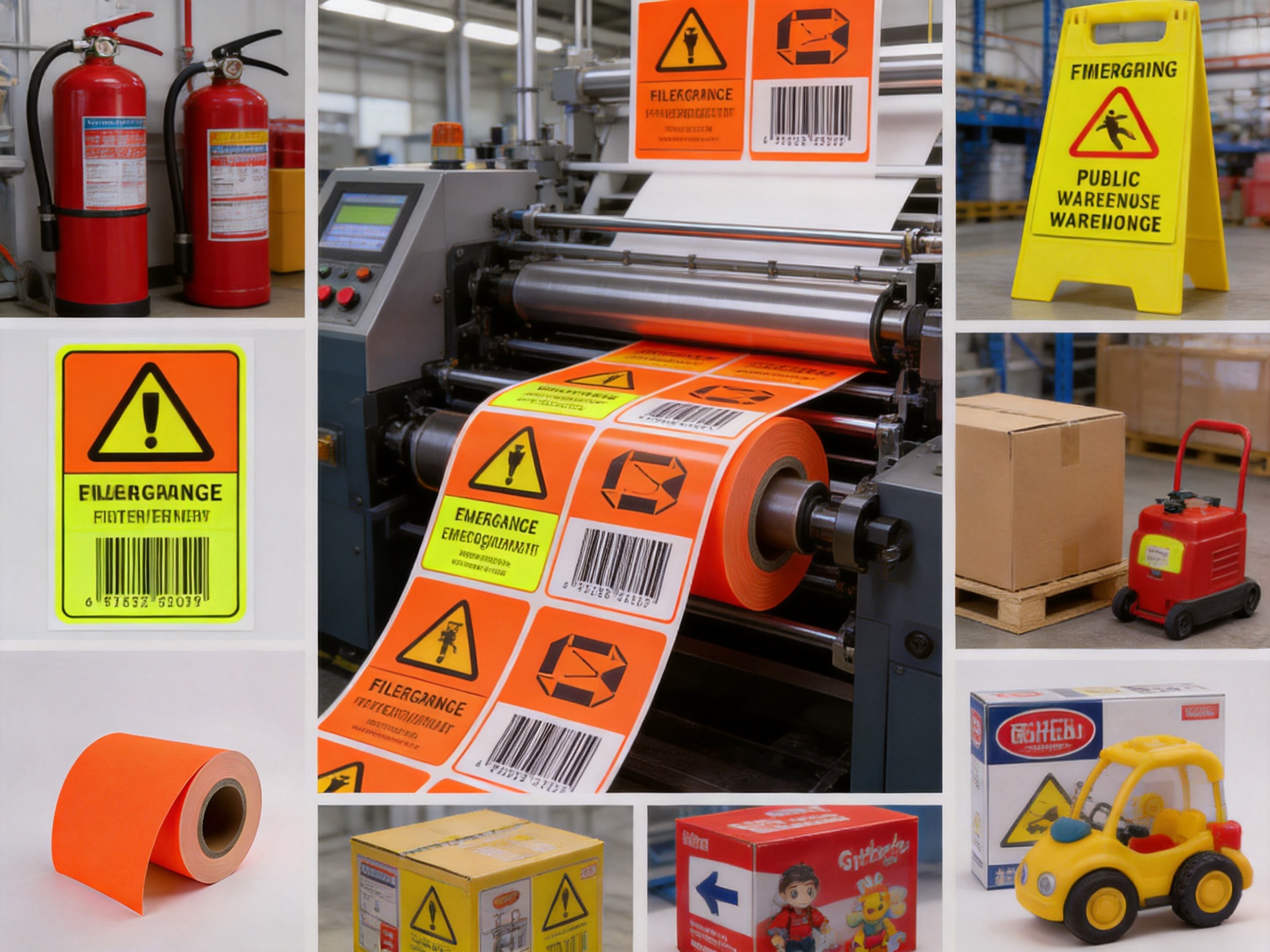
According to the supplied product information, the material can glow at night and is often applied to fire equipment, public places, special products, toys, gifts, and other items that benefit from enhanced visibility. For demanding safety or emergency applications, users should evaluate the exact visibility requirement, illumination conditions, local regulations, and relevant testing standards before final approval.
Construction and Material Composition
80gsm Fluorescent Paper Face Stock
The standard face material is 80gsm fluorescent paper. This basis weight provides a practical balance between printability, flexibility, handling strength, and material efficiency. It is suitable for roll-fed printing, label conversion, sheet conversion, and general-purpose self-adhesive applications.
The fluorescent surface is especially useful for labels that must communicate quickly. Bright colors can help distinguish product categories, identify urgent information, organize warehouse materials, highlight promotional offers, or make notices easier to locate. The paper surface also supports a broad range of printing processes, allowing converters to produce text, symbols, bar codes, graphics, and decorative artwork.
As with other paper-based label materials, the final performance depends on the selected adhesive, liner, printing ink, application surface, storage environment, and handling conditions. A technically suitable construction should therefore be selected according to the intended use rather than color alone.
Adhesive Layer
The adhesive is a critical part of any self-adhesive material because it determines how the finished label behaves during application and service. The fluorescent paper construction can be supplied with several adhesive options, allowing the material to serve both general indoor labeling needs and more specialized applications.
Water-based adhesive is a practical choice for many standard labeling and packaging applications. It can provide an efficient balance of coating performance, processability, and general-purpose bonding. It is suitable for users who require a conventional adhesive system for paper, board, and selected smooth substrates.
Hotmelt adhesive is available for applications requiring strong initial tack and efficient bonding performance. Hotmelt systems may be useful in high-speed converting or applications where quick adhesion is important. The exact performance depends on the target surface, application temperature, pressure, and service conditions.
Solvent adhesive is offered for applications where a different balance of adhesion, temperature resistance, and substrate compatibility is required. It may be selected for more demanding surfaces or environments after appropriate testing.
Anti-freeze adhesive is available for cold-chain, refrigerated, or low-temperature applications. Standard adhesives can lose flexibility or bonding strength when exposed to cold conditions. An anti-freeze formulation is intended to provide a more suitable option for labels that must remain attached under low-temperature conditions.
Removable adhesive is designed for applications where the label may need to be removed without leaving excessive residue or causing unacceptable surface damage. This is useful for temporary signs, promotional identification, reusable containers, selected retail applications, and temporary organization systems. Removal performance should always be tested on the actual substrate and after the intended service period.
Cryogenic adhesive is available for extremely low-temperature labeling requirements. Such applications may include laboratory containers, scientific sample identification, medical storage, or other specialized environments. Because cryogenic systems can involve both very low temperatures and rapid temperature changes, users should confirm the specific temperature range and handling method before ordering.
Tyre-grade rubber adhesive is available for labels intended for demanding rubber or tyre-related surfaces. Rubber substrates can present challenges because of their texture, surface energy, flexibility, and possible migration of additives. A specialized rubber adhesive can offer a more appropriate starting point than a standard paper-label adhesive.
Release Liner Options
The liner protects the adhesive-coated surface until the label is ready for application. It also supports smooth feeding through printing and converting machinery. The product can be supplied with 85g yellow release paper as a standard option, while several alternative liners are available for different processing and application needs.
Glassine paper is available in 50g, 60g, 80g, 100g, and 120g grades. Glassine liners are commonly used where a smooth, dense, and dimensionally consistent liner is beneficial. The choice of grammage influences stiffness, handling, roll construction, and the behavior of the material during die-cutting or dispensing.
Other release paper options include 60g, 120g, and 140g grades. Art paper liners are available in 140g and 165g versions. CCK liners are available in 50g, 80g, 90g, and 120g grades. Transparent PET liners are available in 25, 36, 50, and 100 micron thicknesses.
PET liners can be selected where dimensional stability, transparency, or resistance to moisture-related deformation is important. They may be useful in specialized die-cutting, clear-label processing, or applications where the converter requires a more stable synthetic liner. The correct liner should be determined by the press, die-cutting system, label shape, roll width, storage environment, and application method.
Printing Compatibility
Fluorescent paper self-adhesive material is suitable for several major printing processes, including letterpress, offset printing, flexographic printing, screen printing, and bar code printing. This broad compatibility is one of its important advantages over narrowly specified label materials.
Letterpress Printing
Letterpress printing can be used for labels that require defined text, strong graphic contrast, and a traditional printed appearance. The fluorescent face stock can help emphasize the printed information by providing a vivid background. It may be used for short-run labels, product identification, decorative labels, and specialty printed materials.
Offset Printing
Offset printing is suitable for detailed artwork, multi-color graphics, promotional labels, and applications requiring a refined printed appearance. Fluorescent paper can provide a distinctive background for brochures, stickers, promotional pieces, and packaging-related labels. Printing companies should evaluate ink behavior, drying, color interaction, and the desired contrast before production.
Flexographic Printing
Flexographic printing is widely used for roll-fed labels and high-volume packaging work. The roll format of this product supports efficient web handling and continuous production. Flexographic converters can select suitable inks, anilox configurations, plate designs, and drying conditions according to the required image quality and production speed.
Screen Printing
Screen printing can be used when strong ink deposition, bold graphics, and high visual impact are required. It is suitable for special labels, promotional designs, warning marks, and decorative applications. The fluorescent background can enhance the visual strength of screen-printed elements, particularly when large symbols or high-contrast text are needed.
Bar Code Printing
The material can also be used for bar code printing. Bar code performance depends on the contrast between the printed bars and the fluorescent background, the ink system, the printer resolution, and the scanning equipment. Users should conduct verification testing with the actual bar code design and scanner before mass production. For critical identification systems, print quality and scan reliability should be confirmed at the intended viewing distance and lighting condition.
Fluorescent Paper In Rolls
Applications of Fluorescent Paper in Rolls
Safety and Fire Equipment Labels
One of the most important application areas is safety identification. Fluorescent labels can be applied to fire equipment, emergency tools, safety cabinets, extinguishers, alarm-related equipment, and other items that must be located quickly. The bright face material can create a strong visual distinction from the surrounding environment and help users identify important equipment more efficiently.
For safety labels, the material can carry warning text, operating instructions, arrows, symbols, inspection marks, or identification codes. The final construction should be selected according to the installation surface and the expected exposure to heat, moisture, abrasion, cleaning agents, and outdoor conditions.
Public Places and Directional Notices
Public facilities often require labels and notices that are easy to see. Fluorescent paper can be used for temporary or semi-permanent signs in buildings, service areas, warehouses, schools, offices, transport facilities, and event venues. It can help distinguish evacuation information, restricted-area notices, directional signs, and public reminders from ordinary printed materials.
Because public-place labels may be touched frequently or exposed to cleaning operations, the adhesive and printing system should be tested on the selected wall, glass, plastic, metal, or painted surface. Removable adhesive may be appropriate for temporary notices, while a stronger adhesive can be considered for long-term identification.
Special Products and Industrial Identification
Manufacturers of special products can use fluorescent labels to create a clear product distinction or to identify handling requirements. The material may be converted into batch labels, warning labels, quality-control marks, inspection labels, maintenance reminders, and warehouse identification stickers.
Industrial users can also benefit from custom widths, adhesive selection, and liner options. For example, a cold-storage operator may require anti-freeze adhesive, while a laboratory may require cryogenic adhesive. A tyre manufacturer or distributor may need a rubber-compatible adhesive. A logistics company may prefer a high-contrast label that can be printed with bar codes and variable data.
Toys and Gifts
Fluorescent paper adds visual energy to toy labels, gift packaging, promotional stickers, event materials, and decorative products. Bright colors can help a product stand out on a shelf or attract attention during a marketing campaign. The material can be printed with logos, illustrations, product information, pricing marks, or special-edition designs.
For toys and products handled by children, the complete product construction should be assessed for the intended use, including ink selection, edge design, adhesion, and applicable product-safety requirements. The fluorescent paper itself should not be considered a substitute for a complete safety evaluation.
Packaging and Advertising
Fluorescent self-adhesive paper is suitable for packaging advertising, promotional seals, price labels, discount stickers, shelf communication, and marketing campaigns. Its strong color appearance can attract attention without requiring complex structural packaging changes. It can also support seasonal or short-term campaigns where labels are produced in rolls and applied at scale.
Packaging converters can use the roll format to produce different finished shapes through slitting, die-cutting, and sheet conversion. The jumbo roll widths offer flexibility for optimizing material yield and matching production equipment.
Trademark and Product Labels
Trademark labels and branded product identification are additional application areas. A fluorescent background can make a label more distinctive and help separate an item from competing products. It can also be combined with printed serial numbers, bar codes, security-related information, or promotional messages.
Brand owners should confirm color consistency, print registration, adhesive compatibility, and label durability before approving a large production run. The manufacturer’s ability to support customized constructions can help companies create a label material that matches the intended product positioning.
Advantages Compared with Conventional Label Materials
Higher Visual Noticeability
The primary advantage of fluorescent paper is its high visual impact. Conventional white paper labels are versatile, but they may blend into cartons, documents, shelves, and equipment. Fluorescent paper provides a brighter and more immediately recognizable background, helping the label attract attention in crowded visual environments.
Broad Printing Flexibility
Some specialty label materials are optimized for only one printing process. This product is designed for use with letterpress, offset, flexographic, screen, and bar code printing. That flexibility helps printers and converters use existing production resources rather than investing in a completely separate process.
Multiple Adhesive Choices
Another important advantage is the range of adhesive systems. A standard water-based adhesive may be suitable for general labeling, while hotmelt, solvent, anti-freeze, removable, cryogenic, and tyre-grade rubber adhesives address more specific requirements. This is more versatile than a single-standard construction that cannot be adapted to low temperatures, temporary labeling, or difficult rubber surfaces.
Multiple Liner Choices
The availability of paper, glassine, art paper, CCK, and PET liners allows users to optimize the product for converting and application. Liner selection affects stiffness, release behavior, dimensional stability, die-cutting, roll handling, and environmental suitability. Having multiple choices supports a more precise match between the label construction and the customer’s equipment.
Roll and Sheet Supply
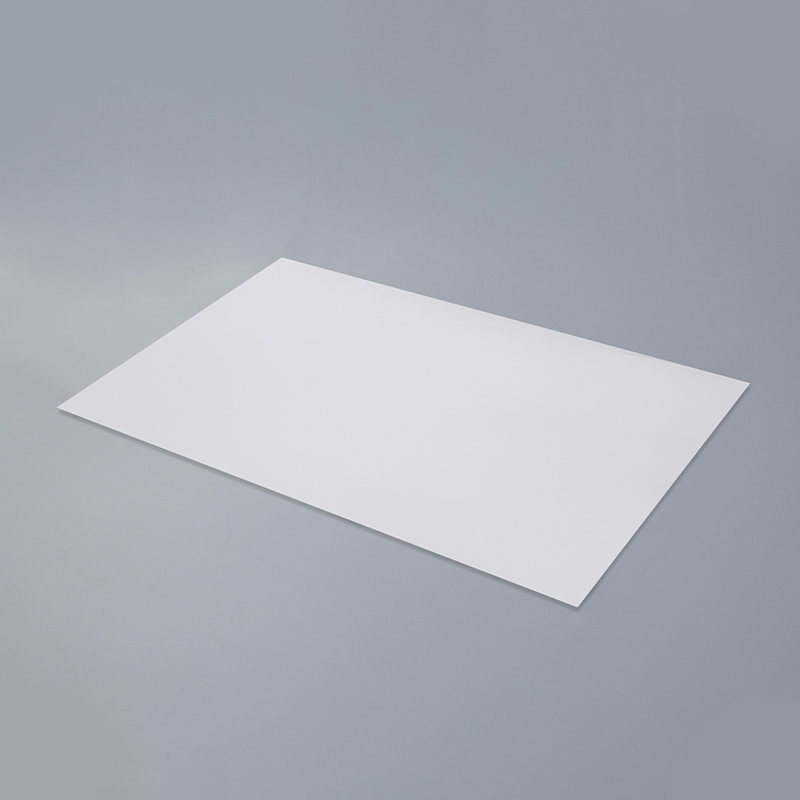
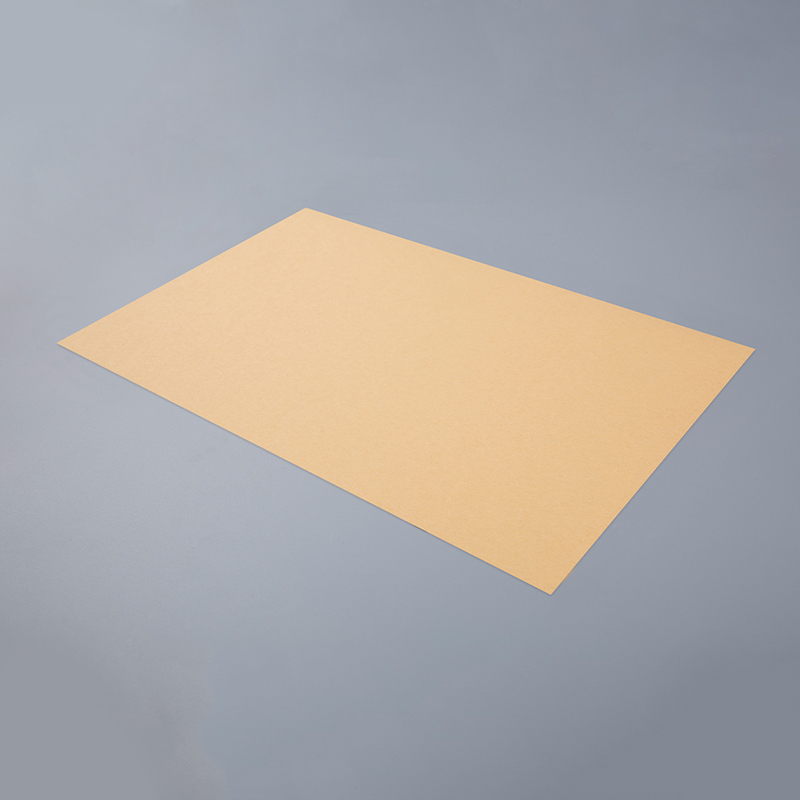
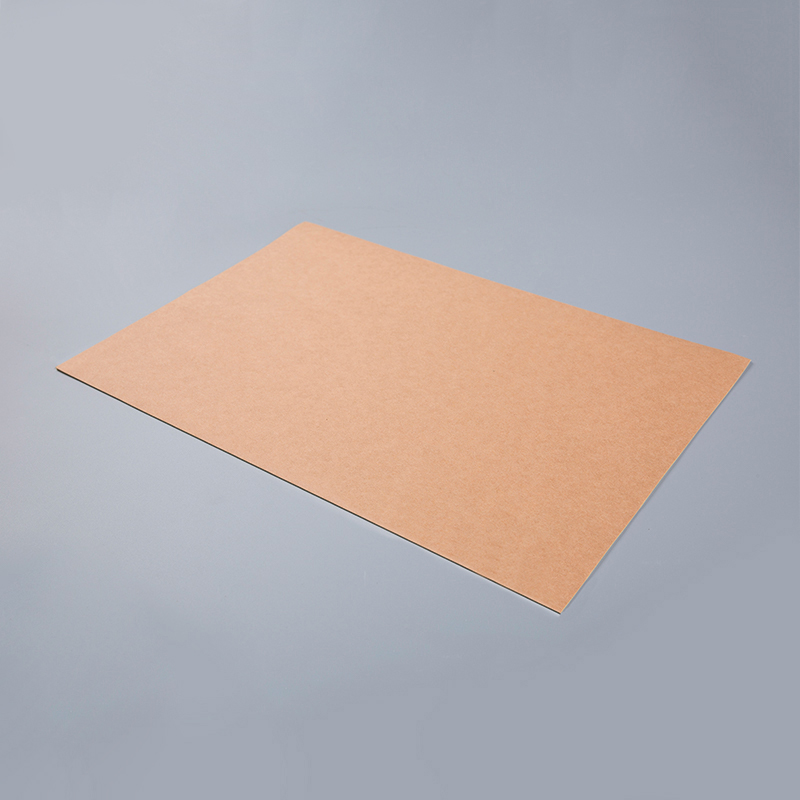
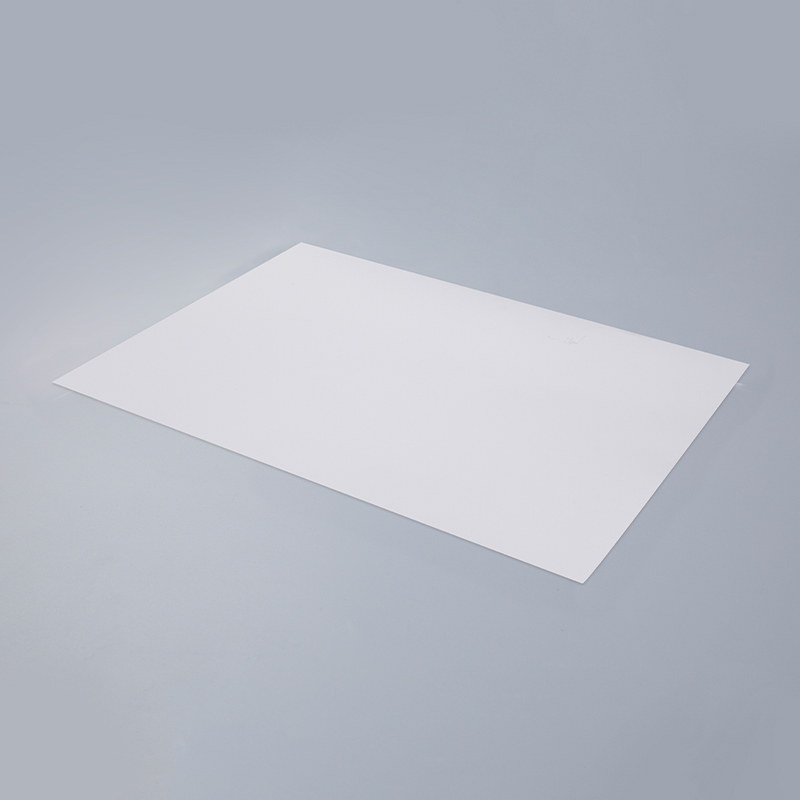
The material is available in jumbo rolls and can also be supplied in sheet sizes such as A4, A3, 20 by 30 inches, 21 by 30 inches, 24 by 36 inches, 50 by 70 centimeters, and 70 by 100 centimeters. Customized sizes are also available. This allows the same basic material platform to serve roll-fed printers, sheet printers, office users, packaging companies, and label converters.
Customization Capability
Customization is particularly valuable when a buyer has requirements that cannot be met by a general-purpose label stock. The construction can be adapted by selecting the adhesive, liner, width, sheet size, and conversion format. OEM and ODM support can also be used for customer-specific drawings, samples, or technical specifications.
Advanced Manufacturing Process
Raw Material Selection
Consistent quality begins with selecting suitable face paper, adhesive components, and release liners. The fluorescent paper must provide an even surface and stable handling characteristics. Adhesive raw materials must be selected according to the required bonding profile, processing method, and service environment. The liner must provide controlled release and sufficient dimensional stability for coating, lamination, printing, and conversion.
Material selection is not limited to choosing a color or grammage. The complete construction must be considered as a system. A label intended for a cold environment requires a different adhesive strategy from a temporary indoor notice. A bar code label may require a different surface and liner combination from a decorative gift label. This system-based approach helps reduce production problems and improve final application performance.
Adhesive Coating
The company operates gluing production lines for applying adhesive to the selected face material or liner. Accurate coating is important because adhesive weight influences tack, peel strength, cohesion, dispensing behavior, and final durability. An uneven coating can lead to poor adhesion, edge lifting, transfer problems, or inconsistent label performance.
Controlled coating also helps maintain roll quality. A properly coated web can be wound into a stable jumbo roll with fewer wrinkles, telescoping issues, or blocking problems. The coating process must be matched to the selected adhesive chemistry, coating speed, drying or curing conditions, and target application.
Laminating
Laminating joins the fluorescent face stock, adhesive layer, and release liner into a unified self-adhesive construction. Good lamination requires controlled tension, accurate alignment, clean surfaces, and stable web handling. Poor alignment can affect label cutting, printing registration, and finished-roll appearance.
The company’s laminating capability supports different combinations of face material, adhesive, and liner. This is important for customized orders because a single standard construction may not satisfy every customer. By combining available liner and adhesive choices, the manufacturer can produce material for general labels as well as low-temperature, removable, cryogenic, and rubber-surface applications.
Slitting and Roll Conversion
After coating and lamination, jumbo rolls can be slit into narrower rolls for printing and label-converting equipment. Slitting quality influences roll edges, web tracking, winding stability, and machine efficiency. Accurate slitting helps reduce waste and supports consistent feeding through downstream equipment.
The ability to supply broad jumbo widths, including 1000mm, 1020mm, 1080mm, and 1530mm, gives customers flexibility in selecting a parent roll that fits their converting plans. Narrow rolls and finished widths can be prepared according to the buyer’s specifications where required.
Sheet Cutting
In addition to roll production, the material can be converted into sheets. Standard sheet formats include A4 and A3, as well as several commercial sizes. Sheet conversion is useful for offset printers, digital printing users, office labeling, promotional applications, and customers who do not operate roll-fed equipment.
Customized sheet sizes can be considered for packaging, signage, retail campaigns, and industrial identification. The sheet format should be selected according to the printer’s paper path, maximum sheet size, label layout, and required material yield.
Inspection and Testing
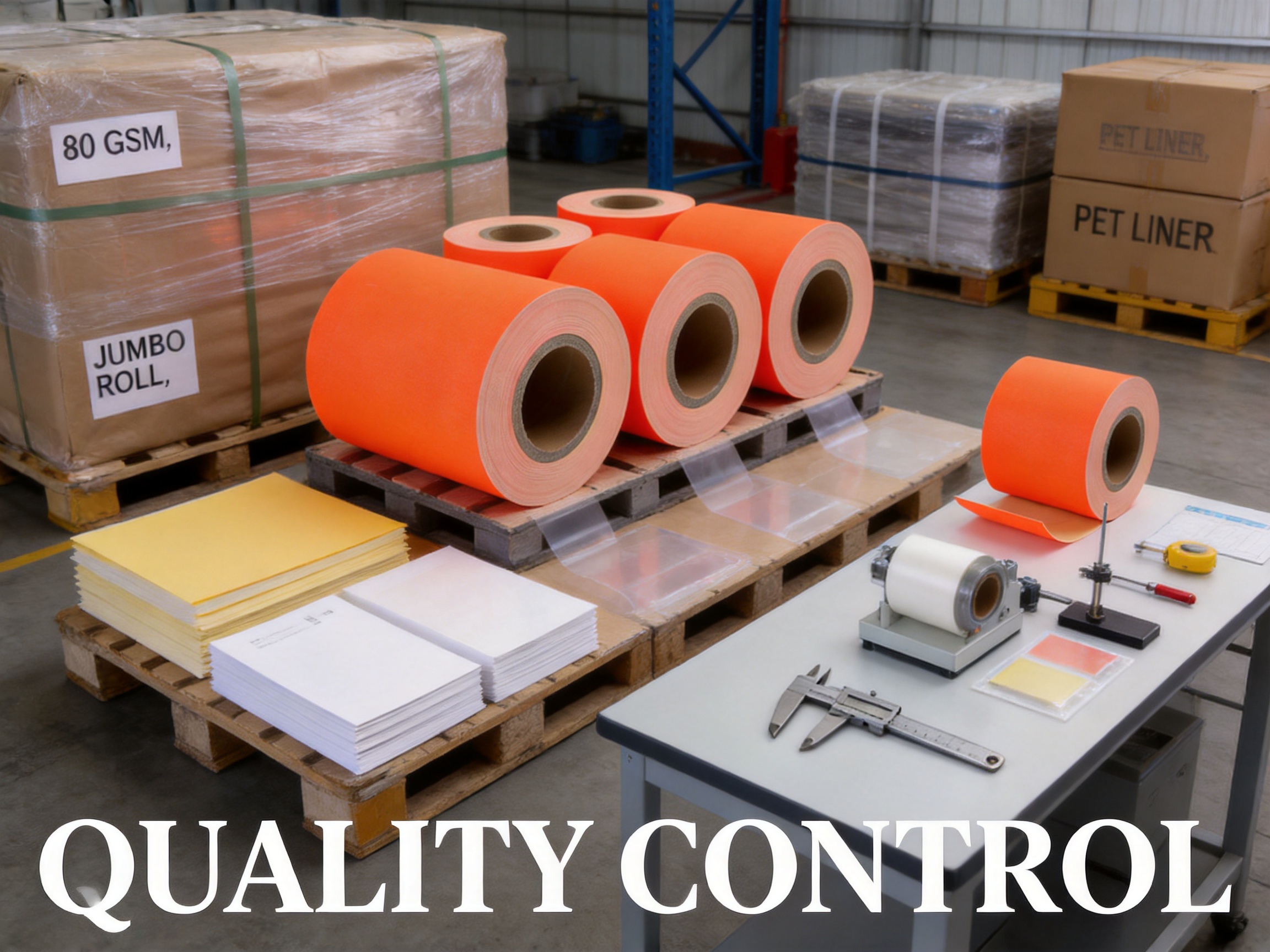
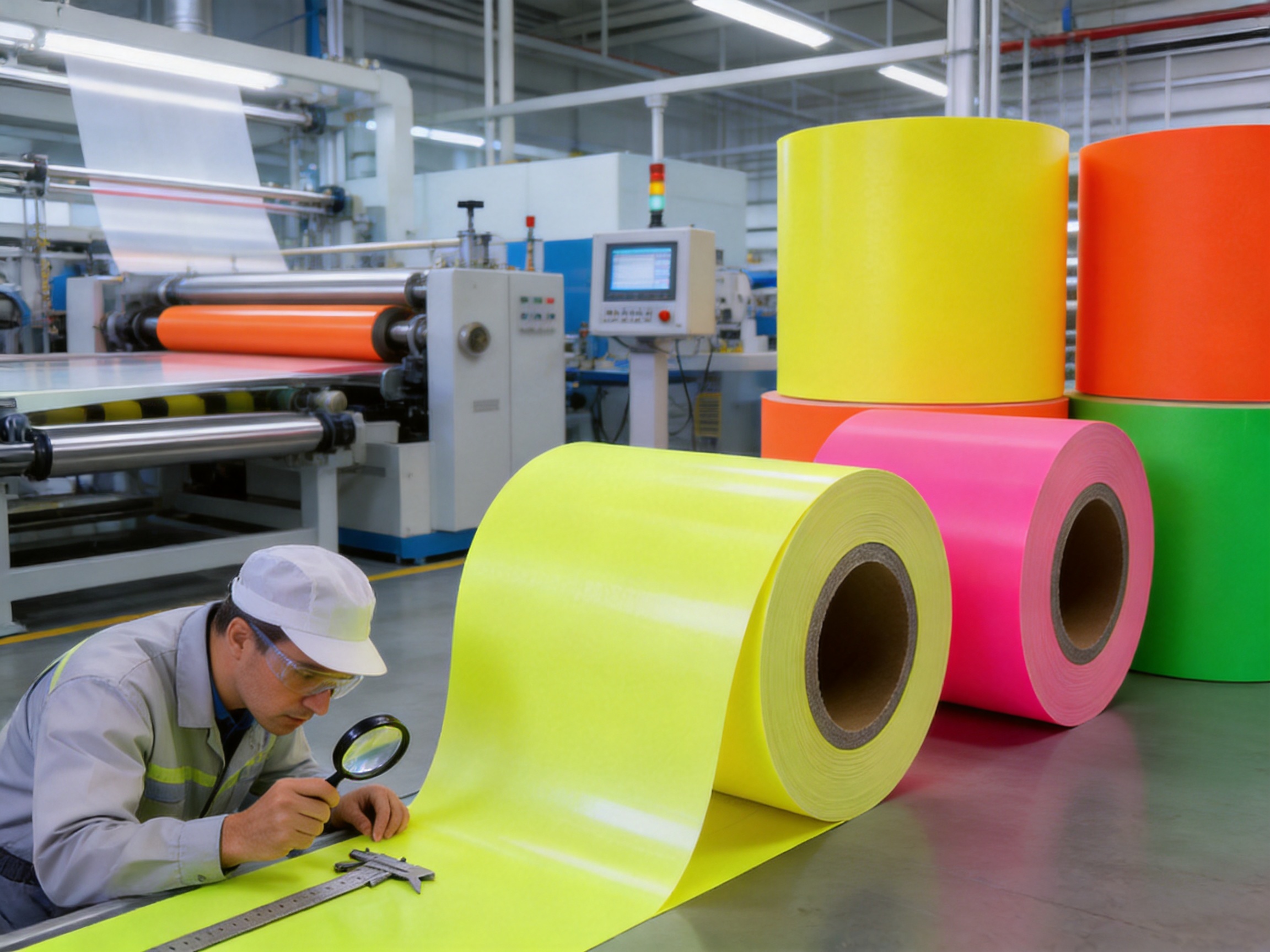
The manufacturer maintains its own testing laboratory and uses inspection equipment to support product quality. Testing may include evaluation of basis weight, coating uniformity, release behavior, adhesion, roll appearance, dimensional characteristics, and print suitability. The exact inspection plan can be adapted to product type and customer requirements.
Quality control is especially important for fluorescent materials because visible color consistency is a key part of product value. A reliable production system should monitor the face stock, adhesive coating, liner, roll winding, and finished dimensions rather than checking only the final appearance.
Quality and Production Strengths
Suzhou Piaozhihua Composite Material Technology Co., Ltd. specializes in high-grade self-adhesive labels and related materials. The company integrates research and development, production, sales, and after-sales service. Its manufacturing portfolio includes gluing, laminating, and cutting operations, supporting a complete workflow from raw-material preparation to finished roll or sheet delivery.
The company reports annual production capacity of more than 280 million square meters. This capacity is significant for customers seeking stable supply, repeat orders, and production continuity. Large-scale manufacturing can also support more efficient scheduling for standard products while leaving room for customized constructions.
With more than 20 years of OEM manufacturing experience, the company is positioned to work with customers that require private-label supply, customized material structures, or production based on drawings and samples. OEM and ODM capabilities allow the buyer to request a product aligned with a particular machine, substrate, application environment, or brand program.
The company also operates a professional research and development team and has multiple patents. Continued research is relevant to self-adhesive materials because market requirements are changing in areas such as environmental performance, low-temperature adhesion, digital printing, liner optimization, and application-specific durability.
Its sales and service network covers domestic locations including Shanghai, Ningbo, Hangzhou, Chengdu, Harbin, Wuhan, Chongqing, Guangzhou, Changsha, and Beijing, along with international markets in North America, Europe, Asia, Latin America, the Middle East, and other regions. This distribution experience can support communication across different markets and help customers coordinate repeat supply.
Packaging and Delivery
Proper packaging protects fluorescent paper rolls and sheets from moisture, contamination, impact, deformation, and handling damage. The product can be supplied with sea-transit-worthy poly-wood pallet packing and carton packing. Both roll and sheet formats can be prepared from stock where applicable.
Sheet products are packed at 100 sheets per ream. Each ream is packed with a strong PE-coated kraft paper wrapper. Pallets are wrapped with stretch film and fastened with plastic straps to improve stability during storage and transport.
For international shipments, packaging should be selected according to the transportation route, container conditions, climate, storage period, and destination warehouse. Buyers should provide any special packing instructions before production, particularly when they require moisture barriers, pallet dimensions, roll orientation, label marks, or container-loading specifications.
How to Select the Correct Construction
Consider the Application Surface
The first selection factor is the substrate. Paper, cardboard, glass, metal, plastic, painted surfaces, rubber, and textured materials may require different adhesive behavior. A smooth carton may work well with a general-purpose water-based adhesive, while a rubber or tyre surface may require the available tyre-grade rubber adhesive.
Consider Temperature
Temperature can influence both application and service performance. If labels are applied or stored in refrigerated conditions, anti-freeze adhesive may be appropriate. For extremely low-temperature laboratory or scientific applications, cryogenic adhesive should be considered. Buyers should specify the minimum and maximum temperature, application temperature, dwell time, and whether the label will experience repeated temperature cycling.
Consider Removability
If the label must be removed later, a removable adhesive may be preferred. However, removability is affected by surface type, label age, temperature, humidity, cleaning chemicals, and application pressure. The intended surface should be tested after the actual storage or service period to confirm acceptable removal behavior.
Consider Printing Equipment
Printing machinery determines the appropriate roll width, liner stiffness, web tension, ink system, and surface treatment. Letterpress, offset, flexographic, screen, digital, and bar code printing each have specific process conditions. Customers should provide press information and finished dimensions so the material can be matched to the production line.
Consider the Final Label Format
Roll labels, fan-folded labels, die-cut labels, sheets, stickers, and large-format notices may require different constructions. A narrow roll used on an automatic applicator may need precise winding and edge quality. A sheet intended for offset printing may require a liner with suitable stiffness and feeding behavior. A large fluorescent sign may require a different adhesive and sheet size than a small product sticker.
Recommended Production and Application Practices
Store the material in a clean, dry environment away from direct sunlight, excessive heat, and high humidity. Keep rolls and sheets in their original packaging until they are ready for processing. Allow the material to acclimatize to the printing environment when there is a substantial difference between storage and production temperature.
Before full-scale printing, perform a trial using the actual press, ink, drying conditions, and artwork. Check color appearance, ink adhesion, smearing, drying time, bar code readability, die-cutting, matrix stripping, and label dispensing. A trial is especially important when the material is being used with unfamiliar ink systems or high-speed equipment.
For application, surfaces should be clean, dry, and free from dust, oil, grease, loose paint, and moisture. Apply sufficient pressure to create contact between the adhesive and substrate. The exact pressure and dwell time depend on the adhesive type and surface condition.
Do not assume that one adhesive is suitable for every surface or environment. Even when the face paper is identical, changing from water-based adhesive to hotmelt, solvent, anti-freeze, removable, cryogenic, or rubber adhesive can substantially change the final performance. Technical approval should be based on testing the complete label construction.
Technical Specification Overview
| Item | Available Specification | Typical Selection Consideration |
|---|---|---|
| Face material | 80gsm fluorescent paper | High-visibility paper face stock for printed labels, notices, packaging, and special products |
| Standard adhesive | Water-based adhesive | General-purpose labeling and packaging applications |
| Special adhesive options | Hotmelt, solvent, anti-freeze, removable, cryogenic, tyre-grade rubber adhesive | Quick tack, demanding surfaces, low temperatures, temporary labels, cryogenic use, or rubber substrates |
| Standard liner | 85g yellow release paper | General roll and sheet processing |
| Glassine liner | 50g, 60g, 80g, 100g, 120g | Smooth, dense liner requirements and controlled converting |
| Release paper | 60g, 120g, 140g | Alternative stiffness and release combinations |
| Art paper liner | 140g, 165g | Higher liner grammage and specialized handling |
| CCK liner | 50g, 80g, 90g, 120g | Customized converting and processing requirements |
| Transparent PET liner | 25, 36, 50, 100 microns | Dimensional stability, transparency, and specialized die-cutting |
| Jumbo roll width | 1000mm, 1020mm, 1080mm, 1530mm | Parent-roll processing and production-line compatibility |
| Sheet sizes | A4, A3, 20 by 30, 21 by 30, 24 by 36, 50 by 70cm, 70 by 100cm | Sheet printing, signage, office use, packaging, and promotional work |
| Customization | Available according to customer requirements | Special widths, sizes, constructions, drawings, samples, OEM, and ODM programs |
Environmental and Sustainability Considerations
The company identifies sustainable development and environmental protection as important parts of its brand positioning. Its development approach includes eco-friendly solutions involving face materials, adhesives, and backing papers. For customers with sustainability objectives, the most appropriate construction should be discussed according to the required application, recycling process, adhesive chemistry, liner type, and regulatory expectations.
Material sustainability is a system issue. The face stock, adhesive, liner, printing ink, packaging, and end-of-life route all influence the environmental profile of a label. A paper face stock may be advantageous in some recycling systems, but the adhesive and liner must also be considered. PET liners may provide dimensional stability and processing benefits, while paper liners may be preferred for other material-management goals.
Customers should request current technical and compliance information for the exact construction being considered. Environmental claims should be based on verified product data, applicable standards, and the requirements of the target market rather than on a general description of the product family.
Why Choose an Experienced Manufacturing Partner?
Self-adhesive materials appear simple, but their performance depends on close control of many variables. Face-paper quality, adhesive coating weight, liner release, lamination alignment, roll tension, slit-edge accuracy, and packaging protection all influence the final result. An experienced manufacturer is better prepared to manage these factors consistently across standard and customized orders.
A manufacturer with gluing, laminating, and cutting capabilities can coordinate the complete production chain rather than relying on disconnected suppliers. This can simplify technical communication, shorten development cycles, and make it easier to investigate a performance issue if one occurs.
In-house testing and inspection equipment also support more reliable quality management. For buyers, this can provide greater confidence in repeat orders, especially when the material is used for safety labels, bar codes, automated application, or high-volume packaging.
The combination of production scale, technical experience, OEM and ODM support, research capability, and international supply experience makes the product suitable for both standard purchasing and long-term customized programs.
Frequently Asked Questions
What is the main benefit of fluorescent paper in rolls?
The main benefit is high visibility. The fluorescent paper face stock creates a bright and distinctive appearance that can help labels, warnings, promotional messages, and product markings attract attention more effectively than ordinary paper labels.
Can the material be used for bar codes?
Yes. The product information identifies bar code printing as a suitable application. Users should verify the contrast, ink, printer resolution, scanner compatibility, and final bar code readability with the actual artwork before mass production.
Which printing processes are supported?
The material is suitable for letterpress, offset, flexographic, screen, and bar code printing. A production trial is recommended because ink systems, drying conditions, press speed, and artwork can affect the result.
What adhesive options are available?
Available options include water-based, hotmelt, solvent, anti-freeze, removable, cryogenic, and tyre-grade rubber adhesives. The correct adhesive depends on the substrate, temperature, service period, removability requirement, and application method.
Is the material suitable for refrigerated applications?
It can be supplied with anti-freeze adhesive for low-temperature applications. The customer should provide the application temperature, storage temperature, substrate, and expected service conditions so that the construction can be evaluated correctly.
Can it be used in cryogenic applications?
Cryogenic adhesive is available for specialized low-temperature applications. The exact temperature range, container material, application procedure, and exposure time should be confirmed before production approval.
Can the labels be removed?
A removable adhesive option is available. Removal performance depends on the substrate, temperature, label age, surface cleanliness, and application pressure. Testing on the actual surface is recommended.
What liner choices can be supplied?
Options include 85g yellow release paper, glassine paper from 50g to 120g, release paper from 60g to 140g, art paper from 140g to 165g, CCK liner from 50g to 120g, and transparent PET liners from 25 to 100 microns.
What jumbo roll widths are available?
Available jumbo roll widths are 1000mm, 1020mm, 1080mm, and 1530mm. Other finished widths may be considered according to the customer’s production requirements.
Are sheets available as well as rolls?
Yes. Available sheet formats include A4, A3, 20 by 30, 21 by 30, 24 by 36, 50 by 70 centimeters, and 70 by 100 centimeters. Customized sheet sizes can also be discussed.
Can the product be customized?
Yes. Customization may include adhesive type, liner, roll width, sheet size, packaging, and other construction details. The manufacturer also provides OEM and ODM services and can work from customer drawings or samples.
How should the material be stored?
Store the product in its original packaging in a clean, dry place away from excessive heat, moisture, and direct sunlight. Keep the material protected until printing or application, and allow it to acclimatize when moving it between significantly different environments.
Who manufactures this product?
The product is manufactured by Suzhou Piaozhihua Composite Material Technology Co., Ltd., located at No. 16 Weixin Road, Shuangfeng Town, Taicang City, Suzhou City, Jiangsu Province, China. The company specializes in self-adhesive labels and composite materials and provides production, customization, and after-sales support.
Conclusion
Fluorescent paper in rolls is a versatile self-adhesive material for applications where visibility and printing flexibility are essential. Its 80gsm fluorescent paper face stock helps printed information stand out, while the choice of adhesive and liner allows the construction to be adapted to general labeling, packaging, safety identification, public notices, toys, gifts, bar codes, low-temperature environments, cryogenic applications, and rubber or tyre surfaces.
The product’s compatibility with letterpress, offset, flexographic, screen, and bar code printing gives converters broad production flexibility. Jumbo roll widths and multiple sheet formats support both industrial-scale manufacturing and sheet-based printing. Customized sizes and construction options further expand its usefulness.
Behind the material is a manufacturing system that integrates gluing, laminating, slitting, cutting, inspection, research and development, and technical service. Suzhou Piaozhihua Composite Material Technology Co., Ltd. combines more than 20 years of OEM experience with large annual production capacity, in-house testing, OEM and ODM support, and international supply experience. For buyers seeking a high-visibility label material with configurable performance and reliable manufacturing support, fluorescent paper in rolls provides a practical and adaptable solution.
References
1. Product specification information for 80gsm fluorescent paper self-adhesive material, including adhesive, liner, roll width, and sheet-size options.
2. Manufacturer information for Suzhou Piaozhihua Composite Material Technology Co., Ltd., including production capabilities, OEM and ODM services, testing facilities, and company experience.
3. General technical principles for pressure-sensitive adhesive label construction, including face stock, adhesive, and release-liner functions.
4. General printing and converting practices for paper-based self-adhesive materials, including flexographic, offset, letterpress, screen, and bar code printing.
5. General storage, handling, application, and quality-control guidance for self-adhesive label materials.