
 English
 Español
 русский
 Français
 عربى
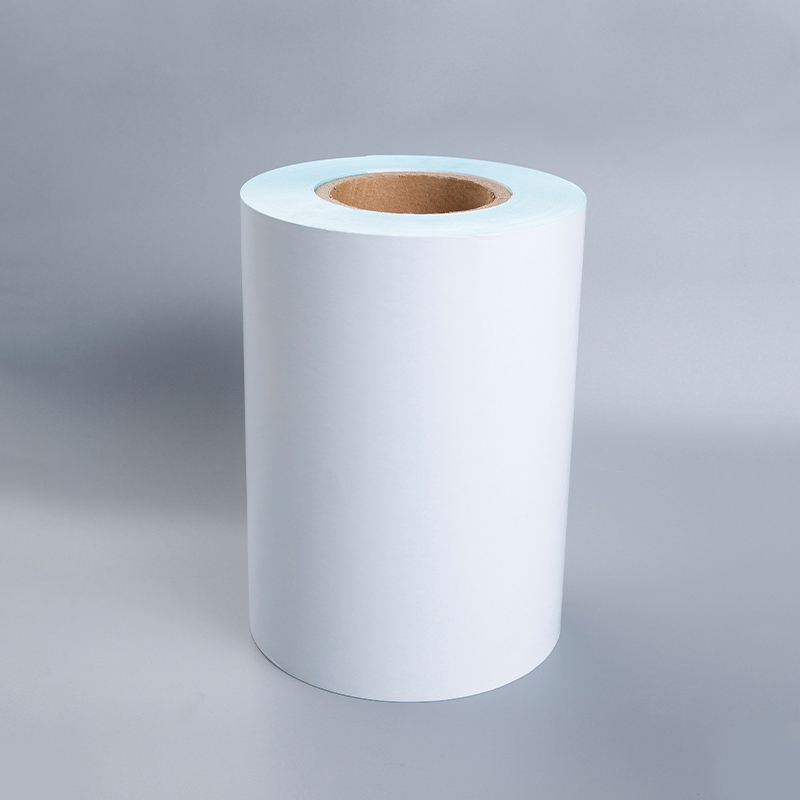
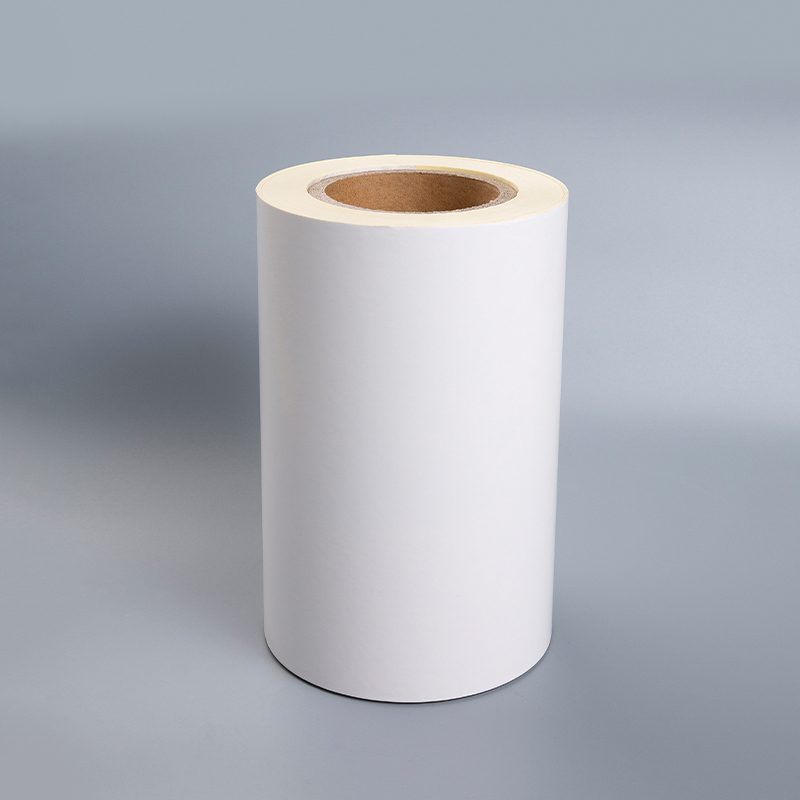
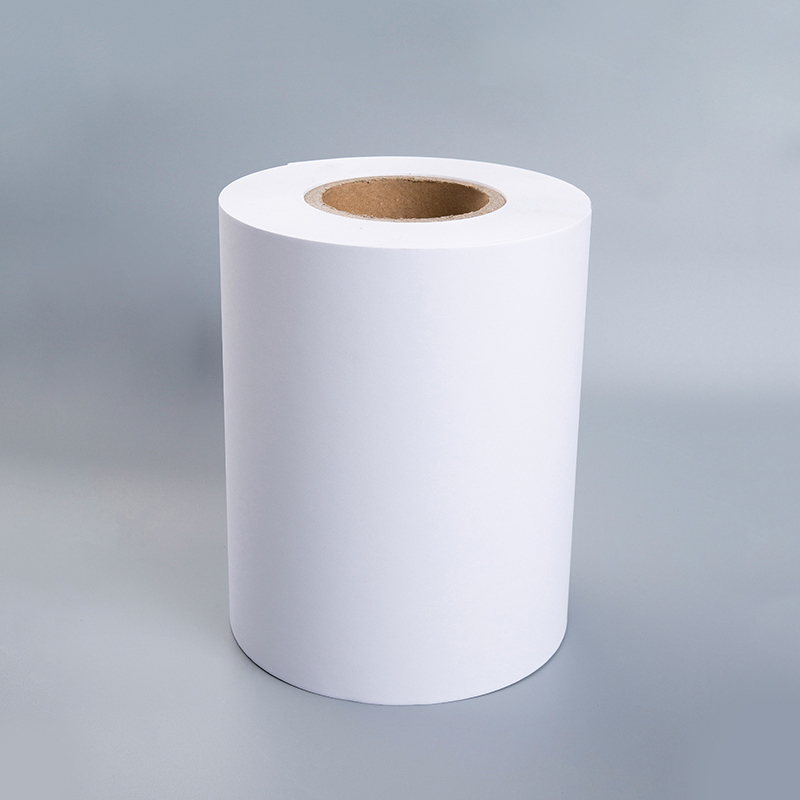
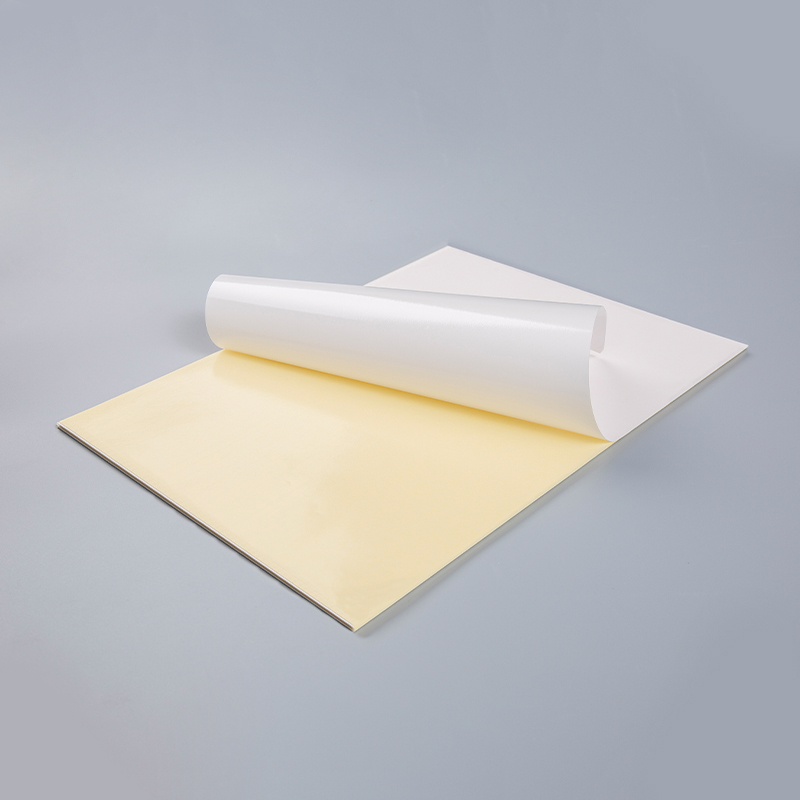
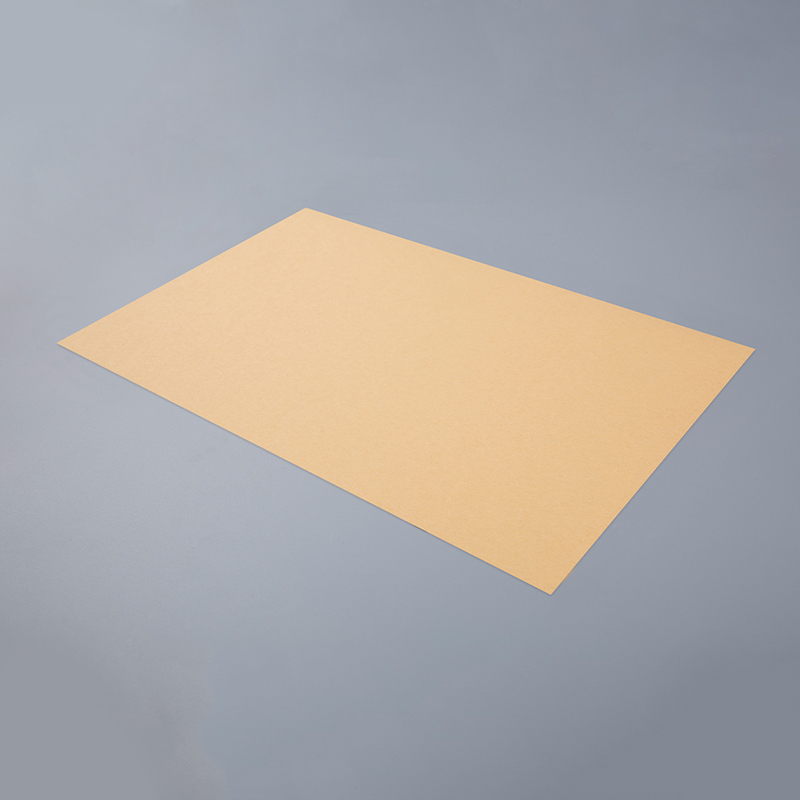
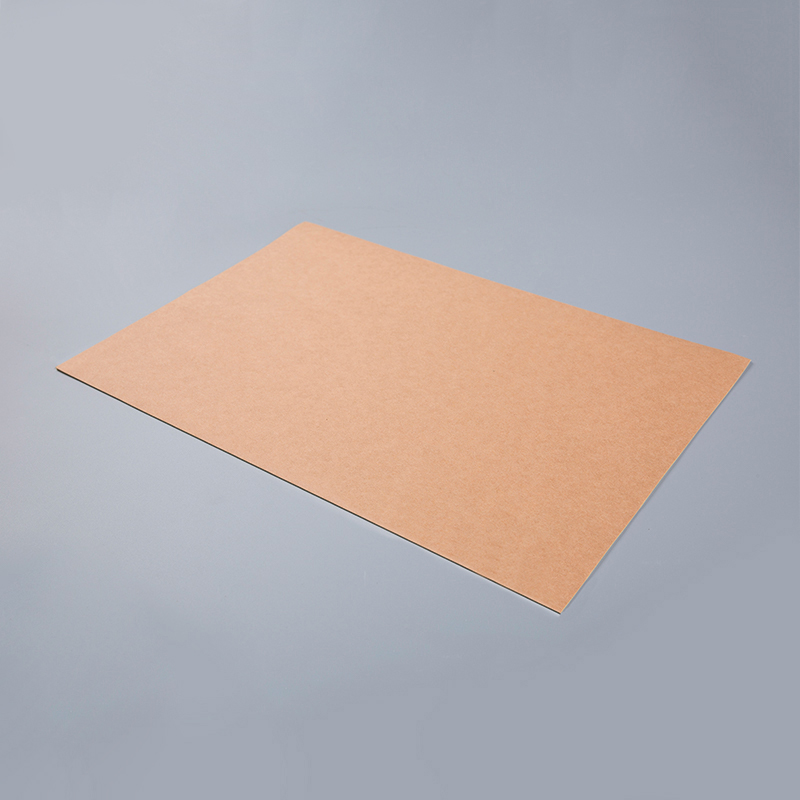
Gloss Silver PET adhesive film with a top coating is designed for labels that require a metallic appearance, durable performance, and reliable printability. Combining a bright silver polyester face material, a specialized surface coating, pressure-sensitive adhesive options, and a choice of release liners, this material provides a flexible solution for demanding product identification and decorative labeling applications.
Unlike ordinary paper labels, the material is engineered for environments where moisture, oil, chemicals, heat, abrasion, and tearing may compromise label quality. Its polyester construction delivers strong dimensional stability and resistance to tearing, while the silver surface creates a premium metallic effect that can enhance the appearance of consumer goods, electrical equipment, mechanical products, bathroom supplies, cosmetics, jewelry, and many other products.
The product is supplied by Suzhou Piaozhihua Composite Material Technology Co., Ltd., a Chinese manufacturer specializing in self-adhesive labels and related composite materials. The company integrates research and development, coating, adhesive application, laminating, slitting, sheet cutting, quality inspection, sales, and after-sales service. With a broad manufacturing infrastructure and more than 20 years of OEM experience, the company can provide both standard material specifications and customized solutions.
This article examines the construction, performance, manufacturing process, application advantages, customization options, packaging standards, and selection considerations associated with gloss silver PET adhesive film with a top coating.
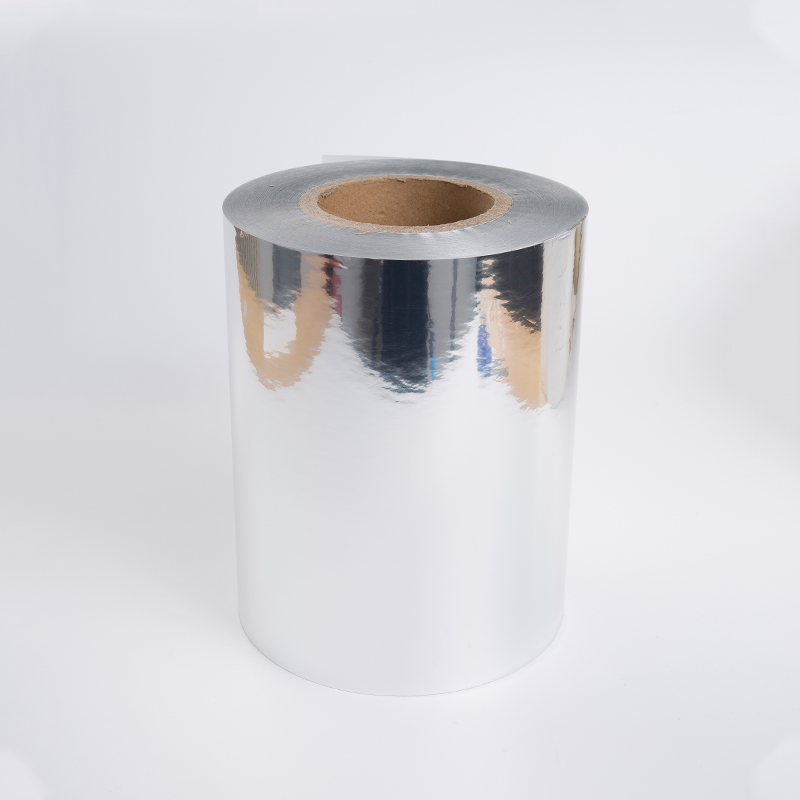
PaperGloss Silver PET With Coating On Top
Content
- 1 1. Product Overview
- 2 2. Performance Advantages
- 3 3. Advantages Compared with Conventional Label Materials
- 4 4. Printing and Converting Considerations
- 5 5. Adhesive Options and Application Selection
- 6 6. Release Liner Choices
- 7 7. Manufacturing Process and Quality Control
- 8 8. Applications
- 9 9. Packaging, Storage, and Delivery
- 10 10. Customization and OEM Support
- 11 11. How to Select the Correct Construction
- 12 12. Quality, Sustainability, and Long-Term Development
- 13 13. Frequently Asked Questions
- 13.1 Q1: What is gloss silver PET adhesive film?
- 13.2 Q2: What is the standard thickness?
- 13.3 Q3: Is the material suitable for outdoor use?
- 13.4 Q4: Can the material be used with digital printers?
- 13.5 Q5: What adhesive should be used for cold environments?
- 13.6 Q6: Is removable adhesive available?
- 13.7 Q7: What liner options are available?
- 13.8 Q8: Can the material be supplied in jumbo rolls?
- 13.9 Q9: Can sheets be customized?
- 13.10 Q10: Is UL-certified material available?
- 13.11 Q11: Which industries commonly use this product?
- 13.12 Q12: What information should be supplied when requesting a quotation?
- 14 14. Conclusion
- 15 References
- 16 Product: PaperGloss Silver PET With Coating On Top
1. Product Overview
Gloss silver PET adhesive film is a pressure-sensitive labelstock based on a polyester face material. The face material has a bright silver appearance and a gloss finish. A special coating is applied to the top surface to improve the suitability of the film for printing, decoration, and demanding service conditions.
The standard material described for this product is 50-micron gloss silver PET with coating on top. Other face material thicknesses, including 25 microns, 100 microns, and 150 microns, are also available. This range enables users to select a balance between flexibility, stiffness, opacity, durability, and cost according to the intended application.
The product is not limited to one adhesive formula or one liner construction. Water-based adhesive is available as a regular option, while hot-melt adhesive, solvent adhesive, anti-freeze adhesive, removable adhesive, cryogenic adhesive, and tyre-grade rubber adhesive can also be supplied. A wide selection of release liners is available, including glassine paper, release paper, coated art paper, CCK liner, and transparent PET liner.
This construction allows the material to be configured for different label manufacturing and end-use conditions. A label producer may require a smooth sheet for digital printing, a jumbo roll for high-volume flexographic or rotary production, a removable adhesive for temporary identification, or a cold-resistant adhesive for products exposed to low-temperature logistics. The same basic silver PET platform can therefore support multiple market segments.
1.1 Basic Construction
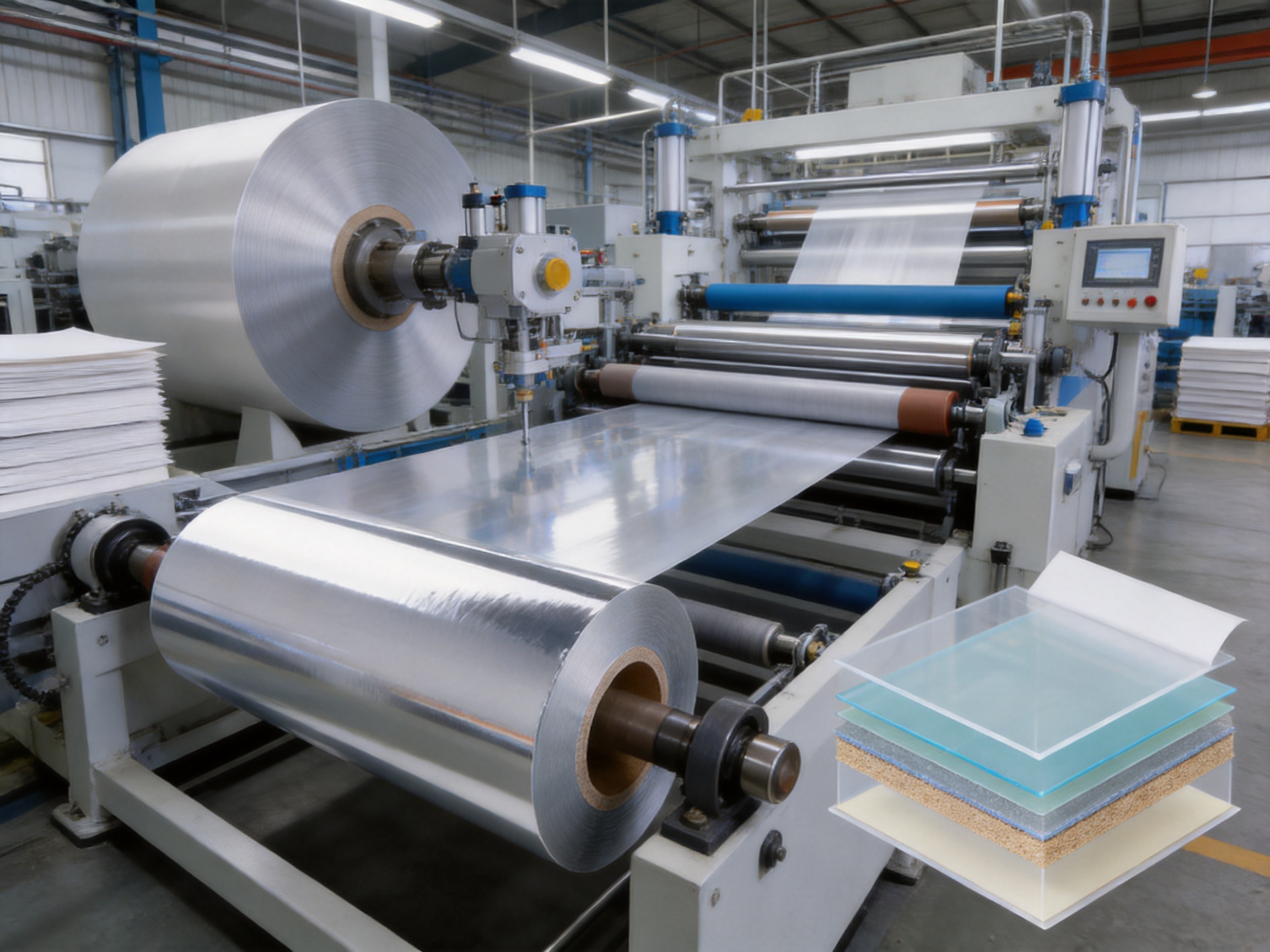
A self-adhesive label material normally consists of three functional layers: the face material, the adhesive layer, and the release liner. In this product, the face material is a silver polyester film with a gloss surface and a special printable coating. The adhesive provides bonding to the selected substrate. The liner protects the adhesive before application and supports feeding, die-cutting, printing, and dispensing.
The top coating is especially important. Polyester film is naturally strong and dimensionally stable, but a specialized coating can improve ink reception, surface uniformity, color development, and compatibility with printing systems. It can also support the visual quality of metallic graphics by providing a consistent surface for inks, varnishes, barcodes, and variable information.
The silver appearance is integrated into the face material rather than being created solely by a printed ink layer. This gives the finished label a continuous metallic effect and allows designers to combine the silver background with transparent, opaque, or colored inks. Depending on the printing process, selected areas can remain silver while other areas are printed with contrasting colors or white ink.
1.2 Main Product Specifications
| Item | Available Specification |
| Face material | Gloss silver PET with special coating on top |
| Standard face thickness | 50 microns |
| Other face thicknesses | 25, 100, and 150 microns available |
| Adhesive options | Water-based, hot-melt, solvent, anti-freeze, removable, cryogenic, and tyre-grade rubber adhesive |
| Standard liner | 60 g white glassine paper |
| Other liner options | 50, 80, 100, and 120 g glassine; 60, 85, 120, and 140 g release paper; 140 and 165 g art paper; 50, 80, 90, and 120 g CCK liner; 25, 36, 50, and 100 micron transparent PET liner |
| Jumbo roll widths | 1000, 1020, 1080, and 1530 millimeters |
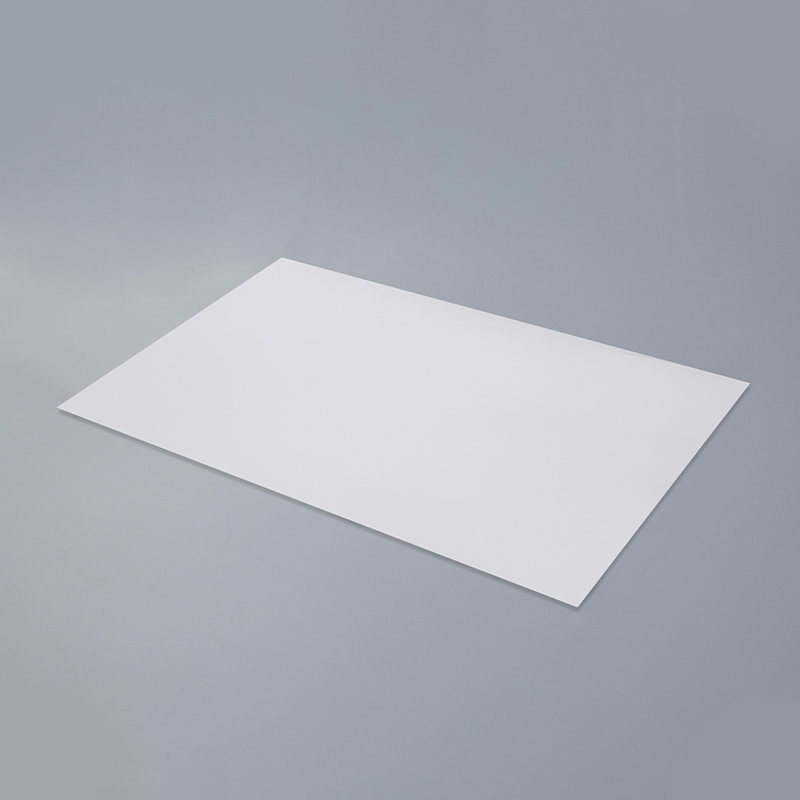
| Sheet sizes | A4, A3, 20 x 30 cm, 21 x 30 cm, 24 x 36 cm, 50 x 70 cm, and 70 x 100 cm |
| Customization | Customized sizes and constructions available according to requirements |
2. Performance Advantages
2.1 Bright Metallic Appearance
The most visible advantage of gloss silver PET is its metallic appearance. A bright silver background can give a product a more refined and technical appearance than standard white paper or ordinary transparent film. It is suitable for brands that want to communicate quality, modern design, durability, or precision.
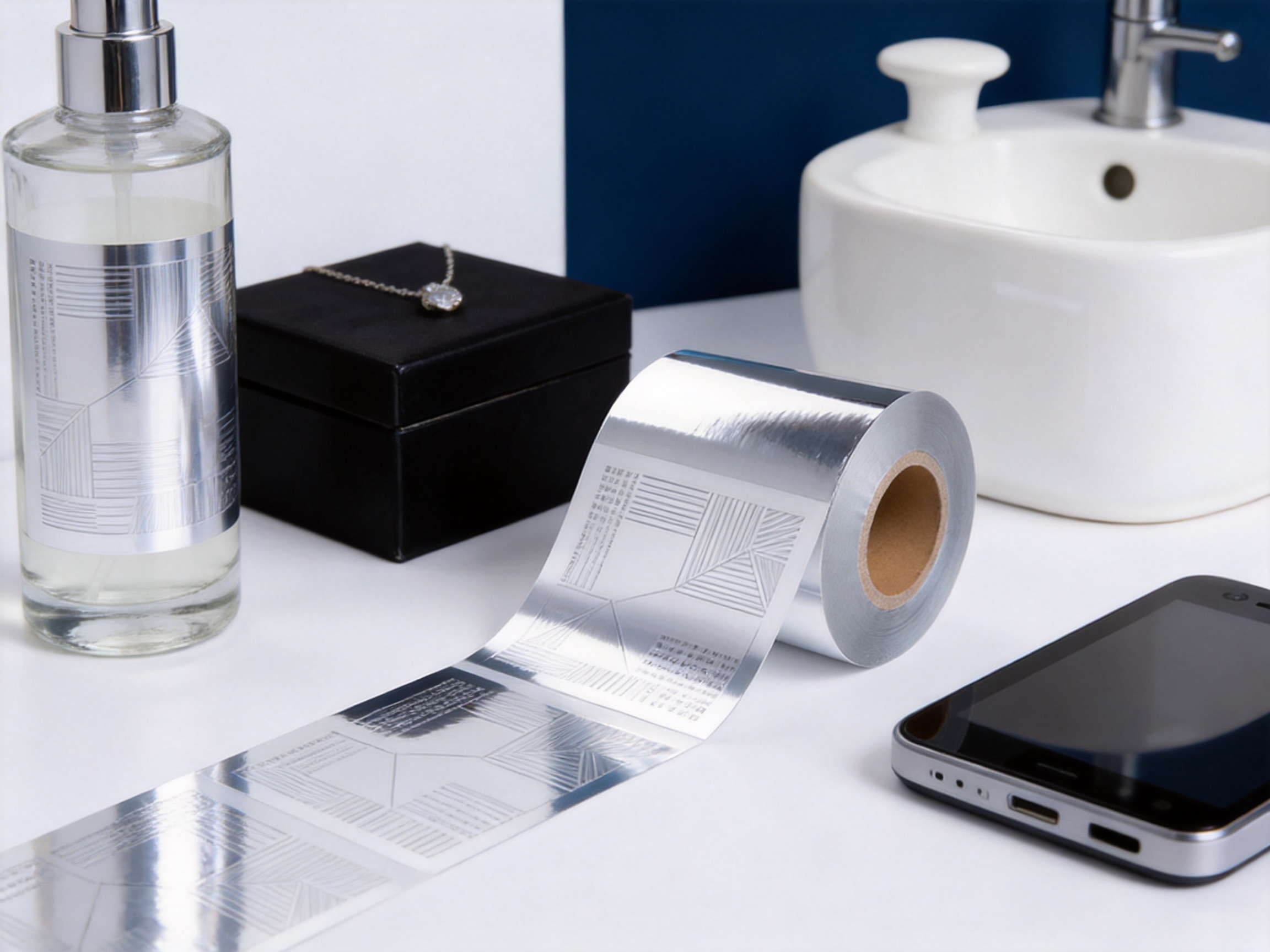
The gloss surface reflects light and creates a clean, polished visual effect. This is valuable for labels used on cosmetics, jewelry packaging, bathroom accessories, electronics, appliances, and premium consumer products. The silver background may be used as a complete visual field or selectively exposed through printed designs, allowing the label designer to create highlights, metallic lettering, borders, icons, and decorative patterns.
Compared with a label that relies entirely on simulated metallic ink, silver PET can provide a more consistent base appearance. Metallic ink performance may vary according to ink coverage, print density, curing, and substrate absorption. A silver film face material provides a ready-made metallic foundation, while printed elements can be added for branding and product information.
2.2 Excellent Tear Resistance
Polyester film offers significantly greater tear resistance than conventional paper face materials. This is useful where labels may be handled repeatedly, exposed to friction, or applied to products during transportation and storage. The film is less likely to split when subjected to pulling, rubbing, or edge damage.
Improved tear resistance can help preserve product information throughout the distribution cycle. A label that remains intact is more likely to retain barcodes, warnings, serial numbers, operating instructions, and brand graphics. It also reduces the risk that a damaged label will make the product appear poorly finished.
For industrial and mechanical products, the stronger face material can be particularly useful. Equipment may be handled during assembly, installation, maintenance, and shipment. A polyester label can provide more dependable physical performance than an uncoated paper label in these conditions.
2.3 Resistance to Moisture and Water Exposure
PET film does not absorb water in the same manner as paper. This makes the label material suitable for many applications in which condensation, splashing, or humid storage could affect a paper label. Bathroom supplies, personal care products, cleaning products, appliances, and outdoor-associated items may benefit from a film-based label construction.
Water resistance depends on the complete label system rather than the face film alone. The selected adhesive, printing ink, varnish, substrate, and application conditions all influence final performance. Nevertheless, the non-paper face material provides an important foundation for labels intended to withstand moisture.
When labels are applied to curved or smooth containers, users should confirm that the adhesive is suitable for the specific substrate and environment. Surface cleanliness, application pressure, dwell time, and temperature can influence bond development. For applications involving persistent water exposure, testing the finished label is recommended.
2.4 Oil and Chemical Resistance
The product is intended for high-performance labeling applications that may involve oil, chemicals, or cleaning agents. Polyester is generally more resistant to many common contaminants than uncoated paper. Its smooth film surface is easier to wipe and can help protect printed information from direct contact with certain liquids.
Chemical resistance is not universal. Different solvents, acids, alkalis, oils, and cleaning compounds can produce different effects on the coating, ink, adhesive, and liner. For this reason, application-specific compatibility testing remains important. The product’s value lies in its strong starting point and its availability with different adhesive technologies for specialized conditions.
For chemical containers, machine components, laboratory equipment, and industrial products, the label should be evaluated against the actual chemical exposure, contact duration, temperature, and cleaning procedure. A suitable top coating and compatible printing system can further improve resistance to abrasion and liquid contact.
2.5 High-Temperature Performance
PET is widely selected for applications requiring better heat resistance than ordinary paper labels. The material can be used where products encounter elevated temperatures during manufacturing, storage, transportation, or operation. This may include electrical components, appliances, mechanical parts, and industrial identification.
High-temperature performance is influenced by several factors, including the PET thickness, adhesive chemistry, ink system, exposure duration, and substrate. A film may remain physically stable while an unsuitable adhesive loses tack or an unsuitable ink changes color. The availability of hot-melt, solvent, rubber-based, and other adhesive options allows the construction to be adjusted to the application.
Users should define the expected minimum and maximum temperature, exposure time, substrate type, and whether the label will be applied before or after heating. A technical evaluation can then identify the appropriate adhesive and liner combination.
2.6 Light Permeability and Design Flexibility
The material can support creative designs involving reflection, translucency, and layered visual effects. Depending on the selected construction and printing treatment, designers may combine metallic silver areas with transparent zones, colored graphics, opaque white ink, or variable data.
Transparent PET liner options may be useful in converting operations that require a clear backing or specific die-cutting behavior. Transparent or partially transparent printed effects can be used to create windows and visual depth. The final degree of light transmission depends on the silver layer, coating, ink coverage, and material thickness, so sample testing is advised for specialized designs.
2.7 Potential for UL-Certified Applications
Some products in the range have passed UL certification. Certification availability depends on the exact construction, thickness, adhesive, liner, and intended use. Customers requiring UL-related performance should confirm the specific approved grade and applicable certification requirements before ordering.
For electrical and electronic products, recognized label materials can support compliance planning and improve confidence in long-term identification. The material’s tear resistance, heat resistance, and chemical resistance also make it a practical candidate for labels placed on electrical appliances, control panels, components, and mechanical equipment.
3. Advantages Compared with Conventional Label Materials
3.1 Compared with Paper Labels
Paper labels remain economical and effective for many general applications, but they can be vulnerable to water, tearing, oil, abrasion, and prolonged handling. Gloss silver PET addresses these weaknesses through a film face material that retains its physical structure when exposed to many common environmental stresses.
The metallic surface also provides a visual advantage. Standard white paper requires metallic ink, foil, or additional decoration to create a silver effect. Silver PET provides the metallic appearance within the labelstock, reducing the need to build the entire effect through printing alone.
Paper may be preferred where easy recyclability, natural texture, or low cost is the main consideration. However, for products that require a premium metallic appearance or stronger resistance, silver PET can offer a better overall balance of design and durability.
3.2 Compared with Uncoated Film
An uncoated film may provide basic water resistance and physical strength, but its printability can be less consistent for certain ink systems. The specialized top coating on this product is designed to create a more uniform surface for printing and decoration.
A controlled coating can help improve ink adhesion, color definition, surface smoothness, and the appearance of fine text. It can also support more consistent results across production runs when printing variable information, barcodes, logos, and detailed graphics.
3.3 Compared with Separate Foil Decoration
Hot stamping and cold foil can produce attractive metallic effects, but they require additional converting stages, tooling, registration control, or specialized equipment. Silver PET can simplify the design of metallic label backgrounds by providing the silver appearance before printing.
This does not eliminate the value of foil processes. Foil may still be selected for highly reflective accents, security effects, or premium decorative details. However, for applications requiring a broad metallic field across many labels, silver PET can provide an efficient alternative with fewer decorative steps.
3.4 Compared with Lower-Grade Metallic Films
Lower-grade materials may show uneven gloss, inconsistent color, poor coating uniformity, or limited adhesive choices. A controlled production process and multiple available constructions can help reduce these limitations. Customers can select the face thickness, adhesive, and liner according to performance requirements instead of accepting a one-size-fits-all material.
The availability of jumbo rolls and sheet formats also supports different production models. High-volume label converters can purchase roll material for continuous processing, while digital printing users, small manufacturers, and distributors can select sheets in common sizes such as A4 or A3.
4. Printing and Converting Considerations
4.1 Digital Printing
The coated surface is suitable for digital printing applications where consistent surface quality and accurate image reproduction are important. Digital printing is useful for short runs, customized labels, serialized products, variable information, and multiple designs with limited setup requirements.
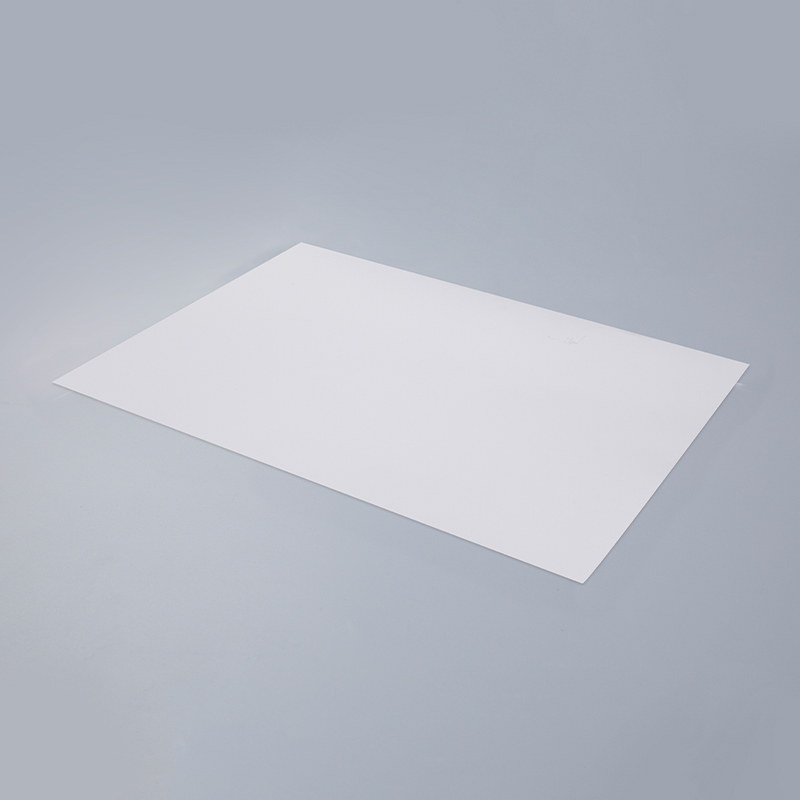
A4, A3, and other sheet formats can support office-style digital production, commercial digital presses, and small-batch label manufacturing. Before full production, users should confirm printer compatibility, fuser or curing temperature, ink adhesion, feeding performance, and image durability.
4.2 Flexographic and Rotary Printing
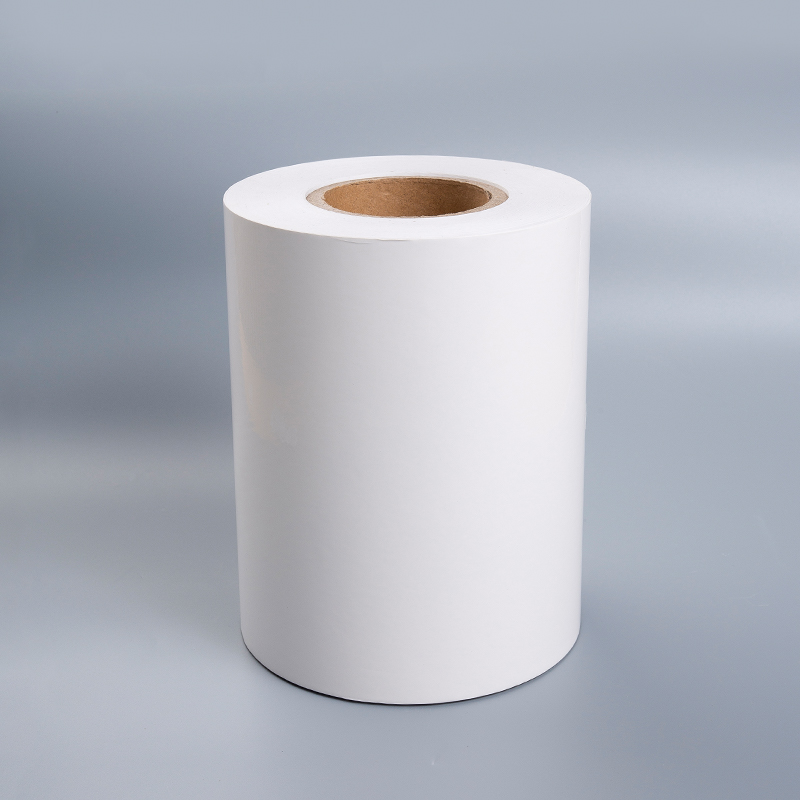
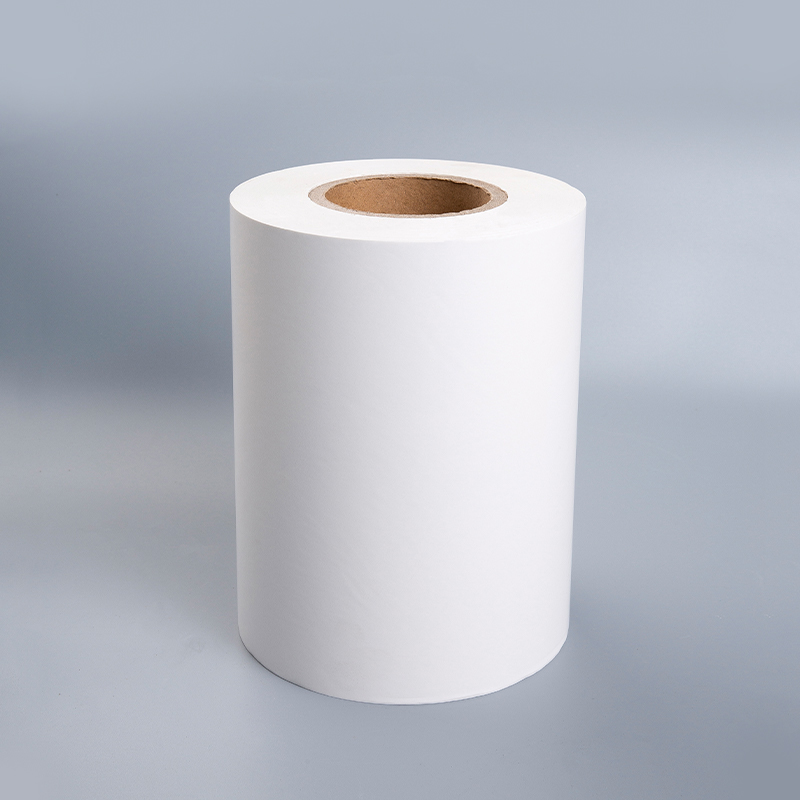
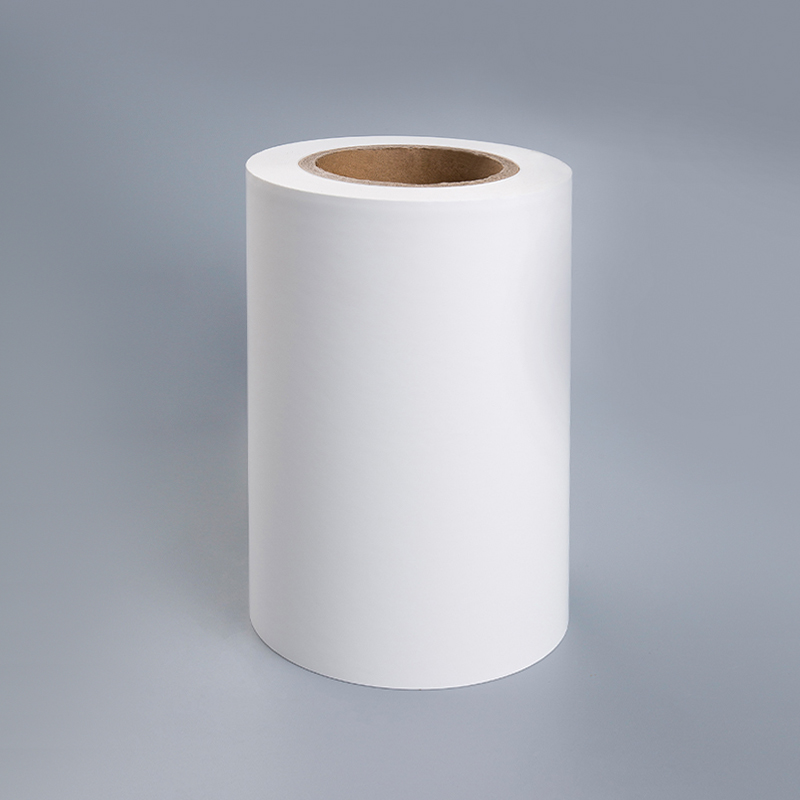
Jumbo roll formats are suitable for professional label converting operations. Flexographic printing can be used for high-volume production, while rotary systems can support accurate registration, die-cutting, and inline finishing. The available roll widths of 1000, 1020, 1080, and 1530 millimeters offer options for different press configurations and nesting plans.
Converters should establish suitable web tension, drying or curing conditions, ink selection, and die-cutting settings. PET film generally offers good dimensional stability, but accurate process control remains necessary when producing small labels, fine text, or complex shapes.
4.3 Ink and Coating Compatibility
The correct ink system should be selected according to the printing method and end-use environment. Water-based, solvent-based, UV, and other printing technologies may require different surface preparation and curing conditions. The coating is designed to support printing, but a trial run remains the most reliable method for confirming performance.
For labels exposed to chemicals, rubbing, heat, or outdoor handling, an additional protective varnish or overlamination may be considered. These treatments can improve abrasion resistance and protect variable data. However, they may also change gloss, flexibility, die-cutting behavior, and cost, so they should be evaluated as part of the complete label design.
4.4 Die-Cutting and Waste Removal
The face film and liner combination influences die-cutting performance. The converter must balance cutting depth so that the PET face is cleanly cut without unnecessarily damaging the liner. A suitable liner can improve release behavior and support efficient matrix stripping.
For intricate shapes, the die, pressure, speed, and waste removal system should be adjusted to the selected thickness. Thicker PET may provide more stiffness but can require different cutting parameters. Transparent PET liners and heavier paper liners may be selected when improved web stability or specialized processing behavior is required.
5. Adhesive Options and Application Selection
5.1 Water-Based Adhesive
Water-based adhesive is a common option for general-purpose applications. It can provide reliable bonding when applied to clean, dry, smooth surfaces under suitable temperature conditions. It may be selected for consumer packaging, product labeling, and indoor or moderate-environment applications.
5.2 Hot-Melt Adhesive
Hot-melt adhesive can offer strong initial tack and is often considered for applications requiring rapid bond formation. It may be suitable for selected packaging and industrial substrates. Performance depends on the surface energy, application temperature, service temperature, and required aging stability.
5.3 Solvent Adhesive
Solvent adhesive can be selected for demanding applications where strong adhesion, environmental resistance, or specialized performance is required. It may be appropriate for difficult substrates and industrial labels, subject to the specific formula and regulatory requirements.
5.4 Anti-Freeze and Cryogenic Adhesive
Anti-freeze and cryogenic adhesive options are available for products that encounter low-temperature storage, refrigerated logistics, or laboratory environments. Ordinary adhesives may lose tack or become brittle when exposed to cold conditions. A specialized adhesive can help maintain attachment at low temperatures.
Customers should provide the lowest expected temperature, application temperature, substrate type, and duration of exposure. Cryogenic applications often require careful testing because condensation, frost, and thermal shock may affect the bond.
5.5 Removable Adhesive
Removable adhesive is intended for applications where the label must be taken off with limited residue or surface damage. It may be useful for temporary identification, promotional labels, logistics marking, reusable containers, and equipment tracking.
Removability depends on dwell time, substrate, temperature, surface coating, and environmental exposure. A label that is removable shortly after application may become more difficult to remove after prolonged aging. Application testing should therefore reflect the real service period.
5.6 Tyre-Grade Rubber Adhesive
Tyre-grade rubber adhesive can be used for specialized applications involving rubber surfaces and demanding bonding conditions. Rubber substrates may contain plasticizers, additives, or textured surfaces that influence adhesion. A purpose-selected adhesive can improve the likelihood of reliable bonding, although the exact tyre compound and service conditions should be evaluated.
6. Release Liner Choices
The release liner supports the adhesive before application and plays an important role in printing, converting, dispensing, and storage. The standard option is 60 g white glassine paper. Glassine is smooth, lightweight, and widely used for pressure-sensitive label constructions.
Other glassine weights, including 50, 80, 100, and 120 g, are available. Heavier liners can provide additional stiffness and dimensional support, while lighter liners may reduce material consumption and improve flexibility. The choice depends on label size, die-cut complexity, press requirements, and dispensing equipment.
Release paper options include 60, 85, 120, and 140 g constructions. Art paper liners in 140 and 165 g are also available for applications requiring a more substantial backing. CCK liners in 50, 80, 90, and 120 g provide additional options for customers with particular converting or release requirements.
Transparent PET liners are available in 25, 36, 50, and 100 microns. They can support applications requiring a film liner, improved dimensional stability, or a clear backing. As with all liner choices, release force and converting compatibility should be verified with the intended adhesive and production equipment.
7. Manufacturing Process and Quality Control
7.1 Material Preparation
Manufacturing begins with the selection and inspection of PET film, adhesive components, release liners, and coating materials. Face material thickness, surface quality, silver appearance, roll condition, and cleanliness are reviewed before production. Consistent raw material preparation is essential for stable coating and laminating performance.
7.2 Surface Coating
The special top coating is applied to create a controlled printable surface. Coating uniformity affects gloss, ink reception, color appearance, and final label quality. Production parameters such as coating weight, drying conditions, web speed, and tension must be controlled to reduce variation across the roll width and length.
After coating, the material may be inspected for surface defects, streaks, pinholes, uneven gloss, contamination, and coating adhesion. A well-controlled surface provides a reliable foundation for subsequent printing and converting.
7.3 Adhesive Coating
The selected adhesive is applied to the reverse side of the PET face material or to the liner, depending on the manufacturing design. Coating weight and uniformity are carefully controlled because they influence initial tack, final adhesion, release performance, and resistance to temperature or chemicals.
Different adhesive families require different coating and drying conditions. Water-based systems may require controlled drying, while solvent systems require appropriate solvent removal and safety controls. Hot-melt systems require accurate temperature management to achieve stable coating quality.
7.4 Laminating
The coated face material and release liner are laminated under controlled pressure and tension. The goal is to create a smooth, bubble-free composite with stable adhesive distribution and reliable release performance. Poor lamination can result in wrinkles, tunneling, delamination, uneven adhesion, or feeding problems during printing.
7.5 Slitting and Sheet Cutting
After coating and laminating, jumbo rolls can be slit into narrower rolls or converted into sheets. The company operates production lines covering gluing, laminating, and cutting. This integrated structure helps reduce dependence on external processing and allows specifications to be coordinated across the complete product.
Sheet sizes include A4, A3, 20 x 30 centimeters, 21 x 30 centimeters, 24 x 36 centimeters, 50 x 70 centimeters, and 70 x 100 centimeters. Custom sizes can be produced according to equipment and order requirements. Accurate cutting helps ensure reliable feeding in digital printers, cutters, and packaging lines.
7.6 Laboratory and Inspection Capability
Suzhou Piaozhihua Composite Material Technology Co., Ltd. maintains its own testing laboratory and uses inspection equipment to support quality control. Testing may cover face material appearance, thickness, adhesive properties, release behavior, dimensional stability, coating quality, and finished roll or sheet condition.
Application-specific testing can also be arranged when customers require performance evaluation under heat, cold, moisture, chemicals, or specialized substrates. This approach is valuable because label performance depends on the interaction of all layers and the real conditions of use.
7.7 Production Capacity and Integrated Service
The company reports annual production capacity exceeding 280 million square meters. Its integrated capabilities include research and development, production, sales, and after-sales support. The company also reports more than 20 years of OEM manufacturing experience and provides ODM and OEM services for customers who need products made according to drawings, samples, or technical specifications.
Integration can improve communication between product development and manufacturing. Instead of selecting face material, adhesive, and liner independently from different suppliers, customers can discuss the complete label construction with one manufacturer. This may reduce development time and help align performance requirements with production feasibility.
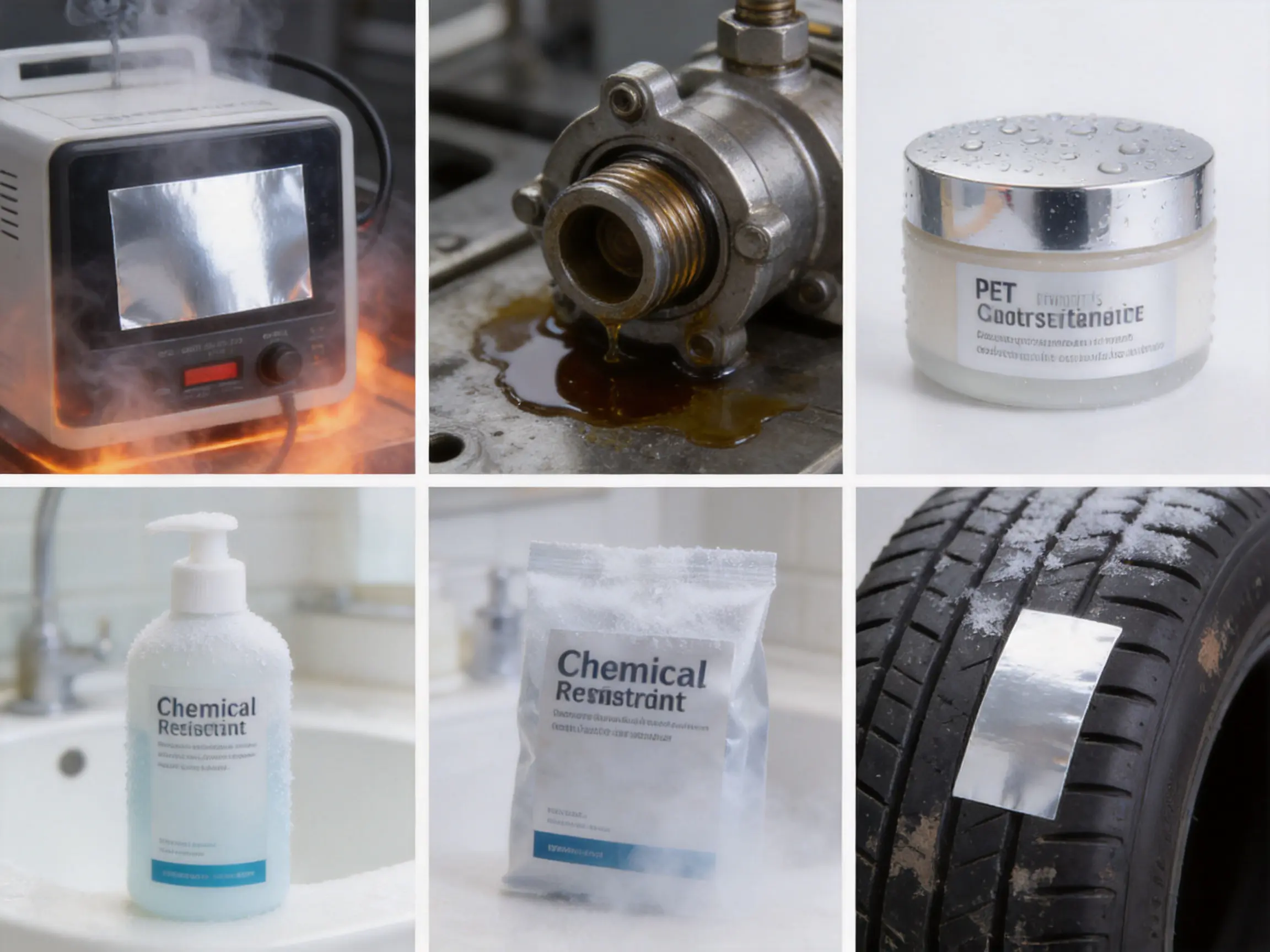
8. Applications
8.1 Bathroom Supplies
Bathroom products may experience humidity, splashing, condensation, and frequent handling. Silver PET labels can provide a durable, decorative identification solution for dispensers, fittings, accessories, cleaning products, and related packaging.
8.2 Cosmetics and Personal Care
Cosmetic packaging often requires a premium visual effect as well as resistance to oils, moisture, and handling. A gloss silver background can support luxury and technical design concepts. It can be combined with colored printing, transparent effects, white ink, and fine text for product names, ingredients, warnings, and brand information.
8.3 Jewelry and Premium Goods
Jewelry packaging and premium products benefit from a metallic appearance that communicates value. Silver PET can be used for boxes, pouches, cartons, certificates, tags, and product identification labels. The film construction can help maintain a neat appearance during handling and storage.
8.4 Electrical Appliances and Electronics
Electrical appliances and electronic products often require labels for model information, ratings, warnings, serial numbers, operating instructions, and certification marks. The material’s strength, heat resistance, and potential availability in UL-related constructions make it suitable for selected applications in this sector.
8.5 Mechanical Products
Mechanical products may be exposed to oil, friction, temperature variation, and rough handling. Silver PET labels can be used for equipment identification, part numbers, maintenance instructions, control panels, warning labels, and asset tracking. The appropriate adhesive should be selected for painted metal, bare metal, plastic, rubber, or textured surfaces.
8.6 Waterproof and Chemical-Resistant Product Labels
Products marketed as waterproof or resistant to oil and chemicals often require labels that remain legible in the same environment. PET face material provides a stronger starting point than conventional paper. Depending on the exposure, additional protective printing treatments and application-specific adhesives may be used.
9. Packaging, Storage, and Delivery
Packaging is important because self-adhesive materials can be affected by pressure, moisture, dust, temperature, and rough handling during transportation. The company offers sea-transit-worthy poly-wood pallet packing and carton packing for rolls or sheets available from stock.
Sheets are packed at 100 sheets per ream. Each ream is wrapped with strong PE-coated kraft paper. Pallets are wrapped with stretch film and secured with plastic fastening belts. This packaging structure is designed to support protection during handling, loading, unloading, and international shipment.
Materials should be stored in a clean, dry environment away from direct sunlight, excessive heat, and sharp temperature changes. Rolls and sheets should remain in their original packaging until needed. Before printing or application, the material should be allowed to acclimatize to the production environment where appropriate.
Correct storage helps preserve adhesive performance, liner release, roll shape, sheet flatness, and printing consistency. Customers should also observe the manufacturer’s recommended storage conditions and first-in, first-out inventory practices.
10. Customization and OEM Support
One of the principal strengths of this product platform is the range of configurable elements. Customers can select face thickness, adhesive type, liner type, roll width, sheet size, and finishing format. This is more adaptable than purchasing a fixed construction that may not match the application.
OEM customers can provide drawings, samples, target performance data, or existing label specifications. The manufacturer can then evaluate the required combination of PET, coating, adhesive, and liner. ODM support is also available for customers developing a new product or seeking an alternative to an existing label material.
Customization may include jumbo roll width, sheet dimensions, adhesive selection, liner weight, packaging method, and special performance requirements. Customers should provide information about the substrate, application temperature, service temperature, moisture exposure, chemical exposure, printing method, label shape, expected storage period, and final use.
A clear technical brief helps the manufacturer recommend a more suitable construction. It also reduces the risk of selecting an adhesive or liner that performs well in one environment but fails in another.
11. How to Select the Correct Construction
11.1 Define the Substrate
The label may be applied to glass, plastic, metal, painted metal, rubber, cardboard, coated paper, or another material. Surface energy, texture, curvature, cleanliness, and flexibility affect adhesion. The same adhesive should not automatically be used for every substrate.
11.2 Define Environmental Conditions
Important conditions include water, humidity, oil, solvents, cleaning chemicals, sunlight, abrasion, heat, freezing temperatures, and pressure. The expected exposure time should also be stated. A short-term label and a permanent industrial label may require different adhesive and protective treatments.
11.3 Define the Printing Process
The selected material should be compatible with digital, flexographic, offset, screen, thermal transfer, or other printing processes. Customers should identify the press type, ink system, curing method, sheet or roll format, and variable data requirements.
11.4 Define the Label Geometry
Small labels, narrow strips, large panels, wraparound labels, and labels with intricate die-cutting may require different face thicknesses and liner weights. Curved surfaces may require a more flexible construction, while large labels may benefit from additional dimensional stability.
11.5 Test the Complete Label
Testing should be conducted on the actual substrate using the final printing and application process. Evaluation may include initial tack, peel adhesion, shear resistance, aging, water exposure, chemical contact, temperature cycling, abrasion, and barcode readability. Complete-label testing is more reliable than evaluating the PET face material alone.
12. Quality, Sustainability, and Long-Term Development
The company’s stated quality manufacturing approach has been developed over more than 20 years. Its product strategy includes self-adhesive face materials, adhesives, and backing papers, with attention to product performance and customized service.
The company also identifies sustainable development and environmental protection as part of its brand positioning. Eco-friendly solutions may involve the selection of face materials, adhesive systems, and backing papers that support customers’ sustainability objectives. The appropriate solution depends on the application, local regulations, recycling infrastructure, and required performance.
Material selection should consider the entire label system. A durable film label may reduce replacement frequency, while a paper-based solution may be preferred where recycling compatibility is the dominant concern. Customers should assess the complete product life cycle, including manufacturing, application, use, removal, and disposal.
13. Frequently Asked Questions
Q1: What is gloss silver PET adhesive film?
Gloss silver PET adhesive film is a pressure-sensitive label material consisting of a bright silver polyester face, a special top coating, an adhesive layer, and a release liner. It is designed for attractive and durable labels used in demanding environments.
Q2: What is the standard thickness?
The standard described construction uses 50-micron gloss silver PET with coating on top. Thicknesses of 25, 100, and 150 microns are also available for different requirements.
Q3: Is the material suitable for outdoor use?
It can be suitable for selected outdoor or demanding applications, but the complete construction must be evaluated. Outdoor performance depends on adhesive type, ink, protective coating, sunlight exposure, moisture, temperature, and service duration.
Q4: Can the material be used with digital printers?
Yes. Sheet formats such as A4 and A3 are available, and the coated surface is intended to support printing. Printer, ink, fuser, curing, feeding, and durability tests should be completed before commercial production.
Q5: What adhesive should be used for cold environments?
Anti-freeze or cryogenic adhesive may be considered for low-temperature applications. The lowest temperature, application conditions, condensation, substrate, and exposure duration should be provided for product selection and testing.
Q6: Is removable adhesive available?
Yes. Removable adhesive is available for temporary labels and applications where reduced residue or easier removal is required. Actual removability depends on the substrate, dwell time, temperature, and environmental exposure.
Q7: What liner options are available?
Available options include glassine paper, release paper, art paper, CCK liner, and transparent PET liner. Different basis weights and film thicknesses are available to suit printing, die-cutting, dispensing, and storage requirements.
Q8: Can the material be supplied in jumbo rolls?
Yes. Jumbo roll widths of 1000, 1020, 1080, and 1530 millimeters are available. Other dimensions may be discussed as customized requirements.
Q9: Can sheets be customized?
Yes. Standard sheet formats include A4, A3, 20 x 30 centimeters, 21 x 30 centimeters, 24 x 36 centimeters, 50 x 70 centimeters, and 70 x 100 centimeters. Customized sheet sizes can also be considered.
Q10: Is UL-certified material available?
Some products in the range have passed UL certification. Customers should confirm the exact approved construction and certification requirements for their intended application before placing an order.
Q11: Which industries commonly use this product?
Typical industries include bathroom supplies, cosmetics, jewelry, electrical appliances, electronics, mechanical products, industrial equipment, consumer goods, and products requiring waterproof, oil-resistant, chemical-resistant, or heat-resistant labels.
Q12: What information should be supplied when requesting a quotation?
Useful information includes face thickness, adhesive type, liner preference, roll or sheet format, size, quantity, printing process, substrate, environmental conditions, application temperature, service temperature, and any certification or packaging requirements.
14. Conclusion
Gloss silver PET adhesive film with a top coating is a versatile solution for labels that must combine visual impact with dependable physical performance. Its bright metallic appearance supports premium and technical product designs, while the polyester face provides strong tear resistance, moisture resistance, chemical resistance, high-temperature capability, and dimensional stability.
The product is particularly valuable when a conventional paper label may be damaged by water, oil, abrasion, heat, or repeated handling. Its coated surface supports printing and decoration, and its metallic base can reduce the need for separate foil effects across large label areas.
Its performance can be further adapted through a broad range of adhesives and release liners. Water-based, hot-melt, solvent, anti-freeze, removable, cryogenic, and tyre-grade rubber adhesive options allow the material to address different substrates and environments. Glassine, release paper, art paper, CCK, and transparent PET liners provide additional flexibility for converting and application.
Suzhou Piaozhihua Composite Material Technology Co., Ltd. supports this product range through integrated research and development, coating, gluing, laminating, cutting, inspection, OEM, and ODM capabilities. Jumbo rolls and sheets are available, while customized sizes and constructions can be developed for specific customer requirements.
For the best result, buyers should evaluate the entire label system rather than selecting a face material alone. By matching the PET thickness, coating, adhesive, liner, printing method, and application conditions, manufacturers can obtain a label that is visually attractive, technically appropriate, and reliable throughout its intended service life.
References
1. Product specification information for gloss silver PET with coating on top, supplied by Suzhou Piaozhihua Composite Material Technology Co., Ltd.
2. Technical information concerning pressure-sensitive adhesive label constructions, including face materials, adhesive systems, and release liners.
3. General industry practices for polyester film printing, coating, laminating, slitting, die-cutting, and sheet conversion.
4. General guidance for selecting self-adhesive label materials according to substrate, temperature, moisture, chemical exposure, and printing requirements.
5. General packaging and storage practices for pressure-sensitive labelstock supplied in rolls and sheets.