
 English
 Español
 русский
 Français
 عربى
Content
- 1 Introduction
- 2 What Is Fluorescent Paper in Rolls?
- 3 Key Product Advantages
- 4 Applications of Fluorescent Paper
- 4.1 Fire Equipment and Emergency Identification
- 4.2 Public Places and Directional Signage
- 4.3 Packaging and Product Promotion
- 4.4 Trademark and Product Labels
- 4.5 Toys, Gifts, and Creative Products
- 4.6 Industrial Marking and Warehouse Management
- 4.7 Cold-Chain and Low-Temperature Uses
- 4.8 Tyre and Rubber-Related Applications
- 5 Printing and Converting Performance
- 6 Manufacturing Process and Quality Strengths
- 7 Why This Product Can Outperform Ordinary Label Paper
- 8 Customization and OEM/ODM Services
- 9 Packaging, Storage, and Delivery
- 10 Sustainability and Responsible Material Development
- 11 How to Select the Correct Fluorescent Paper Construction
- 12 Company Manufacturing and Service Profile
- 13 Frequently Asked Questions
- 13.1 What is the main advantage of fluorescent paper in rolls?
- 13.2 What is the face material specification?
- 13.3 Which adhesive should be used for general labels?
- 13.4 Is a low-temperature adhesive available?
- 13.5 Can the labels be removed?
- 13.6 Can fluorescent paper be used for barcode labels?
- 13.7 What printing methods are supported?
- 13.8 What roll widths are available?
- 13.9 Are finished sheets available?
- 13.10 Which liners are available?
- 13.11 Can the material be customized?
- 13.12 How should fluorescent paper be stored?
- 13.13 Is the product suitable for outdoor use?
- 13.14 What information should be provided for a quotation?
- 14 Conclusion
- 15 References
- 16 Product: Fluorescent Paper In Rolls
Introduction
Fluorescent paper in rolls is a high-visibility self-adhesive labeling material developed for applications that require strong visual impact, reliable printability, and flexible converting options. Its bright fluorescent face stock helps labels, signs, promotional graphics, product markings, and warning messages stand out from ordinary printed materials. When used in suitable environments, the material can also provide a noticeable glow or high-visibility effect under low-light conditions, making it valuable for fire equipment, public facilities, special products, toys, gifts, and other attention-sensitive applications.
The product is based on 80gsm fluorescent paper and can be manufactured with different adhesive systems and release liners. This construction allows buyers to select a configuration according to the application, printing process, surface type, temperature requirement, removability, and final converting method. Water-based adhesive is available for general-purpose labeling, while hotmelt, solvent, anti-freeze, removable, cryogenic, and tyre-grade rubber adhesive options support more demanding uses.
Supplied in jumbo rolls or finished sheets, fluorescent paper can be used by label converters, printers, packaging companies, sign manufacturers, stationery producers, distributors, and industrial users. Jumbo roll widths include 1000mm, 1020mm, 1080mm, and 1530mm, while sheet options include A4, A3, 20 x 30cm, 21 x 30cm, 24 x 36cm, 50 x 70cm, and 70 x 100cm. Customized sizes can also be produced for specific production lines or finished-product requirements.
The combination of vivid appearance, multiple adhesive choices, liner flexibility, broad printing compatibility, and professional roll-to-sheet converting makes this material a practical alternative to ordinary paper labels. It provides a balance between visual performance, manufacturing efficiency, customization, and cost control.
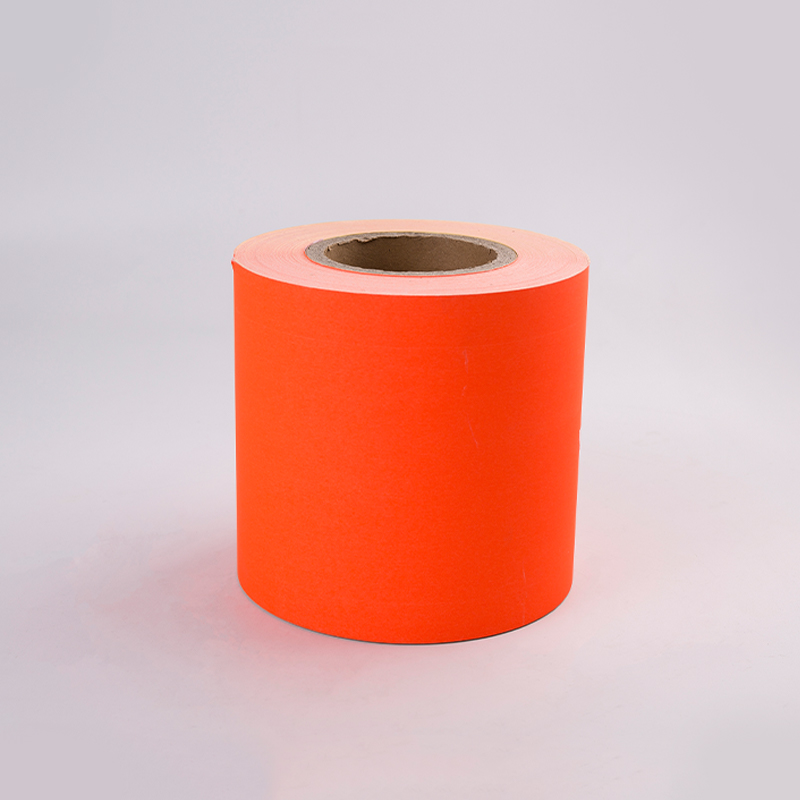
Fluorescent Paper In Rolls
What Is Fluorescent Paper in Rolls?
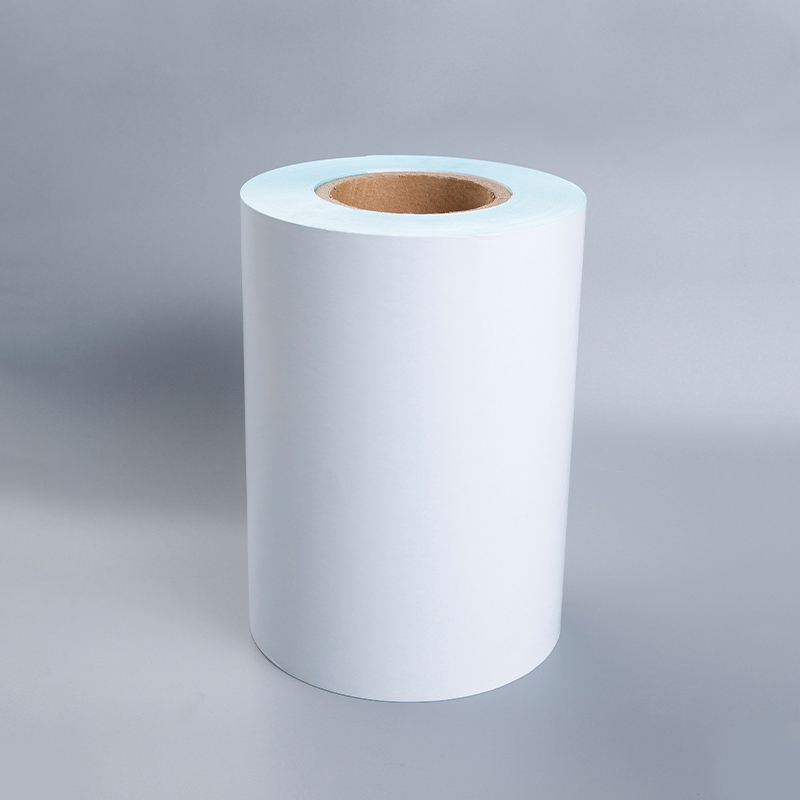
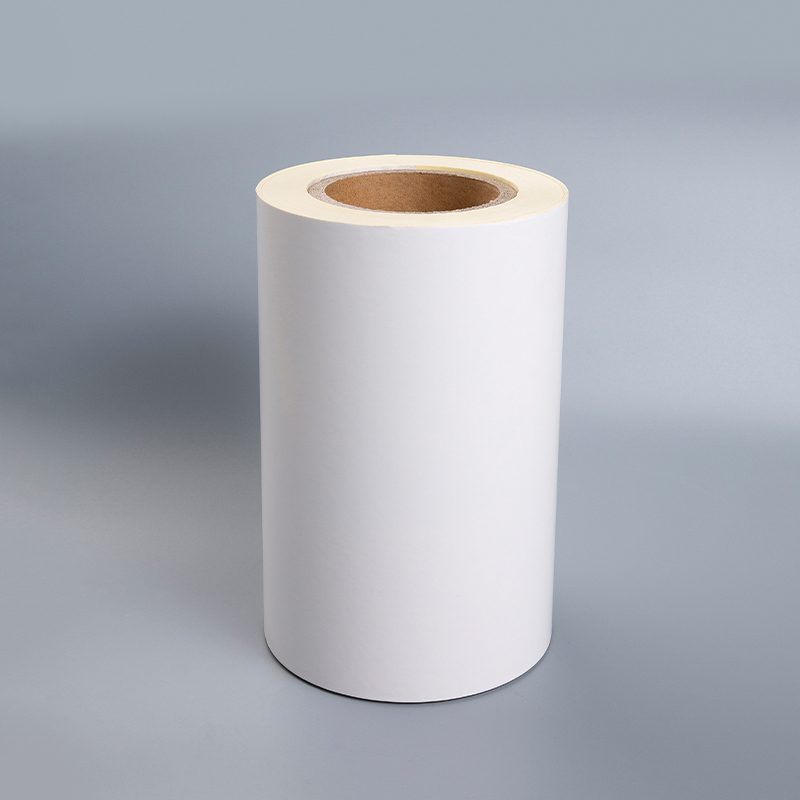
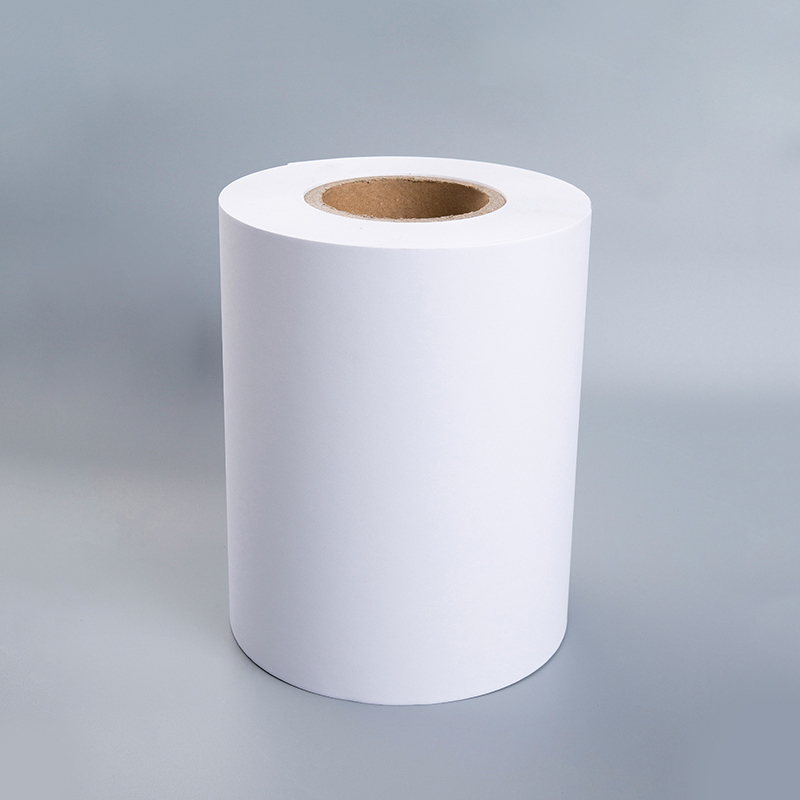
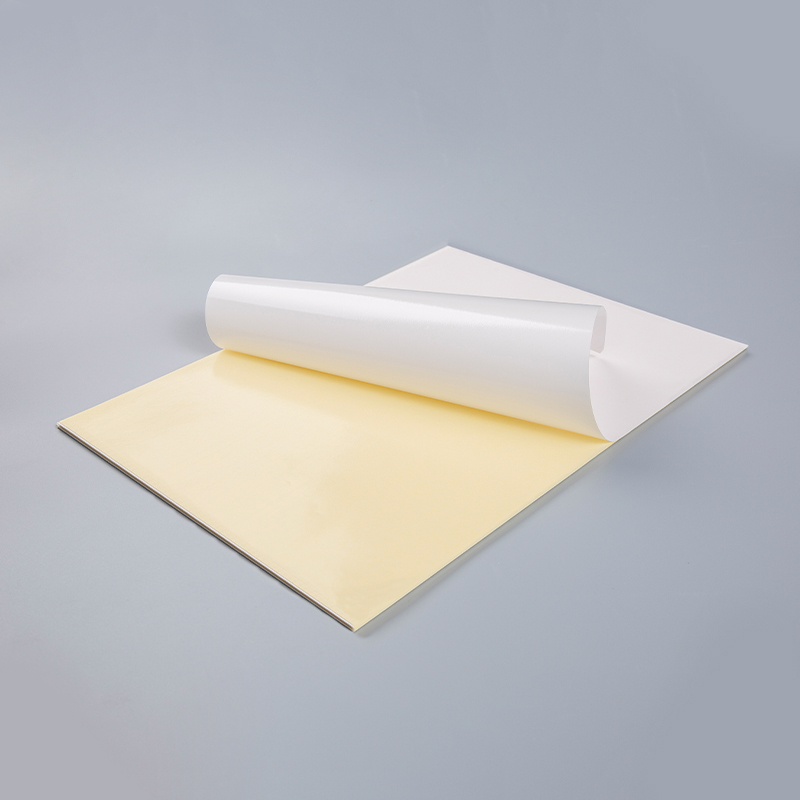
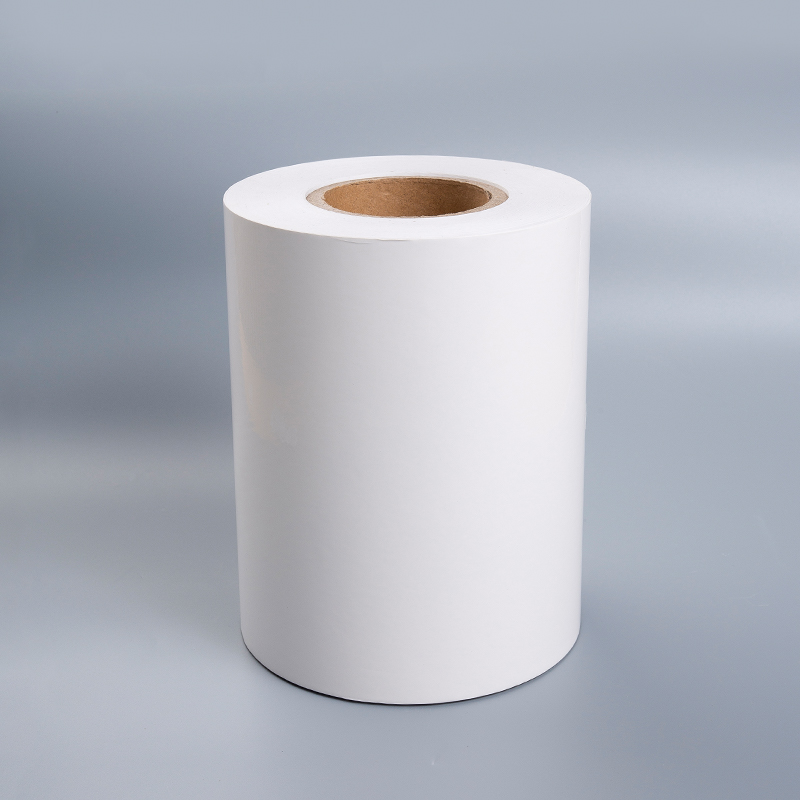
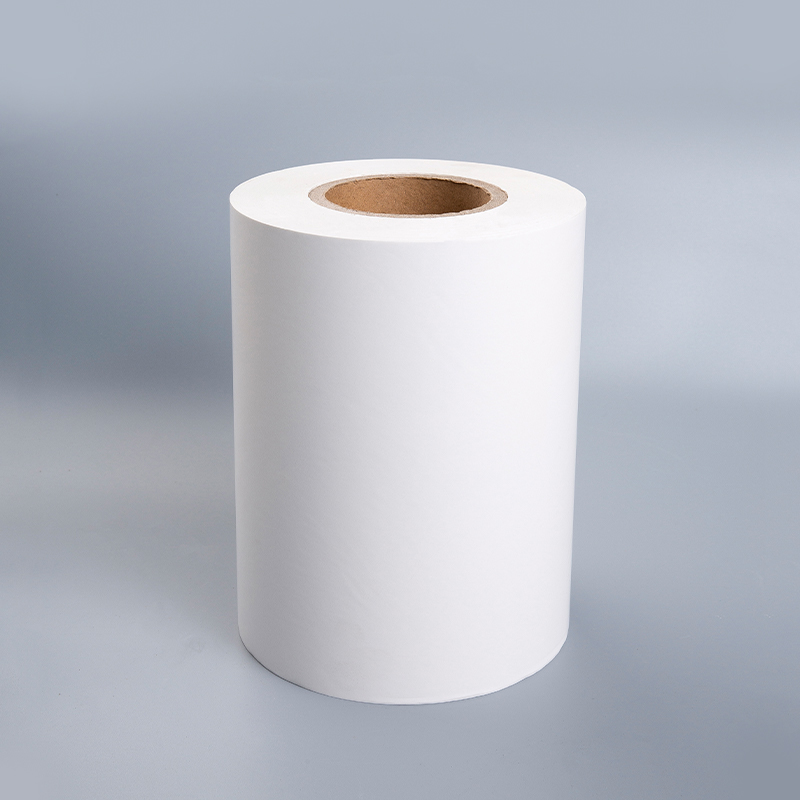
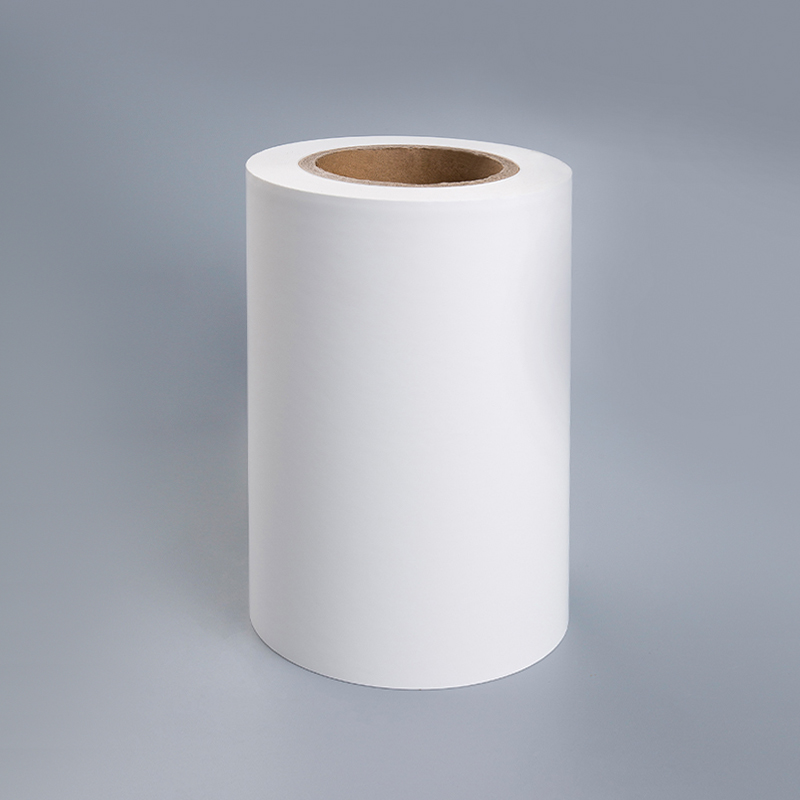
Fluorescent paper in rolls is a continuous self-adhesive paper material wound into a jumbo roll or production roll. The product normally consists of three functional layers: a fluorescent paper face stock, an adhesive coating, and a release liner. Each layer contributes to the performance of the final label or printed article.
The 80gsm fluorescent paper face stock provides a lightweight but useful printing surface. Its high-brightness color gives printed graphics a strong visual presence and improves the visibility of text, symbols, borders, and warning information. Because the material is supplied continuously in rolls, it can be integrated into high-speed flexographic, letterpress, and other industrial printing operations.
The adhesive layer bonds the face stock to the target substrate. Adhesive selection is important because different products and environments require different levels of tack, shear strength, temperature resistance, removability, or chemical stability. A general-purpose water-based adhesive may be appropriate for regular packaging and indoor labeling, whereas a solvent adhesive or specialized low-temperature adhesive may be better for difficult surfaces or demanding conditions.
The release liner protects the adhesive before application. It also supports smooth unwinding, die cutting, slitting, printing, and label dispensing. Standard and optional liner materials include yellow release paper, glassine paper, other release papers, art paper, CCK liner, and transparent PET liner. These choices allow the construction to be matched to the converter’s equipment and the end user’s expectations.
Continuous Roll Construction
Roll production offers several advantages over pre-cut materials. A converter can slit the jumbo roll into narrower widths, die-cut custom label shapes, print repeating designs, or combine the material with automated dispensing equipment. Continuous material also minimizes unnecessary interruptions and supports more efficient production planning.
For businesses purchasing large quantities, jumbo rolls can reduce packaging waste and provide better control over the converting process. For smaller users, finished sheets are available in common commercial sizes. This dual supply model enables the same fluorescent paper technology to serve both industrial converters and direct-use printing customers.
High-Visibility Face Material
The main visual advantage of fluorescent paper is its vivid appearance. Compared with standard white paper or ordinary colored paper, fluorescent paper attracts attention more quickly. This makes it particularly useful where the message must be noticed at a distance, among competing graphics, or in busy public and retail environments.
Fluorescent colors can be used for directional signs, promotional labels, shelf markers, warning notices, event materials, special packaging, and identification labels. The material can support both simple one-color messages and more complex printed designs, provided that the selected ink system and printing conditions are suitable for the intended face stock.
Key Product Advantages
Strong Visual Impact
The most important advantage of fluorescent paper is its high visual impact. A fluorescent label naturally contrasts with ordinary cartons, packages, documents, and surfaces. This helps users identify important information quickly, including caution messages, product distinctions, promotional offers, emergency instructions, and handling notices.
For retail applications, vivid labels can help products attract attention on crowded shelves. For industrial use, fluorescent markings can improve the visibility of equipment identification, maintenance instructions, and handling information. In public locations, bright labels and signs can make notices easier to locate and read.
Versatile Printing Compatibility
The product is suitable for several printing methods, including letterpress, offset, flexographic printing, screen printing, and barcode printing. This broad compatibility is an important advantage for customers that operate different machines or purchase materials for multiple production programs.
Flexographic printing is suitable for long production runs and repeated label designs. Offset printing can provide detailed graphics and high-quality images on sheet formats. Letterpress printing remains useful for sharp text and traditional label production. Screen printing can be selected when heavier ink deposits or special visual effects are required. Barcode printing supports product identification, warehouse management, inventory control, and retail operations.
Printing performance depends on ink selection, drying conditions, machine settings, and the specific fluorescent color. Professional testing before mass production is recommended, especially for small text, fine lines, high-density graphics, and barcode applications. When appropriately processed, the material can provide clean printing and dependable visual results.
Multiple Adhesive Solutions
One of the product’s strongest competitive advantages is the range of adhesive options. A single adhesive construction cannot meet every application requirement. By offering several adhesive categories, the manufacturer can provide a more suitable product for different surfaces, climates, and service conditions.
Water-based adhesive is a practical choice for general-purpose applications. It can be used for many paper, cardboard, plastic, and indoor surfaces when standard adhesion is sufficient. It is commonly selected for packaging labels, promotional labels, stationery, and general product identification.
Hotmelt adhesive offers fast initial tack and is often selected for applications requiring immediate bonding. It can be useful in high-speed packaging or labeling operations where the label must adhere rapidly after application.
Solvent adhesive is designed for applications requiring stronger performance on challenging substrates or under more demanding environmental conditions. Depending on the formulation, it can offer improved resistance to moisture, chemicals, temperature changes, or surface irregularities.
Anti-freeze adhesive is suitable for cold-chain and low-temperature applications. Ordinary adhesives may lose tack when applied to chilled or frozen surfaces. A specialized anti-freeze formulation can improve application reliability for refrigerated goods, frozen food packaging, cold-storage identification, and other temperature-sensitive uses.
Removable adhesive is suitable when labels must be taken off cleanly or repositioned during the product lifecycle. It can be useful for temporary signs, promotional campaigns, rental equipment, event materials, reusable containers, and short-term identification.
Cryogenic adhesive is intended for extremely low-temperature applications. It may be considered for laboratories, medical sample containers, scientific research, and other environments where labels must remain attached under severe cold conditions. Actual performance should always be validated against the required temperature range and substrate.
Tyre-grade rubber adhesive is available for applications requiring strong bonding to rubber or tyre-related surfaces. Rubber substrates can be difficult because of surface energy, flexibility, curvature, and the presence of processing residues. A dedicated adhesive construction can improve the reliability of identification and marking labels in this sector.
Flexible Release Liner Selection
The release liner affects label processing, die cutting, dispensing, and application. The available liner choices include 85g yellow release paper, 50g, 60g, 80g, 100g, and 120g glassine paper, 60g, 120g, and 140g release paper, 140g and 165g art paper, 50g, 80g, 90g, and 120g CCK liner, and transparent PET liners in 25, 36, 50, and 100 micron thicknesses.
Glassine liner is often selected for smoothness, uniformity, and efficient processing. CCK liner can provide an alternative paper-based option for converting applications. Art paper liners offer additional stiffness and may be useful where handling or dimensional support is important. Transparent PET liners can provide high dimensional stability and a clear appearance, making them suitable for precision converting and specialized applications.
Offering multiple liners gives customers more control over the final construction. A converter can select a heavier liner for improved machine handling, a thinner liner for material efficiency, or a PET liner for demanding die-cutting and dispensing operations.
Roll and Sheet Availability
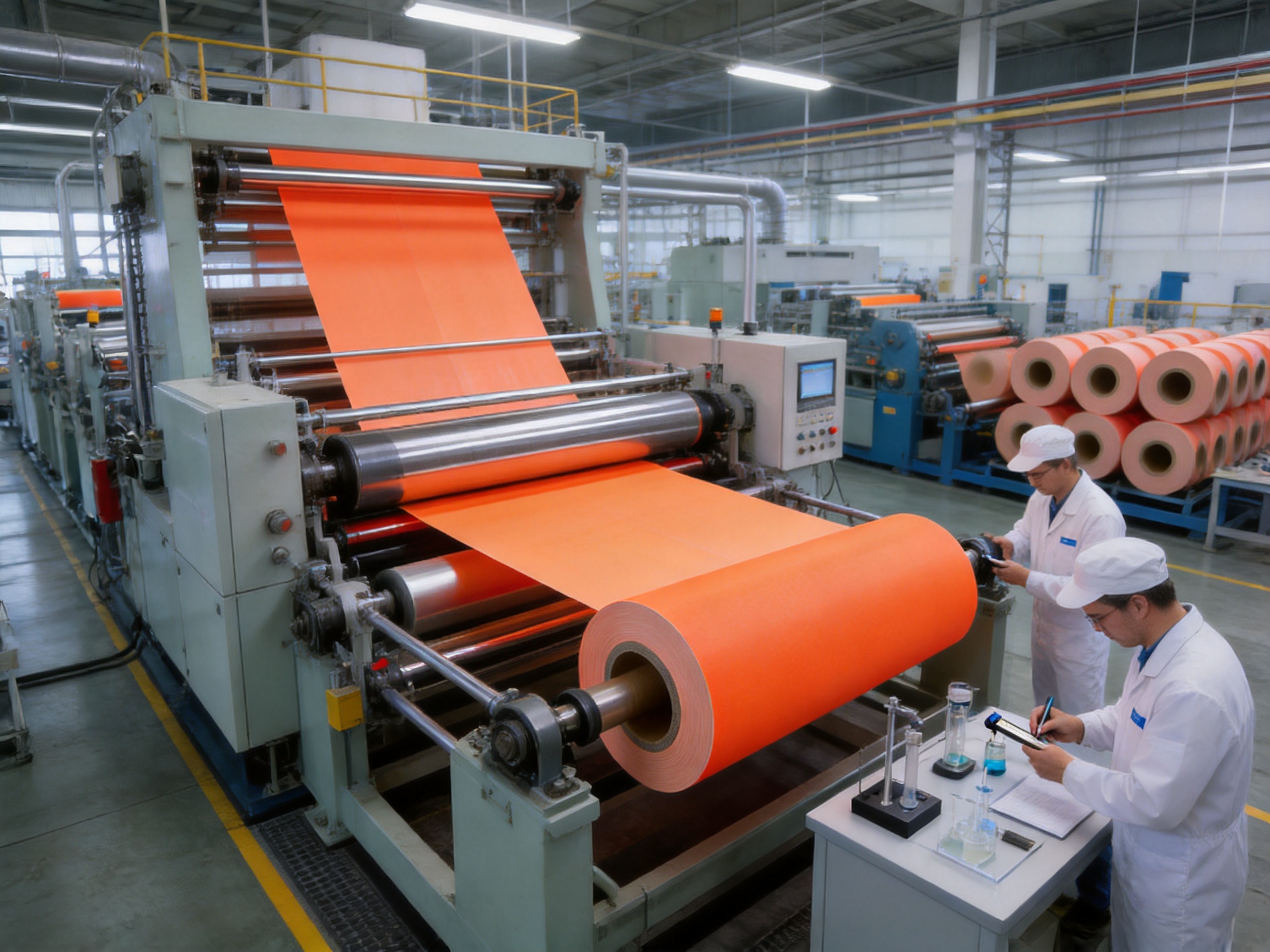
Fluorescent paper is supplied in both jumbo rolls and sheets. Jumbo rolls are available in widths of 1000mm, 1020mm, 1080mm, and 1530mm. These widths can be slit or converted according to the buyer’s production equipment and finished label dimensions.
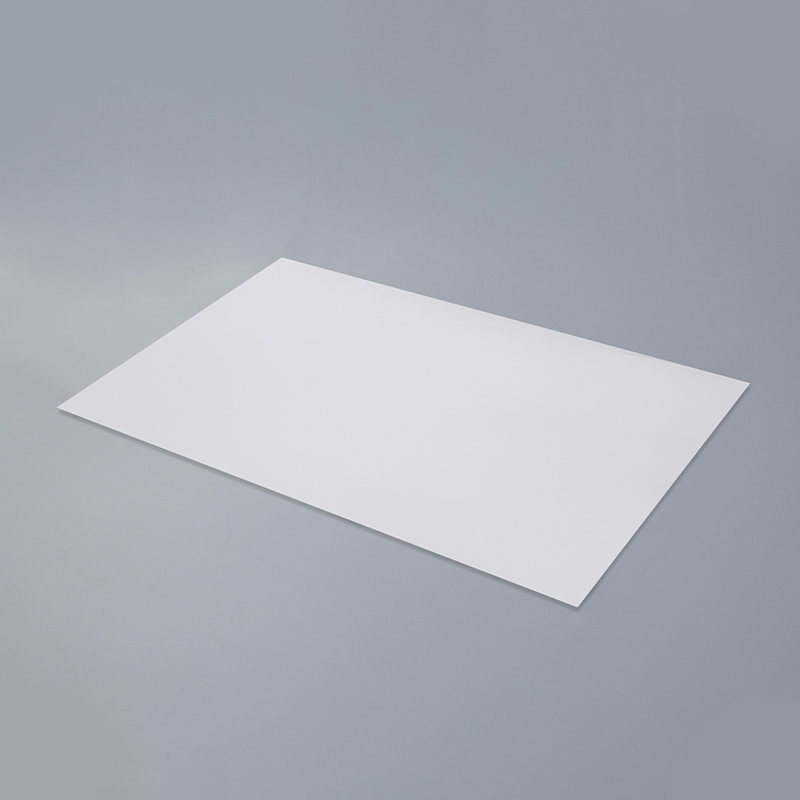
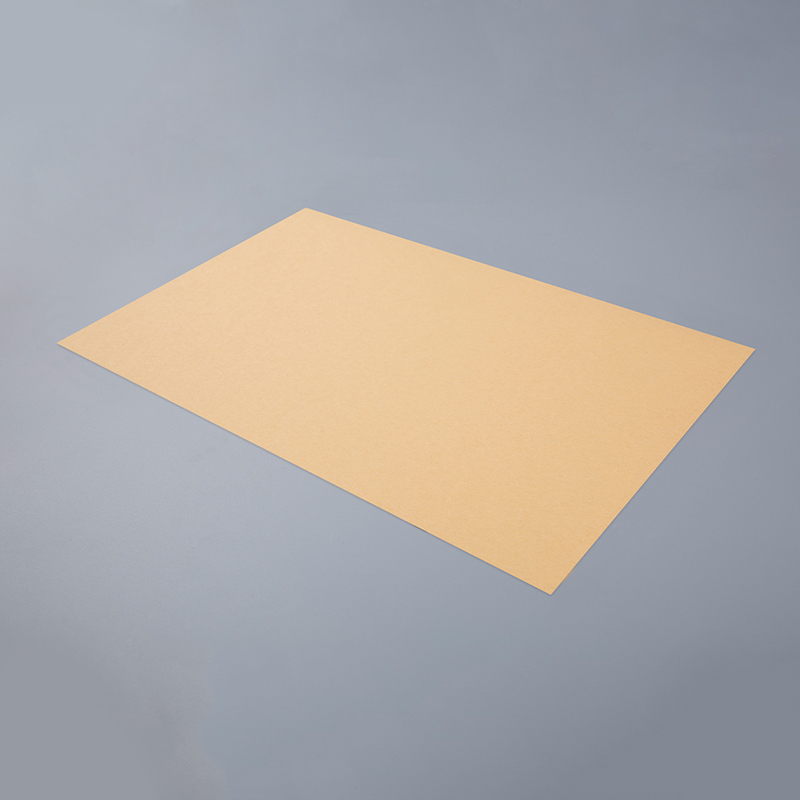
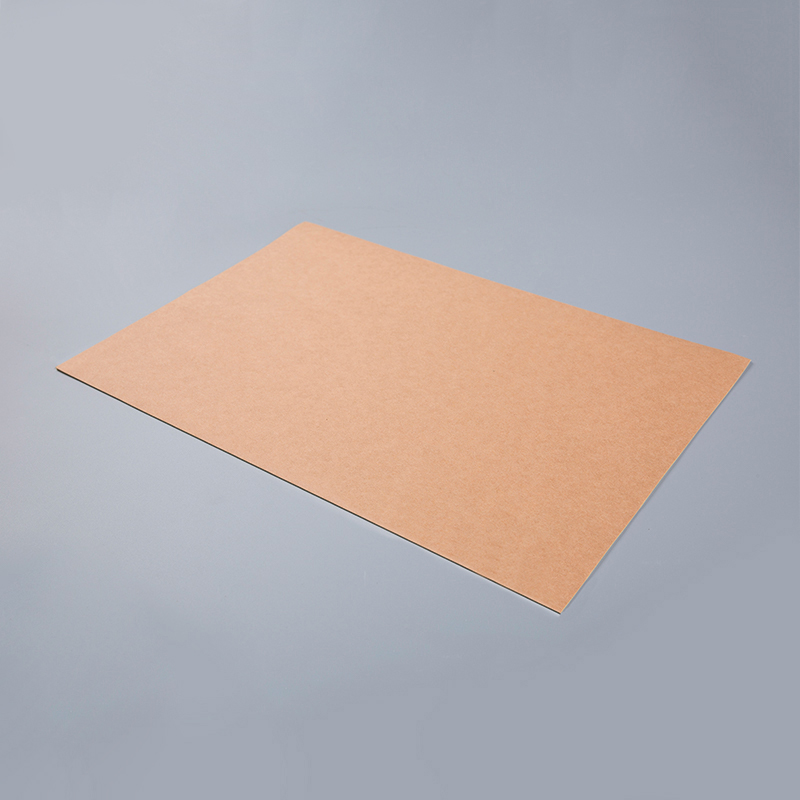
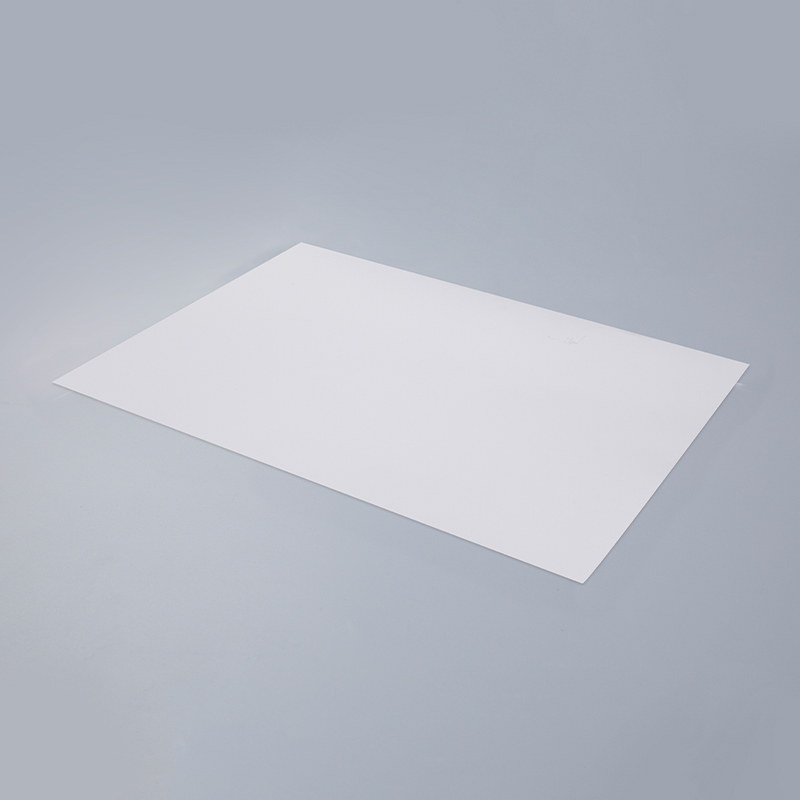
Sheet sizes include A4, A3, 20 x 30cm, 21 x 30cm, 24 x 36cm, 50 x 70cm, and 70 x 100cm. Customized sheet dimensions can also be discussed. This range allows the material to serve digital printing, office printing, commercial printing, signage, arts and crafts, packaging, and industrial marking applications.
| Product Element | Available Specification | Typical Benefit |
|---|---|---|
| Face material | 80gsm fluorescent paper | Bright appearance, lightweight construction, suitable printing surface |
| General adhesive | Water-based adhesive | Suitable for common indoor and packaging applications |
| Special adhesives | Hotmelt, solvent, anti-freeze, removable, cryogenic, tyre-grade rubber | Supports demanding surfaces and operating conditions |
| Standard liner | 85g yellow release paper | Reliable protection and easy visual identification |
| Alternative liners | Glassine, release paper, art paper, CCK, transparent PET | Allows processing and performance customization |
| Jumbo roll widths | 1000mm, 1020mm, 1080mm, 1530mm | Suitable for slitting and industrial converting |
| Sheet formats | A4, A3, commercial sizes, customized sizes | Convenient for sheet-fed printing and direct use |
Applications of Fluorescent Paper
Fire Equipment and Emergency Identification
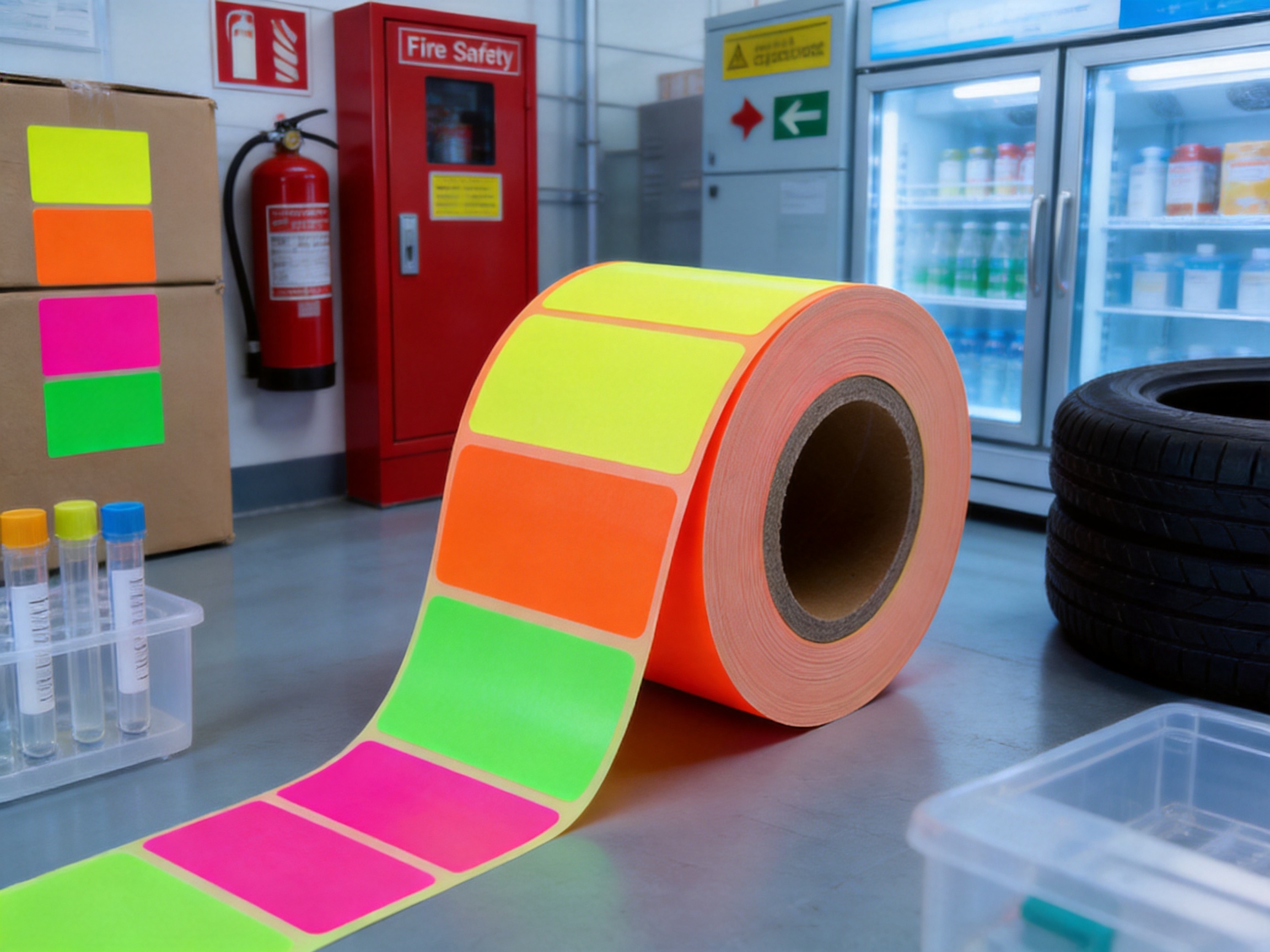
Fluorescent labels can help identify fire extinguishers, fire cabinets, emergency equipment, alarm points, and safety instructions. Bright colors can make equipment easier to locate in public buildings, factories, warehouses, schools, hotels, and commercial facilities.
The material should be selected according to the installation environment. Indoor applications may use a general-purpose adhesive, while outdoor or humid areas may require a more durable adhesive and suitable protective finishing. For safety-critical communication, printed information should be clear, accurate, and compliant with applicable local regulations.
Public Places and Directional Signage
Public facilities often need signs that are easily noticed by visitors. Fluorescent paper can be used for temporary directional signs, queue management notices, event instructions, restricted-area notices, and facility reminders. Its visual contrast helps separate important messages from ordinary printed documents.
Possible locations include transportation facilities, shopping centers, exhibitions, schools, hospitals, offices, sports venues, and community centers. Sheet formats are convenient for short-term notices, while roll formats support larger production quantities and repeated signage programs.
Packaging and Product Promotion
Packaging companies can use fluorescent labels to promote discounts, identify limited-edition products, communicate special handling requirements, or create a distinctive shelf presence. Bright labels can be applied to cartons, bags, boxes, bottles, jars, and other packaging formats, subject to compatibility testing.
Retailers may use fluorescent stickers for price promotions, clearance notices, new product markers, seasonal campaigns, and inventory classification. Since the material is printable by several methods, the construction can be adapted to both large-volume packaging and short promotional runs.
Trademark and Product Labels
Fluorescent paper can be used for trademark labels, product identification, batch markings, model numbers, and brand-supporting graphics. Its unusual color helps the label stand apart from the main package and can make product information easier to locate.
For barcode labels, the printer should verify contrast, scanner readability, ink density, and surface uniformity. Fluorescent backgrounds can produce a strong visual effect, but barcode performance must be tested with the intended scanners and software systems before commercial release.
Toys, Gifts, and Creative Products
Toy manufacturers, gift suppliers, stationery companies, and craft producers can use fluorescent paper for decorative labels, package seals, instruction stickers, promotional inserts, and colorful product markings. The material’s bright appearance is well suited to products aimed at children, events, celebrations, and entertainment markets.
For toys and children’s products, the complete label construction should be assessed for applicable safety requirements, including ink, adhesive, migration, and surface durability considerations. The appropriate grade depends on the final product, contact conditions, and applicable market regulations.
Industrial Marking and Warehouse Management
In warehouses and factories, visual differentiation can support faster identification of stock, work-in-progress materials, shipping groups, inspection status, and handling instructions. Fluorescent labels can be assigned to different production stages, priority levels, or storage categories.
Roll material is especially useful for industrial label converters and automated printing lines. It can be slit into the required width, printed with variable data, and converted into labels for cartons, pallets, containers, and equipment.
Cold-Chain and Low-Temperature Uses
When labels are applied to refrigerated or frozen surfaces, adhesive performance becomes a major concern. The anti-freeze and cryogenic adhesive options allow the product to be considered for cold-chain logistics, frozen food, laboratory samples, medical materials, and research applications.
Users should specify the application temperature, storage temperature, surface material, condensation conditions, and expected service duration. Testing should include application at the lowest expected temperature, resistance to moisture, and adhesion after temperature cycling.
Tyre and Rubber-Related Applications
Rubber and tyre surfaces can challenge conventional label adhesives. They may be curved, flexible, textured, or affected by oils and processing agents. Tyre-grade rubber adhesive is available for applications requiring a construction developed around these characteristics.
Potential uses include product identification, inspection labels, production tracking, quality-control markings, and logistics information. As with any specialized adhesive application, the label should be tested on the actual rubber compound and under the intended storage and service conditions.
Printing and Converting Performance
Letterpress Printing
Letterpress printing can produce crisp text, strong line definition, and a distinctive traditional label appearance. It is suitable for applications where sharp typography and direct visual contrast are important. The printer should select a suitable ink viscosity and impression pressure to avoid unnecessary deformation of the face material.
Offset Printing
Offset printing is appropriate for sheet-fed production, detailed graphics, and multi-color images. A4, A3, and larger sheet formats can be used for commercial printing, promotional materials, packaging components, and signage. Drying time and ink adhesion should be reviewed because the fluorescent surface may interact differently with various ink systems.
Flexographic Printing
Flexographic printing is particularly suitable for roll-fed production. It supports efficient long-run manufacturing and can be integrated with slitting, die cutting, laminating, and other converting steps. The printer can select anilox volume, plate design, ink system, and drying conditions according to the artwork and required color density.
Screen Printing
Screen printing can create bold graphics and relatively heavy ink coverage. It may be useful for signs, special labels, promotional products, and decorative applications. The process should be controlled to prevent excessive ink penetration, uneven drying, or loss of the fluorescent visual effect.
Barcode Printing
Fluorescent paper can be used for barcode printing when the barcode design, ink, scanner, and substrate are properly matched. Testing should confirm adequate reflectance and contrast, accurate bar dimensions, and consistent readability across the full production roll or sheet batch.
Die Cutting and Slitting
The roll construction can be converted into custom label shapes through rotary or flatbed die cutting. Slitting equipment can divide jumbo rolls into narrower widths for specific printing machines. Proper tension control helps prevent telescoping, wrinkles, edge damage, and uneven winding.
Die-cutting conditions should be adjusted according to the face stock, adhesive coat weight, and liner thickness. Excessive cutting depth may damage the liner, while insufficient cutting depth can make label stripping difficult. A controlled converting process helps preserve label appearance and application efficiency.
Manufacturing Process and Quality Strengths
Integrated Production Capabilities
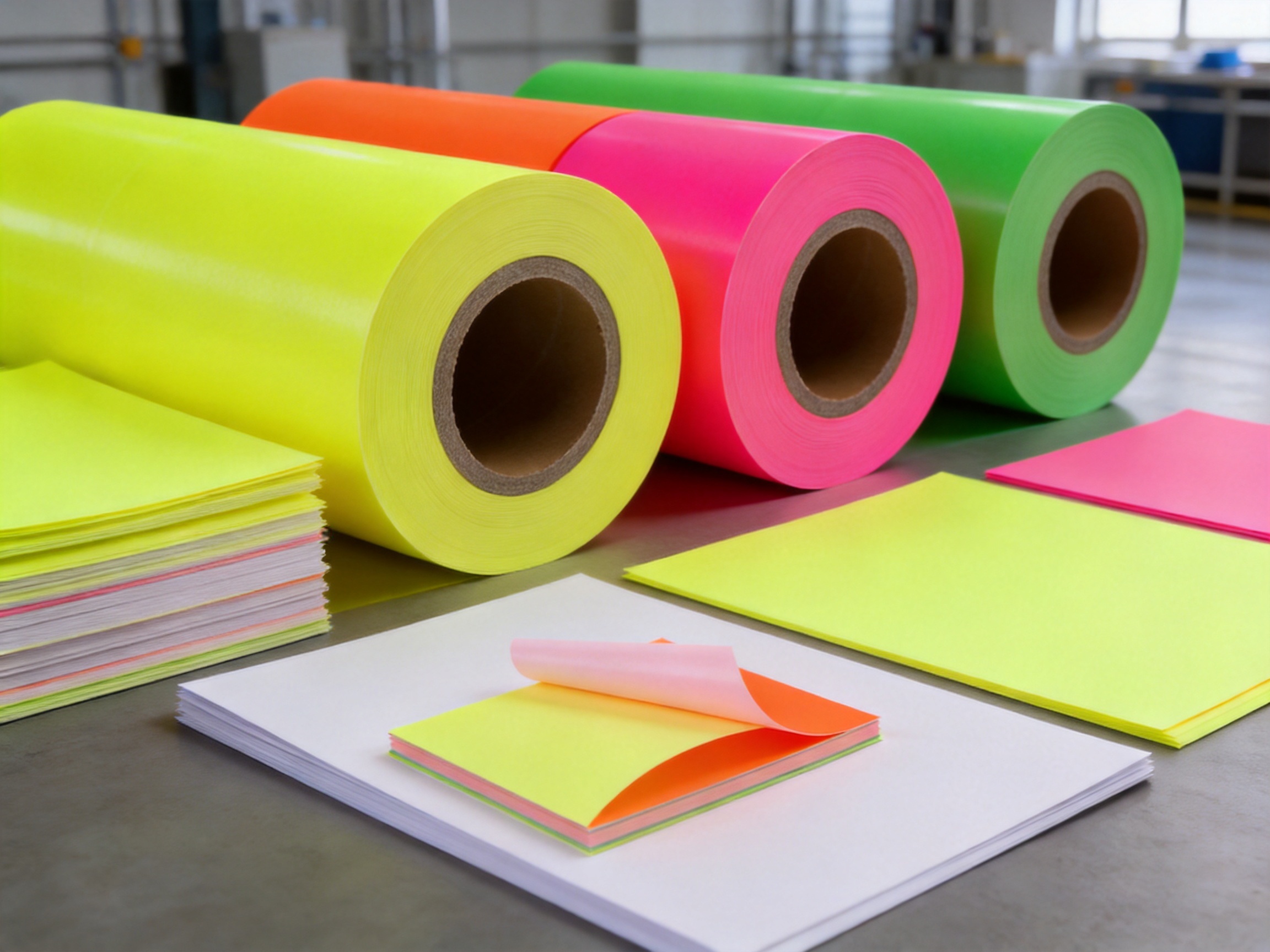
Suzhou Piaozhihua Composite Material Technology Co., Ltd. specializes in self-adhesive label materials and integrates research and development, production, sales, and after-sales service. Its production capabilities include gluing, laminating, and cutting, which are essential processes for manufacturing consistent self-adhesive constructions.
By managing several major stages within one manufacturing organization, the company can coordinate face material selection, adhesive coating, liner lamination, roll conversion, and finished-product inspection. This integrated approach can reduce communication gaps and improve production control compared with fragmented sourcing arrangements.
Adhesive Coating
Adhesive coating is a critical stage in the production of self-adhesive paper. The coating must be applied evenly across the material width to achieve consistent tack, peel adhesion, and shear performance. Coating weight, drying conditions, web speed, and viscosity control all influence the final product.
For fluorescent paper, uniform coating is especially important because uneven adhesive distribution can cause label lifting, bubbles, wrinkling, or inconsistent converting behavior. Professional coating control helps ensure that the material performs consistently during printing and application.
Laminating
Laminating joins the fluorescent face material, adhesive layer, and release liner into a stable composite structure. Accurate alignment and controlled pressure help prevent wrinkles, air entrapment, delamination, and edge defects.
A well-controlled lamination process also supports reliable unwinding and die cutting. The relationship between face stock, adhesive, and liner must remain stable during storage, transportation, printing, and final application.
Slitting and Cutting
After coating and lamination, the material can be slit into jumbo rolls, narrow rolls, or converted into sheets. Cutting accuracy affects compatibility with customer equipment and the appearance of the finished package. Clean edges are important for automated feeding, label dispensing, and high-speed printing.
The manufacturer offers jumbo roll widths of 1000mm, 1020mm, 1080mm, and 1530mm, as well as multiple sheet sizes. This indicates a production system designed to serve both industrial converting customers and users requiring ready-to-print sheets.
Testing and Inspection
The company maintains its own testing laboratory and uses inspection equipment to support product quality. Testing may include visual inspection, basis weight verification, liner evaluation, adhesive performance testing, roll appearance checks, dimensional measurement, and printing or converting trials.
Quality control is particularly important for products supplied internationally. Buyers may require consistent width, roll length, winding quality, adhesive behavior, release force, color appearance, and packaging integrity across repeated orders. A structured inspection system helps reduce variation and supports stable supply.
Production Capacity and Supply Reliability
The company reports an annual production capacity of more than 280 million square meters and ranks among the top 10 companies in China for self-adhesive products. Large production capacity can support regular supply programs, contract manufacturing, private-label projects, and customized product development.
Capacity alone does not guarantee suitability, but it can be an important advantage for distributors and industrial buyers that need continuity. A supplier with established production lines, technical personnel, quality systems, and logistics experience is generally better positioned to support recurring orders than a small trading intermediary.
Why This Product Can Outperform Ordinary Label Paper
Ordinary white self-adhesive paper is suitable for many applications, but it may not provide enough visual separation in busy environments. Fluorescent paper offers a stronger color signal, which can improve recognition and make printed information more prominent.
Compared with pre-cut decorative paper, roll-form fluorescent material provides better flexibility for industrial converting. Customers can determine their own label widths, shapes, repeat lengths, and production quantities. This can reduce dependence on fixed standard sizes.
Compared with a one-adhesive product range, the available adhesive options offer more precise application matching. Buyers can choose a construction according to temperature, surface, permanence, removability, and rubber compatibility rather than accepting a one-size-fits-all adhesive.
Compared with a single-liner construction, the broad liner selection helps customers optimize processing performance. Glassine, release paper, art paper, CCK, and PET liners each provide different handling characteristics. This flexibility can improve die cutting, dispensing, dimensional stability, and overall production efficiency.
Compared with suppliers that only distribute finished stock, an integrated manufacturer can provide technical consultation, customized sizes, OEM production, ODM development, and after-sales support. This is particularly valuable when the customer needs a specific adhesive, liner, roll width, sheet size, or application solution.
Customization and OEM/ODM Services
The product can be customized according to customer drawings, samples, technical specifications, or application requirements. Customization may involve fluorescent color, adhesive type, liner construction, roll width, sheet dimensions, winding direction, core size, packaging method, and label converting format.
OEM manufacturing allows buyers to order material under their own product program or brand requirements. ODM support can help customers develop a new construction when an existing standard specification does not meet the application. The company reports more than 20 years of OEM manufacturing experience and maintains a professional research and development team with multiple patents.
Customers seeking customization should provide detailed information at the inquiry stage. Important data includes the target substrate, application temperature, indoor or outdoor use, required service life, printing method, label size, expected monthly quantity, roll dimensions, and packaging requirements.
Samples and pilot trials are recommended before mass production. A small-scale trial can identify adhesive compatibility, printer settings, drying conditions, die-cutting performance, and label application behavior. It also provides an opportunity to confirm fluorescent color, liner handling, and finished appearance.
Packaging, Storage, and Delivery
Fluorescent paper is available with sea-transit-worthy poly-wood pallet packing and carton packing. Both roll and sheet packaging can be arranged from stock, subject to order quantity and production scheduling.
For sheet products, 100 sheets are packed per ream. Each ream is wrapped with strong PE-coated kraft paper to help protect the material during handling and transportation. Pallets are wrapped with stretch film and secured with plastic fastening belts to improve stability during shipment.
For roll products, suitable packaging should protect the roll edges, outer surface, core, and winding condition. Strong pallet support is important for international sea transportation, especially when cargo may experience vibration, changes in humidity, and repeated handling during loading and unloading.
Self-adhesive paper should be stored in a clean, dry environment away from direct sunlight, excessive heat, and high humidity. The material should remain in its original packaging until required for production. Before printing, the rolls or sheets should be conditioned to the printing room environment when necessary.
Storage conditions can affect adhesive tack, liner release, paper flatness, and printability. Customers should follow the supplier’s recommended storage guidance and conduct an inspection before converting material that has been stored for an extended period.
Sustainability and Responsible Material Development
Environmental considerations are becoming increasingly important in label and packaging material selection. The company positions its product development around sustainable development and environmental protection, including improvements related to face materials, adhesives, and backing papers.
For fluorescent paper, sustainability may involve selecting suitable paper sources, optimizing material thickness, reducing production waste, improving roll utilization, and choosing adhesive and liner structures appropriate for the final recycling or disposal pathway. The correct solution depends on the complete label construction and the recycling system available in the destination market.
Customers should evaluate the entire product lifecycle rather than focusing on the face material alone. Adhesive chemistry, liner composition, ink system, coating, packaging, application method, and disposal route all influence environmental performance.
Material efficiency can also support sustainability. Jumbo rolls and customized widths may reduce trim waste during conversion. Accurate slitting and optimized label layouts can improve the usable yield of each roll. Selecting the correct liner thickness and roll dimensions can reduce unnecessary material consumption without compromising production performance.
How to Select the Correct Fluorescent Paper Construction
Step One: Define the Application
Start by identifying the purpose of the label. A promotional shelf label may need strong color and general-purpose adhesion, while a frozen-food label may require anti-freeze adhesive. A temporary event notice may need removable adhesive, whereas a tyre identification label may require rubber-compatible adhesive.
Step Two: Identify the Substrate
Adhesion depends heavily on the target surface. Paperboard, corrugated cartons, glass, plastics, metal, painted surfaces, rubber, and textured materials all behave differently. Surface cleanliness, curvature, flexibility, and coating should be considered before selecting the adhesive.
Step Three: Establish the Temperature Range
Specify the temperature during application, storage, transportation, and final use. If the label is applied in a cold room or must remain attached to a frozen surface, standard adhesive may not be sufficient. Anti-freeze or cryogenic adhesive may be more appropriate.
Step Four: Choose the Printing Process
Identify whether the material will be printed by letterpress, offset, flexographic, screen, digital, or barcode equipment. The selected printing process affects sheet or roll format, ink compatibility, drying requirements, and surface handling.
Step Five: Select the Liner
Choose the liner based on converting speed, die-cutting requirements, dispensing method, stiffness, dimensional stability, and environmental priorities. Glassine and paper liners are common options, while PET liners may be preferred for precision processing or demanding applications.
Step Six: Confirm Finished Dimensions
Provide the required roll width, core size, outer diameter, sheet size, label dimensions, and winding direction. Accurate information helps the manufacturer prepare a construction that fits the customer’s equipment and reduces subsequent converting adjustments.
Step Seven: Conduct Application Testing
Before full-scale purchasing, apply sample labels to the actual substrate under realistic conditions. Evaluate initial tack, adhesion after 24 or 72 hours, edge lifting, removability, resistance to moisture, temperature cycling, and print durability. Testing is especially important for safety, cold-chain, outdoor, and industrial applications.
Company Manufacturing and Service Profile
Suzhou Piaozhihua Composite Material Technology Co., Ltd. is located at No. 16 Weixin Road, Shuangfeng Town, Taicang City, Suzhou City, Jiangsu Province, China. The company focuses on high-grade self-adhesive labels and related composite materials.
Its business model combines research and development, manufacturing, sales, and after-sales service. The company has production lines for gluing, laminating, and cutting, supported by testing equipment and an in-house laboratory. This structure enables the company to address product performance, customization, technical support, and quality control through a coordinated process.
The company has more than 20 years of manufacturing experience and serves customers in domestic and international markets. Its reported sales and marketing network extends across Asia, Europe, the Americas, Africa, the Middle East, and other regions. This international experience can support export packaging, documentation, production communication, and recurring supply programs.
The company also offers OEM and ODM services. It can produce materials based on customer drawings or samples and provide customized solutions for different industries. Its stated core values include quality, integrity, innovation, win-win cooperation, and responsibility.
For product inquiries, customers can contact the company through the following details:
Company: Suzhou Piaozhihua Composite Material Technology Co., Ltd.
Email: info@piaozhihua.com
Telephone: +86-13621727329
Telephone: +86-512-53419666 / +86-512-53416667
Address: No. 16 Weixin Road, Shuangfeng Town, Taicang City, Suzhou City, Jiangsu Province, China.
Frequently Asked Questions
What is the main advantage of fluorescent paper in rolls?
The main advantage is its strong visual impact combined with continuous roll-fed processing. The bright fluorescent face stock helps printed information stand out, while the roll format supports slitting, flexographic printing, die cutting, and high-volume label production.
What is the face material specification?
The standard face material is 80gsm fluorescent paper. The final appearance and performance may vary according to fluorescent color, adhesive type, liner, printing process, and finishing method.
Which adhesive should be used for general labels?
Water-based adhesive is generally suitable for many standard indoor, packaging, stationery, and product-labeling applications. The actual choice should be based on the substrate, temperature, humidity, required permanence, and service conditions.
Is a low-temperature adhesive available?
Yes. Anti-freeze adhesive and cryogenic adhesive options are available for applications involving chilled, frozen, or extremely low-temperature conditions. The exact construction should be tested on the target surface at the required temperature.
Can the labels be removed?
Removable adhesive is available for temporary labels, promotional materials, event signs, reusable containers, and other applications where clean removal or repositioning is required. Removal performance depends on surface type, application duration, temperature, and environmental exposure.
Can fluorescent paper be used for barcode labels?
Yes, it can be used for barcode printing when the barcode design, ink, printer settings, and scanner are properly matched. A readability test should be completed before commercial production.
What printing methods are supported?
The material is suitable for letterpress, offset, flexographic, screen, and barcode printing. Printing trials are recommended because ink compatibility and drying behavior can vary by machine and fluorescent color.
What roll widths are available?
Jumbo roll widths include 1000mm, 1020mm, 1080mm, and 1530mm. Narrower widths can be created through slitting or customized production arrangements.
Are finished sheets available?
Yes. Available sheet formats include A4, A3, 20 x 30cm, 21 x 30cm, 24 x 36cm, 50 x 70cm, and 70 x 100cm. Customized sheet sizes can also be discussed.
Which liners are available?
Available liners include 85g yellow release paper, glassine paper in several weights, 60g, 120g, and 140g release paper, 140g and 165g art paper, CCK liners in several weights, and transparent PET liners in 25, 36, 50, and 100 micron thicknesses.
Can the material be customized?
Yes. Customization may include adhesive type, liner, roll width, sheet size, core specification, winding method, packaging, and other technical details. OEM and ODM services are available based on customer drawings, samples, or application requirements.
How should fluorescent paper be stored?
Store it in a clean, dry location away from direct sunlight, excessive heat, and high humidity. Keep the original packaging intact until use and allow the material to acclimatize when required before printing or application.
Is the product suitable for outdoor use?
It may be suitable for selected outdoor applications when the adhesive, ink, protection, and service conditions are properly matched. Outdoor exposure involves moisture, ultraviolet radiation, temperature change, and surface contamination, so application testing is necessary.
What information should be provided for a quotation?
Customers should provide the required face material, fluorescent color, adhesive type, liner, roll or sheet size, quantity, printing process, target surface, application temperature, packaging requirements, and destination market. Samples or technical drawings are helpful for customized projects.
Conclusion
Fluorescent paper in rolls is a versatile self-adhesive material for applications that require visibility, printability, and flexible converting. Its 80gsm fluorescent paper face stock provides a distinctive appearance, while the available adhesive systems allow the material to be adapted to general packaging, promotional labeling, cold-chain use, removable applications, cryogenic environments, and tyre-related products.
The product is suitable for letterpress, offset, flexographic, screen, and barcode printing. Jumbo roll widths support industrial production, and finished sheet sizes provide convenience for commercial and direct-use applications. Multiple release liner options further improve flexibility by allowing customers to select a construction suited to their converting equipment and application method.
The manufacturer strengthens the product offering through integrated gluing, laminating, cutting, testing, OEM, and ODM capabilities. Its reported production capacity, laboratory resources, research and development experience, international service network, and more than 20 years of manufacturing experience provide a solid foundation for customized self-adhesive material supply.
For buyers comparing fluorescent label materials, the most important evaluation points are not color alone. Adhesive selection, liner performance, printing compatibility, roll quality, application temperature, storage conditions, converting requirements, and quality consistency should all be considered. With the correct construction and appropriate testing, fluorescent paper in rolls can provide a reliable and commercially effective solution for high-visibility labels, packaging, safety communication, and industrial identification.
References
1. Product specification information for 80gsm fluorescent paper in rolls, including adhesive, liner, roll width, and sheet size options.
2. Technical information supplied for self-adhesive label materials, printing compatibility, and application categories.
3. Packaging and delivery specifications for roll and sheet products, including pallet, carton, ream, kraft paper, stretch film, and fastening-belt protection.
4. General principles of pressure-sensitive adhesive selection for paper, plastic, metal, glass, rubber, cold-temperature, and removable labeling applications.
5. General guidance on flexographic, offset, letterpress, screen, and barcode printing for self-adhesive label stocks.
6. Manufacturer profile and service information for integrated gluing, laminating, cutting, laboratory testing, OEM, ODM, and customized self-adhesive material production.