
 English
 Español
 русский
 Français
 عربى
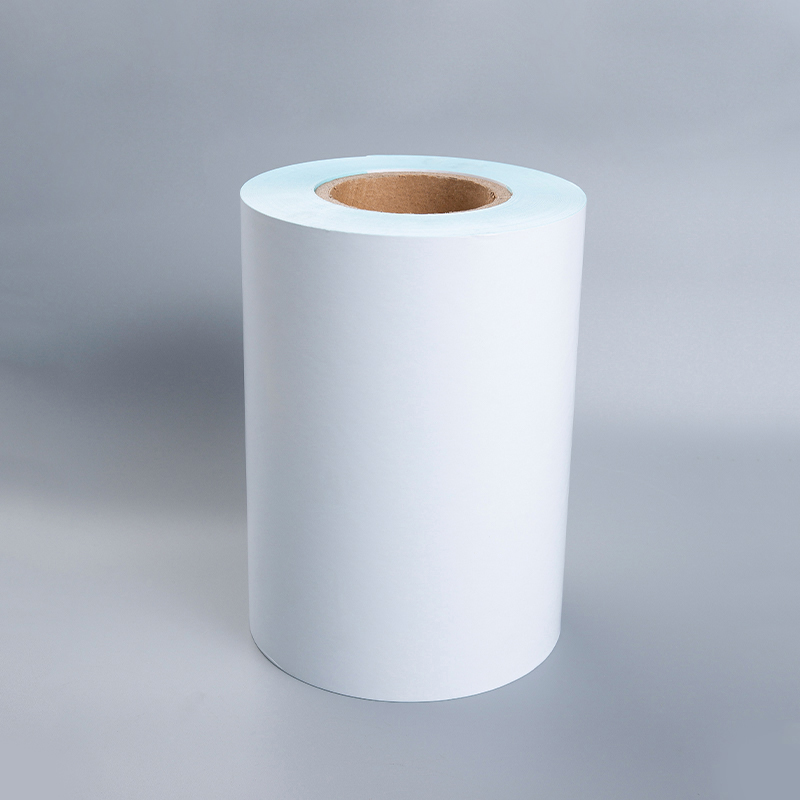
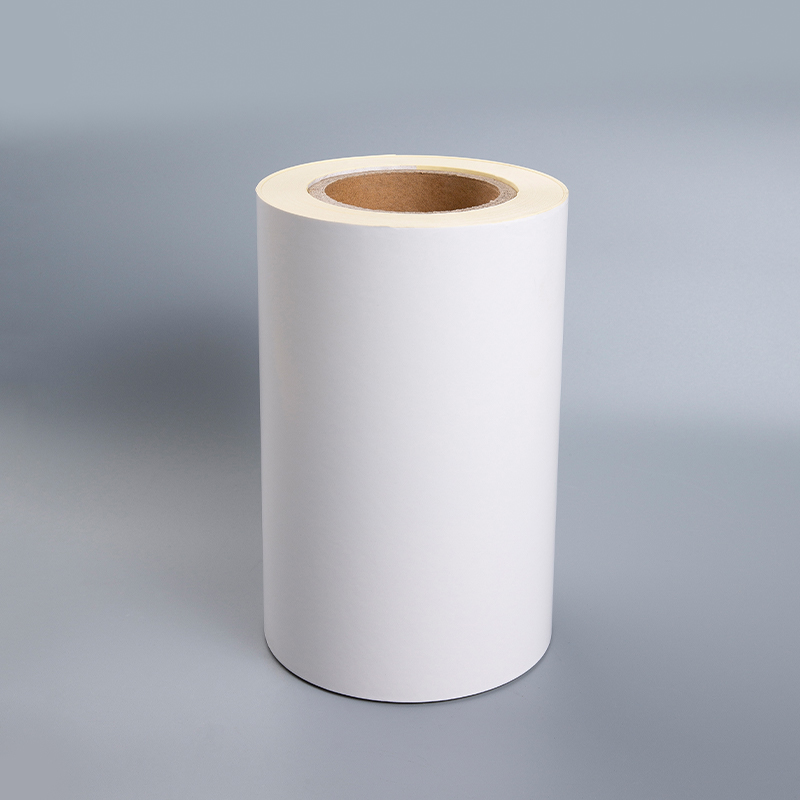
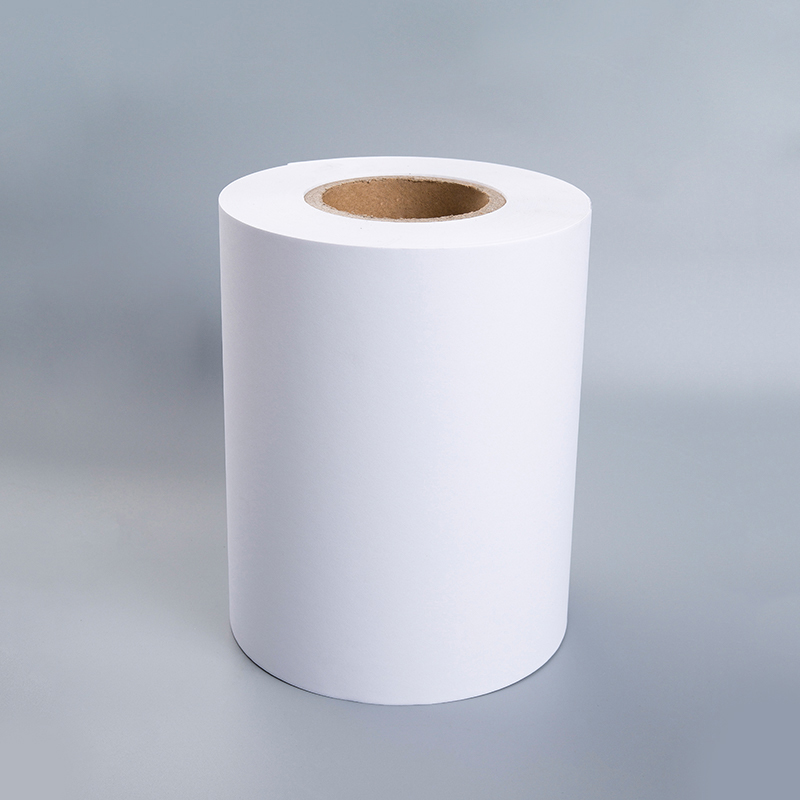
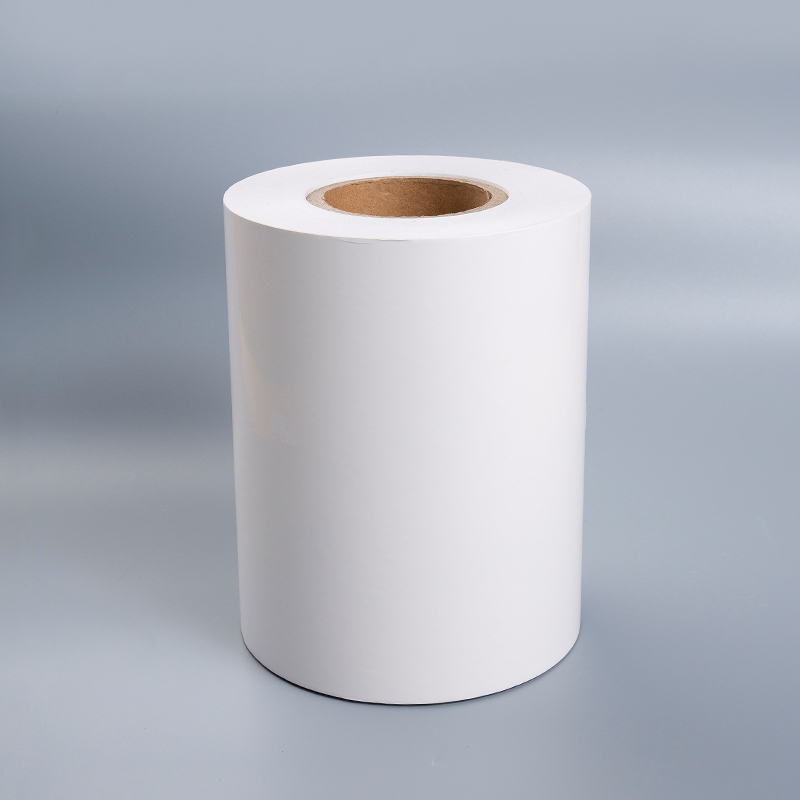
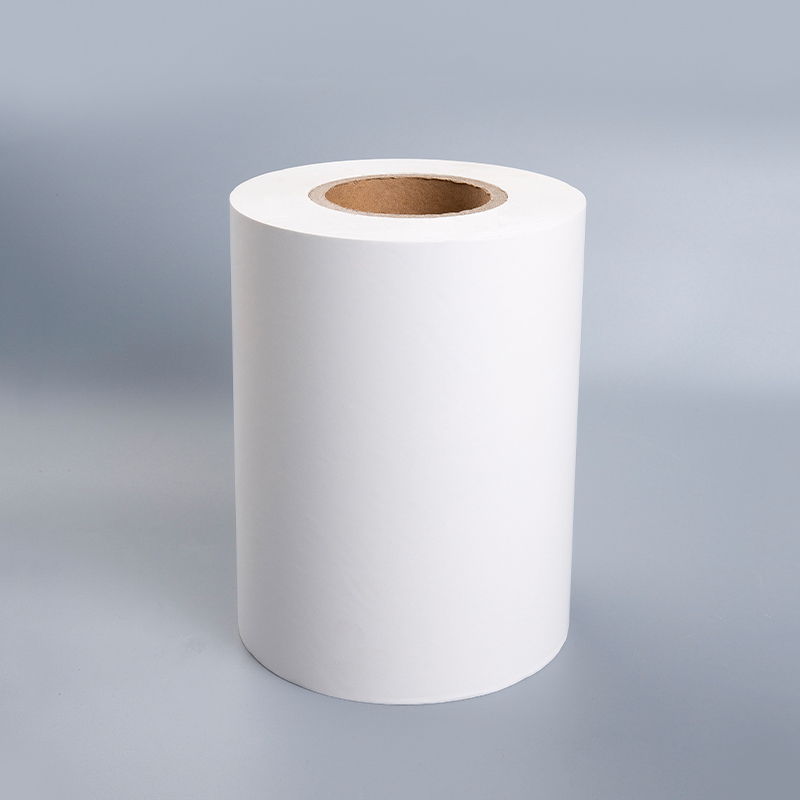
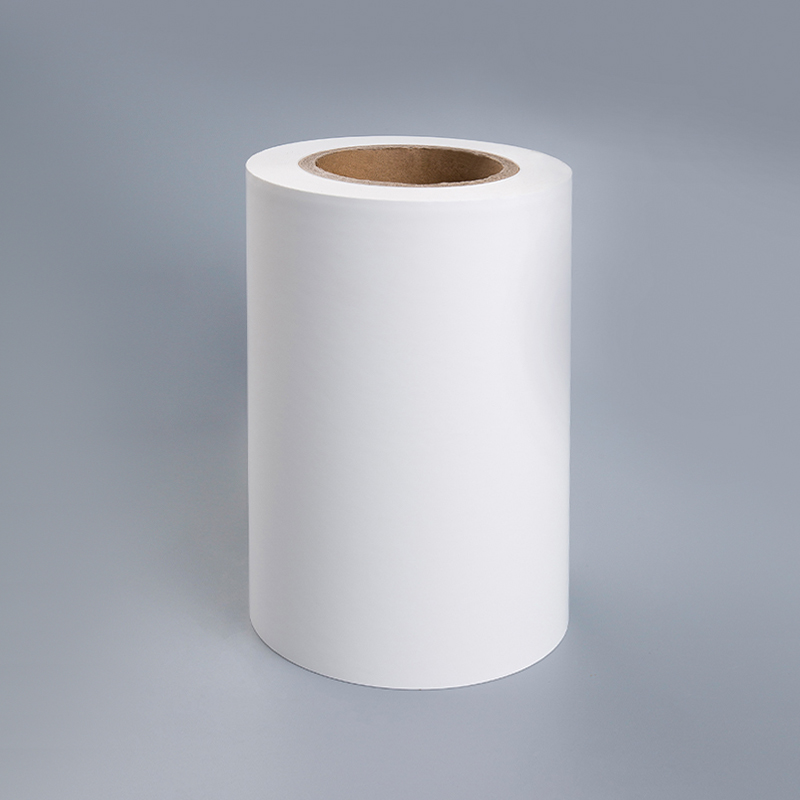
عربىRemovable solvent woodfree paper is a practical self-adhesive label material designed for applications that require clean removal, smooth printing performance, stable adhesion, and dependable conversion. It combines a woodfree paper face stock, a removable solvent adhesive, and a high-quality release liner to create a labeling solution suitable for retail, supermarkets, warehousing, logistics, medical supplies, office use, outer box stickers, and many daily labeling environments.
Unlike permanent label materials that may damage surfaces or leave residue after removal, removable solvent woodfree paper is engineered to balance adhesion and removability. It can attach securely during use while allowing the label to be removed when necessary. This makes it especially valuable for temporary identification, promotional labels, price labels, logistics marks, inventory labels, and other applications where information may change or where surfaces must remain clean.
As a product category within self-adhesive paper materials, removable solvent woodfree paper offers a strong combination of printability, usability, and cost efficiency. Its smooth paper surface supports clear text, barcodes, graphics, and color printing, while its adhesive system provides performance across a wide range of practical environments. For converters, printers, and brand owners, this material delivers consistent processing, reliable die-cutting, stable release, and flexible customization options.
Removable Solvent Woodfree Paper
Content
- 1 Understanding the Structure of Removable Solvent Woodfree Paper
- 2 Core Product Specifications
- 3 Why Woodfree Paper Is a Strong Face Material Choice
- 4 The Value of Removable Solvent Adhesive
- 5 Advantages Over Conventional Label Materials
- 6 Application in Stores and Supermarkets
- 7 Application in Warehousing and Logistics
- 8 Application in Medical Supplies and Healthcare Distribution
- 9 Application in Daily Office Use
- 10 Importance of the Release Liner
- 11 Manufacturing Strength Behind the Material
- 12 Advanced Gluing Process and Adhesive Control
- 13 Laminating Quality and Composite Stability
- 14 Cutting, Slitting, and Sheet Finishing
- 15 Packaging and Delivery Protection
- 16 Customization for Different Markets
- 17 Quality Inspection and Testing Capability
- 18 Research, Development, and Innovation
- 19 Sustainability and Responsible Material Development
- 20 Performance Considerations for End Users
- 21 Competitive Position in the Self-Adhesive Material Market
- 22 How Converters Benefit from This Material
- 23 How Distributors Benefit from This Material
- 24 How End Users Benefit from This Material
- 25 Recommended Handling and Storage
- 26 Q&A: Common Questions About Removable Solvent Woodfree Paper
- 26.1 What is removable solvent woodfree paper?
- 26.2 Where can this product be used?
- 26.3 What is the standard face material?
- 26.4 What adhesive is used?
- 26.5 Does the label remove without residue?
- 26.6 What liner is normally supplied?
- 26.7 Can the product be supplied in rolls and sheets?
- 26.8 Why choose woodfree paper instead of ordinary paper?
- 26.9 Why choose removable adhesive instead of permanent adhesive?
- 26.10 What makes this product competitive?
- 27 Conclusion
- 28 References
- 29 Product: Removable Solvent Woodfree Paper
Understanding the Structure of Removable Solvent Woodfree Paper
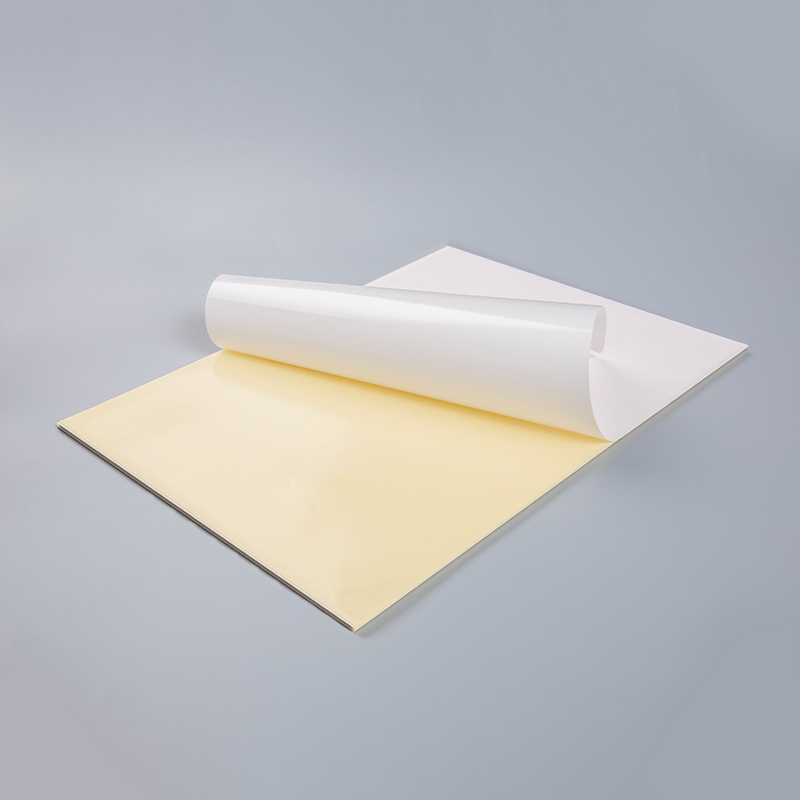
Removable solvent woodfree paper is a composite label material made from three primary layers: the face material, the adhesive, and the liner. Each layer plays a specific role in the final performance of the label. The face material provides the printable surface and visual appearance. The adhesive determines bonding behavior, removability, and application reliability. The liner protects the adhesive before use and enables smooth converting, printing, die-cutting, and dispensing.
The standard face material for this product is 70gsm woodfree paper, with additional face stock options available in 75gsm, 100gsm, 120gsm, and 140gsm. Woodfree paper is widely used in label production because it has a clean surface, good opacity, stable paper formation, and excellent printing adaptability. The term “woodfree” generally refers to chemical pulp paper with low lignin content, which improves brightness, durability, and print quality compared with some mechanical pulp papers.
The adhesive used in the standard product is a removable solvent adhesive. Solvent adhesive systems are valued for their bonding stability, coat weight uniformity, and strong performance under demanding conditions. When formulated as removable adhesive, they are designed to adhere well during service while allowing removal from appropriate substrates with reduced risk of tearing, staining, or residue.
The liner is typically 80g white glassine paper, though several liner alternatives are available, including 50g, 60g, 100g, and 120g glassine paper; 60g, 90g, 120g, and 140g release paper; 140g and 165g art paper; and 50g, 80g, 90g, and 120g CCK liner. This broad liner selection allows the material to be adapted for different converting equipment, label sizes, automatic dispensing systems, sheet formats, and end-use requirements.
Core Product Specifications
Item |
Specification |
Available Options |
Face Material |
70gsm woodfree paper |
75gsm, 100gsm, 120gsm, and 140gsm woodfree paper available |
Adhesive |
Removable solvent adhesive |
Water-based, hotmelt, solvent, anti-freeze, cryogenic, and tyre-grade rubber adhesives available |
Liner |
80g white glassine paper |
Glassine paper, release paper, art paper, and CCK liner options available |
Jumbo Roll Width |
1000mm, 1020mm, 1080mm, and 1530mm |
Custom widths available according to production requirements |
Sheet Size |
A4, A3, 20 x 30, 21 x 30, 24 x 36, 50cm x 70cm, and 70cm x 100cm |
Customized sheet dimensions available |
Applications |
Retail, supermarkets, warehousing, logistics, medical supplies, outer box stickers, and office labels |
Temporary labels, promotional stickers, identification labels, and variable information labels |
Why Woodfree Paper Is a Strong Face Material Choice
The face stock is the visible and printable part of the label, so its performance directly affects customer experience. Woodfree paper offers a smooth and consistent surface that is easy to print and easy to color. This makes it suitable for labels that require text clarity, color contrast, barcode readability, and clean graphic presentation. In retail and logistics applications, where labels often need to be scanned or read quickly, surface quality is critical.
Compared with rougher paper labels, woodfree paper provides a more refined appearance and better ink acceptance. It is especially suitable for applications where information needs to be displayed clearly, such as price tags, shelf labels, inventory marks, medical packaging identification, and office file labels. The paper surface supports conventional label printing methods and can be adapted for different printing and converting requirements.
Woodfree paper also provides a favorable balance of rigidity and flexibility. It can be converted into sheets or rolls, cut into different label shapes, and applied to a wide range of flat or slightly curved surfaces. The availability of multiple grammage options gives buyers more control over label stiffness, opacity, and handling characteristics. Lighter weights can improve economy and flexibility, while heavier weights can create a more substantial label feel.
The Value of Removable Solvent Adhesive
The adhesive is one of the most important components of this product. A removable solvent adhesive is designed for applications where the label must remain in place during normal use but may later need to be removed. This performance is different from permanent adhesives, which are intended to bond strongly and remain attached for the life of the product or package.
Removable adhesive is particularly important in retail, logistics, warehousing, and office environments because labeling needs are often temporary. A supermarket may use labels for short-term promotions. A warehouse may use labels for temporary inventory identification. A medical supplier may need labels that identify batches or outer packaging without damaging the underlying carton or container. In these cases, clean removability can reduce labor, waste, and surface damage.
Solvent adhesive technology offers several advantages. It can provide strong adhesion consistency, stable aging performance, and good resistance to environmental variation. Compared with some general-purpose adhesive systems, solvent adhesives may offer improved bonding control and better performance on certain substrates. When engineered as removable adhesive, they are especially useful where users need a precise balance between holding power and clean release.
The product can also be adapted with other adhesive systems, including water-based adhesive, hotmelt adhesive, general solvent adhesive, anti-freeze adhesive, cryogenic adhesive, and tyre-grade rubber adhesive. This range of adhesive options demonstrates the ability to tailor label materials for different temperatures, surfaces, and application challenges. For example, anti-freeze or cryogenic adhesives may be considered for cold-chain labeling, while hotmelt adhesives may be selected for high-tack applications.
Advantages Over Conventional Label Materials
Removable solvent woodfree paper offers several advantages compared with ordinary paper labels, permanent self-adhesive labels, and lower-grade removable labels. The first advantage is surface cleanliness after removal. While exact removal performance depends on the application surface, dwell time, temperature, and label size, removable adhesive is designed to reduce residue and damage. This can be a major benefit for surfaces that must remain presentable or reusable.
The second advantage is printing quality. The smooth woodfree paper surface supports sharp printing and easy coloring. This gives the material an advantage over rougher paper grades that may absorb ink unevenly or reduce barcode clarity. In logistics and retail, poor print quality can cause scanning errors, delays, and customer dissatisfaction. A consistent face material helps reduce those risks.
The third advantage is converting reliability. A label material must run well through coating, laminating, slitting, cutting, sheet finishing, die-cutting, printing, and packaging processes. The availability of stable liners such as white glassine paper and CCK liner improves release performance and handling. Good liner selection helps converters achieve cleaner die-cutting, smoother label dispensing, and more accurate registration.
The fourth advantage is customization. Many label buyers need specific roll widths, sheet sizes, adhesive properties, or liner types. This product is available in jumbo roll widths such as 1000mm, 1020mm, 1080mm, and 1530mm, with sheet sizes including A4, A3, 20 x 30, 21 x 30, 24 x 36, 50cm x 70cm, and 70cm x 100cm. Customized dimensions can also be produced. This flexibility helps reduce material waste and improves compatibility with different production lines.
The fifth advantage is application versatility. Some label materials perform well in only one narrow use case. Removable solvent woodfree paper can serve stores, supermarkets, warehouses, logistics companies, medical supply distributors, office users, and packaging operations. This makes it a useful standard material for converters and distributors that need inventory flexibility.
Application in Stores and Supermarkets
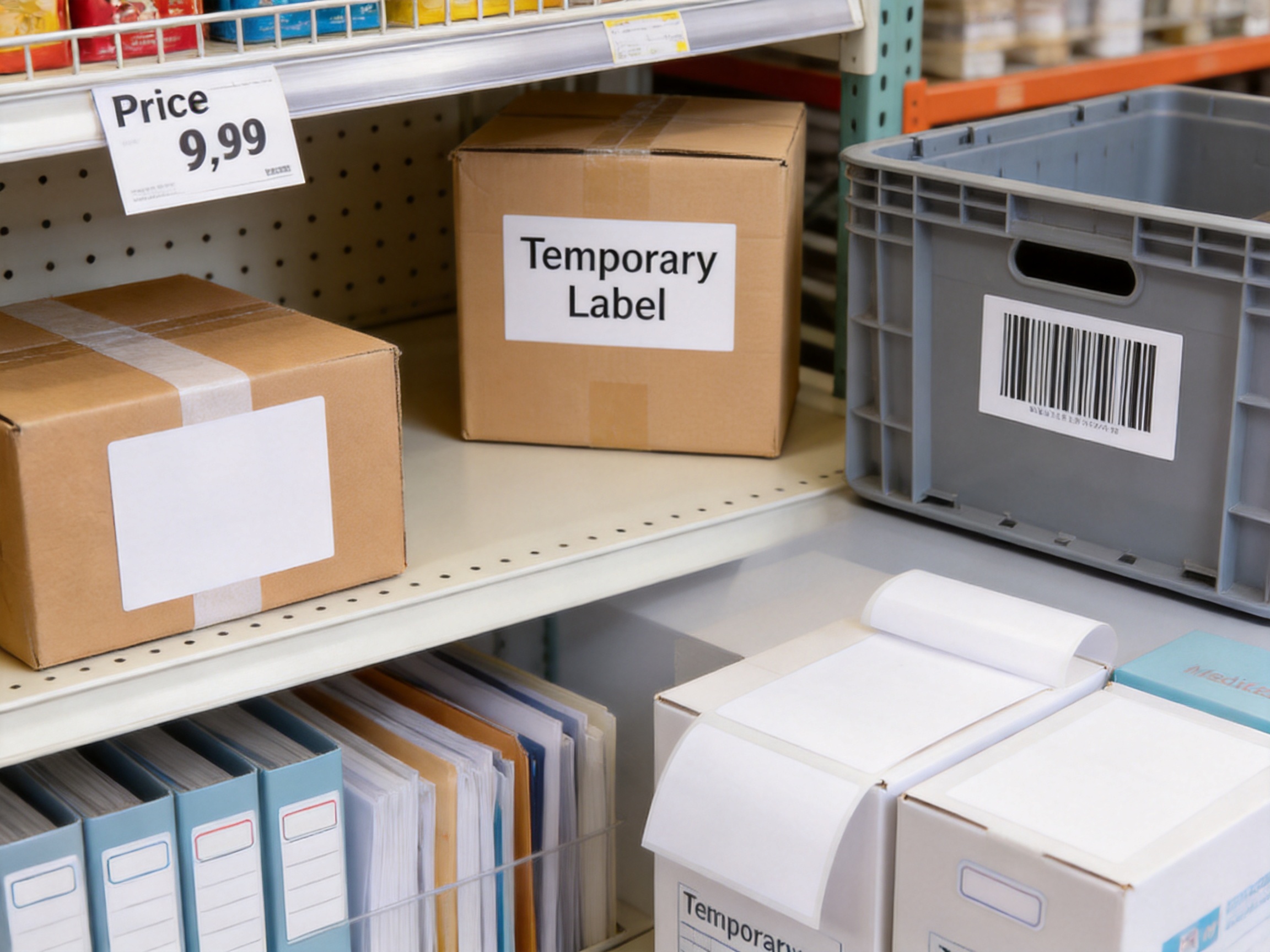
Retail environments require labels that are easy to print, easy to apply, visually clear, and sometimes easy to remove. Removable solvent woodfree paper is suitable for price labels, promotional stickers, shelf identification, temporary product labeling, discount labels, return labels, and seasonal sales stickers. The clean paper surface supports readable text and attractive printed graphics, helping products and promotions communicate effectively.
In supermarkets, labels are frequently changed because prices, promotions, batch information, and inventory details are updated regularly. If labels are too permanent, staff may spend extra time removing them or covering old labels with new ones. If labels leave residue, shelves, product containers, or packaging may look messy. A removable adhesive helps reduce these operational problems.
Retailers also need label materials that can be supplied consistently. A smooth face material and stable liner help printing and converting companies produce large quantities of labels with fewer interruptions. For retail chains, consistency across many stores is important because label appearance affects brand perception and customer trust.
Application in Warehousing and Logistics
Warehousing and logistics operations depend on accurate identification. Labels may be used on cartons, pallets, shelves, bins, temporary storage zones, shipping documents, and returned goods. In these environments, the label must hold long enough to support handling, scanning, and transportation, but it may also need to be removed when inventory moves or packaging is reused.
Removable solvent woodfree paper is well suited for outer box stickers and temporary logistics identification. The surface allows clear printing of barcodes, QR codes, serial numbers, item names, destination details, and handling instructions. A smooth printable surface improves readability, which supports more efficient scanning and reduces manual data entry.
For warehouses that reuse containers or need to relabel shelves and bins often, removable adhesive can be a cost-saving feature. Instead of scraping away labels or dealing with adhesive residue, workers can remove labels more efficiently. This improves workplace cleanliness and reduces time spent on maintenance tasks.
Application in Medical Supplies and Healthcare Distribution
Medical supply labeling requires clarity, organization, and dependable identification. Labels may be used on outer boxes, shipping cartons, storage containers, temporary records, sample bags, inventory documents, and internal logistics packages. While medical labels often require specialized compliance depending on the specific use, removable solvent woodfree paper can be valuable for non-direct clinical uses, outer packaging, temporary identification, and warehouse organization.
In healthcare-related supply chains, label readability is important because mistakes can create costly delays. Woodfree paper supports clear printing, while removable adhesive allows labels to be removed from certain surfaces when packaging, storage bins, or records need to be updated. This balance is useful for medical warehouses, distributors, laboratories, and administrative offices.
Application in Daily Office Use
Office environments often require labels for files, folders, storage boxes, drawers, envelopes, binders, inventory items, sample packages, and temporary signs. Permanent labels may not be suitable because office information changes frequently. Removable solvent woodfree paper provides a convenient alternative for users who want labels that are neat, readable, and removable.
Because the material can be supplied in sheet sizes such as A4 and A3, it is suitable for sheet-fed printing and office label production. Customized sheet formats can also support specific label layouts. For offices, schools, archives, and administrative departments, a smooth paper label that prints clearly and removes cleanly can improve organization without damaging materials.
Importance of the Release Liner
The release liner may seem secondary because it is removed before the label is applied, but it is essential to product quality. The liner protects the adhesive, controls release force, supports die-cutting, and determines how smoothly labels can be peeled or dispensed. A poor liner can cause curling, tearing, adhesive contamination, uneven release, or converting problems.
The standard 80g white glassine paper liner provides good smoothness and release consistency. Glassine liner is commonly used in self-adhesive label materials because it has a dense, smooth structure and can be coated with silicone release systems. It supports high-speed converting and automatic label dispensing when properly specified.
For different applications, other liner options may be preferable. CCK liner may offer good lay-flat properties and stability. Release paper options can be suitable for different sheet or roll structures. Art paper liners may be selected for specific handling or sheet applications. The availability of multiple liner types allows the material to be optimized for printers, label converters, and end users.
Manufacturing Strength Behind the Material
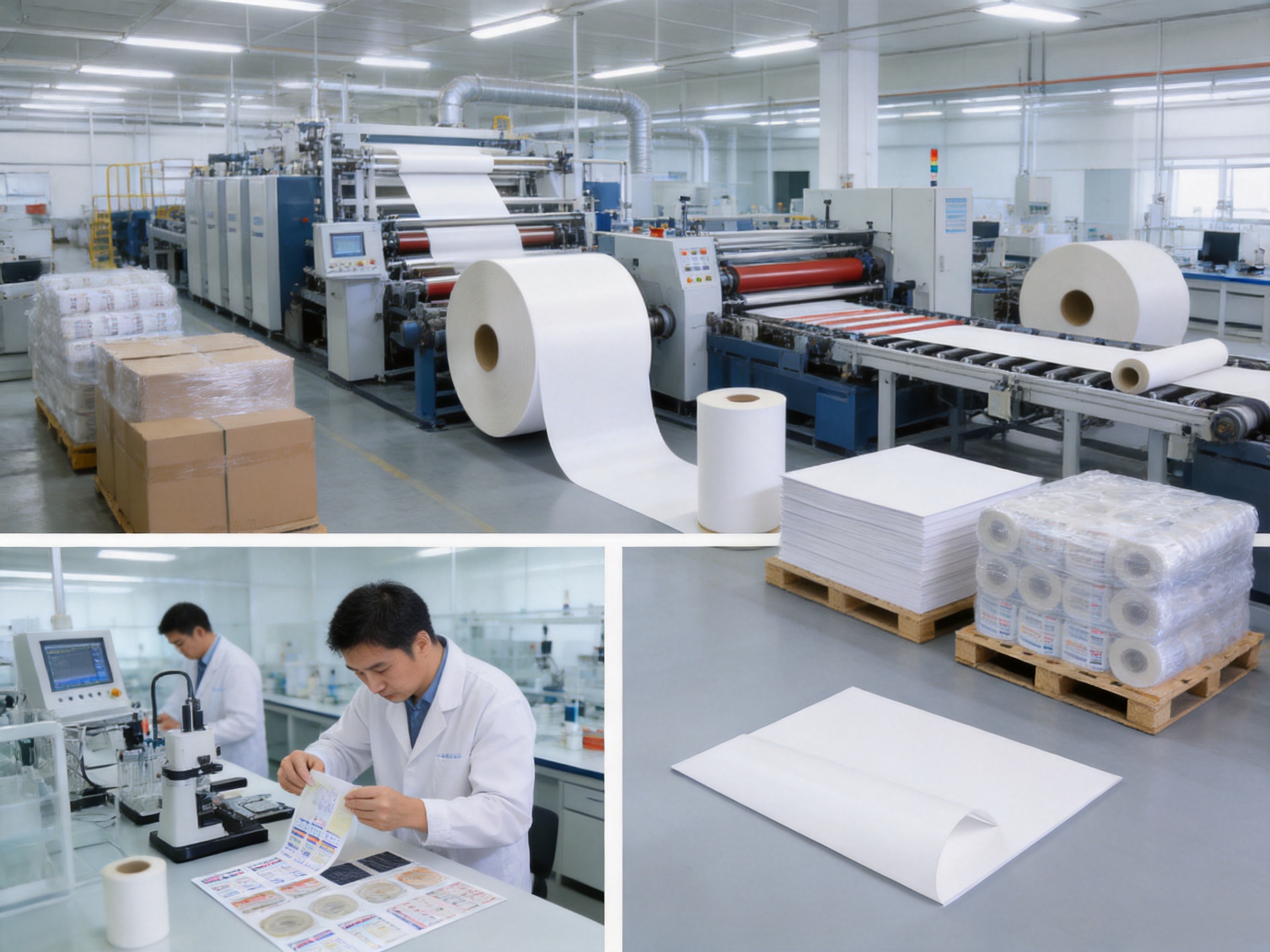
High-quality removable solvent woodfree paper depends not only on raw materials but also on manufacturing control. Suzhou Piaozhihua Composite Material Technology Co., Ltd. specializes in high-grade self-adhesive label materials and integrates research and development, production, sales, and after-sales services. This integrated structure allows the company to control product design, production quality, customization, and customer support in a coordinated way.
The company operates a full range of production lines, including gluing, laminating, and cutting. These processes are essential in self-adhesive material production. Gluing determines adhesive coat weight, coverage uniformity, and bonding performance. Laminating joins the face material, adhesive, and liner into a stable composite structure. Cutting and slitting convert jumbo materials into rolls or sheets suitable for printers, converters, distributors, and end users.
Annual production capacity exceeds 280 million square meters, showing the company’s ability to support large-volume orders and stable supply. Large production capacity is important for customers that require long-term procurement, consistent batch quality, and reliable delivery schedules. It also supports better flexibility when customers need custom specifications or multiple product combinations.
The company is recognized among the top producers in China for self-adhesive products and has built wide market coverage. Domestic sales networks cover major cities, while international marketing reaches regions including Asia, Europe, the Americas, Africa, and the Middle East. This market experience gives the company insight into different application standards, climate conditions, customer preferences, and industry requirements.
Advanced Gluing Process and Adhesive Control
The gluing process is central to the performance of removable solvent woodfree paper. Adhesive must be applied evenly to ensure consistent bonding and removability. If the adhesive coat is too heavy, the label may become difficult to remove or may leave residue. If it is too light, the label may lift too soon. A controlled coating process helps create the correct balance.
Advanced gluing also affects product appearance. Uneven adhesive can cause bubbles, streaks, wrinkles, or surface irregularities that affect printing and converting. Stable coating supports a smooth label structure and helps reduce production waste. For removable labels, adhesive chemistry and coating uniformity are especially important because removability depends on a precise interaction between adhesive, face material, liner, and application surface.
The availability of multiple adhesive options demonstrates manufacturing versatility. Water-based adhesives, hotmelt adhesives, solvent adhesives, anti-freeze adhesives, cryogenic adhesives, and tyre-grade rubber adhesives each require different handling and process control. The ability to produce different adhesive systems indicates technical experience and equipment adaptability.
Laminating Quality and Composite Stability
Laminating is the process that combines the face material, adhesive, and liner into one self-adhesive construction. Good laminating quality ensures that the material remains flat, stable, and easy to process. It reduces the risk of delamination, wrinkles, curl, or uneven release. For sheet products, lay-flat performance is especially important because curled sheets can cause feeding problems in printing and cutting equipment.
Composite stability also affects storage and transportation. Label materials may experience changes in temperature and humidity during shipping, warehousing, and use. A stable laminate structure helps maintain performance across these conditions. Sea-transit-worthy packaging further protects the material during international delivery.
By controlling laminating parameters, the manufacturer can adapt the product for different face weights, liner types, and adhesive systems. This flexibility is valuable for customers that need specific combinations, such as thicker face paper for premium labels, lighter liner for cost efficiency, or special adhesive for cold environments.
Cutting, Slitting, and Sheet Finishing
After coating and laminating, self-adhesive materials must be converted into usable formats. Jumbo rolls may be slit to narrower roll widths, while sheets may be cut to common sizes such as A4, A3, 50cm x 70cm, and 70cm x 100cm. Accurate cutting and slitting are important because printers and converters depend on dimensional consistency.
Poor cutting can lead to uneven edges, dust, adhesive bleeding, or misalignment during printing. Clean slitting improves roll appearance and helps materials run smoothly through equipment. Accurate sheet cutting improves feeding performance and reduces waste. For label converters that produce finished labels, consistent raw material dimensions can improve production efficiency.
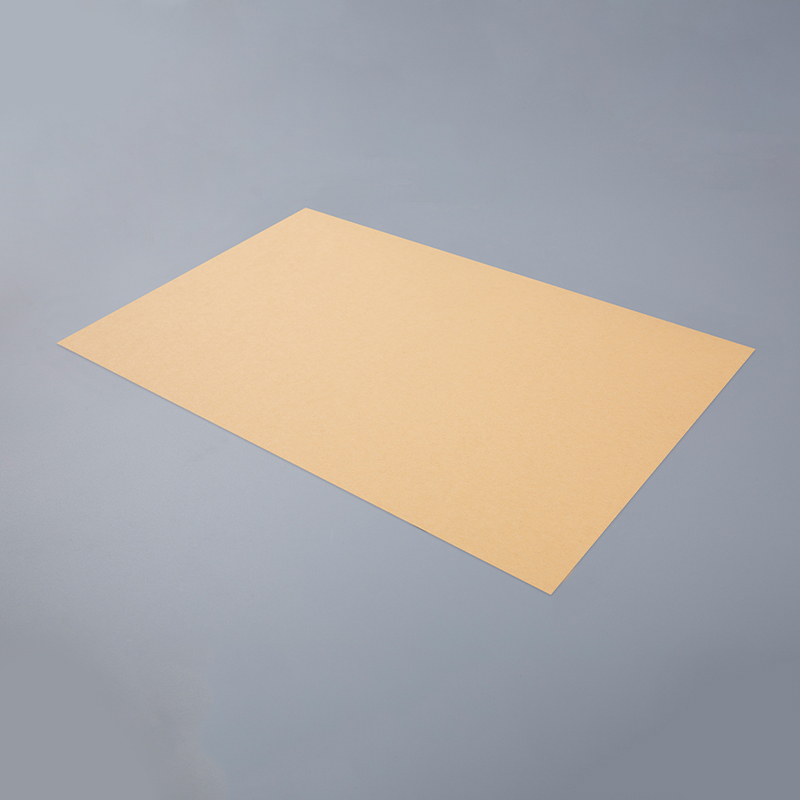
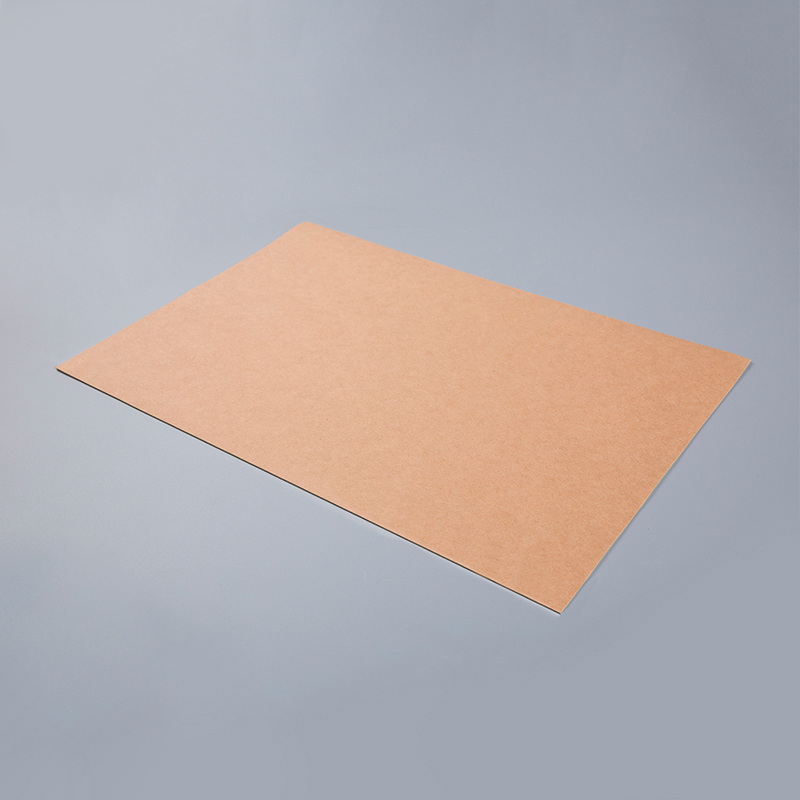
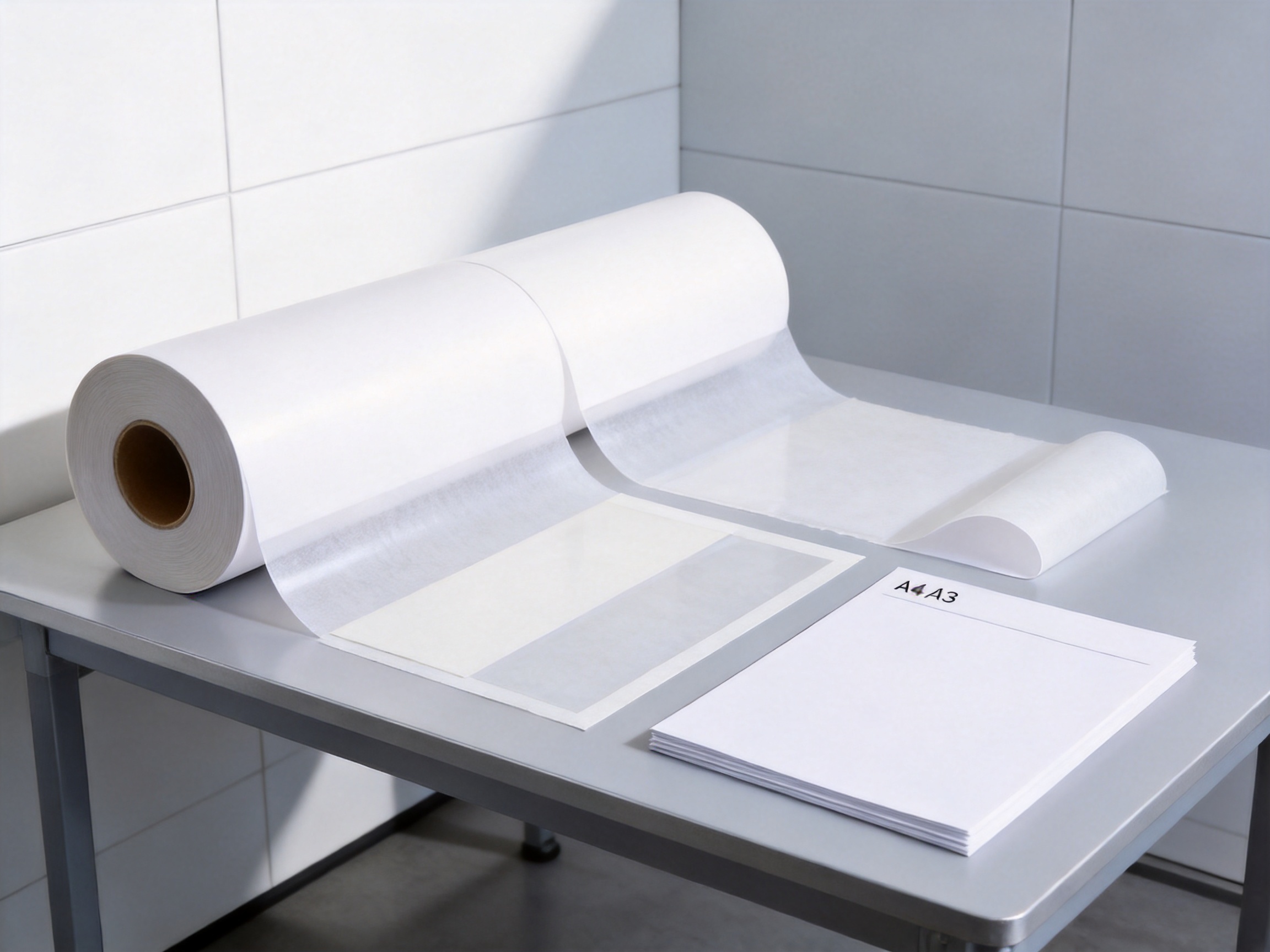
The product is suitable for both roll and sheet supply, which broadens its market use. Roll materials are commonly used by professional label converters and automatic equipment users. Sheet materials are convenient for digital printing, office printing, short runs, and customized label production. This dual-format availability makes the material more competitive than products limited to only one format.
Packaging and Delivery Protection
Proper packaging is essential for preserving self-adhesive material quality. The product can be packed in sea-transit-worthy poly-wood pallet packing and carton packing. Both roll and sheet formats are available from stock. For sheet materials, 100 sheets per ream can be packed with strong PE-coated kraft paper wrappers. Strong pallets are wrapped with stretch film and fastened with plastic fastening belts.
This packaging system protects against moisture, dust, movement, edge damage, and transportation stress. PE-coated kraft paper provides a protective barrier for sheets, while stretch film and fastening belts stabilize pallet loads. For international customers, sea-transit-worthy packaging is especially important because materials may spend long periods in containers and warehouses before final use.
Reliable packaging also reduces hidden costs. Damaged roll edges, curled sheets, wet paper, or crushed cartons can cause production interruptions and material waste. Strong protective packaging helps maintain product condition from factory to customer, supporting more predictable production outcomes.
Customization for Different Markets
One major strength of this product is customization. Customers may require different face material weights, adhesive systems, liners, roll widths, sheet sizes, or packaging formats. The product can be adapted based on drawings, samples, equipment requirements, or application goals. This is especially useful for label converters, distributors, and brand owners that serve multiple industries.
For example, a retail customer may prefer a smooth 70gsm woodfree paper with removable adhesive and sheet format for price labels. A logistics customer may require roll format with a liner suitable for automatic dispensing. A cold-chain customer may need an anti-freeze adhesive option. A customer producing premium temporary labels may select a heavier face stock for improved stiffness and appearance.
Customization can also help reduce waste. If materials are supplied in dimensions that match the customer’s production layout, fewer offcuts are generated. Optimized material width can improve printing and die-cutting efficiency. Customized sheet sizes can match specific printer trays or cutting patterns.
Quality Inspection and Testing Capability
Quality consistency is critical in self-adhesive label materials because small variations can cause large production problems. The company maintains its own testing laboratory and advanced inspection equipment to support product quality. Testing can evaluate characteristics such as adhesion, release force, coat weight, surface condition, thickness, moisture balance, printability, and converting behavior.
For removable solvent woodfree paper, quality control must verify that the adhesive is removable within the intended application range while still providing reliable attachment. The liner must release smoothly without premature separation. The face paper must remain printable and stable. Inspection at multiple stages helps detect defects before materials are shipped.
Quality control also supports batch-to-batch consistency. Customers who produce labels continuously need materials that behave the same way across orders. If release force or adhesive performance changes unexpectedly, equipment settings may need adjustment, causing downtime. Strong inspection processes help minimize this risk.
Research, Development, and Innovation
The company has strong ODM and OEM capabilities supported by a professional research and development team with multiple patents. This innovation ability is important because label material requirements continue to evolve. Customers increasingly need materials that support better printing, cleaner removal, lower waste, stronger environmental performance, and compatibility with automated systems.
Research and development can improve adhesive formulas, liner release systems, coating technology, and composite structures. For removable labels, innovation may focus on reducing residue, improving removability after longer dwell times, expanding substrate compatibility, and maintaining performance under variable temperatures. R&D also supports customized product development for specialized industries.
OEM and ODM services allow customers to develop label materials based on specific drawings, samples, or target performance. This is valuable for distributors seeking private-label products, converters developing new label lines, and industrial users with special application needs. Full after-sales service further supports long-term cooperation by helping customers solve practical production or usage issues.
Sustainability and Responsible Material Development
Modern label users increasingly consider sustainability, environmental protection, and responsible manufacturing. The company’s brand positioning focuses on sustainable development and environmental protection, including eco-friendly solutions involving face materials, adhesives, and backing papers. This direction is important because labels are used in large volumes across packaging, logistics, retail, and industrial markets.
Although self-adhesive materials can be challenging from a recycling perspective because they contain multiple layers, responsible design can still improve environmental performance. Careful adhesive selection, optimized liner weights, efficient production processes, reduced waste, and customized sizing can all contribute to more sustainable use. Developing eco-friendly face materials, adhesives, and backing papers helps customers meet their own sustainability goals.
Removable labels can also support reuse in certain applications. When labels can be removed more cleanly from containers, shelves, bins, and reusable packaging, the underlying item may remain in service longer. This can reduce replacement costs and support more efficient material use.
Performance Considerations for End Users
To achieve best results with removable solvent woodfree paper, users should consider application surface, temperature, humidity, dwell time, label size, and removal method. Removable adhesives generally perform best on smooth, clean, dry surfaces. Dust, oil, moisture, or uneven surfaces may reduce adhesion. Very rough or porous surfaces may increase adhesive anchoring and make removal less predictable.
Temperature is also important. Labels applied in very cold or very hot environments may behave differently than labels applied at room temperature. If the application involves cold storage, freezing, or low-temperature transportation, an anti-freeze or cryogenic adhesive option may be more suitable. For general indoor retail and office use, standard removable solvent adhesive is often appropriate.
Dwell time affects removability. The longer a label remains on a surface, the more the adhesive may interact with the substrate. Removable adhesives are designed to reduce residue, but users should test materials on their actual surfaces before large-scale use, especially when applying to painted, coated, plastic, glass, metal, or delicate surfaces.
Competitive Position in the Self-Adhesive Material Market
The self-adhesive label material market includes many products, but not all materials offer the same balance of printability, removability, customization, and supply reliability. Removable solvent woodfree paper stands out because it combines a smooth printable paper face, controlled removable adhesive, multiple liner options, roll and sheet availability, and strong production support.
Compared with low-cost generic removable labels, this material offers better specification flexibility and manufacturing backing. Customers can choose from various face weights, adhesive types, liners, and sizes. This allows the product to fit many production systems rather than forcing customers to adapt to one limited construction.
Compared with permanent paper labels, it offers easier removal and greater flexibility for temporary applications. This reduces the risk of surface damage and residue. Compared with film labels, it may offer a more economical and paper-like appearance for indoor and general-purpose uses. Compared with rough paper labels, it provides better print presentation and cleaner readability.
The company’s production capacity, testing facilities, R&D capability, and broad sales network further enhance the product’s competitiveness. Customers need not only a good material but also a stable supplier that can deliver consistent quality, technical support, and customization. This combination helps the product compete in both domestic and international markets.
How Converters Benefit from This Material
Label converters need raw materials that can be printed, die-cut, stripped, slit, and rewound efficiently. Removable solvent woodfree paper supports these needs with its smooth face stock, stable adhesive coating, and suitable liner options. A good release liner helps labels separate cleanly during die-cutting and dispensing, while consistent adhesive reduces edge bleeding and production interruptions.
Converters serving multiple industries can keep this material as a versatile option because it applies to retail, logistics, warehousing, office, and packaging markets. The availability of jumbo rolls in multiple widths helps converters optimize production layouts. Sheet options support short-run and digital printing operations.
Customization also helps converters differentiate their offerings. They can request special adhesive combinations, liners, or face weights to create label products for specific customers. OEM and ODM capability supports private-label development and long-term product planning.
How Distributors Benefit from This Material
Distributors need products that are easy to explain, widely applicable, and available in practical specifications. Removable solvent woodfree paper fits these needs because it has clear value: smooth printing, temporary adhesion, clean removal, and broad use. It can be sold to retail label printers, logistics suppliers, office product channels, packaging companies, and industrial users.
The product’s flexible sizes and packaging formats make inventory planning easier. Distributors can stock common sheet and roll formats while offering customized specifications for larger customers. Strong packaging helps reduce damage during storage and delivery, protecting distributor margins and customer satisfaction.
How End Users Benefit from This Material
End users benefit from practical convenience. Labels can be printed clearly, applied easily, and removed when necessary. Stores can update pricing and promotions. Warehouses can relabel bins and cartons. Offices can organize documents and storage areas. Medical supply distributors can identify outer packages and temporary stock locations.
Clean removability can improve appearance and reduce labor. When labels do not need to be scraped off aggressively, workers save time and surfaces remain cleaner. The product therefore supports both operational efficiency and presentation quality.
Recommended Handling and Storage
Like most self-adhesive materials, removable solvent woodfree paper should be stored in a clean, dry, temperature-controlled environment. Materials should be kept away from direct sunlight, high humidity, excessive heat, and chemical contamination. Rolls should be stored upright or according to recommended handling practices to avoid edge damage and deformation. Sheets should remain wrapped until use to protect against moisture variation and dust.
Before printing or converting, materials should be conditioned to the production environment when necessary. Sudden changes in temperature or humidity can affect paper flatness and adhesive behavior. Proper storage and conditioning help maintain stable converting, printing, and application performance.
Q&A: Common Questions About Removable Solvent Woodfree Paper
What is removable solvent woodfree paper?
It is a self-adhesive label material made with a woodfree paper face stock, a removable solvent adhesive, and a release liner. It is designed for labels that need clear printing, dependable temporary adhesion, and easier removal from suitable surfaces.
Where can this product be used?
It can be used in stores, supermarkets, warehousing, logistics, medical supply distribution, outer box labeling, daily office organization, promotional labeling, inventory identification, and temporary packaging labels.
What is the standard face material?
The standard face material is 70gsm woodfree paper. Other available options include 75gsm, 100gsm, 120gsm, and 140gsm woodfree paper, depending on customer requirements.
What adhesive is used?
The standard adhesive is removable solvent adhesive. Other adhesive options include water-based adhesive, hotmelt adhesive, solvent adhesive, anti-freeze adhesive, cryogenic adhesive, and tyre-grade rubber adhesive.
Does the label remove without residue?
The removable adhesive is designed to reduce residue and support clean removal on suitable surfaces. However, actual removal performance depends on the surface type, temperature, humidity, application pressure, dwell time, and label size. Testing before mass use is recommended.
What liner is normally supplied?
The standard liner is 80g white glassine paper. Other liners are available, including different weights of glassine paper, release paper, art paper, and CCK liner.
Can the product be supplied in rolls and sheets?
Yes. It can be supplied in jumbo roll widths such as 1000mm, 1020mm, 1080mm, and 1530mm, as well as sheet sizes including A4, A3, 20 x 30, 21 x 30, 24 x 36, 50cm x 70cm, and 70cm x 100cm. Customized sizes are also available.
Why choose woodfree paper instead of ordinary paper?
Woodfree paper provides a smoother, cleaner, and more printable surface than many ordinary paper grades. It supports clear text, color printing, barcode readability, and a professional label appearance.
Why choose removable adhesive instead of permanent adhesive?
Removable adhesive is better for temporary labeling, price changes, promotions, inventory updates, office organization, and reusable surfaces. It reduces the risk of surface damage and makes label replacement easier.
What makes this product competitive?
Its competitive strengths include smooth printability, controlled removability, multiple adhesive options, several liner choices, roll and sheet availability, customization support, strong packaging, advanced manufacturing processes, large production capacity, and quality inspection capability.
Conclusion
Removable solvent woodfree paper is a versatile and reliable self-adhesive material for applications that require clear printing, temporary adhesion, and cleaner removal. With a smooth woodfree paper surface, removable solvent adhesive, and stable release liner options, it supports retail, supermarket, warehouse, logistics, medical supply, packaging, and office labeling needs.
Its advantages over many conventional label materials include better print clarity, cleaner removability, flexible customization, stable converting performance, and broad application suitability. The availability of different face weights, adhesive systems, liners, roll widths, and sheet sizes makes it adaptable for converters, distributors, and end users.
Behind the product is a strong manufacturing system that includes gluing, laminating, cutting, quality inspection, research and development, OEM and ODM customization, and large-scale production capacity. These strengths help ensure stable supply, consistent quality, and practical solutions for changing label markets.
For buyers seeking a label material that combines usability, appearance, performance, and manufacturing reliability, removable solvent woodfree paper offers a balanced and competitive choice. It is especially valuable wherever labels must communicate clearly, attach dependably, and be removed with less difficulty when the job is done.
References
1. Pressure Sensitive Tape Council. Pressure Sensitive Adhesive Technology: Principles and Applications.
2. FINAT. Technical Handbook for Self-Adhesive Label Materials and Converting.
3. ASTM International. Standard Test Methods for Pressure-Sensitive Adhesive Performance.
4. Pizzi, A., and Mittal, K. L. Handbook of Adhesive Technology.
5. TAPPI Press. Paper and Paperboard Manufacturing and Testing Guidelines.
6. Benedek, I. Pressure-Sensitive Adhesives and Applications.