
 English
 Español
 русский
 Français
 عربى
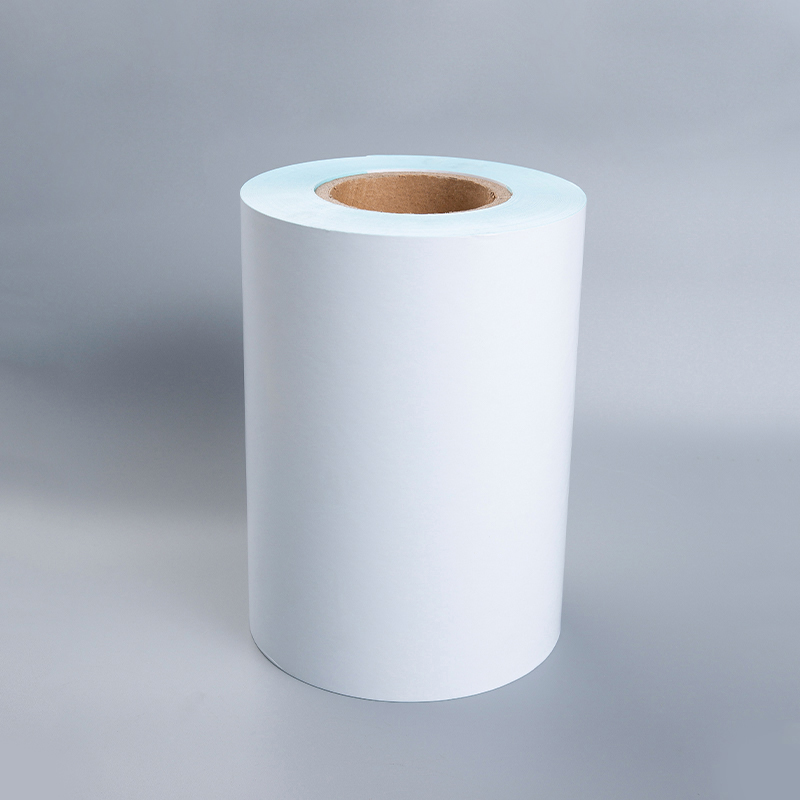
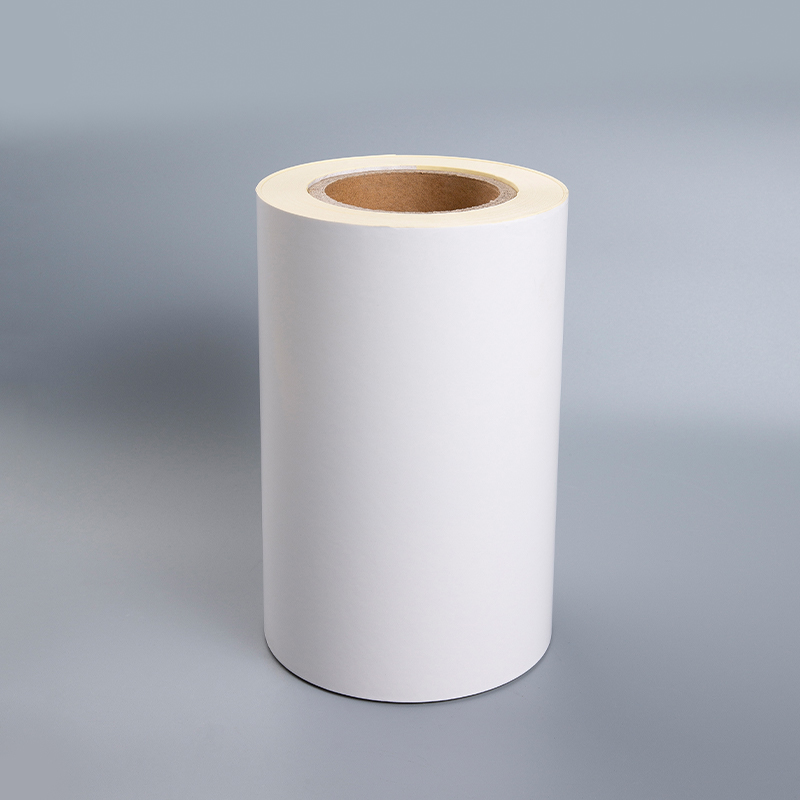
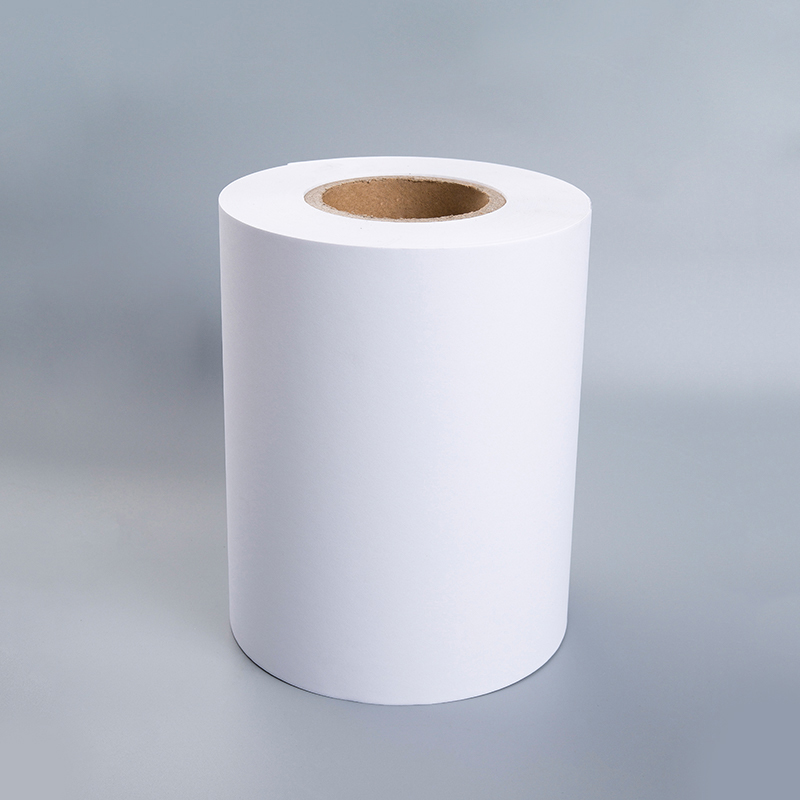
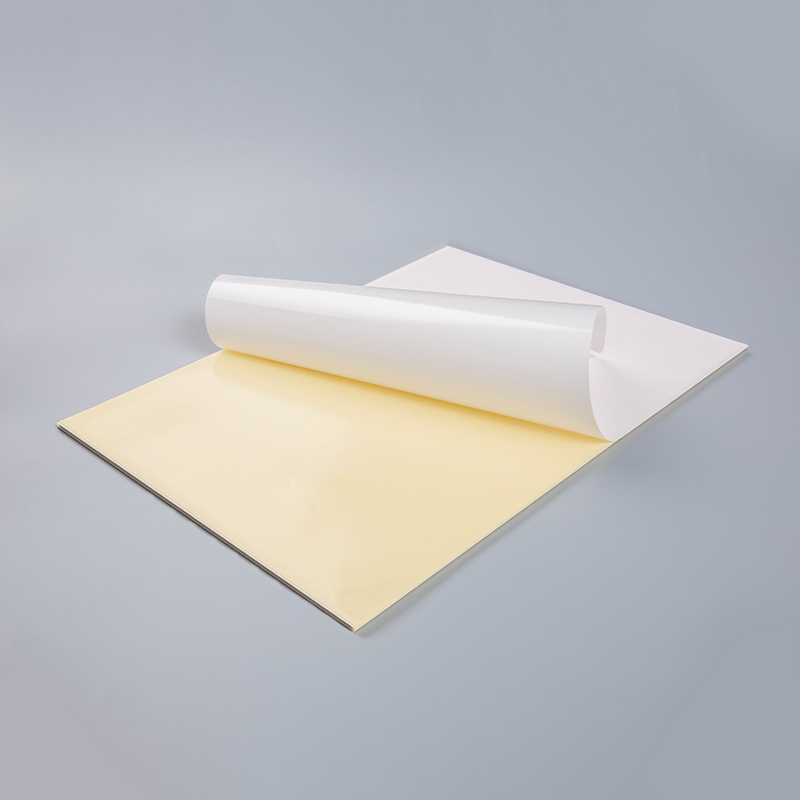
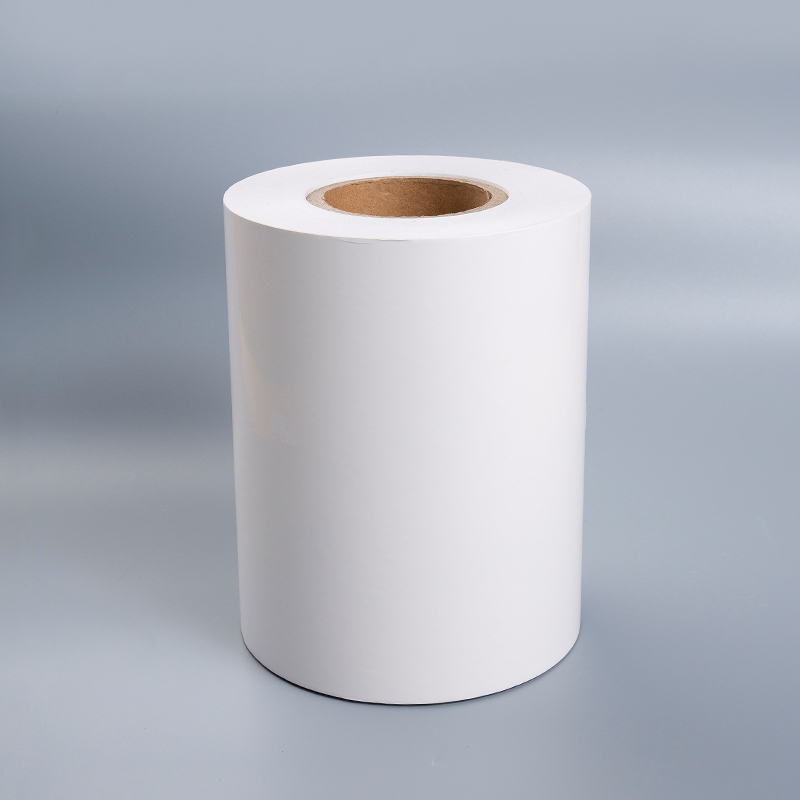
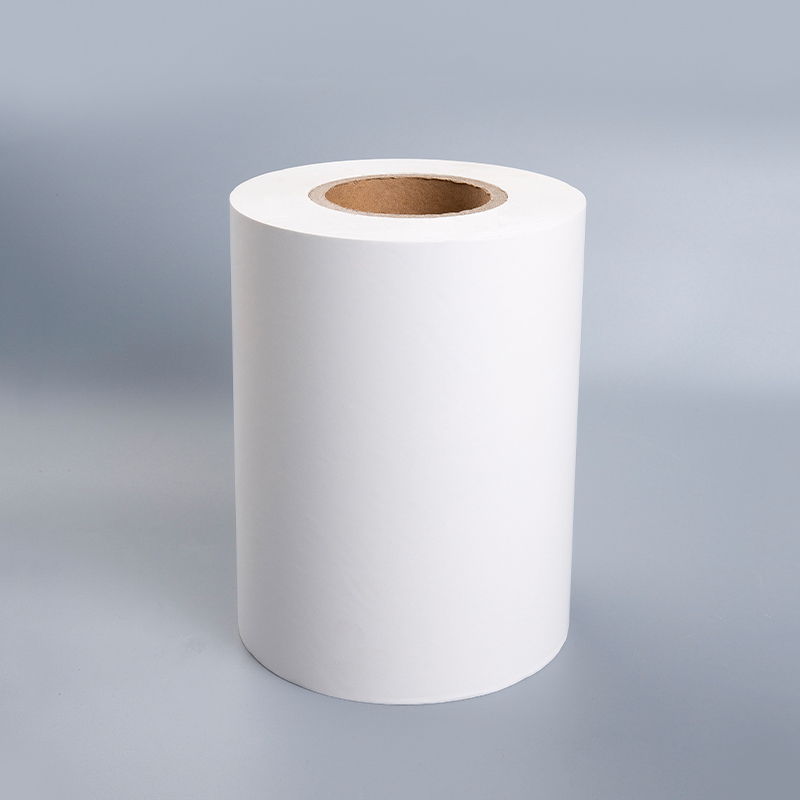
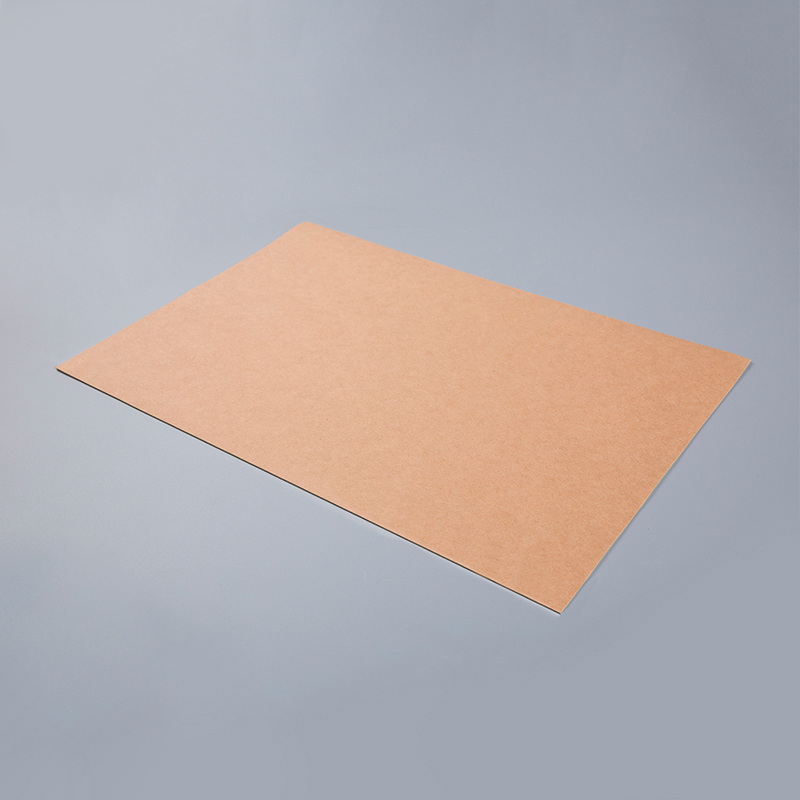
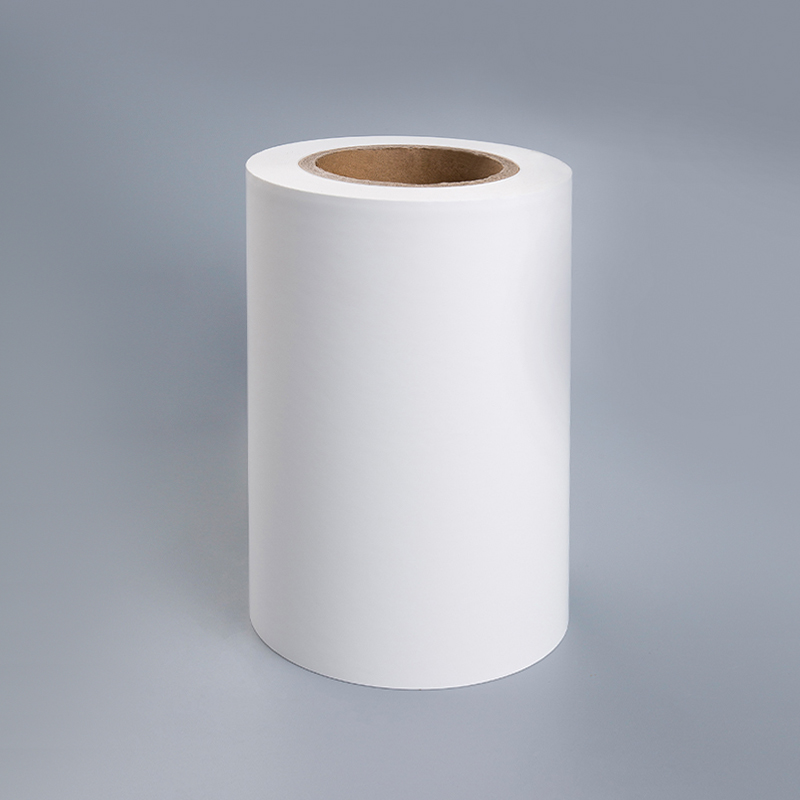
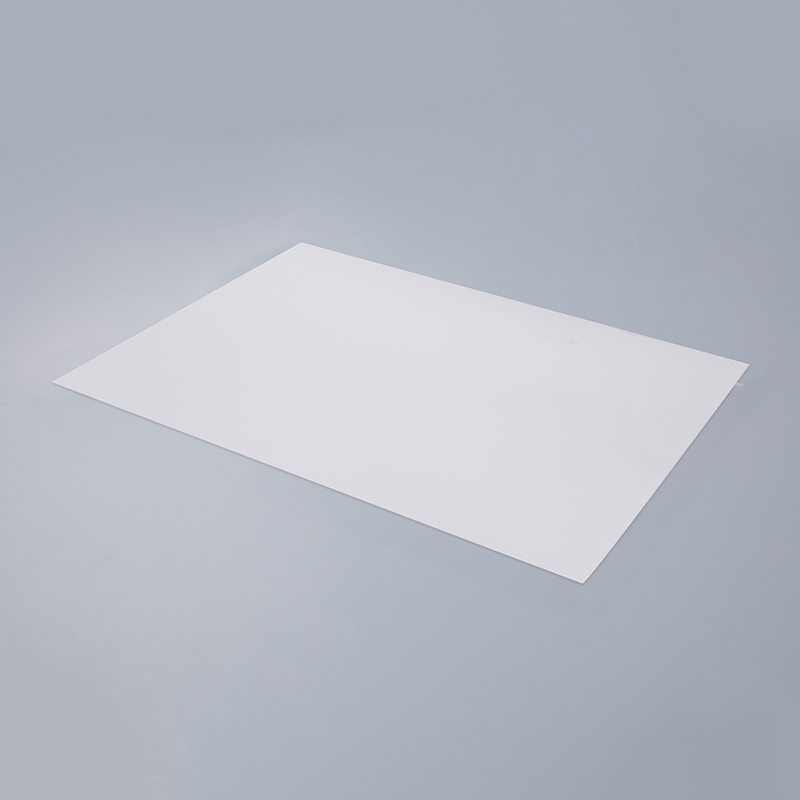
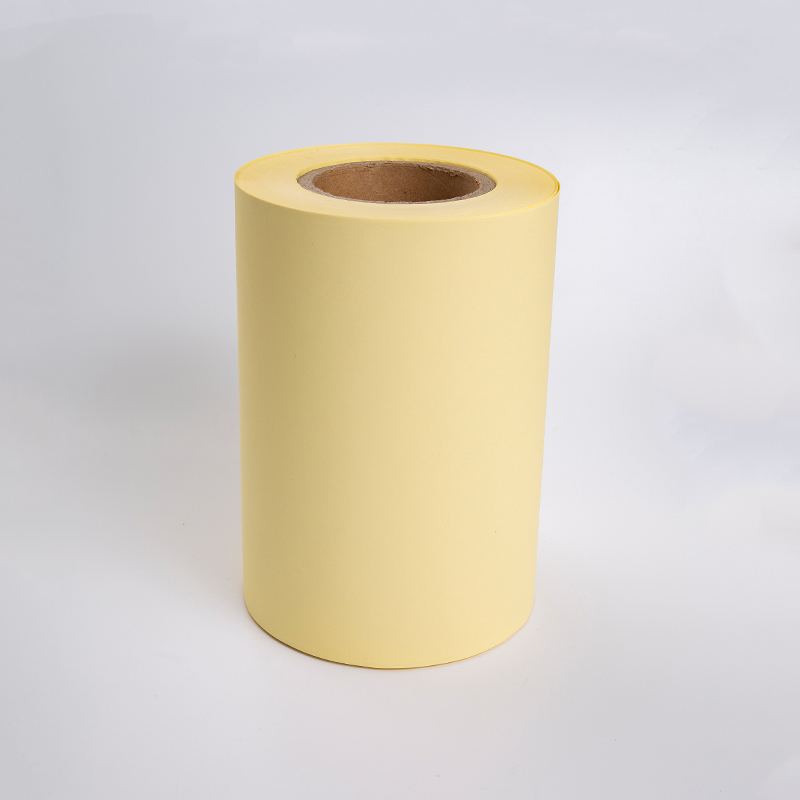
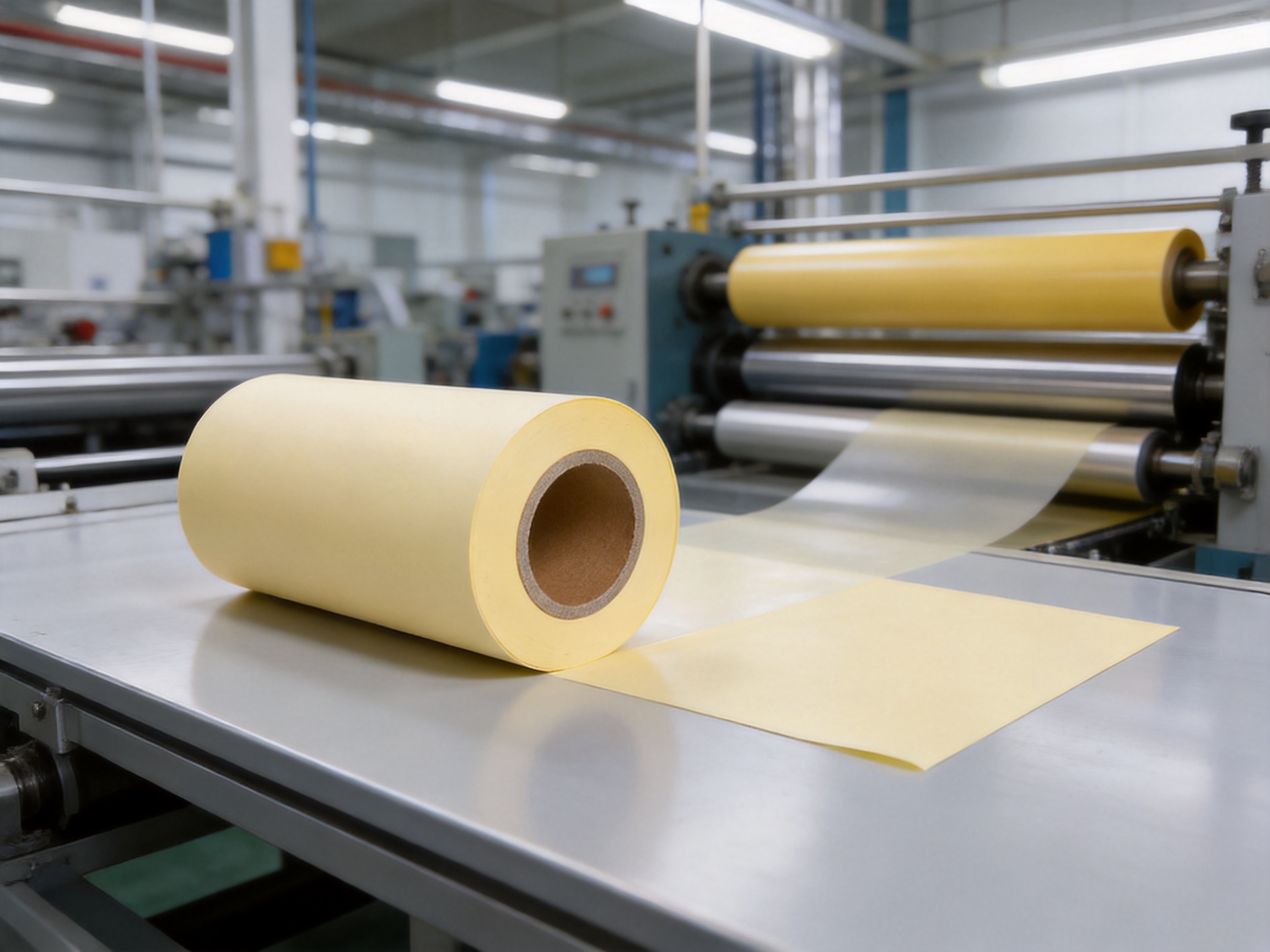
عربىYellow release paper is a specialized liner material engineered to protect pressure-sensitive adhesive surfaces, support accurate converting, and enable clean release during label application, hot stamping, printing, die-cutting, laminating, and packaging processes. Built on PE coated kraft paper and finished with a controlled silicone release layer, it combines the strength of kraft paper, the moisture resistance of polyethylene coating, and the smooth release performance required by modern automated production lines.
For manufacturers of self-adhesive labels, electronic labels, warning labels, decorative foils, medical-grade adhesive components, and specialty converting products, the performance of the release liner directly affects production efficiency, label appearance, bonding accuracy, storage stability, and end-user experience. A label may appear simple, but behind every reliable self-adhesive product is a release paper that must remain flat, stable, clean, strong, and predictable from coating to printing, cutting, transportation, storage, and final application.
This yellow release paper is designed to meet those demanding requirements. It offers excellent dimensional stability after coating, high puncture resistance, low paper dust generation, moisture protection, smooth surface quality, stable release force, and compatibility with high-speed automated equipment. Available in yellow or white, in multiple grammages and roll or sheet sizes, it is suitable for a broad range of industrial and commercial uses.
Content
- 1 Understanding Yellow Release Paper
- 2 Core Material Structure and Performance Logic
- 3 Product Specifications
- 4 Major Advantages Over Conventional Release Liners
- 5 Advanced Manufacturing Processes
- 6 Quality Control and Testing Strength
- 7 Applications in Label Backing
- 8 Applications in Hot Stamping
- 9 Applications in Pressure-Sensitive Adhesive Printing
- 10 Benefits for High-Speed Automated Production
- 11 Advantages for Medical-Grade and Clean Applications
- 12 Safety and Environmental Considerations
- 13 Packaging and Delivery Protection
- 14 Customization Flexibility
- 15 Company Manufacturing Strength
- 16 Why Buyers Choose This Yellow Release Paper
- 17 Comparison with Alternative Liner Materials
- 18 Role in Total Cost Reduction
- 19 Best Practices for Storage and Handling
- 20 Technical Selection Considerations
- 21 Q&A Section
- 21.1 What is yellow release paper used for?
- 21.2 Why is PE coated kraft paper used as the base material?
- 21.3 What are the advantages of yellow color?
- 21.4 Can the product be supplied in white?
- 21.5 What grammages are available?
- 21.6 Is the release paper suitable for high-speed automated production?
- 21.7 How does the product improve die-cutting performance?
- 21.8 Can it be used for hot stamping?
- 21.9 Is customization available?
- 21.10 How is the material packaged for export?
- 22 Conclusion
- 23 References
- 24 Product: Yellow Release Paper
Understanding Yellow Release Paper
Yellow release paper is a carrier and protective material used with adhesive products. Its main function is to prevent adhesive layers from sticking prematurely while allowing clean peeling when the adhesive product is ready to be used. In most self-adhesive constructions, the release paper sits behind the adhesive layer and supports the face material through printing, die-cutting, slitting, packaging, and application.
The product described here uses PE coated kraft paper as its core structure. Kraft paper provides mechanical strength and durability. The PE coating enhances moisture resistance, surface smoothness, and barrier performance. A silicone release layer is then applied with precision to create controlled release properties. This combination makes the material especially useful for pressure-sensitive adhesive labels, hot stamping applications, adhesive printing, electronic labels, packaging labels, and other converting operations.
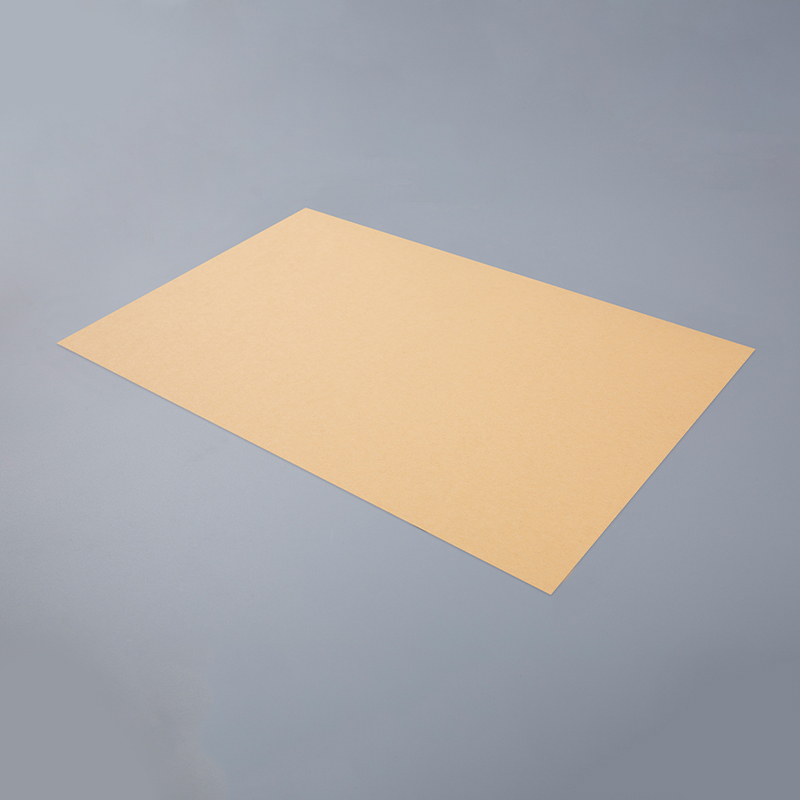
The yellow color provides easy visual identification during production and use. In busy printing and converting workshops, color-coded release liners help operators distinguish materials quickly, reduce handling errors, and improve workflow management. White release paper is also available for customers who require a neutral appearance or specific brand and production preferences.
Core Material Structure and Performance Logic
The performance of yellow release paper depends on the balance between paper base quality, PE coating uniformity, silicone layer precision, and converting compatibility. Each layer has a specific role, and the final product must perform as an integrated system.
Kraft Paper Base
The kraft paper base provides the main body strength. High-quality kraft paper offers uniform density, strong tensile properties, good tear resistance, and reliable dimensional stability. These characteristics are critical because the liner must travel through coating machines, printing presses, die-cutting equipment, slitting lines, and automated labeling systems without breaking, curling, wrinkling, or deforming.
A uniform paper base also reduces production dust. Paper dust can contaminate adhesive layers, interfere with printing quality, reduce die-cutting precision, and increase equipment maintenance needs. By using a cleaner and denser paper structure, the release paper helps manufacturers maintain cleaner production environments and longer equipment service life.
PE Coating Layer
The PE coating improves the barrier performance of the paper. It helps resist moisture penetration, reduces chemical exposure to the paper fibers, and supports a smoother surface for silicone coating. Moisture resistance is especially important when materials are stored or transported across different climates. Temperature and humidity changes can cause ordinary paper to warp, expand, shrink, or curl. PE coated kraft paper provides greater stability and helps prevent deformation.
In label production, a stable liner is essential. Even small changes in liner dimensions can affect registration accuracy, die-cutting depth, label shape, and waste removal. The PE coating contributes to stable converting performance, especially in high-speed automated operations where consistency is more important than isolated peak performance.
Silicone Release Layer
The silicone layer is the functional surface that controls release performance. It must be uniform, well anchored, smooth, and consistent across the full width and length of the material. If silicone coating is uneven, labels may release too easily in some areas and too tightly in others. This can cause label lifting, adhesive transfer, difficult peeling, waste matrix breakage, or application failures.
Advanced multi-roller precision coating technology is used to achieve uniform silicone distribution. Controlled coating weight and stable curing help ensure predictable release force. This is essential for high-precision adhesive bonding, die-cutting, hot stamping transfer, and medical-grade manufacturing where cleanliness, repeatability, and safety are strict requirements.
Product Specifications
The yellow release paper is available in a wide range of grammages and sizes to match different production requirements. Lightweight grades can be used where flexibility and cost efficiency are important, while heavier grades provide stronger support, better stiffness, and improved handling for demanding converting or sheet applications.
Item |
Specification |
Material |
PE coated kraft paper |
Available Grammage |
50 g, 60 g, 65 g, 70 g, 80 g, 85 g, 90 g, 100 g, 120 g, 135 g, 155 g, and 240 g |
Color Options |
Yellow and white |
Jumbo Roll Width |
1000 mm, 1020 mm, 1080 mm, and 1530 mm |
Sheet Sizes |
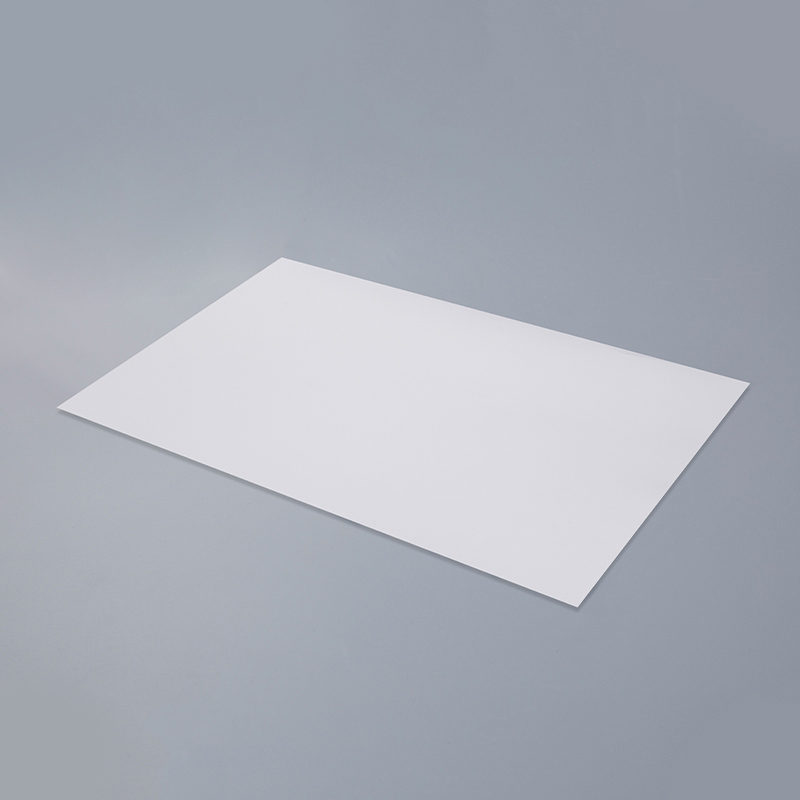
A4, A3, 20 x 30, 21 x 30, 24 x 36, 50 cm x 70 cm, 70 cm x 100 cm, and customized sizes |
Coating Options |
Single-sided or double-sided cast extrusion coating options |
Main Applications |
Label backing, hot stamping carrier, pressure-sensitive adhesive printing, die-cutting, packaging, and specialty adhesive products |
Major Advantages Over Conventional Release Liners
Yellow release paper competes with many types of liner materials, including standard glassine paper, clay-coated paper, ordinary kraft liners, film liners, and lower-grade release papers. Its advantage comes from its balanced combination of stiffness, moisture resistance, release stability, coating quality, converting reliability, and cost-effectiveness.
Excellent Dimensional Stability
Dimensional stability is one of the most important performance indicators for a release liner. During coating, printing, drying, laminating, and die-cutting, the material is exposed to mechanical tension, temperature changes, and humidity variations. A low-quality liner may stretch, shrink, curl, or wrinkle, leading to poor registration and inconsistent finished products.
This yellow release paper is engineered to maintain stable dimensions after coating and during processing. Its PE coated kraft structure helps resist deformation caused by environmental changes. This is especially valuable for electronic device labels, product identification labels, warning labels, and precision die-cut adhesive components where shape accuracy and alignment are critical.
High Durability and Puncture Resistance
Industrial converting processes place significant stress on release liners. Materials may be exposed to sharp die-cutting tools, high-speed web tension, roll rewinding pressure, pallet stacking, and long-distance transportation. A weak liner may tear, puncture, break, or generate defects that reduce yield.
The uniform density and strong kraft base provide superior puncture resistance and durability. This strength supports smooth processing and reduces the risk of production interruption. Compared with lower-grade release paper, the product offers more reliable performance under demanding mechanical conditions.
Low Paper Dust for Cleaner Production
Paper dust is a common problem in printing and label converting. Dust particles can attach to adhesive surfaces, contaminate silicone coatings, create visible defects, damage print heads, interfere with hot stamping transfer, or accumulate inside equipment. Excessive dust increases maintenance costs and may reduce product quality.
This release paper is manufactured with attention to clean surface quality and low dust generation. The result is a more stable production environment, fewer defects, improved equipment life, and better suitability for applications requiring high cleanliness, including medical-grade products and electronic labels.
Outstanding Moisture Resistance
Moisture can damage release liners in multiple ways. It can cause paper swelling, curling, edge waviness, loss of flatness, adhesive instability, and reduced converting accuracy. In export shipments, materials may experience high humidity during sea transportation or storage in different climates.
The PE coating acts as a protective barrier against moisture and chemical corrosion. This helps prevent warping during long-term storage and ensures that the liner remains flat and usable when it reaches the customer. For international buyers and high-volume converters, this stability reduces material waste and improves planning confidence.
Smooth and Flat Surface
A smooth and flat surface is essential for printing, coating, laminating, and adhesive contact. Surface irregularities can cause uneven adhesive distribution, poor print appearance, incomplete hot stamping transfer, or irregular die-cutting performance.
The release paper is designed with a smooth surface and stable release characteristics. It supports high-speed automated production and helps ensure consistent adhesive contact. The smoothness also contributes to clean label peeling and accurate transfer in hot stamping applications.
Stable Release Properties
Release force consistency is central to liner performance. If release is too tight, labels may be difficult to peel, resulting in slow application and possible label damage. If release is too loose, labels may lift prematurely, shift during processing, or cause waste matrix instability.
Through precision silicone coating, the product provides controlled and stable release properties. This allows manufacturers to match the liner to specific adhesive systems and production requirements. Consistent release is particularly important in high-speed label dispensing, automated labeling, and die-cutting operations.
Advanced Manufacturing Processes
The performance advantages of this yellow release paper are closely connected to advanced manufacturing capabilities. A release liner is not merely paper with a coating; it is a precision-engineered material requiring control over raw material selection, extrusion coating, silicone coating, curing, inspection, slitting, sheeting, packaging, and logistics.
Cast Extrusion Coating Technology
Cast extrusion coating technology is used to apply PE coating to the kraft paper base. This process allows molten polyethylene to be extruded and cast onto the paper surface, forming a continuous barrier layer. Depending on customer requirements, single-sided or double-sided coating options can be supplied.
Single-sided PE coating is commonly used when one functional barrier surface is sufficient, while double-sided coating can provide enhanced moisture resistance, improved flatness, and additional protection. The ability to offer both options gives customers flexibility in balancing performance and cost.
Uniform extrusion coating is important because uneven PE thickness can affect flatness, silicone anchorage, release consistency, and roll quality. By controlling the coating process precisely, the material achieves reliable performance across the full web width.
Multi-Roller Precision Coating System
The silicone layer is applied using a multi-roller precision coating system. This technology supports accurate coating weight control and uniform distribution. In release paper manufacturing, the silicone layer must be thin enough for efficiency but complete enough to provide full release coverage.
The multi-roller system helps avoid streaks, bare spots, coating build-up, and uneven release zones. It also supports controlled breathability and surface quality. Such precision is crucial for adhesive bonding, die-cutting, pressure-sensitive label production, hot stamping, and medical-grade converting.
Controlled Curing and Surface Stabilization
After silicone coating, curing conditions must be carefully managed. Proper curing ensures that the silicone layer is anchored to the coated paper and that release properties remain stable. Insufficient curing may cause silicone transfer, poor release performance, or adhesive contamination. Excessive heat may damage the paper, cause curling, or affect dimensional stability.
A well-controlled curing process supports long-term product reliability. It allows release paper to maintain performance after storage and transportation, which is especially important for customers purchasing in jumbo rolls or large palletized shipments.
Gluing, Laminating, and Cutting Capability
The manufacturer operates a full range of production lines including gluing, laminating, and cutting. This integrated capability allows better control over product consistency and customization. Instead of relying on fragmented outsourcing, the company can manage key processes internally, respond quickly to customer requirements, and maintain stronger quality traceability.
For customers, this means more dependable supply, better technical support, and greater flexibility for customized sizes, grammages, and special constructions. Whether the requirement is jumbo roll supply for large label converters or sheeted material for specialized applications, the production system can support varied order needs.
Quality Control and Testing Strength
Release paper quality must be verified through systematic testing. Visual appearance alone cannot confirm release stability, coating uniformity, moisture resistance, strength, or converting suitability. The manufacturer maintains its own testing laboratory and advanced inspection equipment to support quality assurance.
Dimensional and Flatness Inspection
Dimensional stability and flatness are checked to ensure the paper can perform under production conditions. This includes monitoring width accuracy, roll quality, sheet size accuracy, edge condition, curling tendency, and surface smoothness. Stable dimensions reduce the risk of printing misalignment and die-cutting errors.
Release Force Testing
Release force testing evaluates how easily adhesive materials peel from the liner. Consistent release force is essential because it determines both processing behavior and end-user handling. Testing helps confirm that the silicone layer performs within the required range and remains suitable for high-speed automated production.
Coating Uniformity Control
Both PE coating and silicone coating must be uniform. Inspection equipment and production controls are used to reduce coating variation. Uniform coating improves moisture resistance, release consistency, surface quality, and compatibility with adhesives.
Strength and Puncture Testing
The material is designed for superior puncture resistance and mechanical durability. Strength testing helps ensure that the liner can withstand converting tension, die-cutting pressure, handling, rewinding, packaging, and transportation. This is particularly important for heavier rolls and high-speed processing.
Cleanliness and Dust Control
Cleaner paper reduces contamination in downstream operations. Inspection and process discipline help minimize dust, loose fibers, and surface defects. For industries such as electronics, medical products, and premium labels, cleanliness directly affects finished product acceptance.
Applications in Label Backing
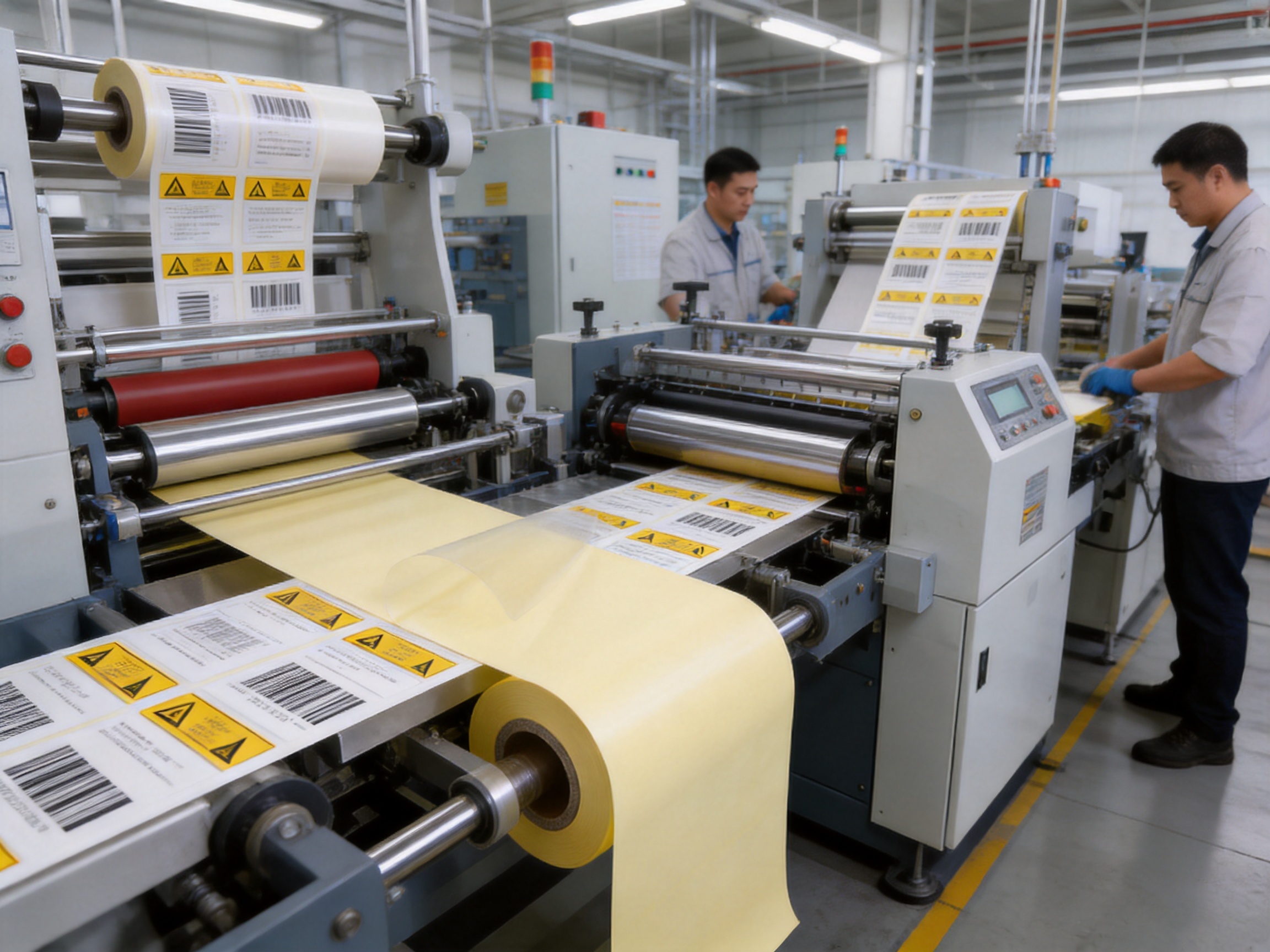
One of the most important uses of yellow release paper is as a label backing material. In self-adhesive label production, the liner supports the label face stock and adhesive layer during printing, die-cutting, waste stripping, rewinding, storage, shipping, and final application.
Electronic device labels, product identification labels, warning labels, barcode labels, logistics labels, and packaging labels all require stable liners. The yellow release paper provides robust support during printing and die-cutting while allowing easy peeling after the label is applied to the target surface.
For electronic device labels, accuracy and cleanliness are especially important. Labels must be cut precisely, printed clearly, and applied without contamination. A stable release paper helps maintain production precision and reduces the risk of adhesive exposure, label curling, or edge lifting.
Warning labels and product identification labels also benefit from a strong liner because they often require durable adhesive systems and accurate application. If the liner releases too poorly, operators may damage labels during peeling. If it releases too easily, labels may shift or lift during processing. Controlled release creates a better balance.
Applications in Hot Stamping
Yellow release paper can act as a carrier for hot-stamping foils in printing processes. Hot stamping transfers metallic effects such as gold or silver finishes onto product surfaces. The carrier must support the foil layer during handling and enable precise transfer under heat and pressure.
In hot stamping, clean separation is essential. Poor release behavior can cause incomplete transfer, blurred edges, dull metallic appearance, or residue. A smooth and stable release paper helps maintain sharpness and gloss after stamping. It also supports production consistency in decorative packaging, premium labels, printed materials, and specialty finishing.
The material’s flatness and dimensional stability contribute to accurate foil placement. This is important for designs requiring fine details, logo elements, security marks, and high-end visual effects. Manufacturers seeking consistent metallic transfer can benefit from the product’s controlled release performance and clean surface quality.
Applications in Pressure-Sensitive Adhesive Printing
Pressure-sensitive adhesive printing requires a reliable liner that can pass through printing and converting equipment without deformation. The release paper provides a flat base for printing, die-cutting, rewinding, and label removal during application.
During printing, the liner helps maintain web tension and registration. During die-cutting, it must resist cutting pressure without tearing or being cut through excessively. During waste matrix removal, it must allow the waste material to separate cleanly while keeping finished labels in position. During final application, it must release labels smoothly.
This yellow release paper is suitable for high-speed automated production because of its stable surface and controlled release. It helps reduce downtime, waste, and operator intervention. For pressure-sensitive label manufacturers, such reliability translates into better production efficiency and lower total cost.
Benefits for High-Speed Automated Production
Modern label and adhesive product manufacturing increasingly relies on high-speed automated equipment. As machine speeds increase, material defects that might be manageable at low speed become serious production problems. A liner must maintain web stability, release consistency, surface smoothness, and mechanical strength under continuous operation.
The yellow release paper is compatible with high-speed automated production because it offers reliable dimensional stability, low dust, uniform density, moisture resistance, and smooth surface characteristics. These properties help minimize web breaks, misregistration, adhesive contamination, curling, and waste stripping failures.
For converters, the real value is not only in the material price but also in production efficiency. A low-cost liner that causes frequent stoppages, rejects, or customer complaints can be more expensive in practice. A stable release paper reduces hidden costs by improving yield, shortening setup time, protecting equipment, and supporting predictable output.
Advantages for Medical-Grade and Clean Applications
Medical-grade adhesive products require strict attention to cleanliness, safety, consistency, and material stability. Release liners used in medical applications may support wound dressings, medical tapes, diagnostic components, protective films, or adhesive parts used in healthcare environments.
The clean production process and controlled coating technology make this release paper suitable for demanding safety expectations. Its low dust generation, smooth surface, moisture barrier, and stable release properties are beneficial for adhesive components that must be handled cleanly and released reliably.
While each medical application may require customer-specific validation, the product’s manufacturing approach supports the quality foundation needed for such uses. The combination of advanced coating, inspection capability, and eco-conscious paper structure offers a practical solution for manufacturers seeking stable liner materials.
Safety and Environmental Considerations
Sustainability is increasingly important in packaging, labels, and adhesive materials. Customers want materials that support environmental responsibility without sacrificing performance. This release paper uses recyclable and biodegradable paper as part of its structure, helping reduce environmental impact compared with less sustainable alternatives.
The clean production process is designed to comply with safety expectations in food and medical-related industries. For customers producing labels for food packaging, healthcare products, consumer goods, and regulated markets, material safety and process cleanliness are important selection factors.
The manufacturer’s broader development philosophy emphasizes sustainable solutions across face materials, adhesives, and backing papers. This means the release paper is not treated as an isolated commodity but as part of a larger eco-conscious product system. Such an approach supports customers who are working toward greener packaging and labeling supply chains.
Packaging and Delivery Protection
Release paper must arrive in excellent condition to perform properly. Even the best material can be damaged by poor packaging, moisture exposure, roll deformation, edge crushing, or unstable pallet stacking. Therefore, packaging and delivery are critical parts of product quality.
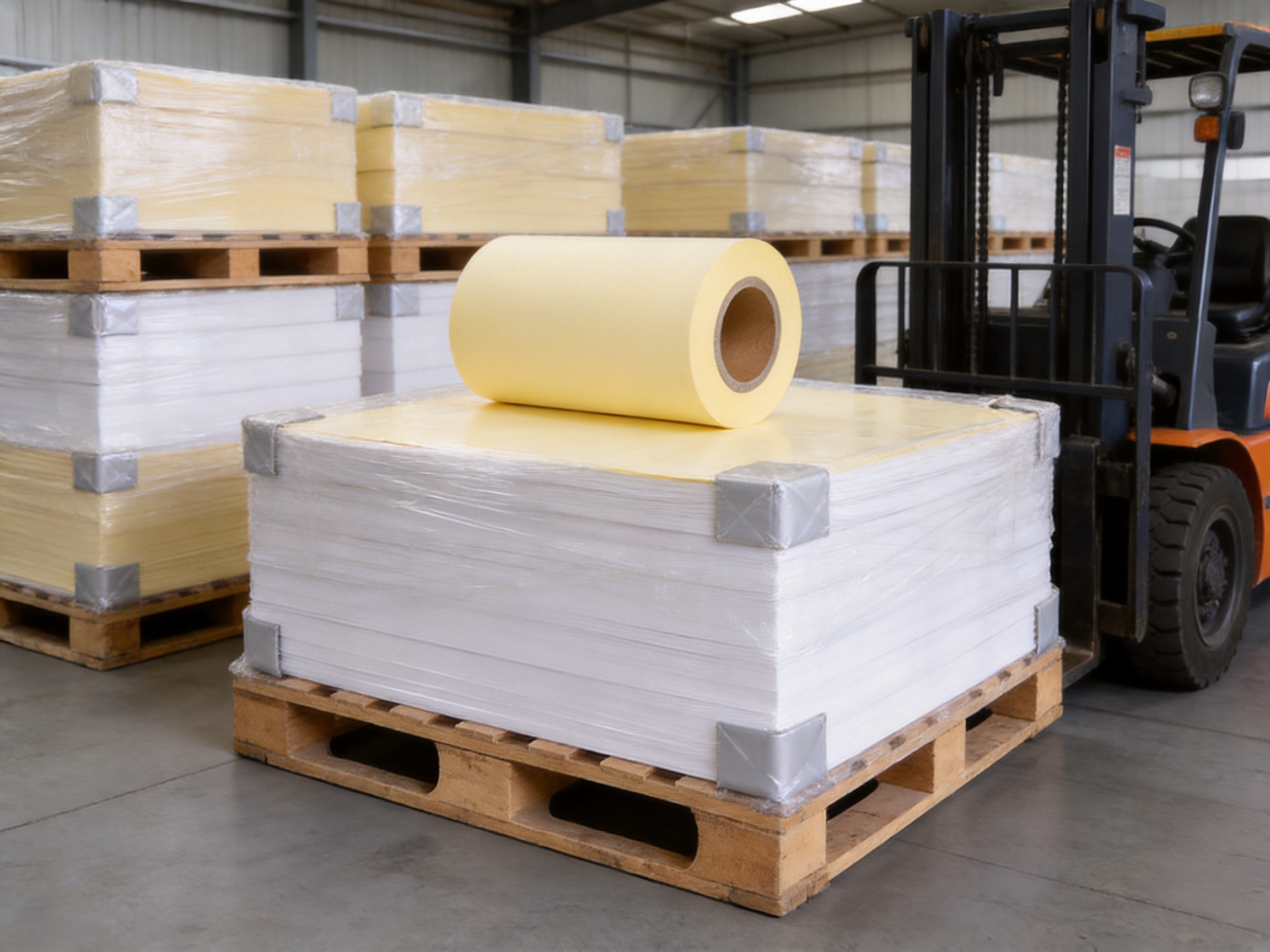
For international sea transportation, fumigation-treated recycled wooden pallets are used to comply with global shipping standards. These pallets provide insect and mold resistance, helping protect goods during long-distance shipment. The pallet design optimizes stacking stability and ensures even weight distribution to prevent roll deformation.
Protective corner guards are embedded, and pallets are tightly wrapped with stretch film. Standardized forklift slots improve logistics efficiency and reduce handling damage. These details are especially important for jumbo rolls, which must remain round, stable, and free from edge damage.
For ream packaging, commonly 100 sheets per ream, each ream is fully sealed with PE-coated kraft paper for moisture and dust protection. Reinforced edges help minimize damage. Multiple reams are stacked on pallets and secured with high-strength stretch film and anti-slip plastic straps to prevent shifting during transit.
This packaging system reflects a practical understanding of export logistics. It protects the product not only at the factory but throughout storage, container loading, sea transportation, customs handling, inland delivery, and customer warehouse receiving.
Customization Flexibility
Different customers require different liner specifications. Some need lightweight paper for economical label production. Others require heavier grammage for sheeted applications, die-cut components, or premium converting. Some use jumbo rolls for automated coating and laminating, while others require sheets in common formats or customized sizes.
The product is available in grammages from 50 g to 240 g and roll widths including 1000 mm, 1020 mm, 1080 mm, and 1530 mm. Sheet sizes include A4, A3, 20 x 30, 21 x 30, 24 x 36, 50 cm x 70 cm, 70 cm x 100 cm, and customized dimensions.
This flexibility allows buyers to match material structure to equipment, adhesive type, label format, release requirement, and cost target. Customization is supported by the manufacturer’s OEM and ODM capabilities, professional research and development team, and experience in producing products based on customer drawings or samples.
Company Manufacturing Strength
The company behind this product specializes in high-grade self-adhesive label materials and integrates research and development, production, sales, and after-sales service. With more than 20 years of OEM manufacturing experience, it has developed strong technical knowledge in self-adhesive materials, release liners, coating processes, adhesives, laminating, and cutting.
The company operates a full range of production lines, including gluing, laminating, and cutting, with an annual production capacity exceeding 280 million square meters. This scale enables stable supply for large-volume customers while maintaining the flexibility required for customized projects.
Its own testing laboratory and advanced inspection equipment help ensure product quality. Quality manufacturing has been part of the company’s development for more than two decades, earning recognition from customers in domestic and international markets.
The company has built sales and service networks across many cities in China and has also developed international markets in Asia, Europe, the Americas, Africa, and other regions. Long-term supply relationships in multiple countries demonstrate its ability to meet international expectations for quality, delivery, and technical support.
Strong ODM and OEM capabilities are another advantage. Customers can request products based on drawings, samples, application requirements, machine conditions, adhesive systems, or desired release performance. The professional research and development team, supported by multiple patents and practical production experience, can help develop tailored material solutions.
Why Buyers Choose This Yellow Release Paper
Buyers choose this yellow release paper because it offers a balanced solution for performance, reliability, customization, and production efficiency. Compared with ordinary release liners, it provides better moisture resistance, dimensional stability, puncture resistance, surface cleanliness, and release consistency. Compared with some film liners, it can offer a more paper-based, recyclable, and cost-effective structure while still delivering strong converting performance.
The product is especially valuable for manufacturers who cannot afford frequent production interruptions. Stable release paper reduces web breaks, poor peeling, label lifting, die-cutting defects, and storage-related deformation. It supports high-speed production and helps maintain consistent finished product quality.
Another reason buyers choose this product is the company’s integrated manufacturing capability. Reliable material performance depends not only on one coating step but on the entire production system. From raw paper selection to PE coating, silicone coating, inspection, slitting, sheeting, packaging, and after-sales service, the company provides a complete manufacturing and quality support structure.
Comparison with Alternative Liner Materials
Release liners can be made from different substrates, and each has strengths and limitations. Yellow PE coated kraft release paper occupies an important position because it combines cost efficiency, strength, barrier performance, and converting suitability.
Compared with Ordinary Kraft Release Paper
Ordinary kraft release paper may offer basic strength but often lacks the moisture barrier and surface smoothness provided by PE coating. Without sufficient barrier protection, ordinary kraft paper can absorb moisture, deform, and affect release stability. Yellow PE coated kraft release paper provides better resistance to humidity and a smoother surface for silicone coating.
Compared with Glassine Paper
Glassine paper is widely used in label liners because of its smooth surface and density. However, some applications require greater stiffness, stronger moisture protection, or specific color identification. PE coated kraft release paper can provide robust mechanical support and enhanced barrier properties, making it suitable for heavy-duty converting and storage conditions.
Compared with Film Liners
Film liners offer excellent smoothness and moisture resistance, but they can be more expensive and less paper-based from a sustainability perspective. Yellow release paper provides a practical balance by using a paper foundation with PE coating and silicone release functionality. For many applications, it delivers sufficient performance with better cost control.
Compared with Low-Grade Silicone Paper
Low-grade silicone paper may have inconsistent coating, unstable release force, dust problems, or poor flatness. These issues can lead to production waste and customer complaints. Precision-coated yellow release paper offers more dependable release behavior and better converting reliability.
Role in Total Cost Reduction
The purchase price of release paper is only one part of cost. The total cost includes production speed, defect rate, machine downtime, tool wear, labor intervention, waste disposal, customer returns, and inventory loss caused by storage damage.
A stable liner helps reduce these hidden costs. Low dust reduces equipment cleaning and contamination. High puncture resistance reduces breaks and handling damage. Moisture resistance reduces storage-related waste. Stable release force reduces peeling failures and die-cutting problems. Smooth surface quality improves print and hot stamping results.
For high-volume label manufacturers, even a small improvement in yield can produce significant savings over time. This makes high-performance yellow release paper a strategic material choice rather than a simple consumable.
Best Practices for Storage and Handling
Although the product is designed for stability, proper storage and handling help preserve its best performance. Rolls and sheets should be stored in a clean, dry environment away from direct sunlight, excessive heat, and high humidity. Materials should be kept in original packaging until use whenever possible.
Before production, rolls may need to acclimate to the workshop environment, especially after long-distance transportation or storage in different climates. Sudden temperature changes can cause condensation, which may affect paper flatness and adhesive converting. Allowing materials to stabilize helps improve production consistency.
During handling, operators should avoid damaging roll edges, crushing cores, or exposing sheets to dust. Forklift handling should follow pallet design and loading instructions. For sheeted reams, protective packaging should remain sealed until the material is needed.
Technical Selection Considerations
When selecting yellow release paper, customers should consider several key factors. The grammage should match the required stiffness, strength, and converting method. The roll width or sheet size should match machine and product format. The release force should match the adhesive system and application method. The choice between single-sided and double-sided coating should reflect moisture resistance, flatness, and functional requirements.
Customers should also consider storage conditions, shipping distance, expected shelf life, printing technology, die-cutting depth, hot stamping temperature, and application speed. For specialized projects, sample testing is recommended to confirm compatibility with adhesive formulations and equipment settings.
The manufacturer’s technical team can support this selection process through OEM and ODM services. By understanding customer requirements, it can recommend appropriate material structure, grammage, size, and coating options.
Q&A Section
What is yellow release paper used for?
Yellow release paper is used as a protective liner and carrier for adhesive materials. Common applications include self-adhesive label backing, pressure-sensitive adhesive printing, electronic labels, warning labels, product identification labels, hot stamping foil carriers, die-cut adhesive parts, and specialty packaging materials.
Why is PE coated kraft paper used as the base material?
PE coated kraft paper combines the strength of kraft paper with the moisture resistance and smoothness of polyethylene coating. This structure improves dimensional stability, reduces warping, supports silicone coating uniformity, and protects the material during storage and transportation.
What are the advantages of yellow color?
The yellow color helps with visual identification during production, storage, and application. It allows operators to distinguish liner materials quickly and can reduce handling mistakes in workshops using multiple release papers or adhesive constructions.
Can the product be supplied in white?
Yes. Both yellow and white options are available, allowing customers to choose the appearance that best matches their production requirements or market preferences.
What grammages are available?
Available grammages include 50 g, 60 g, 65 g, 70 g, 80 g, 85 g, 90 g, 100 g, 120 g, 135 g, 155 g, and 240 g. This wide range supports applications from flexible label liners to stronger sheeted or heavy-duty converting materials.
Is the release paper suitable for high-speed automated production?
Yes. The product is designed with excellent dimensional stability, low dust generation, smooth surface quality, and stable release properties, making it compatible with high-speed automated printing, die-cutting, laminating, and labeling processes.
How does the product improve die-cutting performance?
The uniform density, high puncture resistance, and stable dimensions help the material withstand die-cutting pressure. Controlled release properties also support clean matrix removal and accurate label positioning during converting.
Can it be used for hot stamping?
Yes. Yellow release paper can serve as a carrier for hot-stamping foils. Its smooth surface and clean release performance help ensure accurate metallic transfer and clean separation after stamping.
Is customization available?
Yes. Custom roll widths, sheet sizes, grammages, and material solutions can be supplied based on customer requirements. OEM and ODM services are available for customers with specific drawings, samples, or application needs.
How is the material packaged for export?
For sea transportation, the product is packaged on fumigation-treated recycled wooden pallets with stretch film, protective corner guards, stable stacking design, and forklift slots. Ream packaging is sealed with PE-coated kraft paper and reinforced to protect against moisture, dust, and handling damage.
Conclusion
Yellow release paper is a critical material for modern self-adhesive labels, hot stamping, pressure-sensitive adhesive printing, and industrial converting. Its value lies in reliable performance across the entire production chain: coating, printing, die-cutting, laminating, packaging, storage, transportation, and final application.
By using PE coated kraft paper, advanced cast extrusion coating, precision silicone coating, strict quality inspection, and protective export packaging, this product delivers excellent dimensional stability, moisture resistance, puncture resistance, low dust generation, smooth surface quality, and stable release properties. These advantages help customers reduce waste, improve production speed, protect equipment, and deliver higher-quality finished products.
Supported by more than 20 years of manufacturing experience, integrated production lines, strong research and development capability, OEM and ODM services, and large-scale annual capacity, the manufacturer provides not only a release paper product but also a dependable material solution for global adhesive and label industries.
For companies seeking a stable, customizable, and high-performance release liner, yellow release paper offers a practical combination of durability, precision, safety, environmental consideration, and production efficiency.
References
1. Pressure-Sensitive Tape Council. Pressure Sensitive Adhesive Tape Manufacturing and Testing Guidelines.
2. FINAT Technical Handbook. Test Methods for Self-Adhesive Label Materials.
3. Satas, D. Handbook of Pressure Sensitive Adhesive Technology.
4. Benedek, I. Pressure-Sensitive Adhesives and Applications.
5. TAPPI Press. Paper and Paperboard Converting Technical Standards.
6. ASTM International. Standard Test Methods for Paper, Paperboard, Coatings, and Adhesive Materials.