
 English
 Español
 русский
 Français
 عربى
Content
- 1 Introduction
- 2 What Is Coated Art Paper?
- 3 Core Material Advantages
- 4 Applications of Coated Art Paper
- 5 Available Sizes and Customization
- 6 Manufacturing Process and Quality Control
- 7 Advantages Compared with Conventional Paper Materials
- 8 Packaging and Delivery Protection
- 9 Environmental and Compliance Considerations
- 10 Technical Selection Guide
- 11 Why Work with an Experienced Manufacturer?
- 12 OEM and ODM Development Process
- 13 Quality, Supply, and Service Strengths
- 14 Frequently Asked Questions
- 14.1 What is coated art paper mainly used for?
- 14.2 What basis weights are available?
- 14.3 Can the material be supplied in rolls and sheets?
- 14.4 Is coated art paper waterproof?
- 14.5 Can it be used for direct food contact?
- 14.6 Can it be used in medical packaging?
- 14.7 What printing methods are compatible with the paper?
- 14.8 Can the product be customized according to a sample?
- 14.9 How is the product protected during shipment?
- 14.10 How should coated art paper be stored?
- 15 Conclusion
- 16 References
- 17 Product: Coated Art Paper
Introduction
Coated art paper is a specialized paper material designed to combine a smooth, uniform surface with dependable strength, printability, and converting performance. Unlike ordinary uncoated paper, it is manufactured with a carefully controlled coating layer that improves surface smoothness, ink receptivity, dimensional consistency, and resistance to handling stress. These characteristics make coated art paper suitable for labels, packaging components, industrial liners, healthcare products, electronic die-cutting, and other applications where surface quality and processing stability are essential.
Modern users of coated paper materials expect more than an attractive appearance. They require predictable performance on high-speed printing lines, reliable behavior during die-cutting and lamination, resistance to humidity and transportation conditions, and compatibility with customized roll or sheet formats. The material must also support efficient production while helping manufacturers meet environmental, safety, and supply-chain requirements.
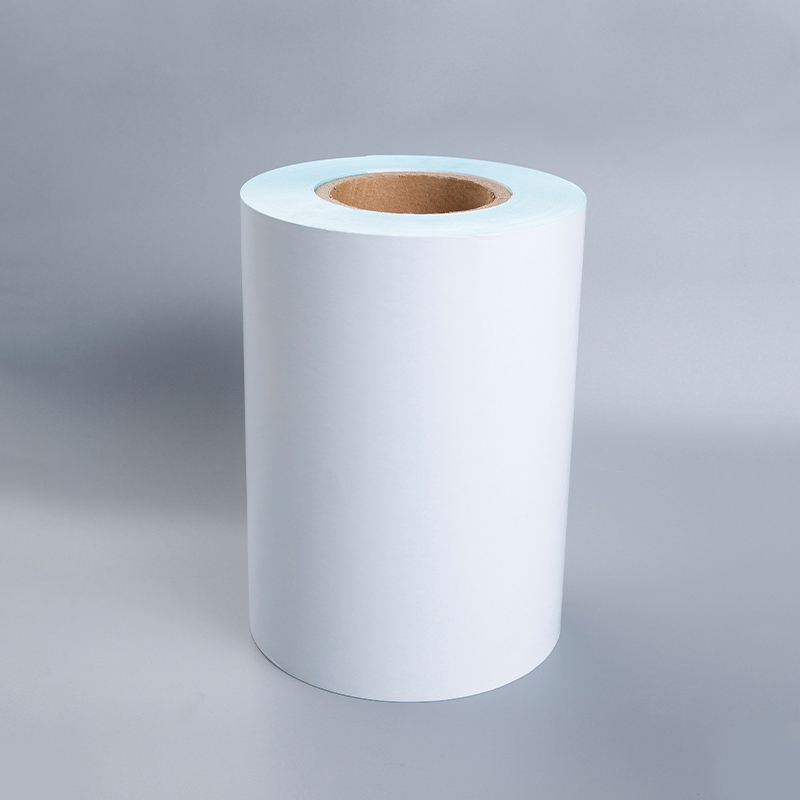
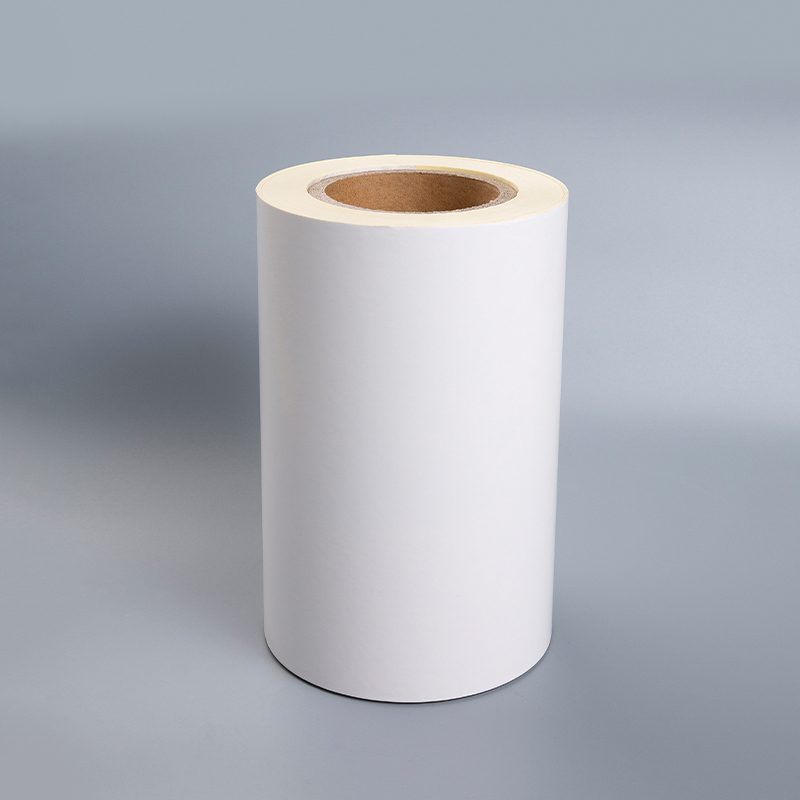
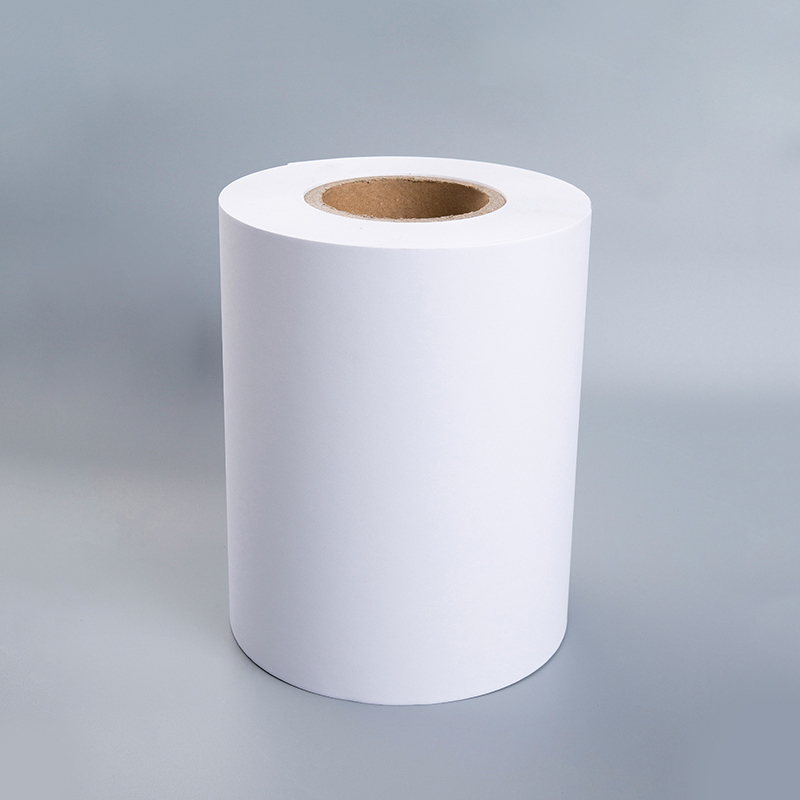
The coated art paper solution described in this article is available in several basis weights, including 90 g, 120 g, 140 g, and 165 g options. It can be supplied in jumbo rolls with widths such as 1000 mm, 1020 mm, 1080 mm, and 1530 mm, as well as in standard or customized sheet sizes. This flexibility allows converters, printers, packaging manufacturers, and industrial users to select a suitable format for their machinery and end-use requirements.
Its key advantages include high toughness, resistance to tearing and cracking, a smooth and consistent surface, dependable moisture resistance, and suitability for applications requiring controlled separation or release. Supported by integrated coating, gluing, laminating, slitting, cutting, testing, and packaging capabilities, the product can be developed as part of a complete material solution rather than treated as a basic paper commodity.
Coated Art Paper
What Is Coated Art Paper?
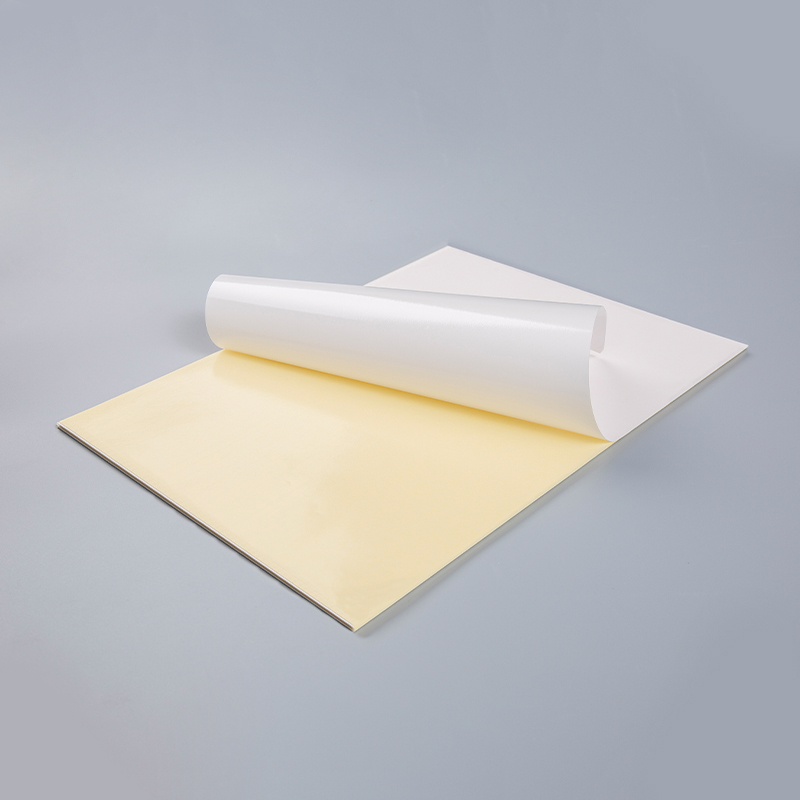
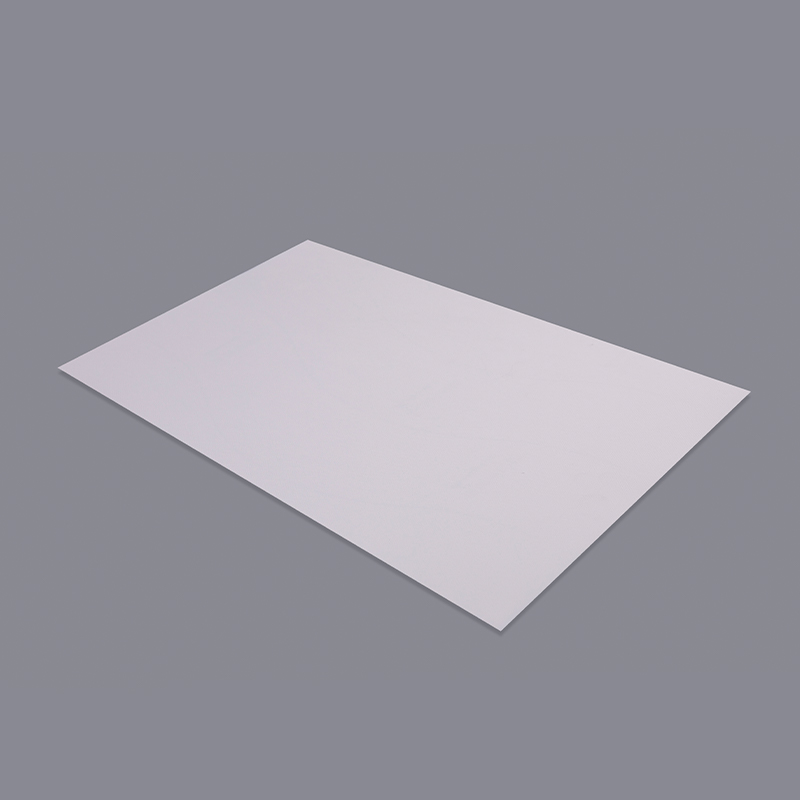
Coated art paper is a paper substrate covered with a controlled coating layer. The coating modifies the natural characteristics of the paper fibers and creates a more uniform surface. Depending on the intended application, the coated surface may be optimized for printing, lamination, adhesive bonding, controlled release, protection, or a combination of these functions.
The base material for this product is art paper available in 90 g, 120 g, 140 g, and 165 g grades. The selected basis weight affects stiffness, flexibility, tear resistance, handling strength, and the overall construction thickness. A lighter grade may be appropriate for applications requiring flexibility and reduced material consumption, while a heavier grade may be preferred when a more substantial carrier or stronger liner is needed.
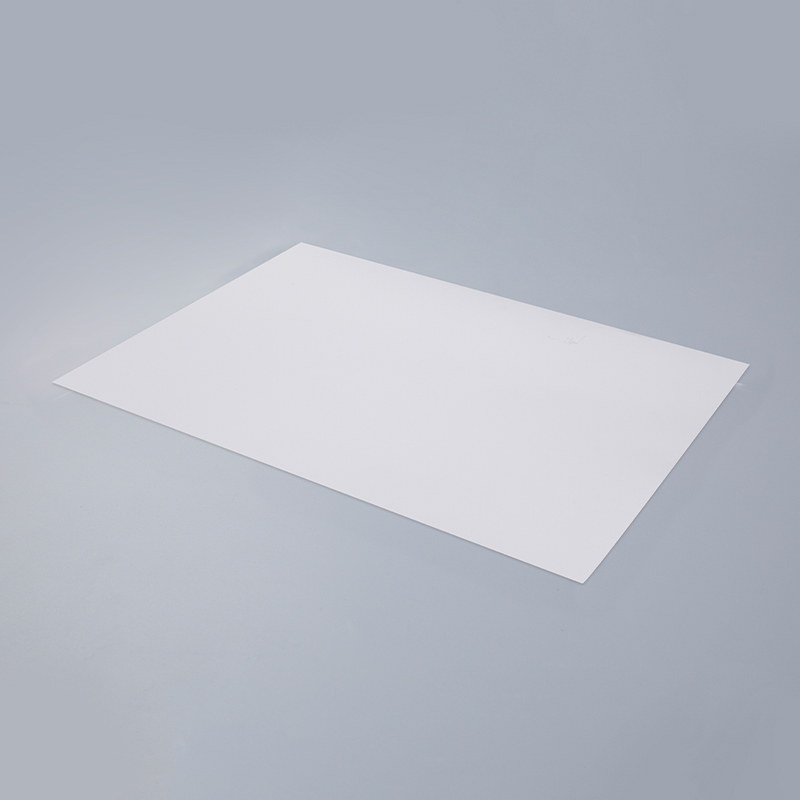
The white surface provides a clean visual foundation for printed graphics, variable data, barcodes, product information, and branding elements. A consistent white appearance also helps improve contrast and readability, particularly in label and packaging applications. For industrial use, the surface uniformity supports accurate processing and reduces the variation that can occur when paper has uneven texture or inconsistent coating coverage.
In practical manufacturing, coated art paper may serve as a printable sheet, a carrier, a release liner, or part of a multilayer self-adhesive construction. The final configuration depends on the coating chemistry, adhesive system, backing structure, release characteristics, and intended end use. Customers should therefore select the specific grade and construction according to the required printing method, converting process, storage environment, and compliance requirements.
Core Material Advantages
High Strength and Dimensional Stability
One of the main advantages of this coated art paper is its high toughness. The material is designed to withstand mechanical handling, repeated contact with processing equipment, and the stresses associated with converting operations. Its resistance to tearing and cracking is particularly valuable in high-speed production environments, where web breaks or damaged sheets can interrupt the entire line.
Structural integrity is important during unwinding, slitting, sheeting, die-cutting, laminating, and packaging. When a paper substrate lacks sufficient strength, it may stretch, wrinkle, split, or deform while passing through rollers and guide systems. These failures can result in material waste, machine stoppages, registration problems, or rejected finished goods. A stronger coated paper helps maintain stable handling throughout the production cycle.
The material can also maintain its form under repeated mechanical stress. This feature is useful for applications involving multiple processing stages, such as printing followed by lamination, die-cutting, inspection, and final assembly. A stable substrate helps preserve dimensions and supports more consistent alignment between printed images, adhesive layers, and cut lines.
Moisture and Water Resistance
Humidity and water exposure can significantly affect paper materials. Moisture may cause swelling, curling, softening, surface distortion, or delamination. During transportation and storage, changes in temperature and relative humidity may create conditions that reduce paper performance before the material reaches the final production line.
The coated surface provides improved resistance to humidity, water splashes, and mild chemical exposure compared with untreated paper. This does not mean that every construction is waterproof or suitable for permanent immersion. Instead, the coating helps protect the paper from common environmental exposure and supports more reliable performance in humid or wet working conditions.
Improved moisture resistance is valuable for food packaging liners, refrigerated or frozen product labels, warehouse identification materials, and packaging components that may encounter condensation. It also helps prevent warping and delamination during long-term storage or transportation when the product is exposed to changing climatic conditions.
For demanding applications, users should evaluate the complete construction rather than the paper layer alone. The final resistance depends on the coating, adhesive, release system, lamination structure, edge protection, packaging method, and the duration and intensity of exposure. Product testing can be arranged for specific environmental conditions when required.
Smooth and Consistent Surface
A smooth coating supports precise ink adhesion and clean printed results. It can improve the appearance of text, graphics, barcodes, fine lines, and variable information by providing a more even surface than ordinary paper. A uniform coating also helps reduce differences in ink absorption across the web or sheet.
Surface consistency is especially important for digital printing, flexographic printing, offset printing, thermal transfer, and other processes that depend on controlled interaction between ink, toner, ribbon, and paper. A predictable surface can help reduce mottling, uneven coverage, feathering, and loss of fine detail. The best printing method depends on the selected grade and the printer’s process conditions, so production trials remain advisable for critical applications.
The coating can also reduce friction and surface irregularities during die-cutting or lamination. This contributes to smoother machine operation and more reliable material flow. When a paper surface is uniform, adhesive layers may be applied more consistently and laminated structures may show fewer defects caused by local thickness or texture variations.
Printability and Visual Quality
Coated art paper is frequently selected when the appearance of the printed product matters. Its white surface can support clean color reproduction and sharp visual presentation. Labels, packaging tags, promotional pieces, and identification materials benefit from an attractive and professional appearance.
For barcode and data-driven applications, surface quality is linked to scanning reliability. A clean, even print can help produce stronger contrast and more legible codes, provided that the correct ink, toner, printing settings, and finishing process are used. The substrate is not a substitute for proper barcode design or inspection, but it provides a suitable foundation for high-quality output.
For premium packaging or branded products, the coated surface can help create a refined appearance while retaining the functional characteristics required for further converting. The material may be cut into labels, tags, inserts, or protective components according to the design and production process.
Recyclability and Responsible Material Selection
Paper-based products can support sustainable manufacturing goals because paper is a widely used renewable material and can be incorporated into recycling systems when the complete construction is compatible with local recycling requirements. The coated art paper described here is positioned as a recyclable material option, although recyclability may depend on the coating, adhesive, release chemistry, ink, lamination, and regional recycling infrastructure.
Responsible material selection requires consideration of the entire product life cycle. This includes the source of the paper, coating formulation, production energy, manufacturing waste, packaging, transport, use phase, and end-of-life treatment. Customers with specific environmental targets should confirm available documentation and select a grade that aligns with their own sustainability policies.
The use of recycled wooden pallets for transportation also contributes to more responsible logistics. Fumigation-treated pallets are used to meet international sea transportation requirements and to reduce the risk of insects and mold. Proper pallet construction helps protect the product while supporting efficient loading, storage, and distribution.
Applications of Coated Art Paper
Label Printing
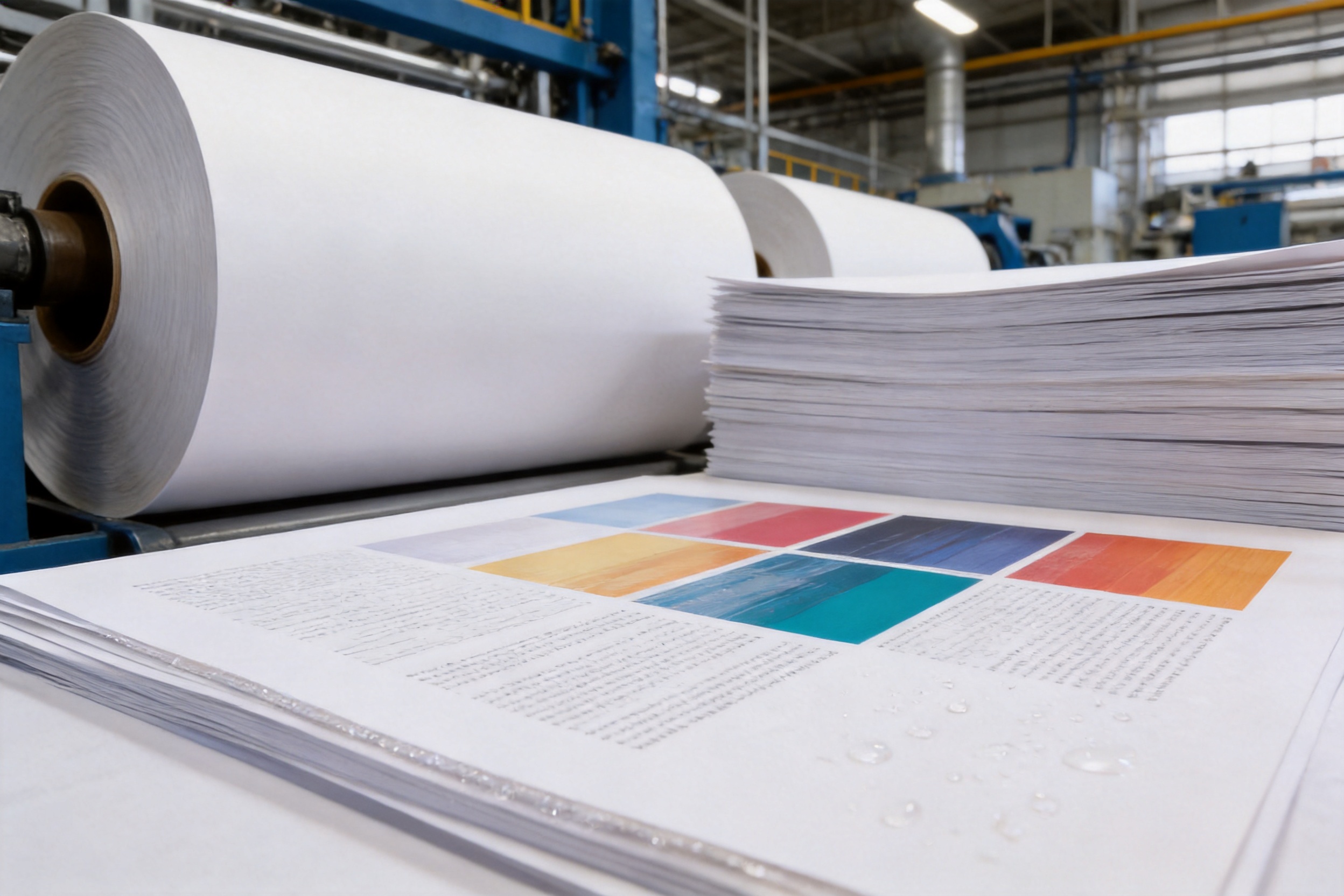
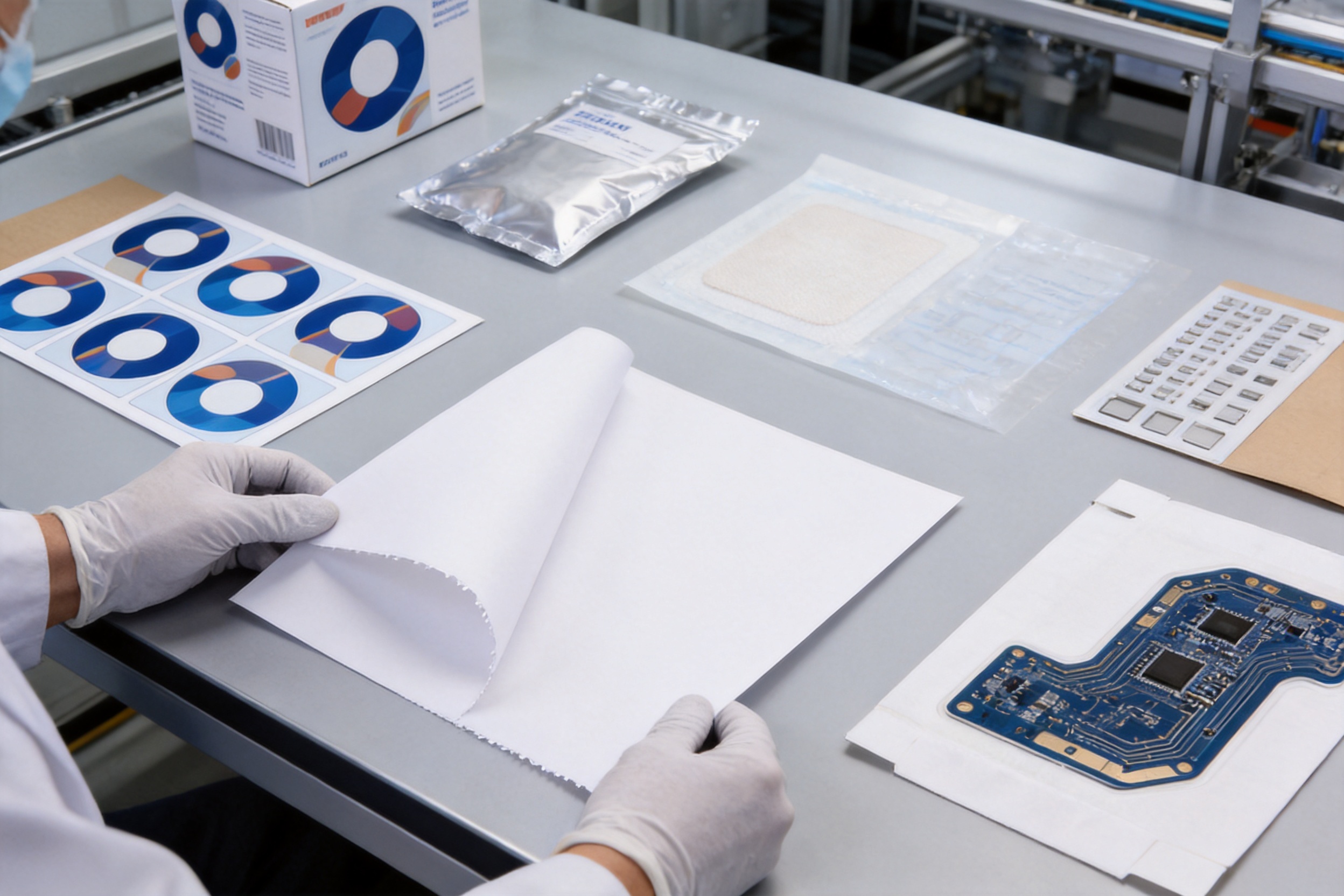
Coated art paper can be used for adhesive labels, barcodes, packaging tags, product identification, and retail information. Its smooth white surface is suitable for printed text and graphics, while its strength supports slitting, die-cutting, dispensing, and application.
In self-adhesive label construction, the paper may function as a printable face material or as a release-related component, depending on the selected configuration. A label usually consists of a face material, adhesive layer, and release liner. Each layer must be compatible with the others. The face material must accept ink, the adhesive must provide the required bond, and the liner must separate cleanly without damaging the label or leaving unwanted residue.
For barcode labels and logistics identification, dimensional stability is important because the material must pass through printers and applicators with consistent registration. Stronger paper can reduce web breaks and edge damage, while a uniform coating helps support clear printing.
Food Packaging
Coated art paper may be used as a liner or supporting material for moisture-sensitive food packaging applications, including products associated with frozen foods and baked goods. The material can help provide a stable separation layer and protect packaging components during handling.
Food-contact suitability depends on the exact construction and regulatory requirements of the destination market. Not every coated paper grade is automatically approved for direct food contact. Where direct contact is required, customers should specify the application in advance and request confirmation of the appropriate food-grade materials, coatings, adhesives, and testing documents.
For indirect-contact packaging, the coated paper can help improve printability, handling, and moisture resistance while remaining separated from the food by another approved packaging layer. The final packaging design should be evaluated for temperature, humidity, grease, storage duration, and transportation conditions.
Healthcare and Medical Products
The material can be used to isolate medical tapes, wound dressings, sterile packaging components, and other healthcare products that require hygienic separation. A controlled surface may allow the product to be removed cleanly while helping protect the adhesive or treated surface before use.
Medical applications require strict control of cleanliness, materials, packaging, and manufacturing conditions. The suitability of a coated art paper product depends on the intended medical use, sterilization method, contact requirements, storage period, and applicable regulations. For this reason, healthcare customers should provide complete technical and regulatory requirements before final product selection.
When used correctly, the material can support efficient packaging and converting operations. Its smoothness may help protect delicate surfaces from scratches, while its strength supports handling during assembly and distribution.
Electronic Die-Cutting
Electronic manufacturing often requires precision cutting of films, foams, tapes, insulation materials, and other thin components. Coated art paper can act as a carrier or protective layer during these processes. Its stable surface helps support accurate positioning, while its strength helps prevent tearing during removal or transport.
In die-cutting applications, the paper must be compatible with the cutting force, tooling design, adhesive system, and removal process. A suitable liner can help maintain component placement and reduce unwanted deformation. The exact release level is important: the component should remain secure during processing but separate efficiently at the required stage.
Clean edges and consistent thickness are also valuable in precision converting. They help reduce variation in cut depth, improve registration, and support higher production efficiency. Trial production is recommended when the material is used for complex geometries, narrow tolerances, or multilayer assemblies.
Flexible Circuit Board Manufacturing
Coated art paper may act as a stable carrier layer during flexible circuit board manufacturing. In this role, it can help support delicate films and protect surfaces from scratches, contamination, and unnecessary mechanical contact.
Flexible circuit production involves thin materials that may be difficult to handle individually. A supporting carrier can improve web control and simplify movement between manufacturing stages. The paper must provide suitable strength, surface smoothness, release behavior, and dimensional stability for the specific process.
Because electronic materials are sensitive to contamination and surface defects, customers should confirm requirements for cleanliness, static control, particle levels, and compatibility with adhesives or processing chemicals. The coated art paper should be evaluated as part of the complete process rather than selected only by basis weight.
Available Sizes and Customization
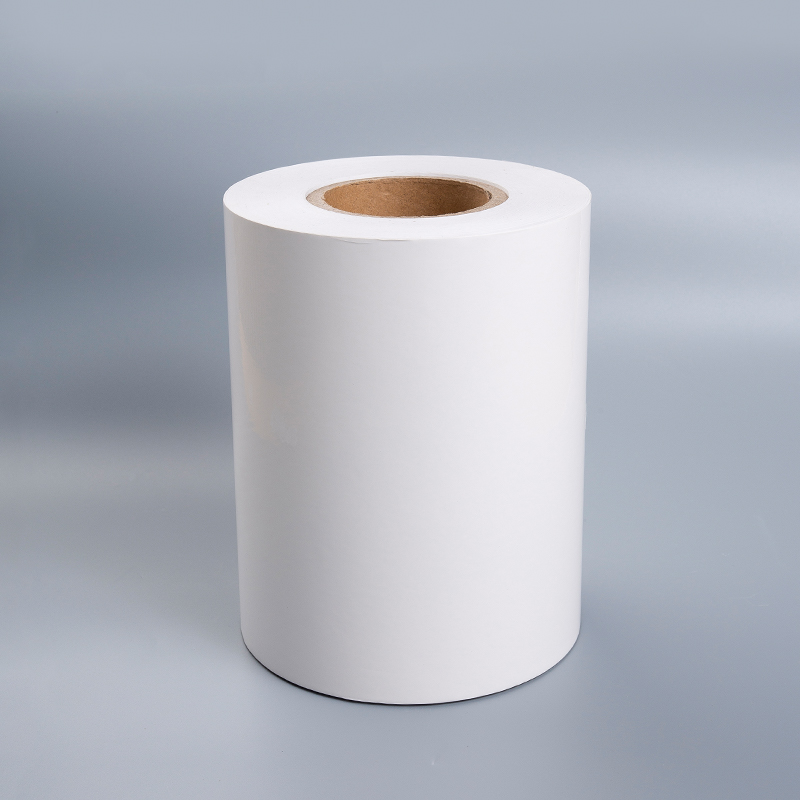
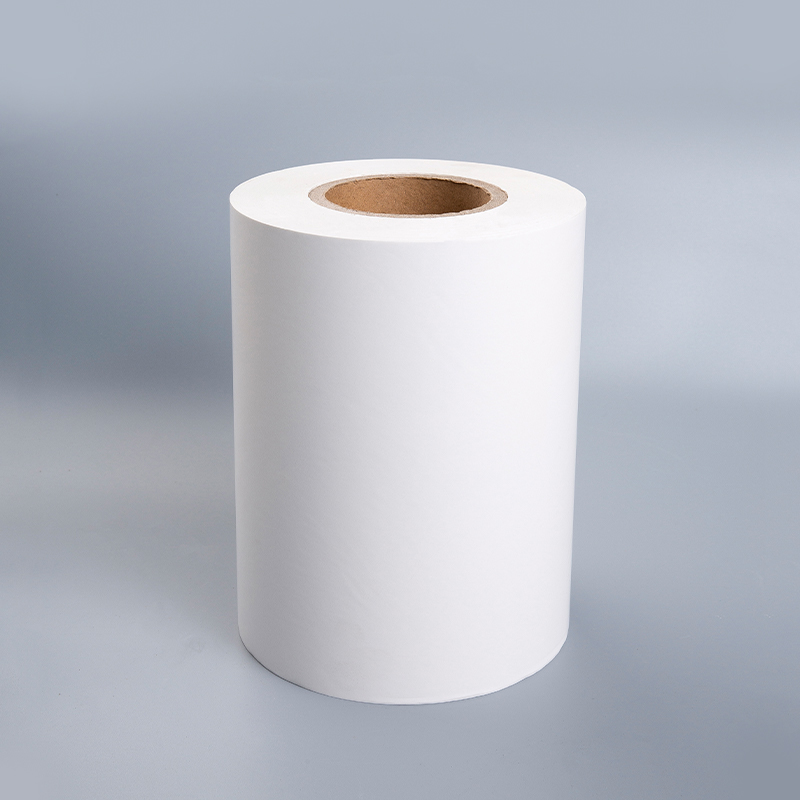
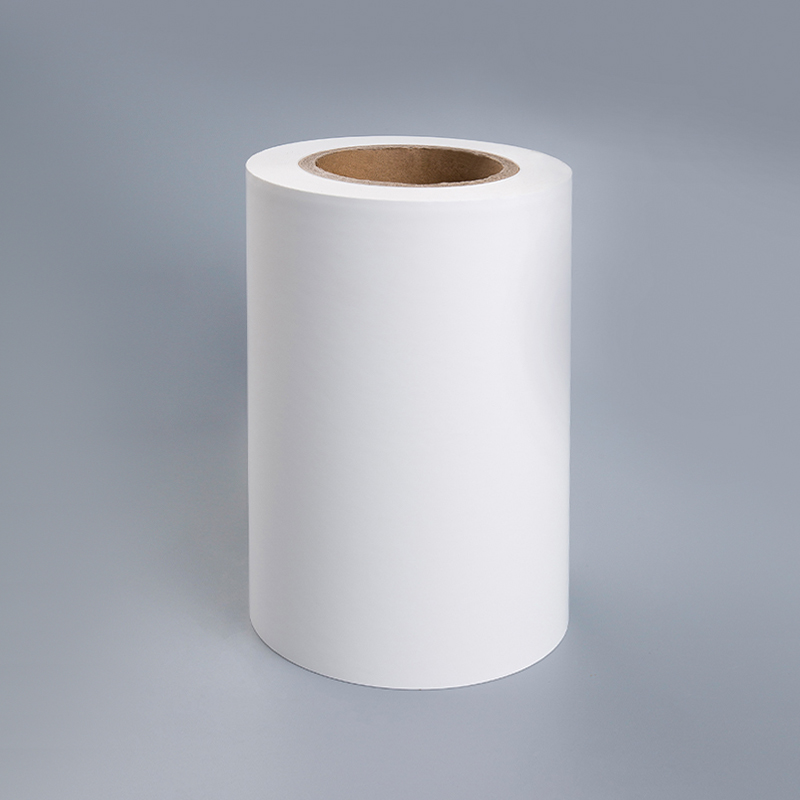
The product is available in jumbo roll widths of 1000 mm, 1020 mm, 1080 mm, and 1530 mm. These formats are designed to support different converting lines and production requirements. Jumbo rolls can be processed into narrower rolls, sheets, labels, liners, or other finished formats according to the customer’s equipment and application.
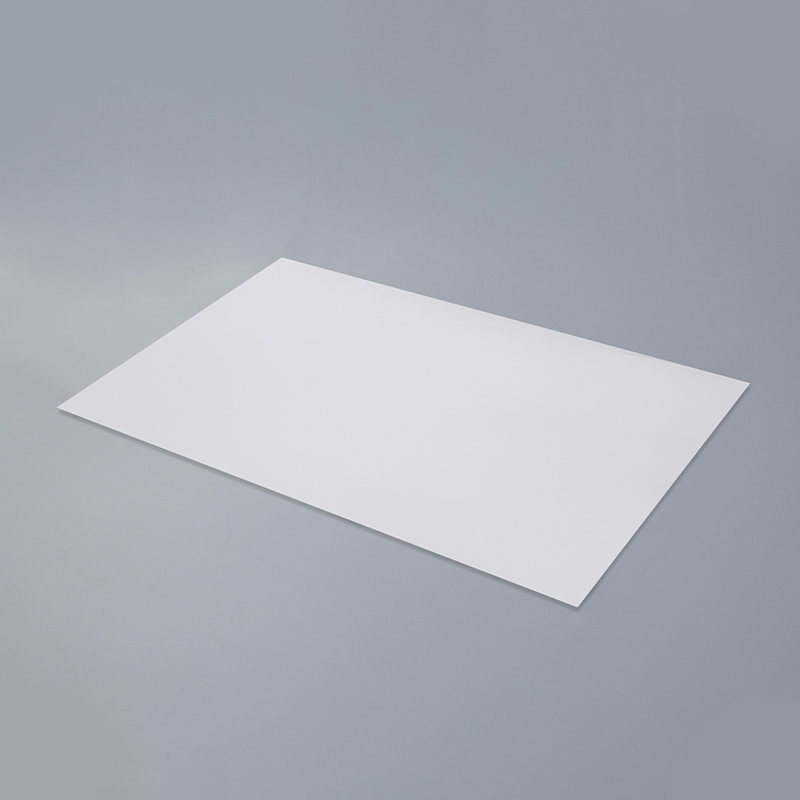
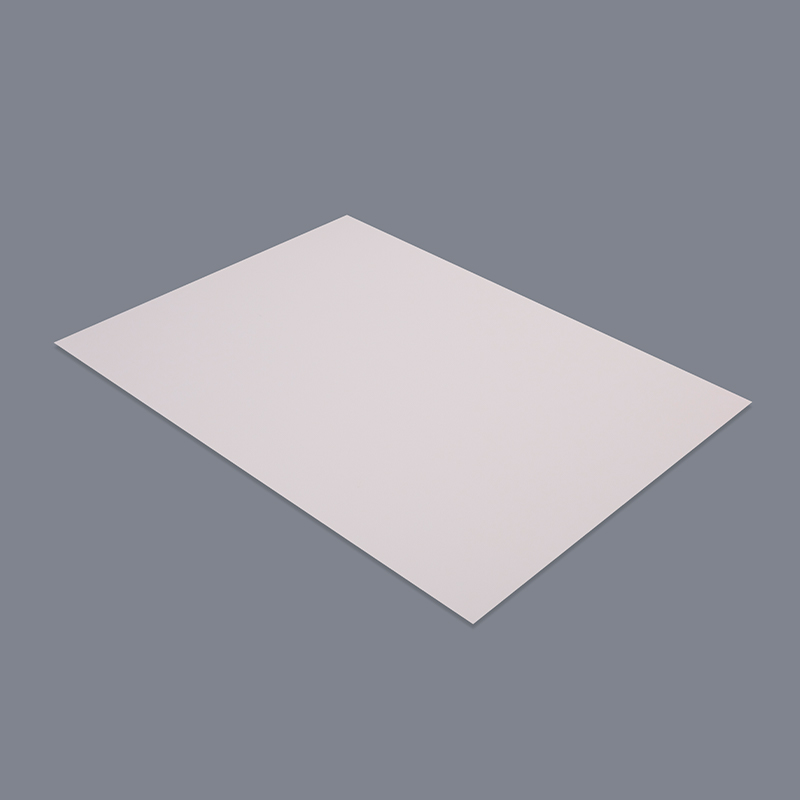
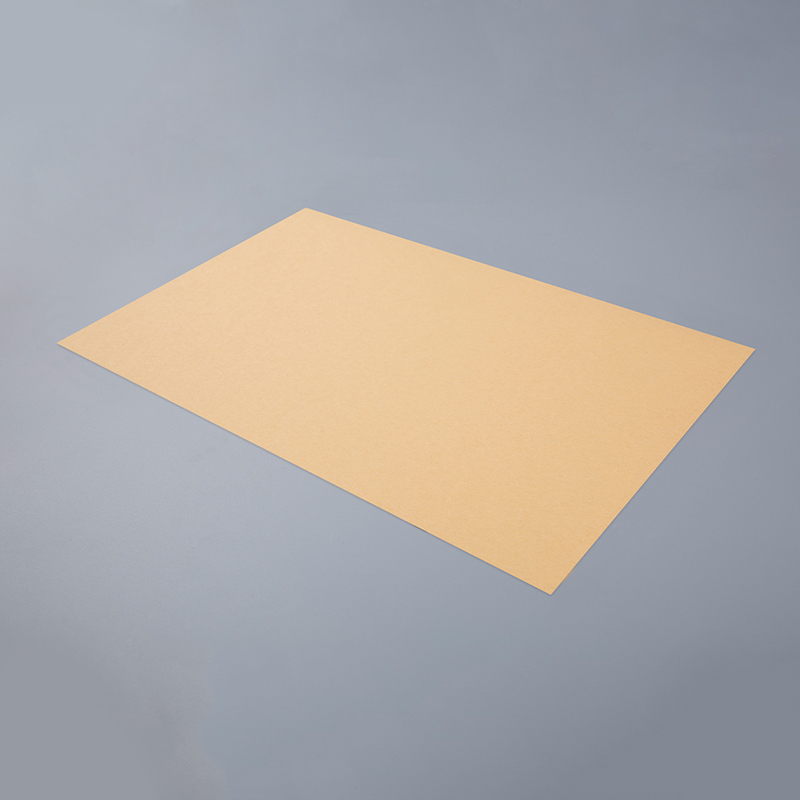
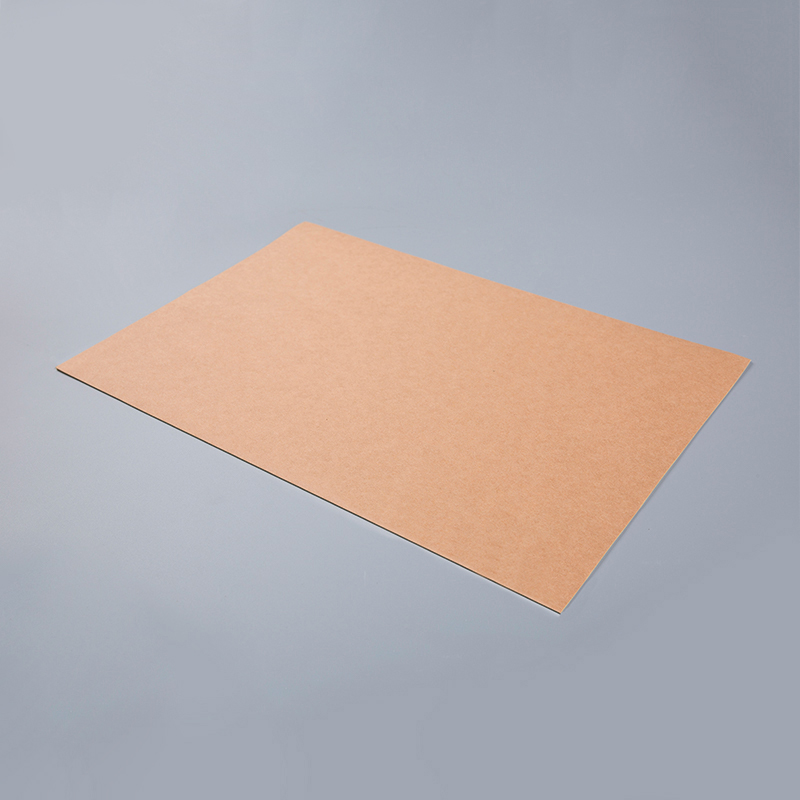
Sheet options include A4, A3, 20 cm by 30 cm, 21 cm by 30 cm, 24 cm by 36 cm, 50 cm by 70 cm, and 70 cm by 100 cm. Customized sizes can also be considered. Custom sheeting may help reduce trimming waste and improve compatibility with existing printers, cutters, packaging lines, or assembly equipment.
| Specification | Available Option | Typical Benefit |
|---|---|---|
| Base material | White art paper | Smooth printable surface and clean appearance |
| Basis weight | 90 g, 120 g, 140 g, 165 g | Selection of flexibility, stiffness, and handling strength |
| Jumbo roll width | 1000 mm, 1020 mm, 1080 mm, 1530 mm | Compatibility with different converting lines |
| Sheet formats | A4, A3, 20 cm by 30 cm, 21 cm by 30 cm, 24 cm by 36 cm | Convenient use for printing and sheet-based processing |
| Large sheet formats | 50 cm by 70 cm, 70 cm by 100 cm | Support for commercial, packaging, and industrial production |
| Customization | Customized dimensions and configurations | Improved material utilization and equipment matching |
Customization may cover width, length, roll diameter, winding direction, core size, sheet dimensions, packaging quantity, surface treatment, release characteristics, and other technical requirements. Customers should provide machine specifications, application details, expected storage conditions, and performance targets so that the material can be matched accurately.
Manufacturing Process and Quality Control
Integrated Production Capabilities
The manufacturer operates a broad production system covering gluing, laminating, cutting, and related converting operations. This integrated structure is important because coated paper performance depends on the interaction of multiple layers and processes. When coating, adhesive application, lamination, and cutting are coordinated within one production system, process control can be more consistent.
Integrated manufacturing also simplifies communication. Instead of coordinating separate suppliers for the paper, adhesive layer, laminate, and final cutting, customers can work with one technical partner for a broader range of requirements. This can shorten development cycles, reduce communication errors, and make it easier to trace material changes.
With annual production capacity exceeding 280 million square meters, the company has the scale to support both routine orders and larger-volume supply programs. Capacity alone does not determine quality, but it can provide advantages in production planning, inventory management, equipment utilization, and delivery coordination.
Coating and Surface Preparation
Coating quality is affected by formulation control, application uniformity, drying conditions, web tension, line speed, and surface preparation. A consistent coating layer requires careful management of these variables throughout production.
Before coating or laminating, the base paper must be handled under controlled conditions to reduce contamination, wrinkles, and dimensional variation. The coating system must be matched to the intended function, whether the priority is printability, moisture resistance, controlled release, adhesive compatibility, or surface protection.
After application, the material must be dried and stabilized properly. Inadequate drying may cause blocking, odor, poor adhesion, or surface defects, while excessive drying or improper tension may lead to brittleness, curling, or dimensional change. Process monitoring helps maintain a stable balance between coating performance and paper flexibility.
Gluing and Laminating
Gluing and laminating are essential when coated art paper is used in a multilayer construction. Adhesive coating must be applied evenly to prevent bubbles, streaks, weak bonds, excessive penetration, and edge lifting. The adhesive system must also be compatible with the paper coating and with any film, liner, tape, foam, or substrate being attached.
Lamination conditions influence the final appearance and performance of the material. Pressure, temperature, line speed, web tension, and curing time must be controlled to ensure that the layers remain bonded without causing wrinkles or distortion. Proper lamination improves structural stability and can add moisture resistance, protection, or specialized functionality.
Different industries require different adhesive properties. A label may require permanent adhesion, removable adhesion, freezer-grade performance, or repositionability. A medical product may require clean removal and skin-safe construction. An electronic application may require low-residue separation and precise dimensional behavior. These requirements should be defined before production begins.
Slitting, Sheeting, and Cutting
Precision slitting and cutting determine whether the finished material can run efficiently on the customer’s equipment. Clean edges, accurate widths, and consistent winding are particularly important for jumbo rolls and narrow-width converting.
Improper slitting may produce dust, edge fraying, telescoping, uneven roll faces, or tension variation. These problems can affect feeding, printing, die-cutting, and application. Controlled slitting conditions help maintain stable roll geometry and reduce the risk of production interruptions.
For sheet products, accurate cutting supports reliable feeding and registration. Sheets must be sufficiently flat and correctly sized for the intended equipment. Ream packaging also requires careful handling to prevent edge damage, moisture uptake, and contamination after cutting.
Testing and Inspection
Quality control should cover both appearance and performance. Typical inspection areas include basis weight, thickness, width, sheet dimensions, coating uniformity, surface cleanliness, tensile strength, tear resistance, moisture behavior, release performance, adhesive properties, and roll or sheet condition.
Visual inspection can identify coating streaks, scratches, pinholes, wrinkles, dirt, edge damage, and other surface defects. Laboratory testing can provide more objective information about strength, moisture resistance, adhesion, release force, and dimensional stability.
The company maintains its own testing laboratory and uses inspection equipment to support product quality. In addition to routine checks, technical testing can be adapted to specific customer requirements. This is especially important for medical, food-related, electronic, and high-speed industrial applications where standard appearance inspection may not be sufficient.
Advantages Compared with Conventional Paper Materials
Coated art paper offers several advantages over ordinary uncoated paper. The most visible difference is surface quality. An uncoated surface has a more open and irregular fiber structure, which can absorb ink unevenly and produce a less refined printed result. The coated surface provides a smoother foundation for graphics, text, and variable information.
Another advantage is improved processing stability. Conventional paper may be more vulnerable to tearing, cracking, curling, and dimensional changes during high-speed converting. The stronger coated construction is designed to maintain integrity under greater mechanical stress.
Moisture performance is also a differentiating factor. Untreated paper can lose strength quickly when exposed to humidity or water. The coating offers an additional protective barrier that helps reduce warping, surface damage, and delamination in common storage and handling conditions.
Compared with low-quality coated products, a carefully controlled coated art paper can provide more consistent surface coverage and more predictable roll or sheet behavior. Uniformity is important because inconsistent material may create variation from one section of a roll to another, resulting in unstable color, uneven adhesion, or irregular release.
Compared with materials designed only for printing, a multifunctional coated art paper solution can also support die-cutting, lamination, release, protective carrying, and industrial separation. This broader application range may help customers simplify purchasing and reduce the number of different materials used across production lines.
Packaging and Delivery Protection
Jumbo Roll Packaging
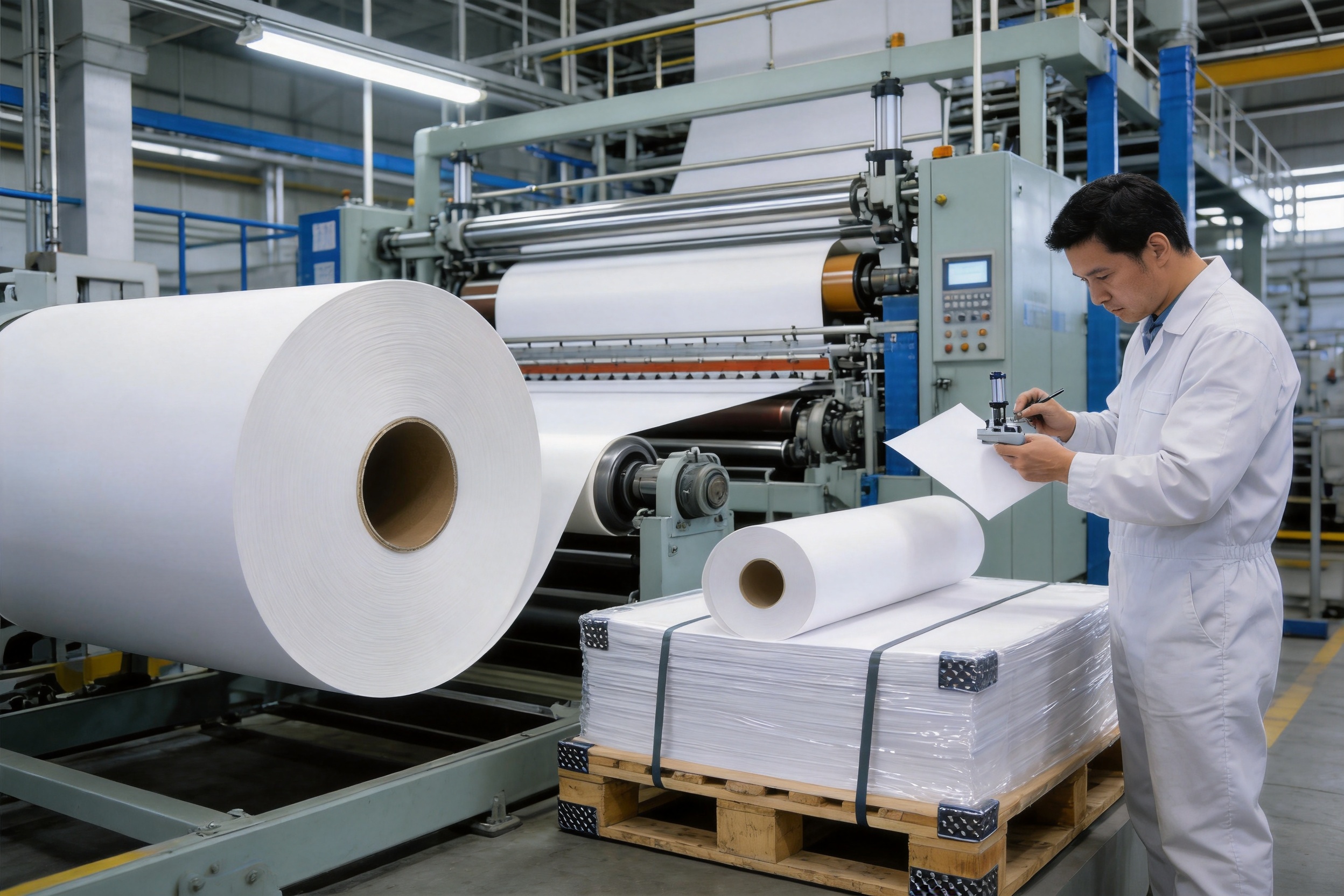
Jumbo rolls are packaged to support long-distance transportation and protect the material from deformation. Fumigation-treated recycled wooden pallets are used for international sea transportation in accordance with applicable global logistics requirements. The pallets provide a stable base and help reduce exposure to insects and mold.
The pallet design supports balanced stacking and even weight distribution. This is important because concentrated weight can deform roll edges or create pressure marks. Protective corner guards are embedded to reduce impact damage, and the finished pallet is tightly wrapped with stretch film to protect against dust, moisture, and shifting during transit.
Standardized forklift slots improve handling efficiency at the factory, warehouse, port, and customer facility. Proper forklift access reduces the likelihood of accidental impact and allows the shipment to be moved without unnecessary manual handling.
Ream Packaging
For sheet products, each ream contains 100 sheets. The ream is fully sealed with PE-coated kraft paper to provide protection against moisture and dust. Reinforced edges help minimize damage caused by handling, stacking, and transportation.
Multiple reams are stacked on pallets and secured with high-strength stretch film and anti-slip plastic straps. This construction helps prevent movement during transit and supports stable loading. The packaging method is intended to preserve sheet flatness, edge condition, and cleanliness until delivery.
Packaging can be adapted to order volume, transportation method, storage period, and customer requirements. For sensitive applications, customers may request additional protection or specify special labeling and palletization instructions.
Environmental and Compliance Considerations
Environmental performance should be assessed according to the complete material structure. Paper recyclability may be influenced by coatings, adhesives, release layers, inks, laminates, and the recycling systems available in the destination market. A coated paper product may support sustainability goals, but customers should verify whether the finished construction meets their internal and regional requirements.
For food-related or healthcare applications, compliance must be confirmed according to the exact grade and intended use. Food-contact standards, medical packaging requirements, sterilization compatibility, chemical restrictions, and documentation expectations vary by country and application. The manufacturer can work with customers to identify an appropriate material specification and testing plan.
The use of recyclable or recycled packaging components, including recycled wooden pallets, can reduce unnecessary resource consumption. Efficient roll and sheet sizing can also help reduce trimming waste. Customers may improve material efficiency further by selecting customized dimensions that fit their equipment and finished product design.
Environmental responsibility is most effective when it is incorporated at the design stage. By reviewing basis weight, roll width, sheet size, adhesive construction, packaging method, and end-of-life requirements together, users can select a practical balance between performance, cost, and sustainability.
Technical Selection Guide
Selecting the correct coated art paper begins with a clear understanding of the application. Customers should identify whether the material will be printed, laminated, die-cut, used as a liner, applied to food packaging, used in healthcare packaging, or incorporated into an electronic manufacturing process.
The required basis weight should then be evaluated. A 90 g grade may offer flexibility and lower material consumption, while 120 g, 140 g, or 165 g grades may provide progressively greater body and handling strength. The correct choice depends on machine tension, finished product design, required stiffness, and the number of processing stages.
Roll dimensions should match the customer’s unwinder, slitter, printer, or laminator. Core diameter, maximum roll diameter, winding direction, and roll weight may also affect equipment compatibility. Sheet users should confirm sheet length, width, grain direction if relevant, stacking height, and feeding requirements.
Surface and performance requirements should be discussed in measurable terms. Instead of describing a material as simply “smooth” or “strong,” customers should identify printing method, ink or toner type, minimum tear resistance, moisture exposure, release behavior, adhesive type, and expected storage conditions.
Finally, customers should request samples or pilot rolls for validation. Testing under real production conditions can reveal issues that are not apparent in laboratory measurements. It also allows the manufacturer to optimize coating, adhesive, release, slitting, and packaging parameters before full-scale production.
Why Work with an Experienced Manufacturer?
A qualified manufacturer contributes more than production capacity. Experience in self-adhesive materials, coated papers, release products, laminates, and industrial converting allows the supplier to understand how different layers interact during production and use.
The company described in the supplied information has more than 20 years of OEM manufacturing experience and provides both OEM and ODM services. This experience supports customized development based on customer drawings, samples, technical specifications, or application requirements.
A professional research and development team supports product innovation and has developed multiple patented technologies. Research capability is important when customers need a material that cannot be supplied as a standard grade. It can help address special release force, adhesive performance, moisture resistance, surface protection, dimensional stability, or sustainability targets.
The company also maintains a broad domestic and international sales network. Its products are supplied to customers in regions including Asia, Europe, the Americas, Africa, the Middle East, and other international markets. A wide service network can support communication, order coordination, technical assistance, and after-sales service across different markets.
Quality manufacturing is presented as a long-term operating principle. This includes investment in production lines, testing equipment, process control, customized solutions, and customer support. For buyers, these capabilities can reduce supply risk and provide a more reliable path from sample development to mass production.
OEM and ODM Development Process
The OEM and ODM process generally begins with application analysis. The customer provides information about the product, printing or converting method, equipment, environmental conditions, required dimensions, target performance, and expected order volume.
The technical team then evaluates the suitable paper grade, coating, adhesive, release system, lamination structure, and packaging method. If the customer has an existing sample, it can be reviewed to identify important physical and functional characteristics. If the customer has only a concept or drawing, the manufacturer can recommend a preliminary construction.
Samples are produced for laboratory and production-line testing. The evaluation may cover printing quality, die-cutting, peeling, adhesion, release, moisture exposure, heat resistance, storage stability, and final product appearance. Feedback from these tests is used to refine the specification.
Once the material is approved, production parameters and inspection standards are documented. Batch control, packaging instructions, labeling, and delivery planning are then organized for regular supply. Continued technical communication helps manage changes in equipment, regulation, raw materials, or end-use requirements.
Quality, Supply, and Service Strengths
The company’s large production capacity provides a foundation for volume orders and long-term supply programs. Multiple production lines for gluing, laminating, and cutting allow different product constructions to be scheduled according to their technical requirements.
Its own testing laboratory supports internal verification before shipment. This can help identify problems earlier and reduce the risk of sending material that does not meet agreed specifications. For customers, reliable inspection records can also support incoming quality control and supplier management.
Customized solutions are another important strength. Coated art paper is not a single universal specification. Different users require different combinations of basis weight, surface finish, moisture resistance, adhesive behavior, release force, roll size, and packaging. The ability to adapt the product makes it more suitable for specialized production lines.
After-sales support is equally important. Technical assistance may be needed when a material is introduced to a new printer, die-cutter, laminator, or labeling machine. A responsive supplier can help investigate issues such as curling, poor release, weak adhesion, edge damage, wrinkles, or printing inconsistency.
The company’s focus on quality, integrity, innovation, mutual benefit, and responsibility provides a framework for long-term cooperation. These values are particularly relevant for customers that require stable supply, consistent technical communication, and continuous improvement rather than one-time purchasing alone.
Frequently Asked Questions
What is coated art paper mainly used for?
Coated art paper is used for adhesive labels, barcode labels, packaging tags, printed materials, food packaging liners, healthcare product separation, electronic die-cutting, and flexible circuit board manufacturing. The exact use depends on the selected coating, adhesive, release properties, basis weight, and final construction.
What basis weights are available?
The listed options include 90 g, 120 g, 140 g, and 165 g art paper. The appropriate basis weight depends on required flexibility, stiffness, tear resistance, machine handling, and the intended end product.
Can the material be supplied in rolls and sheets?
Yes. Jumbo roll widths include 1000 mm, 1020 mm, 1080 mm, and 1530 mm. Sheet formats include A4, A3, 20 cm by 30 cm, 21 cm by 30 cm, 24 cm by 36 cm, 50 cm by 70 cm, and 70 cm by 100 cm. Customized dimensions can also be discussed.
Is coated art paper waterproof?
The coating improves resistance to humidity, water splashes, and mild chemical exposure, but the product should not automatically be considered waterproof or suitable for permanent immersion. Performance depends on the full construction and the conditions of use. Specific water-resistance testing should be requested for demanding applications.
Can it be used for direct food contact?
Some constructions may be developed for food-related applications, but direct food-contact suitability depends on the exact paper, coating, adhesive, ink, and regulatory requirements. Customers must specify the intended food-contact application and confirm the appropriate compliance documentation before use.
Can it be used in medical packaging?
It can be used for certain healthcare applications, including the separation or protection of medical tapes, wound dressings, and sterile packaging components. Medical suitability depends on cleanliness, sterilization, storage, contact, and regulatory requirements. Application-specific validation is required.
What printing methods are compatible with the paper?
The smooth coated surface may support digital, offset, flexographic, thermal transfer, and other printing processes, depending on the selected grade and printer settings. A production trial is recommended to confirm ink adhesion, drying, color performance, barcode readability, and finishing compatibility.
Can the product be customized according to a sample?
Yes. OEM and ODM services are available. Customers may provide drawings, samples, machine requirements, or technical targets. The manufacturer can evaluate the construction and develop a suitable coated paper, adhesive, laminated, or release-related solution.
How is the product protected during shipment?
Jumbo rolls are placed on fumigation-treated recycled wooden pallets, protected with corner guards, and tightly wrapped with stretch film. Reams contain 100 sheets and are sealed with PE-coated kraft paper. Multiple reams are stacked and secured with stretch film and anti-slip plastic straps.
How should coated art paper be stored?
The product should be stored in a clean, dry area away from direct water, excessive heat, and contamination. It should remain in its original protective packaging until use. Stable temperature and humidity conditions help reduce curling, moisture uptake, and dimensional changes.
Conclusion
Coated art paper is a versatile material for printing, labeling, packaging, release, protection, and precision converting. Its smooth white surface supports high-quality printing, while its toughness and resistance to tearing help it withstand demanding production conditions. Improved moisture resistance contributes to more reliable storage and transportation, and the available range of basis weights and formats enables the material to be adapted to different equipment and applications.
The product is particularly valuable when customers need a paper material that performs beyond basic printing. It can support label production, moisture-sensitive packaging, medical separation, electronic die-cutting, and flexible circuit board manufacturing. Its effectiveness depends on selecting the correct construction and validating the complete system, including coating, adhesive, release layer, printing method, machine settings, and packaging.
The manufacturer’s integrated capabilities in gluing, laminating, cutting, testing, OEM development, and ODM development provide a strong foundation for customized supply. More than two decades of manufacturing experience, a large production capacity, an internal testing laboratory, patented research capabilities, and international service coverage further support dependable cooperation.
For customers seeking a stable and adaptable paper solution, coated art paper can offer a practical balance of print quality, processing strength, moisture protection, customization, and responsible material selection. With application-specific engineering and appropriate quality verification, it can become a reliable component in both conventional and advanced manufacturing processes.
References
1. Technical product information supplied for coated art paper specifications, applications, packaging, and manufacturing capabilities.
2. Technical information supplied for self-adhesive label materials, release papers, coated films, and converting processes.
3. General principles of paper coating, paper converting, surface treatment, and industrial laminating practice.
4. General guidance on packaging material selection for printing, labeling, food-related packaging, healthcare products, and electronic manufacturing.
5. General principles of international palletized cargo handling, moisture protection, fumigation treatment, and sea transportation packaging.
6. General considerations for paper recyclability, coating compatibility, adhesive construction, and end-of-life material management.