
 English
 Español
 русский
 Français
 عربى
Content
- 1 Introduction
- 2 What Is Water-Based Adhesive Thermal Synthetic Paper?
- 3 Core Performance Advantages
- 3.1 Reliable Use in Refrigerated and Frozen Environments
- 3.2 Water Resistance and Wet-Handling Capability
- 3.3 Resistance to Tearing and Physical Damage
- 3.4 Direct Thermal Printing Without Carbon Ribbon
- 3.5 Strong Adhesion in Demanding Applications
- 3.6 Broader Application Range Than Ordinary Thermal Paper
- 4 Comparison with Common Alternative Materials
- 5 Applications Across Multiple Industries
- 6 Available Specifications and Customization
- 7 Manufacturing Process and Technical Strengths
- 8 Advantages of the Manufacturing Partner
- 9 Environmental and Sustainability Considerations
- 10 Printing and Conversion Recommendations
- 11 How to Select the Correct Construction
- 12 Quality, Traceability, and Customer Service
- 13 Commercial Benefits for Buyers
- 14 Frequently Asked Questions
- 14.1 What is the main purpose of water-based adhesive thermal synthetic paper?
- 14.2 Does it require a carbon ribbon?
- 14.3 Can it be used in frozen food applications?
- 14.4 What is the standard face-material thickness?
- 14.5 What adhesive options are available?
- 14.6 What release liners can be supplied?
- 14.7 What jumbo roll widths are available?
- 14.8 Can the product be supplied in sheets?
- 14.9 Is the product suitable for wet environments?
- 14.10 Can it be used for cosmetic packaging?
- 14.11 Can the manufacturer provide OEM and ODM services?
- 14.12 How should customers test the material before ordering?
- 15 Conclusion
- 16 References
- 17 Product: Waterbased Adhesive Thermal Synthetic Paper
Introduction
Water-based adhesive thermal synthetic paper is a specialized self-adhesive label material developed for applications where conventional paper labels, ordinary thermal paper, or general-purpose synthetic labels may fail. It combines a heat-sensitive printable face material with a water-based pressure-sensitive adhesive and a release liner, creating a practical labeling solution for refrigerated, frozen, winter, wet, and demanding packaging environments.
In many industries, labels must remain readable, firmly attached, and visually attractive despite exposure to low temperatures, condensation, water, handling friction, and changing environmental conditions. Ordinary paper labels can become soft, distorted, or torn when exposed to moisture. Standard thermal paper may lose performance in cold or humid conditions. Some conventional adhesives may also become brittle or lose tack when temperatures fall. These limitations can result in missing product information, unreadable barcodes, detaching labels, and increased repackaging or inventory problems.
Water-based adhesive thermal synthetic paper is designed to address these challenges. Its synthetic face material offers improved resistance to water, tearing, and wet handling, while its thermal coating supports direct thermal printing without the need for carbon ribbons. The adhesive system provides strong bonding performance, including high viscosity in low-temperature environments. This combination makes the product suitable for labels used in cold storage, frozen food, refrigerated logistics, retail identification, packaging, posters, and a broad range of commercial printing applications.
Produced by Suzhou Piaozhihua Composite Material Technology Co., Ltd., this product reflects more than two decades of experience in self-adhesive material manufacturing. The company integrates research and development, coating, gluing, laminating, slitting, sheet cutting, inspection, sales, and after-sales service. Its production capabilities, customization options, and quality-control systems enable customers to obtain a thermal synthetic labeling material adapted to their specific printing equipment, label construction, adhesive requirements, and delivery format.

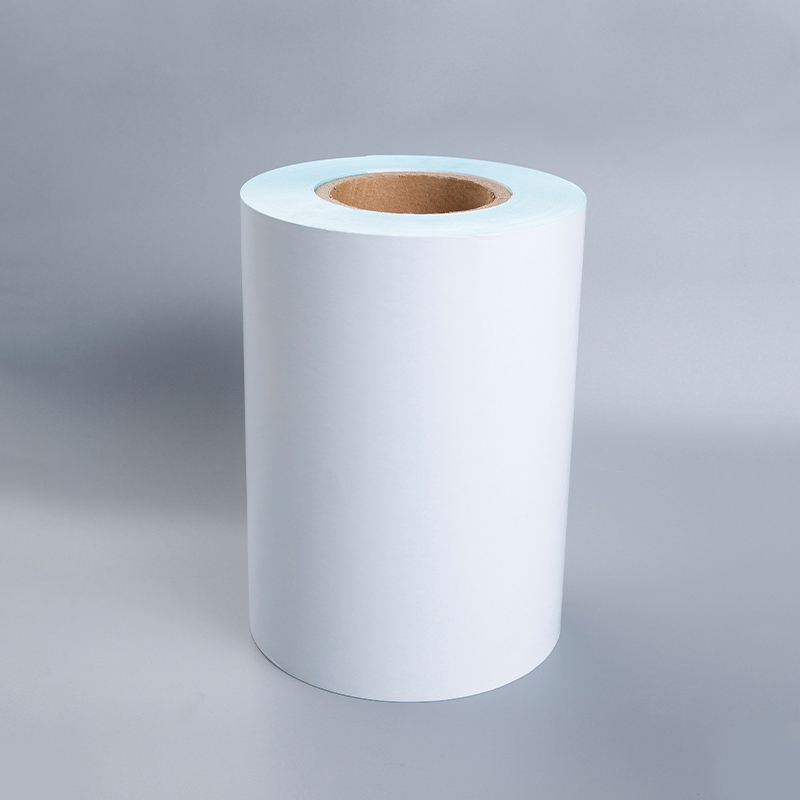
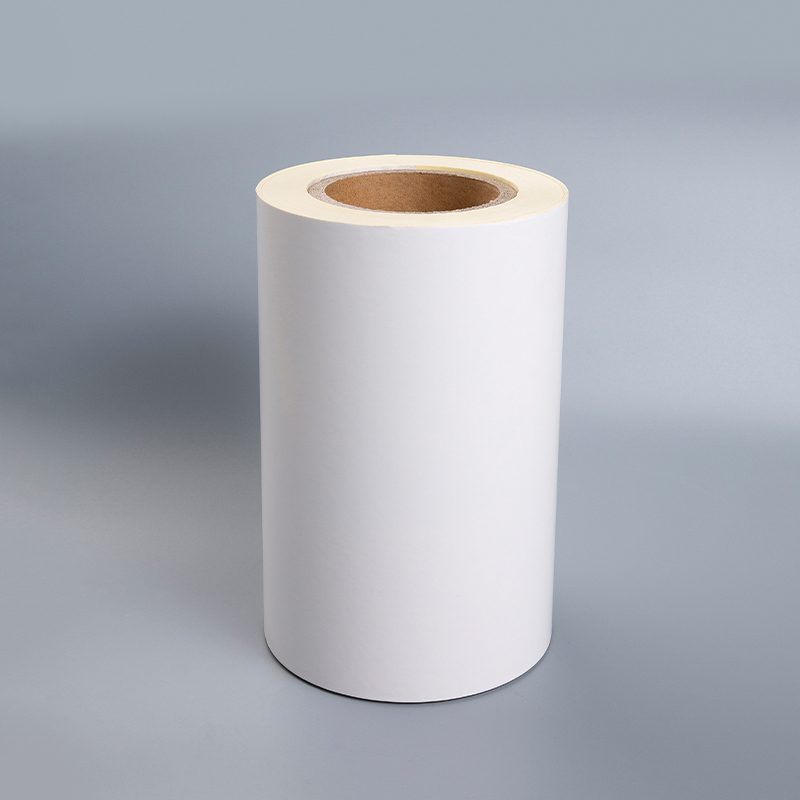
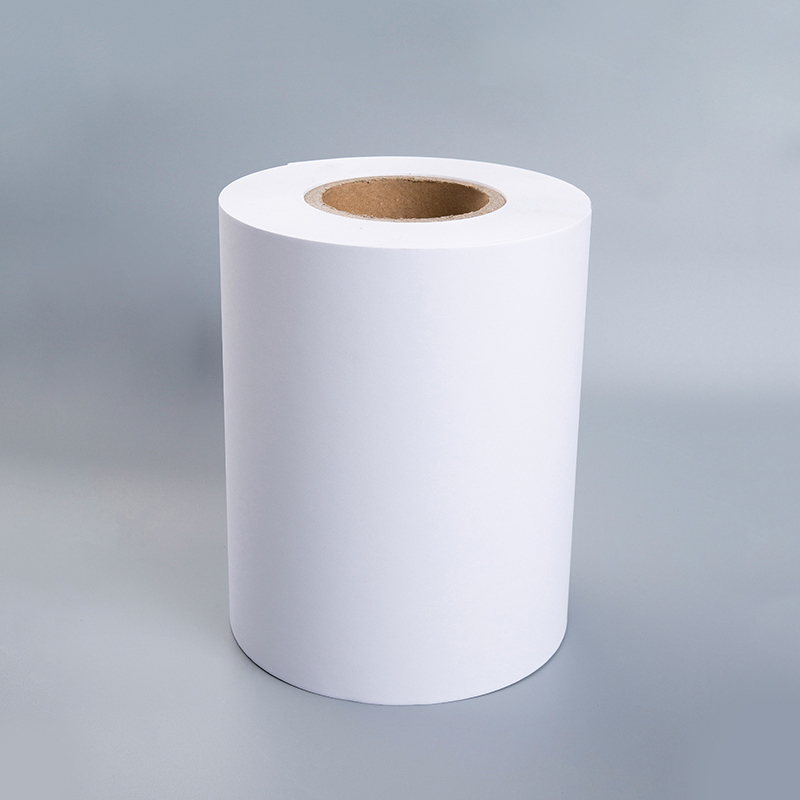
Waterbased Adhesive Thermal Synthetic Paper
What Is Water-Based Adhesive Thermal Synthetic Paper?
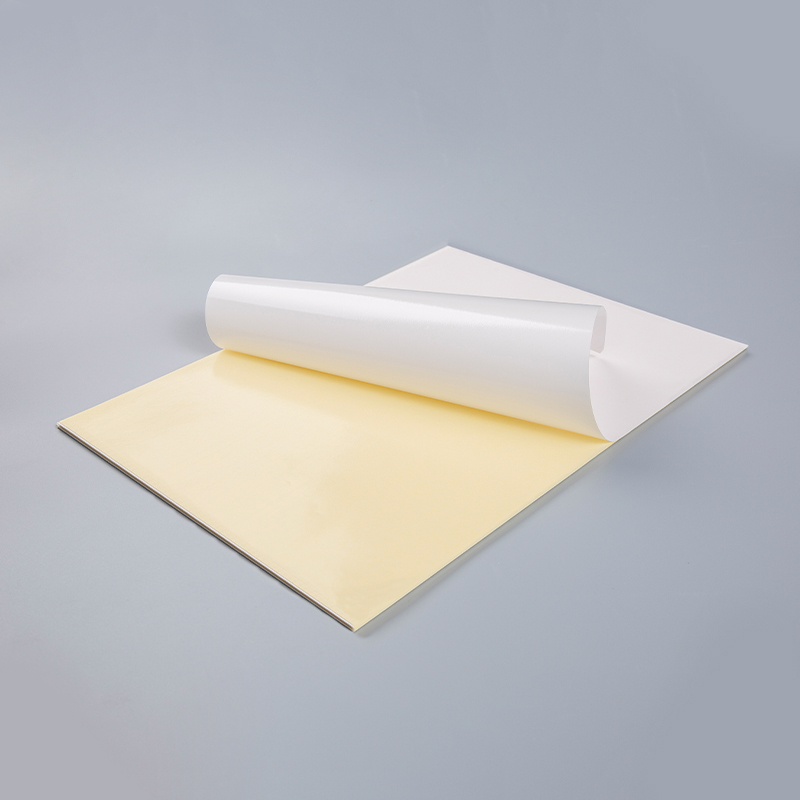
Water-based adhesive thermal synthetic paper is a multilayer self-adhesive material. The primary structure normally consists of a thermal synthetic face stock, a pressure-sensitive adhesive layer, and a release liner. Each layer performs a different function, and the overall performance depends on how effectively these layers are designed and bonded together.
Thermal Synthetic Face Material
The face material is an approximately 80-micron thermal synthetic paper, with 95-micron and 100-micron options available. Unlike ordinary cellulose paper, synthetic paper is engineered to provide greater resistance to water, humidity, tearing, and physical handling. This makes it suitable for product labels that may encounter condensation, splashing, cold storage, or outdoor movement between facilities.
The thermal coating allows images, text, numbers, and barcodes to be produced through heat-sensitive printing. In direct thermal printing, the printer head activates the coating on the label surface. As a result, no carbon ribbon is required. This can simplify the printing process, reduce consumable requirements, and support efficient variable-data printing for logistics, food, retail, and warehouse operations.
Water-Based Adhesive
The water-based adhesive is designed to create reliable bonding between the label and the target surface. It is particularly valuable in applications where labels must remain attached during transportation, cold storage, inventory management, or retail display.
One of the defining features of this product is its ability to maintain high viscosity in low-temperature environments. This is important because many adhesive systems experience reduced flow, reduced wet-out, or increased brittleness as temperatures fall. An adhesive that performs effectively in cold conditions can help prevent edge lifting, label detachment, and loss of traceability.
Although the standard construction uses water-based adhesive, other adhesive systems are also available. Options include hotmelt adhesive, solvent adhesive, removable adhesive, anti-freeze adhesive, cryogenic adhesive, and tyre-grade rubber adhesive. This range allows customers to select a construction according to application temperature, surface energy, removal requirements, chemical exposure, and bonding strength.
Release Liner
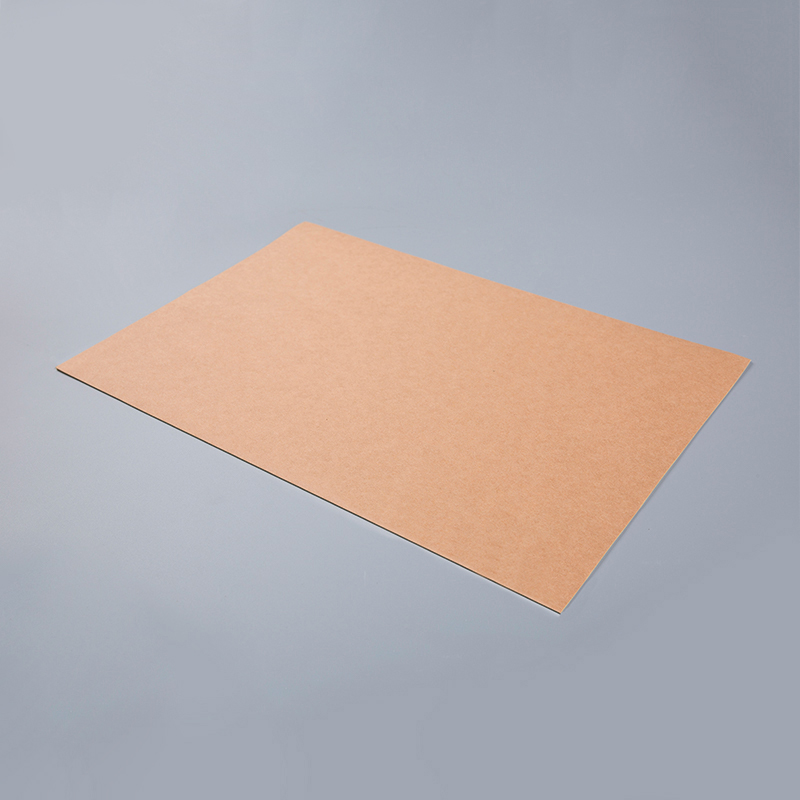
The release liner protects the adhesive before application and enables smooth dispensing during label conversion and use. The standard liner is 60-gram white glassine paper. Other options include 50-gram, 80-gram, 100-gram, and 120-gram glassine paper; 60-gram, 85-gram, 120-gram, and 140-gram release paper; 140-gram and 165-gram art paper; and 50-gram, 80-gram, 90-gram, and 120-gram CCK liner.
Different liner weights and constructions can be selected to support die cutting, label dispensing, sheet feeding, roll converting, stiffness requirements, and customer-specific processing conditions. The ability to customize the liner is especially useful for label converters and packaging manufacturers that operate different cutting and printing systems.
Core Performance Advantages
Reliable Use in Refrigerated and Frozen Environments
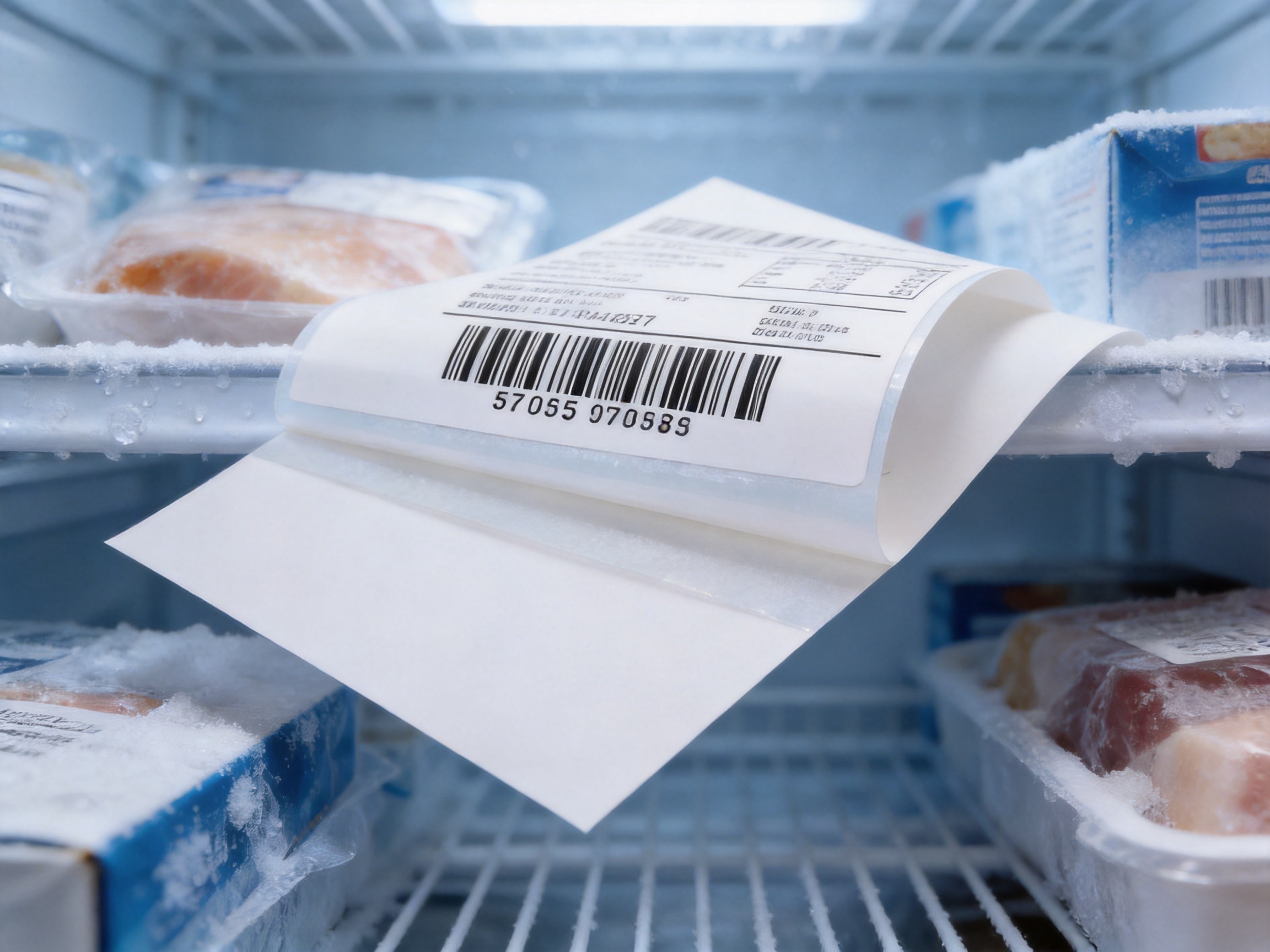
The product is specially designed for labels used in winter, refrigerated, and freezing environments. These conditions present several simultaneous challenges: reduced temperature, moisture condensation, surface frost, repeated handling, and changes between indoor and outdoor environments.
Water-based adhesive thermal synthetic paper is designed to maintain adhesion under low-temperature conditions. Its adhesive can provide high viscosity when temperatures fall, helping labels stay attached to suitable substrates. This is particularly important for chilled food, frozen food, cold-chain logistics, warehouse identification, agricultural products, and products transferred through refrigerated distribution systems.
For label users, reliable cold-environment adhesion can reduce the likelihood of detached labels, illegible product information, and manual relabeling. It can also support better inventory control because barcodes and identification data remain connected to the correct product or package throughout storage and transportation.
Water Resistance and Wet-Handling Capability
Moisture is a common cause of label failure. Paper fibers can absorb water, resulting in wrinkling, swelling, surface damage, or tearing. Once a conventional paper label becomes wet, printed information may become difficult to read, and the label may no longer present a professional appearance.
The synthetic face material provides improved resistance to water and wet conditions compared with ordinary paper-based label stock. This helps the product remain functional in environments involving condensation, refrigerated display cases, food processing areas, beverage packaging, cleaning operations, and humid warehouses.
Water resistance does not eliminate the need to evaluate the complete application. The label surface, adhesive, printing method, substrate, temperature, and exposure duration should all be considered. Nevertheless, the synthetic construction offers a stronger foundation for wet-use labeling than standard untreated paper materials.
Resistance to Tearing and Physical Damage
Labels are often exposed to pulling, rubbing, stacking, bending, and repeated handling. A label that tears easily may lose essential information even when its adhesive remains attached. The synthetic face material is designed to resist tearing and maintain its structural integrity during normal use.
This characteristic can be valuable for warehouse labels, logistics labels, product identification, retail packaging, food packaging, and applications where packages are frequently moved. A more durable face material may also reduce the risk of partial label damage during label application or subsequent handling.
Direct Thermal Printing Without Carbon Ribbon
Thermal printing is one of the main functional benefits of this material. The heat-sensitive surface can be printed without a carbon ribbon, which makes it suitable for direct thermal printers used in many logistics, retail, warehouse, and packaging operations.
Removing the ribbon from the printing process may simplify equipment operation and reduce the number of consumables that must be stored and replaced. It can also support faster workflows for variable information such as product codes, dates, weights, batch numbers, shipping details, and inventory references.
Before full-scale production, users should confirm printer compatibility, print-head settings, image density, barcode requirements, and resistance expectations. Thermal performance can vary according to printer model, operating speed, pressure, heat level, and storage conditions.
Strong Adhesion in Demanding Applications
The product is intended for applications where labels must remain firmly attached. Its water-based adhesive construction can provide a balance between application performance, surface contact, and long-term holding strength. The adhesive can be adapted for different needs through available alternatives such as hotmelt, solvent, removable, anti-freeze, cryogenic, and tyre-grade rubber systems.
This flexibility is a major advantage over a one-adhesive product range. Different substrates require different adhesive behavior. A low-energy plastic surface may need a more aggressive adhesive. A temporary warehouse label may require removability. A frozen package may require an anti-freeze or cryogenic adhesive. A tyre label may require a rubber-based system capable of bonding to a challenging surface.
Broader Application Range Than Ordinary Thermal Paper
Ordinary thermal paper is commonly associated with receipts, tickets, and short-term documents. It may not provide the durability, moisture resistance, or label adhesion needed for demanding packaging applications. Thermal synthetic paper extends the potential use of thermal printing into areas where stronger face material and better environmental resistance are required.
It can be used for product labels, food packaging, cosmetic packaging, automotive soft packaging, posters, retail identification, logistics labels, and other printed packaging purposes. Its combination of synthetic durability, direct thermal printability, and pressure-sensitive adhesion gives it a wider functional range than many conventional thermal paper products.
Comparison with Common Alternative Materials
Selecting a label material requires more than comparing face-material prices. The actual cost and performance depend on printing method, adhesive behavior, storage environment, application speed, label failure rate, and the expected service life of the label. The following comparison provides a general guide.
| Material Type | Typical Strengths | Common Limitations | Value of Thermal Synthetic Paper |
|---|---|---|---|
| Ordinary paper label stock | Cost-effective, widely available, suitable for dry indoor use | Limited water resistance, easier tearing, possible deformation in humidity | Provides a more durable synthetic face and improved wet-handling capability |
| Standard thermal paper | Direct thermal printing, efficient for receipts and short-term information | May have limited durability, moisture resistance, and cold-environment performance | Combines thermal printing with synthetic strength and adhesive label functionality |
| General synthetic label material | Good resistance to water and tearing | May require ink, toner, or ribbon printing; adhesive may not be optimized for freezing conditions | Offers heat-sensitive printing without carbon ribbon and supports low-temperature labeling |
| Film label material | High durability and attractive appearance | Printing may require specialized equipment or additional consumables | Provides a thermal-printable alternative for variable-data applications |
| Removable label stock | Can be removed with less residue in temporary applications | May not provide sufficient permanent adhesion for cold-chain packaging | Can be specified with stronger or anti-freeze adhesive options when required |
The most important advantage is the integration of several properties in one material construction. Instead of treating printability, water resistance, tear resistance, and low-temperature adhesion as separate requirements, the product combines them into a single self-adhesive label solution.
Applications Across Multiple Industries
Frozen and Refrigerated Food Packaging
Frozen and refrigerated food packaging often requires labels to remain attached through processing, cold storage, transportation, display, and consumer handling. Condensation can form when products move between different temperatures, and packages may be handled with wet gloves or in humid environments.
Thermal synthetic labels can support product identification, batch information, production dates, storage instructions, barcodes, price labels, and logistics data. Their direct thermal printing capability is useful where information changes frequently or where packaging lines require rapid variable-data printing.
Cold-Chain Logistics
Cold-chain logistics depends on continuous identification. Packages, cartons, pallets, and containers may move through refrigerated warehouses, trucks, distribution centers, and retail facilities. If a label detaches or becomes unreadable, traceability can be affected.
The material can be converted into labels for shipping information, carton identification, inventory management, route information, product codes, and warehouse handling. Its low-temperature adhesive performance is especially relevant where labels are applied or stored under chilled conditions.
Retail and Supermarket Identification
Retail environments use labels for price marking, product identification, shelf management, promotions, weighing, stock control, and date information. Refrigerated displays and freezer cabinets create conditions that can challenge ordinary paper labels.
Water-based adhesive thermal synthetic paper can support clean, high-contrast printing while offering improved resistance to moisture and handling. Depending on the application, it may be supplied in rolls for automatic printers or sheets for specific printing and packaging workflows.
Food Processing and Catering Supply
Food processing environments often involve water, cleaning routines, temperature changes, and frequent movement of packaging. Labels must remain legible and attached while products are sorted, stored, transported, or prepared for sale.
The synthetic face material can provide a more suitable surface than ordinary paper for these conditions. Customers should evaluate the complete label construction and confirm whether their application requires special adhesive, protective coating, or compliance documentation.
Cosmetic Packaging
Cosmetic packaging requires a combination of attractive appearance, reliable product information, and resistance to handling. Bottles, jars, tubes, cartons, and flexible packs may be exposed to oils, moisture, temperature changes, or repeated contact.
Thermal synthetic paper can be used for selected product labels, inventory labels, batch labels, and variable-data applications. For premium cosmetic presentation, customers can discuss surface appearance, label shape, size, liner selection, and printing requirements with the manufacturer.
Automotive Soft Packaging
Automotive products may use flexible packaging, protective wrapping, service labels, warehouse labels, and identification tags. These materials can be exposed to handling, dust, temperature changes, and storage movement.
The product’s tear-resistant synthetic face and adhesive flexibility make it suitable for selected automotive soft-packaging applications. For particularly challenging substrates, the available tyre-grade rubber adhesive or another customized adhesive may be considered.
Posters and General Product Printing
Although the material is designed for labels, its use can extend to posters and other printed product applications. The thermal surface can support efficient production of variable information, while the synthetic construction offers greater durability than standard paper in selected environments.
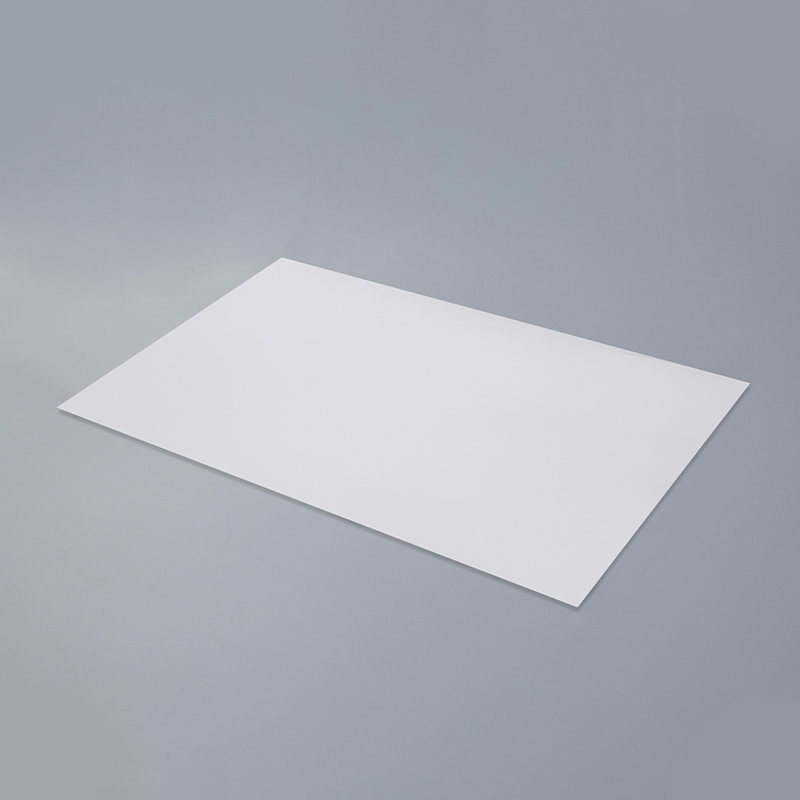
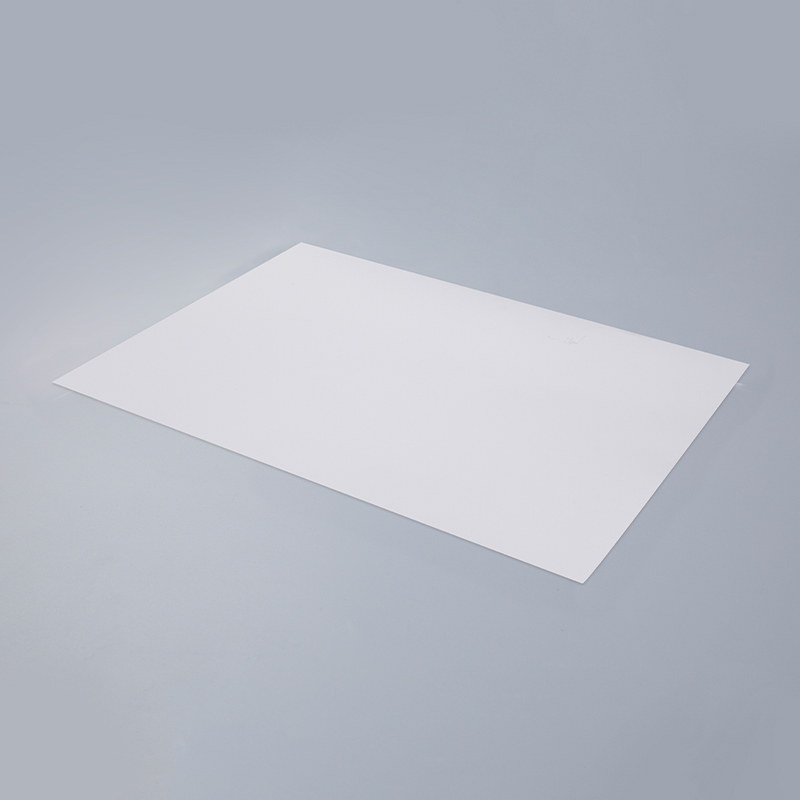
Its suitability for posters depends on size, exposure, display duration, printer compatibility, and required visual quality. It may be supplied in sheet formats such as A4, A3, 20 by 30 centimeters, 21 by 30 centimeters, 24 by 36 inches, 50 by 70 centimeters, and 70 by 100 centimeters, with customized sizes available.
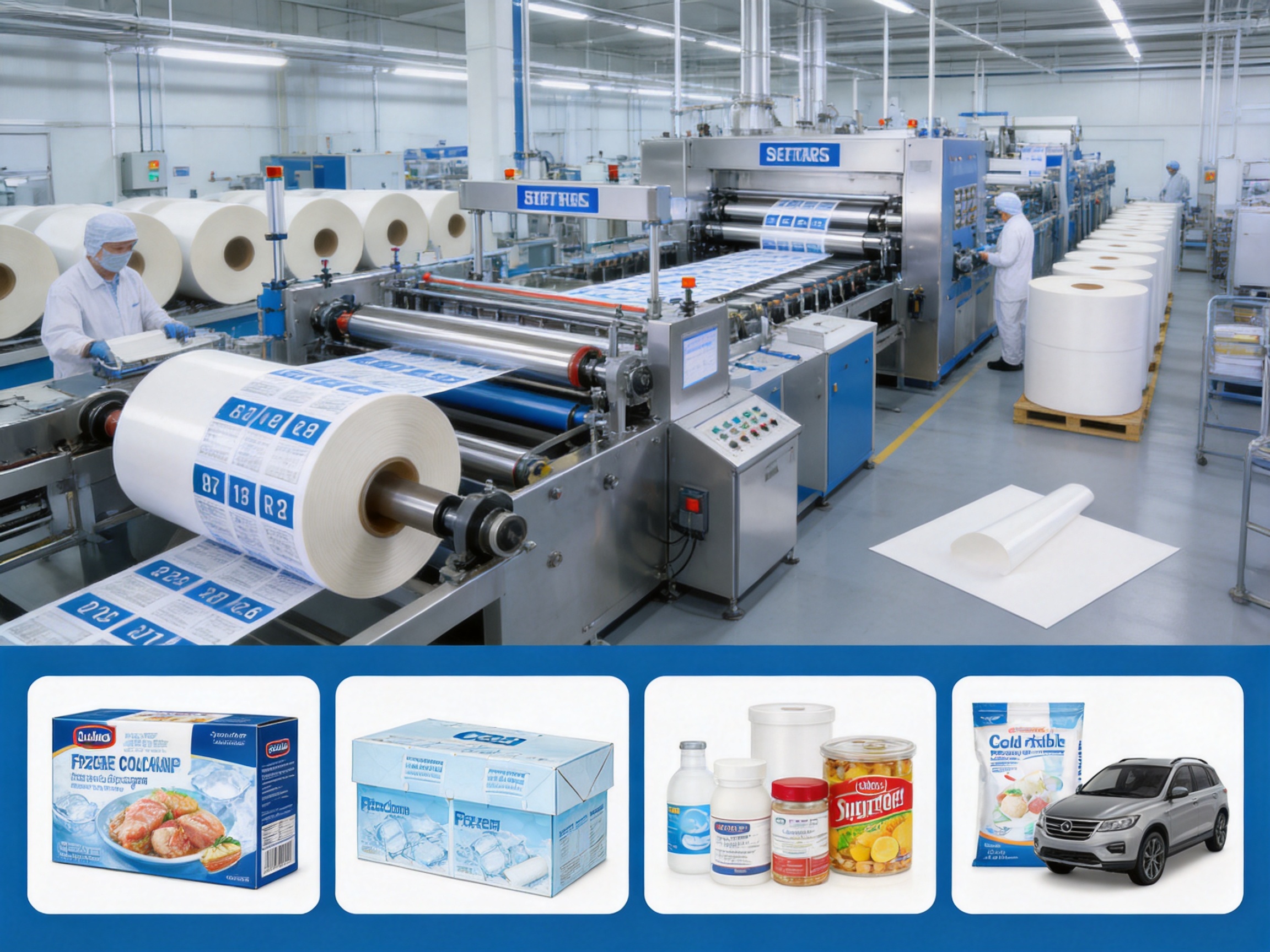
Available Specifications and Customization
One of the product’s important commercial strengths is its range of material and format options. Customers do not have to use a single fixed construction for every project. Face stock thickness, adhesive type, liner, roll width, and sheet dimensions can be selected according to application requirements.
| Component | Standard Option | Available Alternatives |
|---|---|---|
| Face material | 80-micron thermal synthetic paper | 95-micron and 100-micron options |
| Adhesive | Water-based adhesive | Hotmelt, solvent, removable, anti-freeze, cryogenic, and tyre-grade rubber adhesive |
| Standard liner | 60-gram white glassine paper | 50-, 80-, 100-, and 120-gram glassine paper |
| Release paper | Available according to construction | 60-, 85-, 120-, and 140-gram release paper |
| Art paper liner | Available according to construction | 140-gram and 165-gram art paper |
| CCK liner | Available according to construction | 50-, 80-, 90-, and 120-gram CCK liner |
| Jumbo roll width | Common widths include 1,000 millimeters | 1,020, 1,080, and 1,530 millimeters |
| Sheet format | A4 and A3 | 20 by 30, 21 by 30, 24 by 36, 50 by 70, 70 by 100 centimeters, and custom sizes |
Customization is valuable for manufacturers that operate different label presses, die-cutting systems, printer models, and packaging lines. A properly selected liner can improve feeding and converting performance. An appropriate adhesive can improve bonding to a specific substrate. A suitable face thickness can influence stiffness, handling, roll formation, and finished-label appearance.
Customers should provide information about the target surface, application temperature, storage temperature, label dimensions, printing technology, expected service life, exposure to water or chemicals, and whether the label must be removable. This information allows the manufacturer to recommend a more appropriate construction rather than treating every project as a standard order.
Manufacturing Process and Technical Strengths
Integrated Production Capabilities
Suzhou Piaozhihua Composite Material Technology Co., Ltd. integrates several key manufacturing processes, including gluing, laminating, and cutting. The integration of these operations helps coordinate the face material, adhesive layer, and liner into a consistent finished construction.
In a self-adhesive product, each stage affects the next. Inconsistent coating can influence adhesion. Poor lamination can create bubbles or weak bonding between layers. Inaccurate slitting can affect printer feeding and label conversion. By managing multiple processes within an integrated production system, the manufacturer can better control material consistency and respond to customer specifications.
Adhesive Coating and Formulation Control
Adhesive performance depends on formulation, coating weight, drying or curing conditions, surface preparation, and storage. The manufacturing process must ensure that the adhesive is distributed evenly across the web and remains compatible with the face material and liner.
Water-based adhesive systems can offer practical processing and application benefits when properly formulated and coated. The manufacturer can also provide other adhesive types for applications requiring different levels of tack, removability, temperature resistance, or substrate compatibility.
For cold-environment applications, adhesive selection is particularly important. The product is designed to provide high viscosity in low-temperature conditions, but the actual result will also depend on the application surface, surface moisture, application pressure, dwell time, and temperature at the moment of application.
Lamination Precision
Lamination joins the face material, adhesive layer, and release liner into a functional composite. Precision in web alignment and tension control helps reduce wrinkles, telescoping, uneven edges, and other defects that may affect converting or printing.
A stable laminated web supports downstream slitting and sheet cutting. It also helps converters produce uniform labels with predictable dimensions and consistent adhesive exposure. For high-volume customers, such consistency can contribute to improved production efficiency and lower waste.
Slitting and Sheet Cutting
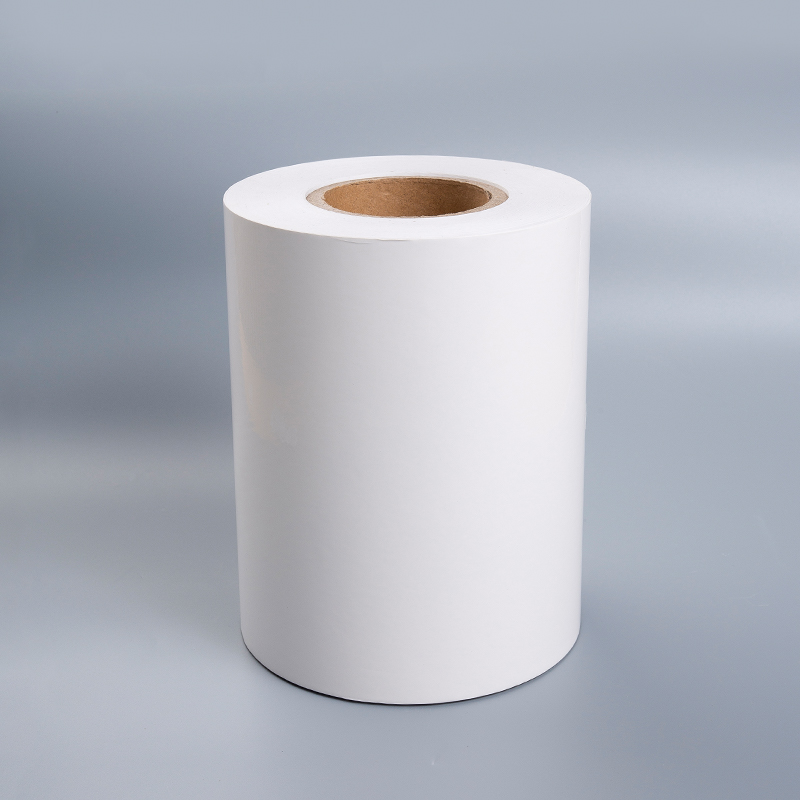
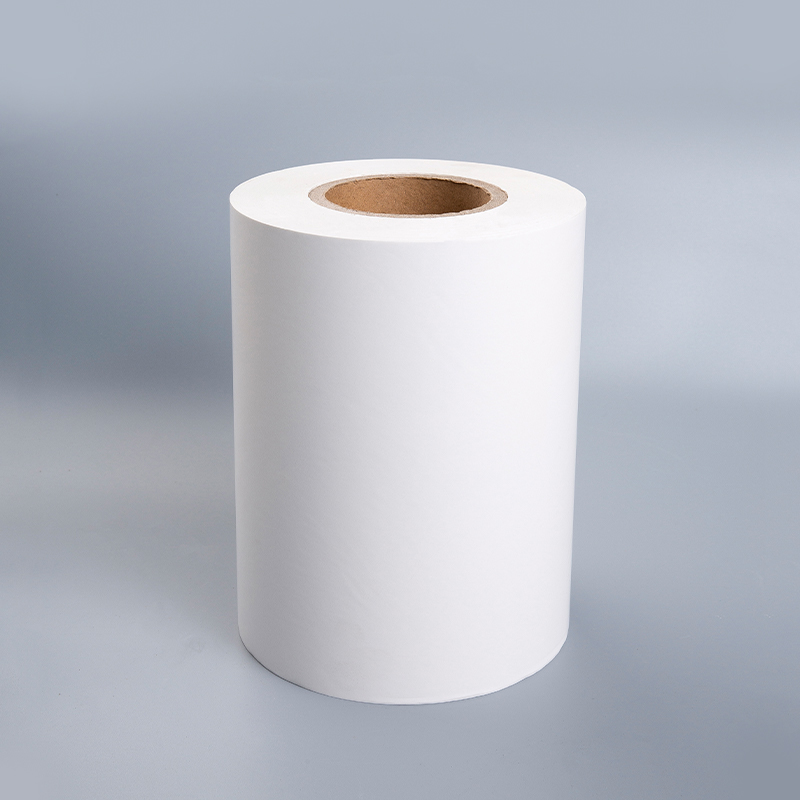
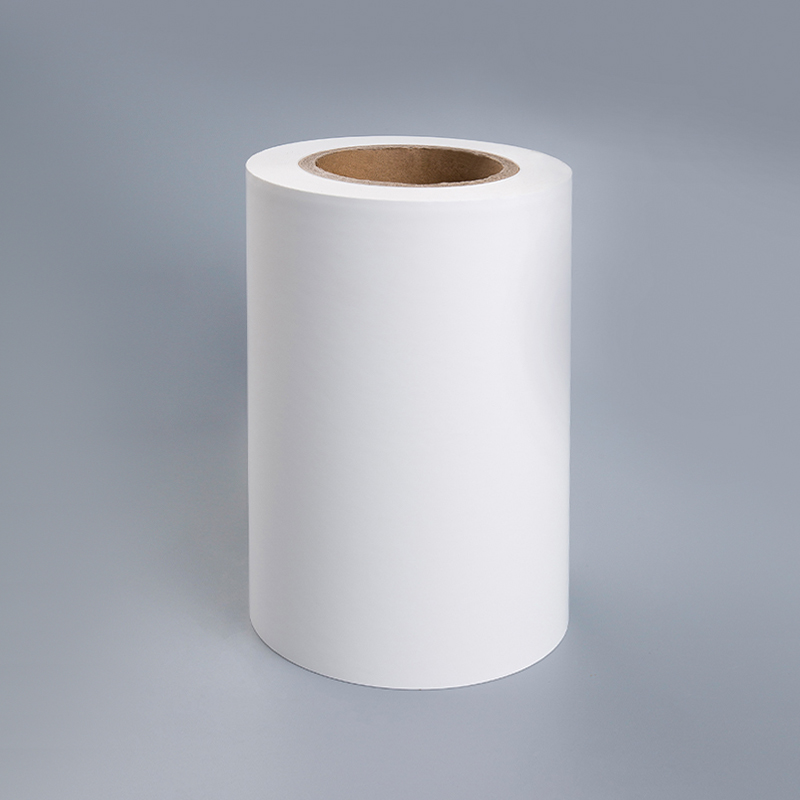
The company offers jumbo roll widths including 1,000, 1,020, 1,080, and 1,530 millimeters. These wide rolls can be converted into narrower rolls or sheets according to customer requirements. Sheet formats include common office and commercial sizes as well as customized dimensions.
Accurate slitting is essential for roll labels. Roll width, edge quality, winding tension, and roll stability influence how the material performs on label printers and converting equipment. For sheet products, cutting accuracy and stack quality are important for feeding, packaging, and storage.
Quality Inspection and Testing
The company maintains its own testing laboratory and uses inspection equipment to support product quality. Testing can help evaluate physical properties, adhesive behavior, coating uniformity, dimensions, and other characteristics relevant to self-adhesive materials.
Quality control should cover raw-material verification, in-process inspection, finished-product assessment, roll or sheet appearance, adhesive consistency, and packaging integrity. A structured inspection system gives customers greater confidence that production lots will meet agreed requirements.
Large-Scale Production Capacity
The company reports annual production capacity of more than 280 million square meters. This scale supports both regular supply programs and larger customized orders. Production capacity is particularly important for customers that need continuity across multiple facilities, countries, or seasonal demand cycles.
Large-scale manufacturing can also support more stable procurement planning. Customers may benefit from coordinated production scheduling, standardized specifications, repeat-order management, and the ability to develop multiple products through one supplier.
Advantages of the Manufacturing Partner
More Than Twenty Years of Industry Experience
The manufacturer has more than 20 years of experience in self-adhesive product manufacturing and OEM production. Long-term experience can contribute to better process knowledge, improved material selection, and a deeper understanding of common problems in label converting and packaging.
Experience is especially useful for customized products. A customer may know the desired application but not the optimal face material, adhesive, or liner. A manufacturer with broad production experience can help translate application requirements into a practical construction.
OEM and ODM Capability
The company accepts OEM and ODM projects and can produce products based on customer drawings or samples. OEM support is useful when a buyer already has an established specification or private-label program. ODM capability is valuable when a buyer needs technical assistance to develop a new construction.
Customized development can involve face-material thickness, adhesive selection, release-liner weight, roll width, sheet size, packaging method, and performance targets. Cooperation should include clear technical documents, sample approval, trial production, and agreed inspection standards.
Research and Development
The company has a professional research and development team and multiple patents. Research and development support allows the manufacturer to continue improving materials, adhesive systems, coating structures, and environmentally oriented solutions.
In the self-adhesive industry, innovation is important because customer requirements continue to evolve. Packaging companies increasingly seek better printability, lower material consumption, improved recyclability, stronger cold-chain performance, and more responsible manufacturing practices.
Broad Market Coverage
The company serves domestic and international markets through sales networks and long-term supply relationships. Its market coverage extends across Asia, Europe, the Americas, Africa, and other regions. This international experience can help the manufacturer understand differences in packaging practices, shipping requirements, product formats, and customer expectations.
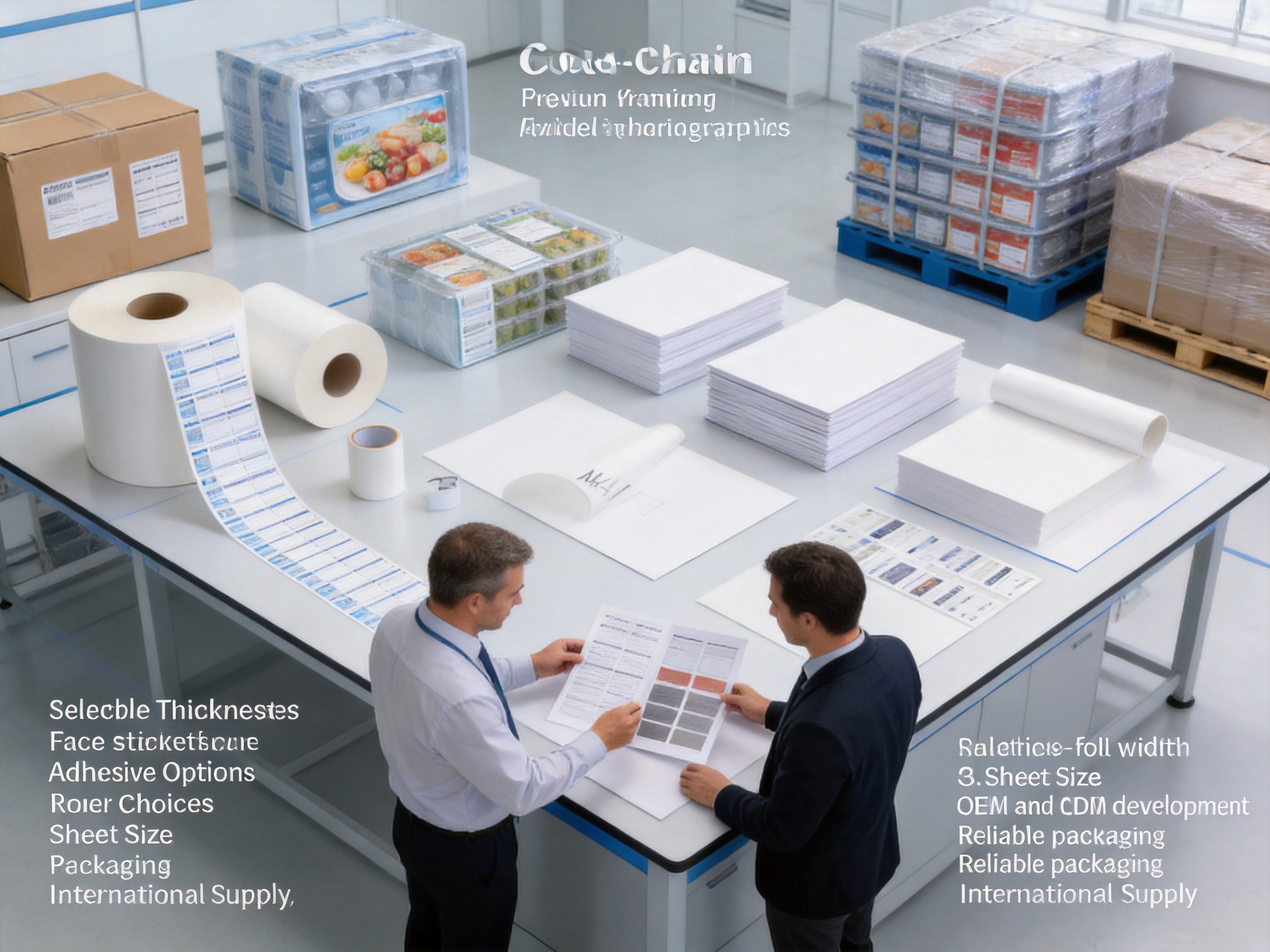
For international buyers, reliable communication, stable specifications, export-oriented packaging, and delivery coordination are important parts of supplier performance. The company provides sea-transit-worthy poly-wood pallet packing and carton packing for rolls or sheets from stock.
Professional Packaging for Transportation
Packaging protects self-adhesive materials from moisture, impact, compression, dust, and deformation during transport. The product can be packed in rolls or sheets using cartons and pallets suitable for sea transportation.
For sheet products, the standard packing description includes 100 sheets per ream. Each ream is packed with a strong PE-coated kraft paper wrapper. Strong pallets are wrapped with stretch film and fastened with plastic fastening belts. Proper packaging helps preserve sheet alignment, roll condition, and product cleanliness through the supply chain.
Environmental and Sustainability Considerations
Environmental performance is becoming an increasingly important factor in label-material purchasing. Customers may consider the composition of the face stock, adhesive, liner, packaging, production process, and end-of-life pathway.
The company positions its product development around sustainable development and environmental protection. Its approach includes the development of eco-friendly solutions involving face materials, adhesives, and backing papers. This is relevant for buyers seeking to improve the environmental profile of packaging without sacrificing essential performance.
Water-based adhesive technology can be considered as part of a broader effort to develop responsible adhesive solutions. However, environmental evaluation should be based on the complete material construction and the specific requirements of the intended recycling or disposal system. Customers should request appropriate technical and compliance information for their market and application.
Material efficiency is another sustainability factor. A correctly engineered label can reduce waste caused by poor adhesion, tearing, unreadable printing, or unsuitable dimensions. Custom roll widths and sheet sizes may also help converters optimize nesting and reduce offcuts.
Printing and Conversion Recommendations
Printer Compatibility
Because the material uses a thermal-sensitive surface, customers should confirm compatibility with their direct thermal printers. Important variables include printer resolution, print speed, heat settings, pressure, label width, roll diameter, core size, and sensor configuration.
Testing should include text, graphics, barcodes, batch codes, and variable-data layouts. The finished image should be evaluated for contrast, edge sharpness, scannability, and resistance to the expected handling conditions.
Surface Preparation
For best adhesion, the application surface should be clean, dry, and free from dust, grease, frost, and loose particles. On refrigerated products, condensation or surface frost can reduce contact between the adhesive and substrate. Where possible, labels should be applied under conditions that allow sufficient adhesive wet-out.
Application pressure is also important. A firm, even pressure helps the adhesive contact the substrate. In automated labeling, roller pressure, dispensing angle, line speed, and label tension should be adjusted to suit the material.
Storage Before Use
Self-adhesive label materials should normally be stored in a clean, dry environment away from direct sunlight, excessive heat, and high humidity. Rolls and sheets should remain in their original packaging until required. Sudden temperature changes should be managed carefully to reduce condensation.
For cold-chain applications, customers should distinguish between the temperature at which the label is applied and the temperature at which the labeled product is stored. These conditions may require different adhesive solutions. A product that performs well after application in a cold environment may require different preparation if the label is applied to a wet or frosted surface.
Converting and Die Cutting
Label converters should evaluate die-cutting depth, liner release, matrix stripping, roll tension, and edge quality. The die should cut through the face and adhesive layers without damaging the liner. A suitable liner can improve converting efficiency and reduce label lifting during stripping.
For sheet products, cutting equipment should be adjusted to maintain accurate dimensions and clean edges. Finished sheets should be stacked and packed to prevent curling, shifting, or contamination.
How to Select the Correct Construction
Choosing the right thermal synthetic label material begins with a clear application assessment. The following questions can help establish the required specification:
What is the target substrate? The label may be applied to coated paper, cardboard, plastic film, glass, metal, flexible packaging, corrugated board, or rubber. Each surface may require different adhesive behavior.
At what temperature will the label be applied? Application temperature is often more important than storage temperature because the adhesive must establish initial contact during application.
What is the lowest temperature during storage and transport? Refrigerated and frozen conditions may require a low-temperature, anti-freeze, or cryogenic adhesive.
Will the label encounter water, condensation, oil, chemicals, abrasion, or repeated handling? These factors influence the selection of face material, adhesive, and possible protective treatments.
Is the label intended to be permanent or removable? Permanent product identification and temporary logistics labels have different adhesive requirements.
Will the material be printed in rolls or sheets? The choice affects liner weight, roll dimensions, sheet stiffness, and packaging format.
What printing equipment will be used? Printer type, resolution, heat settings, and label-feed design should be confirmed before mass production.
What information will be printed? Text, barcodes, graphics, dates, weights, and variable data may require different printing tests.
By answering these questions, buyers can select the appropriate face thickness, adhesive system, liner, and finished format. The manufacturer can then provide samples or trial materials for validation.
Quality, Traceability, and Customer Service
Consistent quality is essential for self-adhesive label materials because a defect can affect a large number of finished labels. A stable supplier should provide clear product specifications, batch information, packaging details, inspection procedures, and communication during production.
Suzhou Piaozhihua Composite Material Technology Co., Ltd. combines manufacturing, research and development, sales, and after-sales service. This integrated structure allows technical questions to be addressed more efficiently. Customers can discuss application problems, request customized constructions, evaluate samples, and coordinate repeat orders through one supplier.
After-sales service is particularly important when a product is used in a new application or a demanding environment. Technical feedback can help identify whether a problem is related to adhesive selection, application temperature, substrate contamination, printing conditions, storage, or converting settings. A systematic approach is more effective than changing materials without identifying the underlying cause.
Commercial Benefits for Buyers
Water-based adhesive thermal synthetic paper can deliver value beyond its basic material price. Direct thermal printing may reduce dependence on carbon ribbons. Improved durability may reduce label replacement. Better cold-environment adhesion may lower the risk of product identification failures. Water resistance may support more reliable use in refrigerated and humid conditions.
Multiple adhesive and liner options can also simplify sourcing. Instead of purchasing unrelated materials from several suppliers, customers may obtain different self-adhesive constructions through one experienced manufacturer. This can improve specification management and support consistent quality across product lines.
Jumbo roll and sheet availability gives converters flexibility. Large rolls may support industrial label production, while standard sheets can meet commercial, office, poster, or small-batch needs. Customized sizes can improve material utilization and help align the product with existing equipment.
The total value should be assessed through application testing and lifecycle considerations. Buyers should compare not only purchase price but also waste, machine efficiency, labor, replacement frequency, storage requirements, and the cost of labeling failures.
Frequently Asked Questions
What is the main purpose of water-based adhesive thermal synthetic paper?
It is designed for self-adhesive labels that require direct thermal printing, water resistance, tear resistance, and reliable adhesion in low-temperature, refrigerated, frozen, or winter environments.
Does it require a carbon ribbon?
No. The thermal face material is heat-sensitive and can be printed through direct thermal printing without a carbon ribbon. Printer compatibility should still be confirmed through testing.
Can it be used in frozen food applications?
Yes. It is specially designed for labels used in refrigerated and freezing environments. The appropriate adhesive should be selected according to application temperature, storage temperature, surface condition, and moisture exposure.
What is the standard face-material thickness?
The standard face material is approximately 80 microns. Options of approximately 95 microns and 100 microns are also available.
What adhesive options are available?
The standard product uses water-based adhesive. Hotmelt, solvent, removable, anti-freeze, cryogenic, and tyre-grade rubber adhesive options are also available for different applications.
What release liners can be supplied?
The standard liner is 60-gram white glassine paper. Other options include different glassine weights, release paper, art paper, and CCK liner constructions.
What jumbo roll widths are available?
Common jumbo roll widths include 1,000, 1,020, 1,080, and 1,530 millimeters. Customized widths may be discussed according to production requirements.
Can the product be supplied in sheets?
Yes. Available sheet formats include A4, A3, 20 by 30 centimeters, 21 by 30 centimeters, 24 by 36 inches, 50 by 70 centimeters, and 70 by 100 centimeters. Customized sizes are also available.
Is the product suitable for wet environments?
The synthetic face material provides improved water and wet-handling resistance compared with ordinary paper. The complete application should still be tested because adhesive performance depends on the substrate, temperature, moisture, and exposure duration.
Can it be used for cosmetic packaging?
Yes. It can be used for selected cosmetic packaging and related product-label applications. The surface appearance, adhesive, label size, printing method, and resistance requirements should be confirmed for each project.
Can the manufacturer provide OEM and ODM services?
Yes. The company provides OEM and ODM services and can develop or produce materials according to customer drawings, samples, technical requirements, and packaging specifications.
How should customers test the material before ordering?
Customers should test printing quality, barcode readability, initial adhesion, final adhesion, low-temperature performance, water exposure, storage stability, converting behavior, and compatibility with the intended substrate and printer.
Conclusion
Water-based adhesive thermal synthetic paper is a practical solution for labels that must combine direct thermal printability with durability and low-temperature adhesive performance. Its synthetic face material helps resist water and tearing, while the thermal coating supports efficient ribbon-free printing. The water-based adhesive is designed to maintain high viscosity in cold environments, helping labels remain attached in winter, refrigerated, and frozen applications.
Compared with ordinary paper labels, standard thermal paper, and general-purpose synthetic materials, this product offers a more balanced construction for demanding packaging and logistics needs. Its application range includes frozen and refrigerated food, cold-chain logistics, retail identification, cosmetic packaging, automotive soft packaging, posters, and other product-printing uses.
The availability of multiple face-material thicknesses, adhesive types, liners, roll widths, and sheet formats gives customers substantial flexibility. Integrated gluing, laminating, slitting, and cutting capabilities support production consistency, while laboratory testing, research and development, OEM and ODM services, and large annual capacity strengthen the company’s ability to serve both standard and customized requirements.
For buyers seeking a dependable self-adhesive thermal material, the most effective approach is to evaluate the complete application rather than one isolated specification. By matching the face material, adhesive, liner, printer, substrate, temperature, and packaging format, customers can obtain a label construction that supports reliable identification and efficient production throughout the supply chain.
References
1. Technical product information for water-based adhesive thermal synthetic paper, including material, adhesive, liner, size, application, and packaging specifications.
2. Technical information on direct thermal printing principles and heat-sensitive label materials.
3. General industry guidance on pressure-sensitive adhesive selection for refrigerated, frozen, and low-temperature applications.
4. General principles of self-adhesive label converting, including coating, laminating, slitting, die cutting, and release-liner selection.
5. Company manufacturing and capability information concerning research and development, OEM and ODM production, testing, packaging, and international supply.