
 English
 Español
 русский
 Français
 عربى
عربى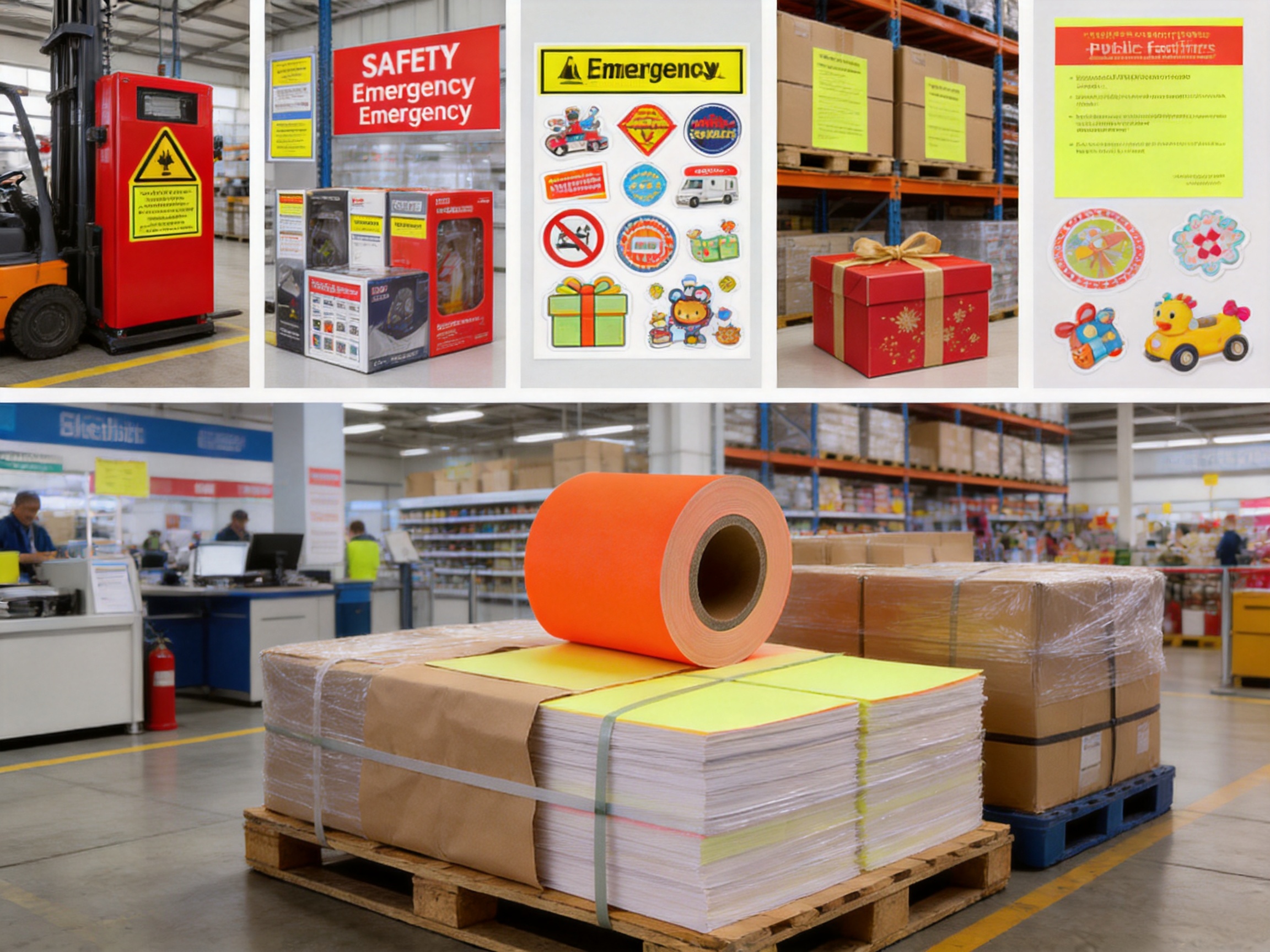
Fluorescent paper in rolls is a specialized self-adhesive labeling material designed for applications that require strong visual impact, easy identification, and dependable print performance. Its bright fluorescent surface attracts attention more effectively than conventional white paper, making it suitable for warning labels, promotional graphics, packaging, public notices, decorative products, toys, gifts, and identification labels. When used in the right environment, fluorescent paper helps products, instructions, and safety messages remain visible even when ordinary printed materials are difficult to notice.
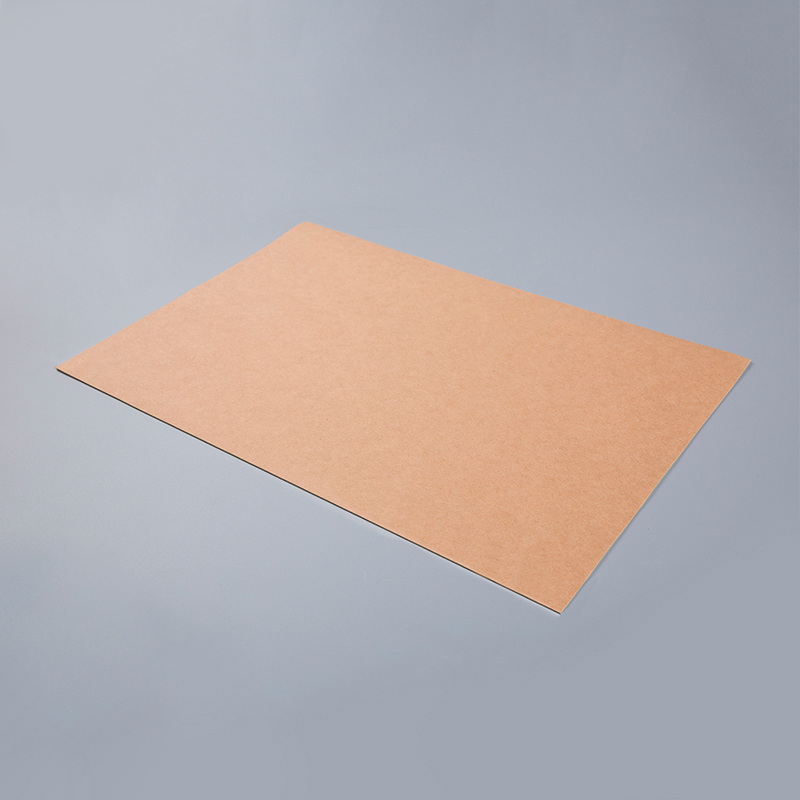
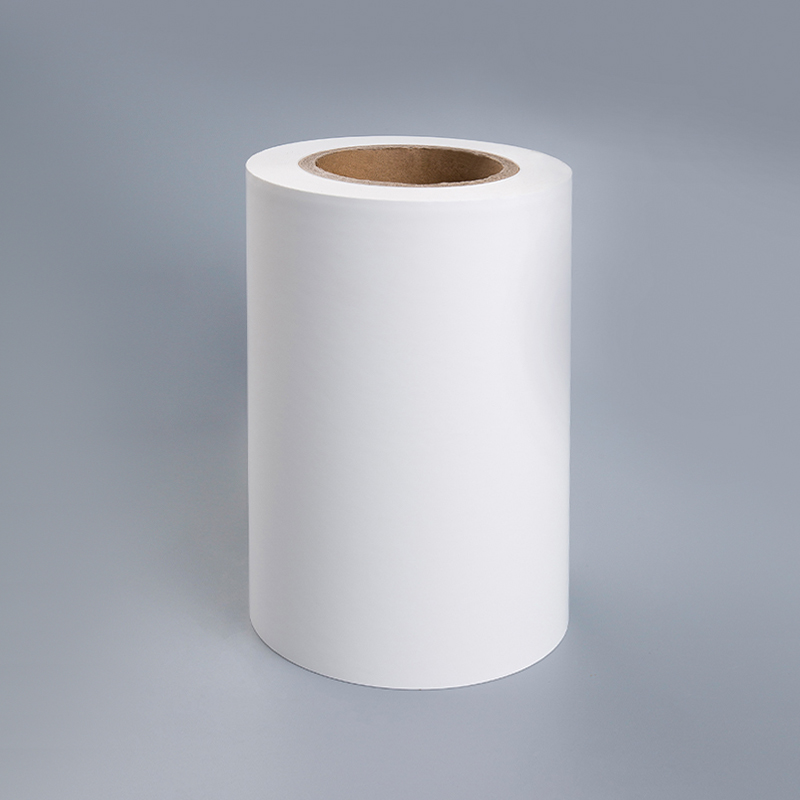
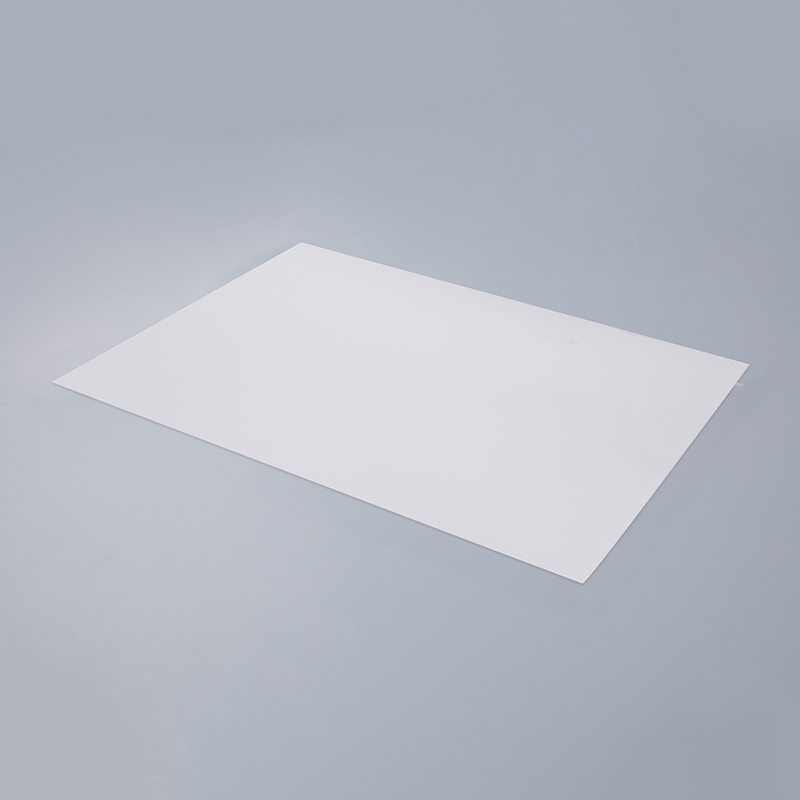
The product described in this article combines an 80 gsm fluorescent paper face material with a pressure-sensitive adhesive and a release liner. It is available in jumbo rolls for industrial converting as well as in sheets for printing, office, packaging, and promotional requirements. A wide selection of adhesive systems and liner constructions allows the material to be adapted to different substrates, temperatures, printing methods, and end-use conditions.
As demand increases for high-impact labels and flexible printed communication, buyers are looking for more than an attractive color. They need consistent basis weight, smooth converting performance, reliable adhesion, stable release properties, accurate winding, and packaging that protects the material during transport. A professional manufacturer must therefore control the complete production process, from raw material selection and adhesive preparation to coating, laminating, slitting, inspection, and delivery.
Content
- 1 What Is Fluorescent Paper in Rolls?
- 2 Why Fluorescent Paper Attracts Attention
- 3 Product Structure and Functional Layers
- 4 Printing Compatibility
- 5 Applications Across Multiple Industries
- 6 Advantages Over Conventional Label Materials
- 7 Manufacturing Process and Quality Control
- 8 Advanced Manufacturing Strengths of the Supplier
- 9 Packaging and Delivery Protection
- 10 How to Select the Correct Specification
- 11 Storage and Handling Recommendations
- 12 Environmental and Sustainability Considerations
- 13 Why Choose a Specialized Self-Adhesive Manufacturer?
- 14 Recommended Quality Evaluation Before Ordering
- 15 Technical Questions to Discuss With the Supplier
- 16 Q&A: Fluorescent Paper in Rolls
- 16.1 What is the standard face material?
- 16.2 Is the material available as both rolls and sheets?
- 16.3 Which adhesive is supplied as standard?
- 16.4 Can the material be used in cold environments?
- 16.5 What liner is normally used?
- 16.6 Which printing methods can be used?
- 16.7 Can fluorescent paper be used for safety labels?
- 16.8 Is fluorescent paper the same as glow-in-the-dark paper?
- 16.9 What jumbo roll widths are available?
- 16.10 Can the supplier produce according to drawings or samples?
- 16.11 How should the material be stored?
- 16.12 What should be tested before a large order?
- 17 Conclusion
- 18 References
- 19 Product: Fluorescent Paper In Rolls
What Is Fluorescent Paper in Rolls?
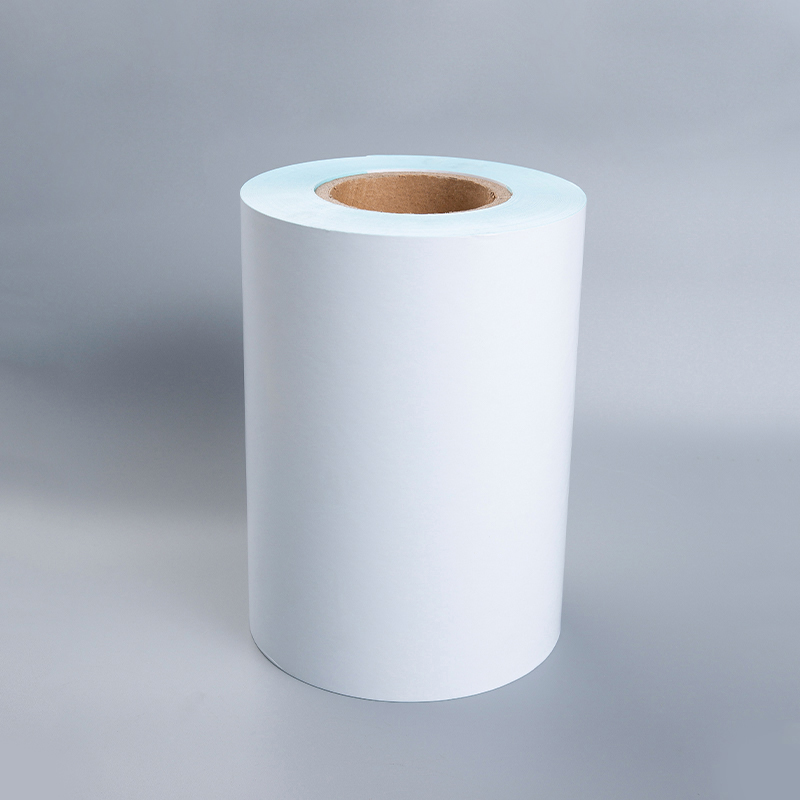
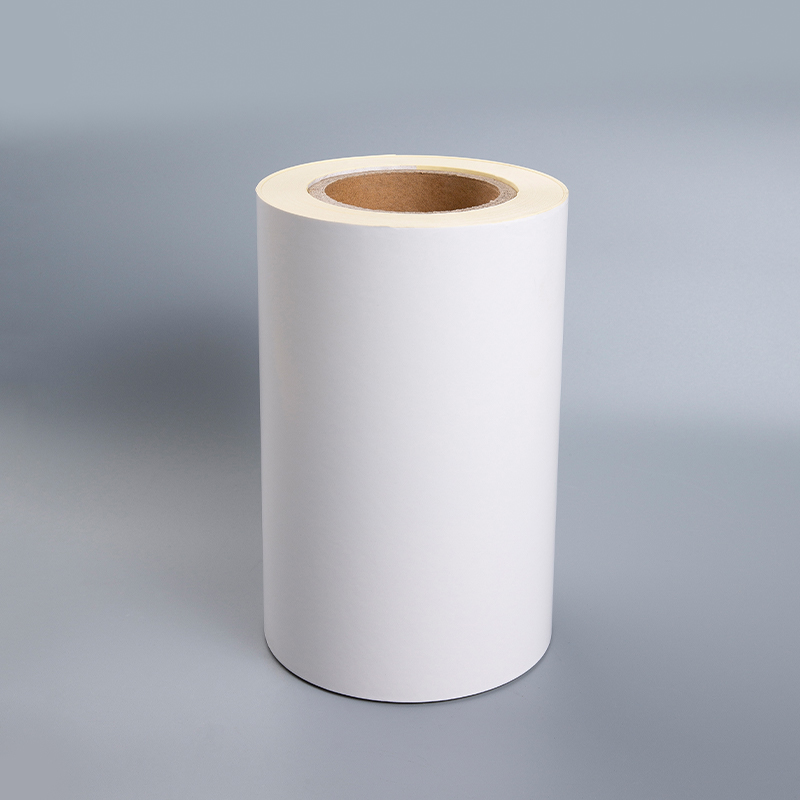
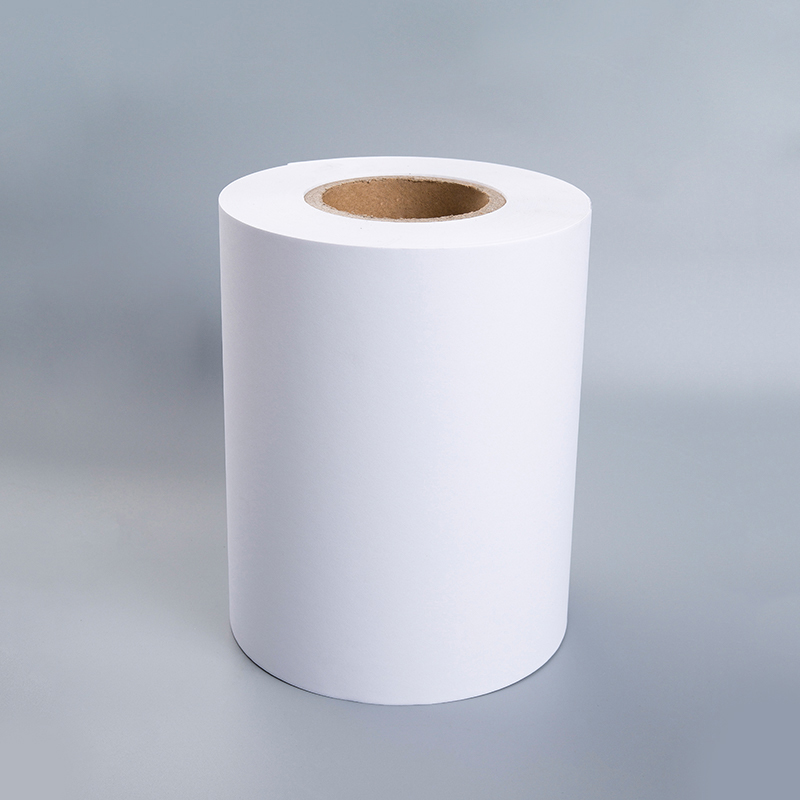
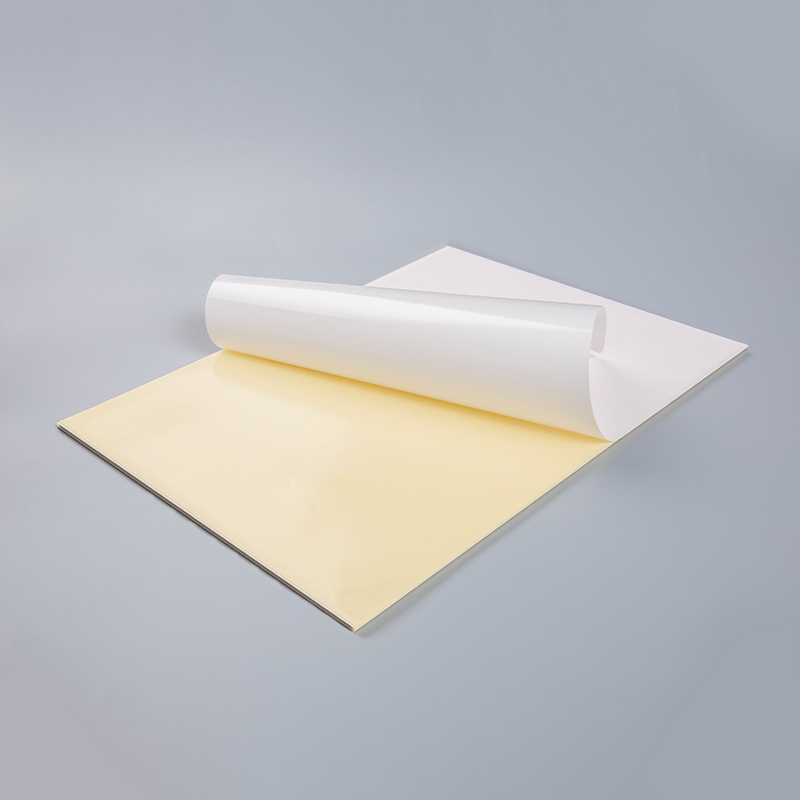
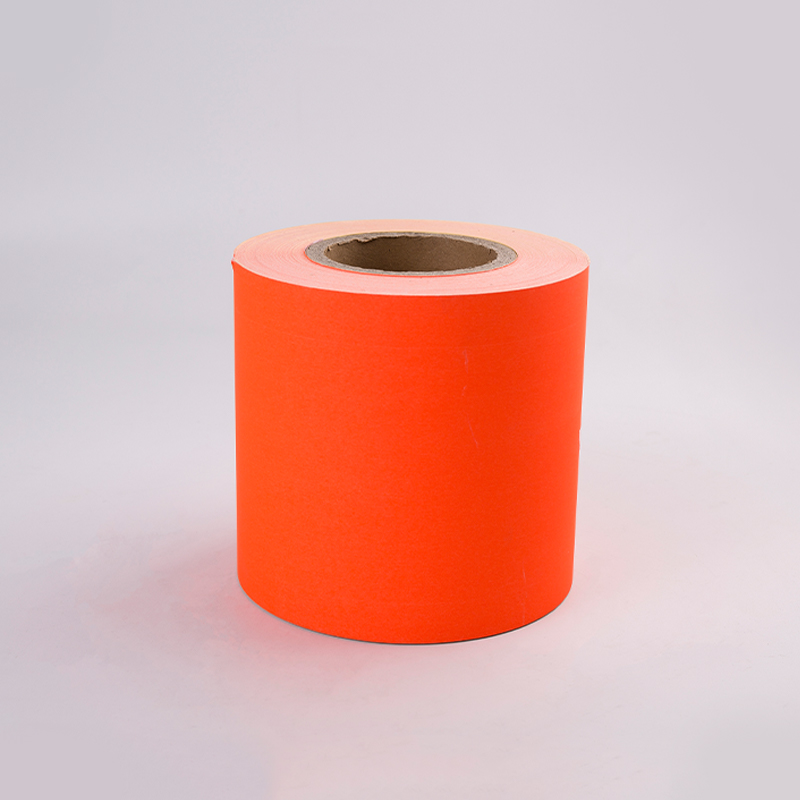
Fluorescent paper in rolls is a coated or specially colored paper material supplied in continuous roll form. When converted into self-adhesive stock, it normally consists of three functional layers: a fluorescent paper face, a pressure-sensitive adhesive layer, and a release liner. The face material provides color, brightness, and printability. The adhesive creates the bond between the label and the target surface. The liner protects the adhesive before application and supports smooth die-cutting, sheet separation, or roll dispensing.
The fluorescent face has a vivid appearance that is more noticeable than standard colored paper. Depending on the selected color and printing design, it can be used as a complete label background or as a high-contrast area for text, symbols, bar codes, logos, and promotional messages. The material is especially useful when the label must be identified quickly from a distance or among many ordinary packages.
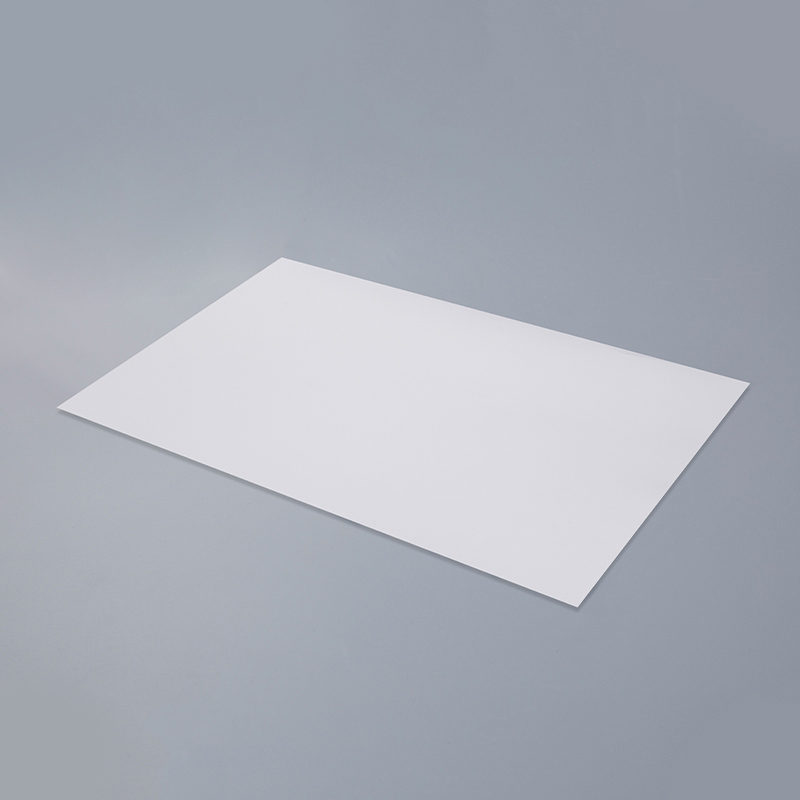
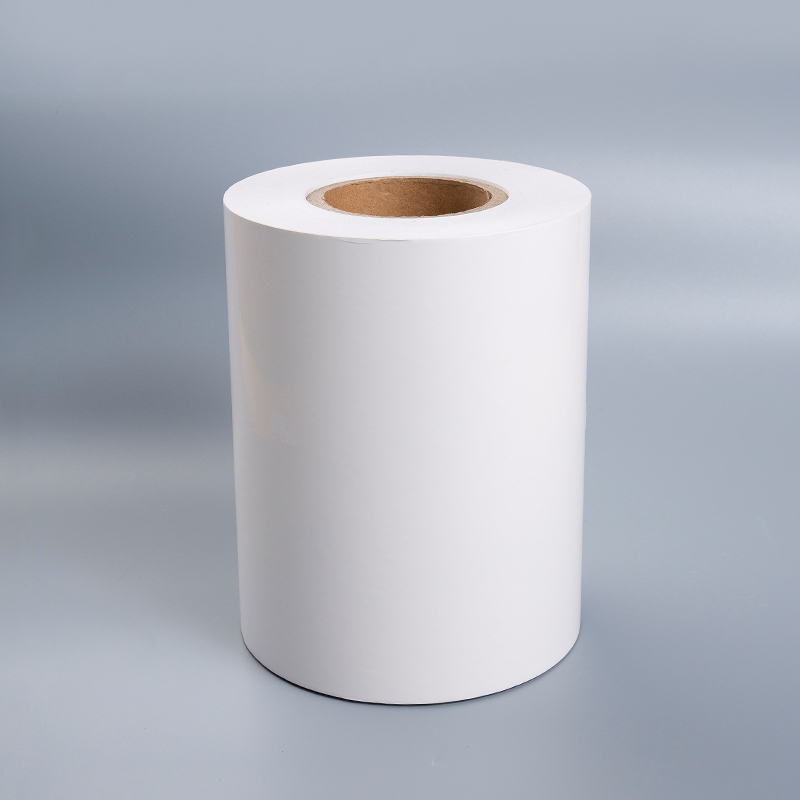
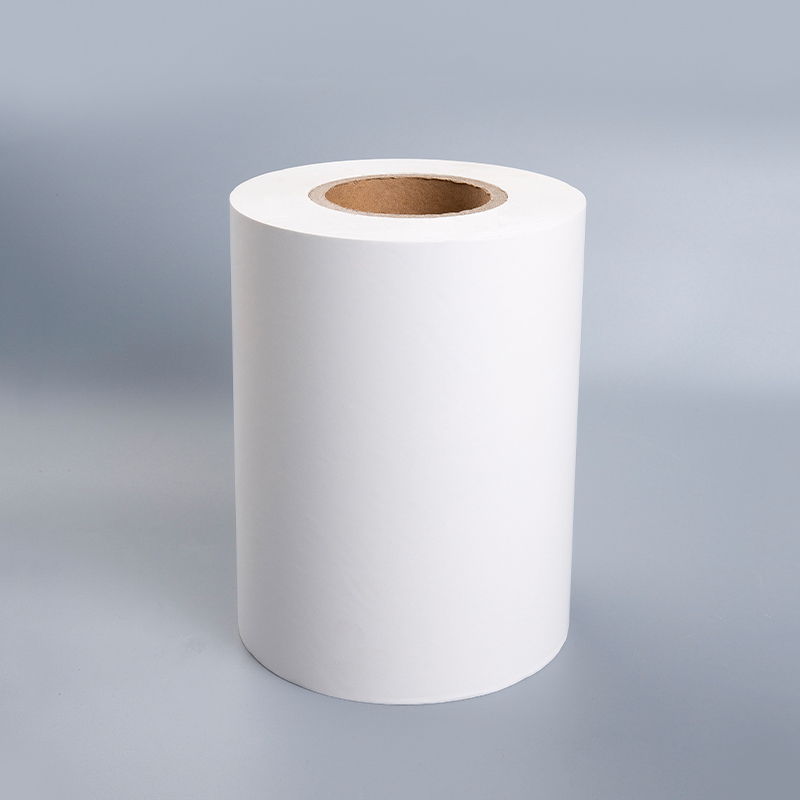
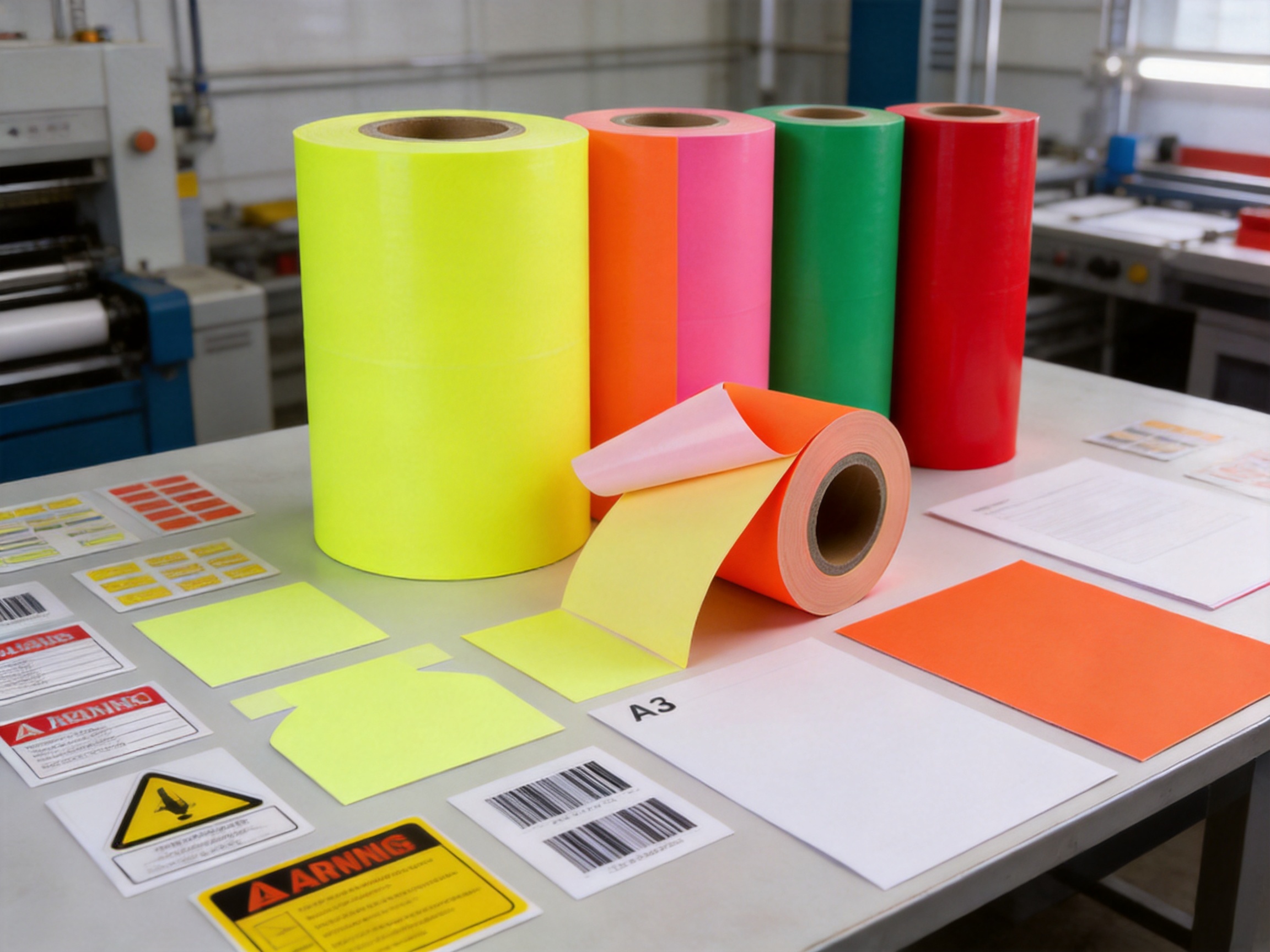
Roll supply is important for manufacturers, printers, and converters. Jumbo rolls can be processed on high-speed slitting, sheeting, die-cutting, and label-converting equipment. Roll materials also reduce the need for repeated manual feeding and allow users to select widths and finished formats according to their equipment. For buyers with smaller requirements, the same material can be supplied in sheets such as A4, A3, 20 × 30 cm, 21 × 30 cm, 24 × 36 cm, 50 × 70 cm, and 70 × 100 cm.
The specified standard face material is 80 gsm fluorescent paper. This weight provides a practical balance between flexibility, handling strength, surface coverage, and cost. It is suitable for many general-purpose labels while remaining compatible with common printing and converting operations. For specialized projects, the adhesive and liner can be adjusted without changing the basic fluorescent paper concept.
Why Fluorescent Paper Attracts Attention
The principal advantage of fluorescent paper is visual prominence. Bright fluorescent colors can make a label stand out on shelves, cartons, walls, equipment, doors, and display boards. In busy environments, an ordinary white label may blend into the background, while fluorescent material creates an immediate visual signal. This makes it valuable for urgent instructions, temporary notices, directional information, promotional messages, and product differentiation.
Fluorescent paper is frequently associated with safety and emergency communication because it can help people locate important information quickly. It may be applied to fire equipment, emergency cabinets, public facilities, safety stations, warning areas, and special products. It is important to distinguish visual fluorescence from photoluminescence: the performance of a finished label depends on the selected paper construction, lighting conditions, printing ink, and application environment. Buyers should confirm the required visibility characteristics before selecting a specification.
In commercial printing, fluorescent paper provides a strong foundation for attention-oriented graphics. A simple black message printed on a vivid fluorescent background can be highly effective, while additional colors can create more complex branding and promotional effects. The substrate can also be used for price labels, event notices, clearance stickers, temporary identification labels, and point-of-sale materials.
Another benefit is design flexibility. The paper can be printed as a full-color label, a single-color notice, a blank writing surface, or a preprinted form. It may be combined with different shapes, die cuts, corner treatments, and variable data. This flexibility allows one material family to serve both industrial and commercial customers.
Product Structure and Functional Layers
Fluorescent Paper Face
The 80 gsm fluorescent paper face provides the visible surface of the label. Its color is the first feature noticed by the end user, but its technical properties are equally important. A suitable face material should have consistent formation, adequate opacity, a reasonably smooth printing surface, and sufficient internal strength for slitting and die-cutting. It should also remain flat and stable under normal storage and processing conditions.
For printing applications, surface uniformity helps produce more consistent ink transfer. Letterpress, offset, flexographic, screen, and bar code printing each place different demands on the face material. A controlled paper surface can support sharper text, more even solid areas, and more reliable registration. The final result depends on the press, ink, drying conditions, artwork, and printing settings, but substrate consistency remains a critical foundation.
Pressure-Sensitive Adhesive
The adhesive layer determines how the label behaves during application and service. Water-based adhesive is a common choice for general-purpose applications where balanced tack, good processing behavior, and economical production are required. Hotmelt adhesive can be selected when high initial tack or fast bonding is important. Solvent adhesive may be suitable for demanding bonding conditions, depending on the substrate and required resistance.
Special adhesive options expand the usable range of the material. Anti-freeze adhesive is intended for applications involving low-temperature storage or application. Removable adhesive is designed for labels that must be removed with less residue or less surface disturbance. Cryogenic adhesive supports specially controlled low-temperature applications. Tyre-grade rubber adhesive is available for demanding rubber-related labeling requirements where a stronger or more specialized bond may be needed.
Adhesive selection should be based on the actual application rather than on a general assumption that one adhesive fits every surface. Important variables include surface energy, texture, cleanliness, curvature, temperature, humidity, contact time, handling conditions, and the expected service period. A professional supplier can help customers choose the appropriate adhesive and may provide samples for application testing.
Release Liner
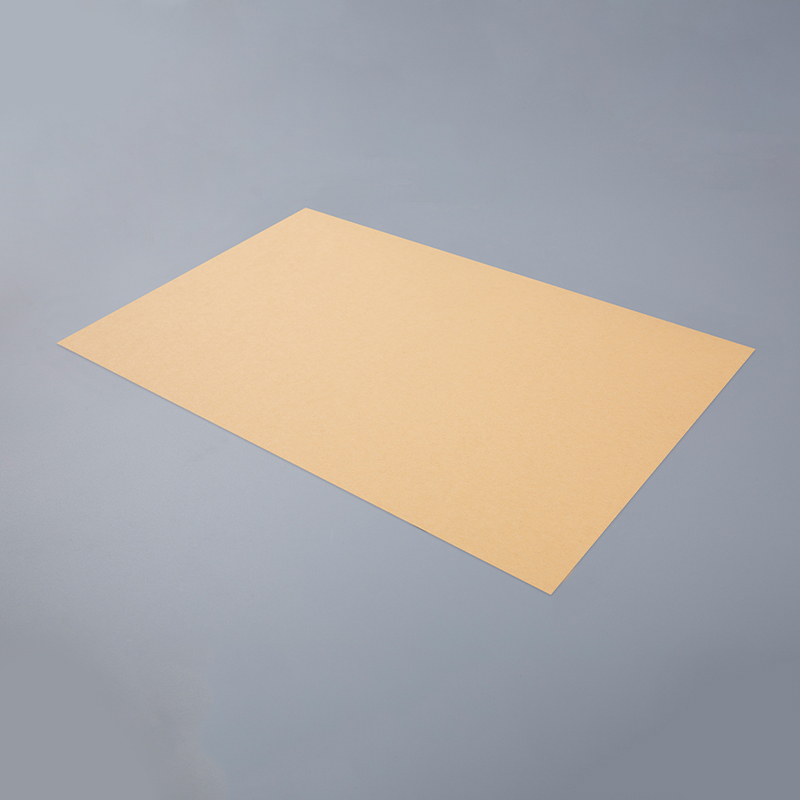
The release liner protects the adhesive before use and allows the label to be removed cleanly during application. The standard construction includes 85 g yellow release paper. Other liner options include 50, 60, 80, 100, and 120 gsm glassine paper; 60, 120, and 140 gsm release paper; 140 and 165 gsm art paper; 50, 80, 90, and 120 gsm CCK liner; and transparent PET liners in 25, 36, 50, and 100 microns.
Different liners provide different balances of stiffness, transparency, dimensional stability, release performance, and converting suitability. Glassine is often valued for its smoothness and controlled caliper. CCK liners can provide a practical solution for many general label applications. Art paper liners may be selected where a heavier or more rigid backing is beneficial. PET liners are useful when transparency, dimensional stability, or a thin but strong backing is required.
Correct release coating is essential. If the liner releases too easily, labels may lift or dispense prematurely. If it releases with excessive force, the label may stretch, tear, curl, or become difficult to apply. Consistent release behavior is particularly important for automated labeling and high-speed die-cutting.
| Component | Standard or Available Specification | Functional Role |
|---|---|---|
| Face material | 80 gsm fluorescent paper | Provides vivid color, printable surface, and visible label structure |
| Adhesive | Water-based adhesive; hotmelt, solvent, anti-freeze, removable, cryogenic, and tyre-grade rubber options | Creates the bond between the label and the application surface |
| Standard liner | 85 g yellow release paper | Protects the adhesive and supports label handling |
| Alternative liners | Glassine, release paper, art paper, CCK, and transparent PET | Allows adjustment of stiffness, transparency, release, and converting performance |
| Jumbo roll widths | 1000, 1020, 1080, and 1530 mm | Supports industrial slitting, sheeting, and label conversion |
| Sheet formats | A4, A3, 20 × 30, 21 × 30, 24 × 36, 50 × 70, and 70 × 100 cm | Supports digital printing, manual application, and customized production |
Printing Compatibility
Fluorescent paper self-adhesive material is suitable for several printing processes, including letterpress, offset, flexographic printing, screen printing, and bar code printing. Each method can be used for different production goals. Letterpress printing can deliver strong, precise impressions for labels and short-run graphics. Offset printing is suitable for detailed artwork and high-quality printed sheets. Flexographic printing is commonly used for roll-to-roll label production and efficient repeat work.
Screen printing can deposit a relatively heavy ink layer and may be useful for bold graphics, specialty effects, or applications requiring strong visual density. Bar code printing requires careful control of contrast, registration, ink density, and scanning performance. Because the fluorescent background can influence contrast, printers should test the selected ink and bar code combination before full production.
Digital printing can also be considered for short runs, variable information, customized graphics, and rapid product changes. The appropriate digital process depends on toner or inkjet technology, drying characteristics, fuser temperature, and printer manufacturer recommendations. Pretesting is recommended because fluorescent surfaces may respond differently to inks and toners than conventional white papers.
For best results, the printing company should control storage and pressroom conditions. Excessive humidity can affect paper flatness and dimensional stability, while very dry conditions may increase static and handling problems. Rolls and sheets should be allowed to acclimatize in the printing area before use. Ink adhesion, drying, color reproduction, and scuff resistance should be evaluated using the exact intended production process.
Applications Across Multiple Industries
Safety and Emergency Identification
Fluorescent labels can be used to identify fire equipment, emergency cabinets, safety stations, extinguishers, alarm points, and public information areas. Their high visibility helps direct attention to equipment that may need to be located quickly. The label design should use clear symbols, readable typography, and appropriate contrast. The adhesive must also be selected for the surface, temperature, and expected service conditions.
In public buildings, factories, warehouses, schools, hospitals, and transportation facilities, fluorescent paper can support temporary or permanent identification systems. It may be used for warning notices, restricted-area signs, maintenance instructions, evacuation information, or equipment status labels. For regulated safety applications, the finished product should comply with the relevant local requirements and should not replace mandatory signage materials when more specialized performance is required.
Packaging and Logistics
Bright labels are useful in warehouses and distribution centers because they can distinguish urgent, fragile, promotional, inspected, or specially handled packages from standard shipments. Fluorescent labels can support sorting, inventory organization, batch identification, and temporary routing instructions. They are also useful for highlighting cartons that need attention during receiving, picking, or dispatch.
For packaging, the adhesive should be compatible with corrugated board, coated cartons, plastic films, glass, or other selected surfaces. The label may be applied manually or through an automatic labeling system. Roll form is especially useful for high-volume packaging lines, while sheets may be preferred for low-volume operations or manual packing stations.
Advertising and Promotion
Fluorescent paper gives promotional messages a highly visible background. Retailers can use it for sale notices, limited-time offers, shelf markers, price changes, event announcements, and point-of-sale displays. Promotional labels can be produced in different sizes and shapes, with printed text, graphics, bar codes, or variable information.
The material is also suitable for trade shows, exhibitions, seasonal campaigns, product launches, and local advertising. Since the substrate itself contributes to the visual effect, a simple design can remain effective without requiring extensive special finishing. This can help reduce the complexity of a promotional project while maintaining a strong shelf or display presence.
Decoration, Toys, and Gifts
Fluorescent self-adhesive paper can add color and energy to gift packaging, craft projects, party products, educational materials, toys, and decorative items. It can be die-cut into stars, arrows, circles, characters, badges, and other shapes. The appropriate adhesive should be selected according to whether the label is intended to be permanent, repositionable, or removable.
When used on toys or products intended for children, the complete finished product should be evaluated for applicable safety, ink, adhesive, and substrate requirements. The fluorescent paper itself is only one part of the final construction. Product developers should consider abrasion, edge lifting, small-part risks, surface contact, and the conditions in which the finished item will be used.
Trademark and Product Labels
Brands can use fluorescent paper to distinguish special editions, promotional packs, clearance products, samples, or limited-quantity items. It can function as a trademark label, authenticity marker, product identifier, or secondary information label. Strong visual differentiation is particularly useful when similar products are displayed together.
Because the face material supports several printing methods, manufacturers can choose a production route that matches the run length, artwork complexity, and required variable information. The use of a specialized adhesive or liner can further improve the label’s suitability for curved containers, textured packaging, cold storage, or removable promotional campaigns.
Advantages Over Conventional Label Materials
Higher Visual Impact
Compared with ordinary white self-adhesive paper, fluorescent paper provides immediate visual contrast. This can improve the likelihood that a notice, product message, or package instruction will be noticed. For applications where speed of recognition matters, this is a meaningful advantage.
Flexible Customization
The product is not restricted to one adhesive or backing configuration. Customers can choose among water-based, hotmelt, solvent, anti-freeze, removable, cryogenic, and tyre-grade rubber adhesive options. They can also select from multiple release liner constructions. This flexibility helps avoid the common problem of using a standard label material in an unsuitable environment.
Industrial Roll Efficiency
Jumbo roll widths of 1000, 1020, 1080, and 1530 mm support efficient conversion. Printers and label converters can slit the material into narrower rolls, sheet it into standard formats, or die-cut it into finished labels. Roll supply can reduce material handling and improve production continuity compared with relying only on pre-cut sheets.
Broad Printing Options
Support for letterpress, offset, flexographic, screen, bar code, and selected digital printing applications gives buyers greater freedom when planning production. A material that can be integrated into multiple printing workflows is more useful to converters serving different customers and product categories.
Customized Liner and Adhesive Performance
Many competing materials are available only with a fixed liner and general-purpose adhesive. The product range described here allows the construction to be adjusted according to the end use. A transparent PET liner may be selected for dimensional stability, a glassine liner for smooth converting, a heavier liner for handling strength, or an anti-freeze adhesive for low-temperature conditions.
Suitable for Rolls and Sheets
Availability in both rolls and sheets makes the material accessible to large converters and smaller users. Industrial customers can purchase jumbo rolls for high-volume processing, while printers, offices, promotional suppliers, and packaging companies can use finished sheets for more manageable production quantities.
Manufacturing Process and Quality Control
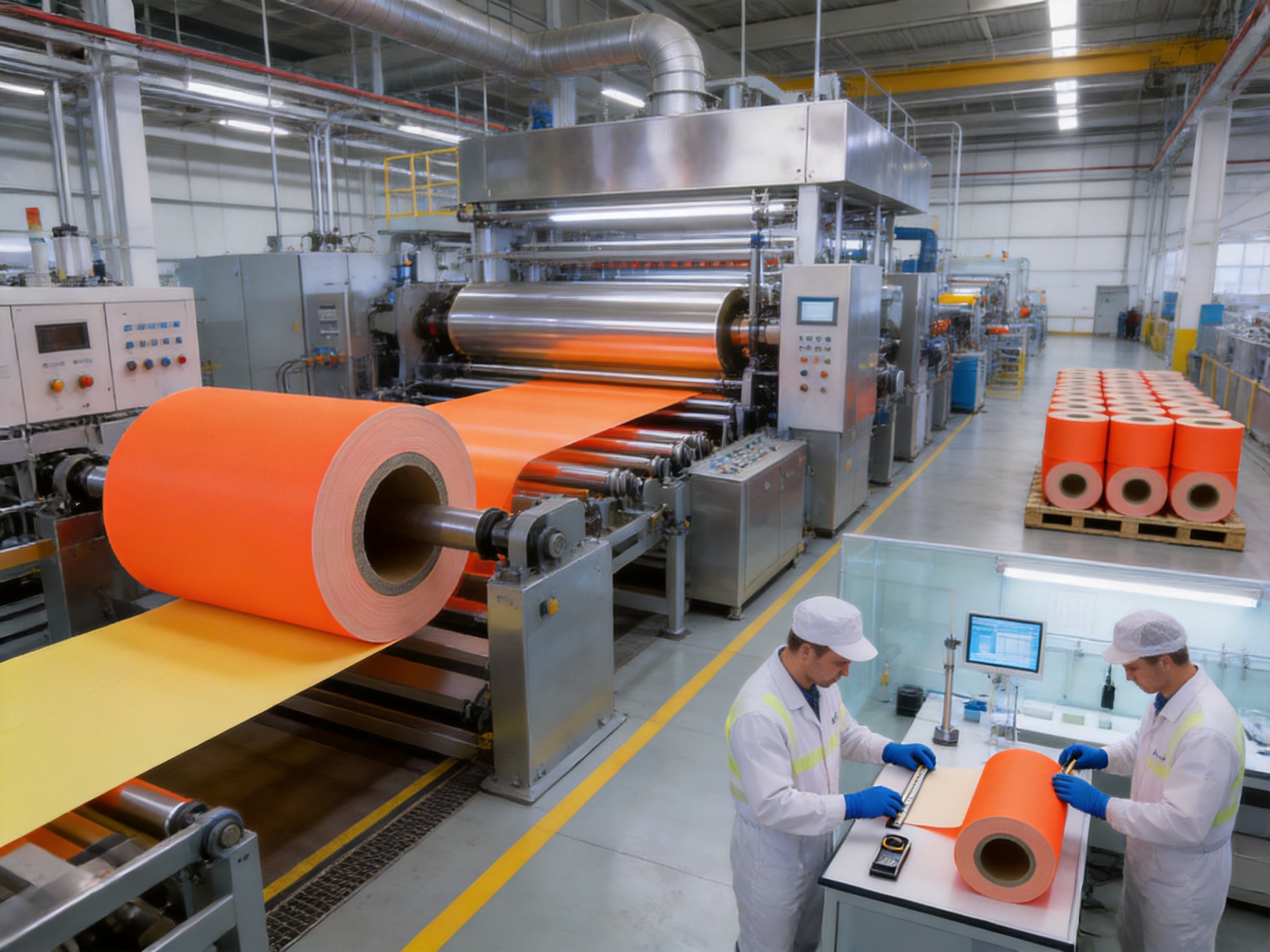
The performance of self-adhesive fluorescent paper depends on the control of several interconnected processes. A strong manufacturing system begins with incoming raw material inspection. Paper, adhesive ingredients, release liners, cores, packaging materials, and other components should be checked against specifications before entering production.
Raw Material Preparation
The fluorescent paper must be stored under suitable temperature and humidity conditions to protect its flatness and stability. Paper rolls should be examined for edge damage, telescoping, wrinkles, moisture variation, and other defects. Adhesive materials should be prepared according to the selected formulation and production requirements.
Liners should be checked for caliper, surface quality, coating uniformity, release behavior, and roll integrity. The liner is not merely packaging for the adhesive; it has a direct influence on die-cutting, dispensing, label release, and finished-product handling. Proper material matching at this stage reduces downstream defects.
Adhesive Preparation and Coating
Adhesive preparation requires controlled mixing, filtration, viscosity management, and, where applicable, temperature control. Water-based, hotmelt, and solvent adhesive systems have different processing requirements. The coating process must deliver a consistent adhesive weight across the web while avoiding streaks, pinholes, bubbles, contamination, and edge variation.
Coating equipment should be adjusted according to the adhesive type, paper surface, line speed, drying conditions, and target coat weight. For water-based adhesive, drying must remove moisture sufficiently without causing excessive paper distortion. For hotmelt adhesive, temperature and viscosity control are especially important. Solvent systems require appropriate drying and process safety controls.
Laminating
After adhesive coating, the face material and liner are laminated under controlled pressure and web tension. The objective is to create a uniform composite structure without wrinkles, air entrapment, delamination, or misalignment. Accurate tension control is particularly important for wide webs and thin liners because uneven tension can affect roll appearance and later converting performance.
High-quality laminating also supports stable label release. Poor lamination may lead to adhesive transfer, liner separation, face lifting, or inconsistent die-cutting. Process operators should monitor the web continuously and respond quickly to any abnormality.
Slitting and Rewinding
Jumbo rolls can be slit into narrower widths according to customer requirements. Slitting quality affects the final roll edge, winding density, roll hardness, and machine performance at the customer’s facility. Accurate knives, stable web tension, and correct core positioning help produce clean edges and well-formed rolls.
Rewinding must be controlled to prevent telescoping, starring, loose edges, wrinkles, and uneven roll hardness. Finished rolls should be checked for width, outside diameter, core size, winding direction, splice condition, and labeling. These details are important for automated equipment and for customers who require consistent roll-to-roll processing.
Sheeting and Finishing
When sheets are required, the laminated roll is processed through a sheeting line. Cut accuracy, squareness, surface cleanliness, and stack alignment should be controlled. Standard formats such as A4 and A3 are suitable for office, digital printing, and general commercial use, while larger sizes such as 50 × 70 cm and 70 × 100 cm support commercial printing and display production.
Customized sheet sizes can be produced according to customer requirements. Before confirming a custom format, buyers should consider the printing equipment, packaging method, pallet dimensions, storage space, and intended application. A well-planned sheet size can reduce trim waste and improve production efficiency.
Inspection and Testing
Quality inspection may include checks for basis weight, caliper, color consistency, surface defects, adhesive coat weight, tack, peel adhesion, shear performance, release force, liner integrity, roll width, sheet size, and winding quality. The exact tests should reflect the customer’s application and the selected adhesive system.
Visual inspection is also essential. Fluorescent materials must be checked for color variation, stains, scratches, coating marks, wrinkles, edge damage, and contamination. A defect that appears minor on a single roll can become significant after high-speed conversion. Consistent inspection helps protect both the manufacturer and the customer from avoidable production losses.
Fluorescent Paper In Rolls
Advanced Manufacturing Strengths of the Supplier
Suzhou Piaozhihua Composite Material Technology Co., Ltd. specializes in high-grade self-adhesive labels and related composite materials. The company integrates research and development, production, sales, and after-sales service. This integrated structure enables the supplier to manage material development and customer support through one coordinated organization rather than treating each stage as an isolated transaction.
The company operates a full range of production lines covering gluing, laminating, and cutting. These capabilities are directly relevant to fluorescent paper in rolls because the product requires precise control of adhesive application, layer bonding, roll conversion, and finished-format preparation. In-house processing can also support more efficient communication when a customer requests a customized adhesive, liner, width, or sheet size.
With an annual production capacity of more than 280 million square meters, the company is positioned to serve both regular industrial demand and customized projects. Large production capacity can provide advantages in supply continuity, production scheduling, and the ability to support customers who need repeat orders. Capacity alone does not guarantee quality, but when combined with process control and inspection, it can help create a stable supply platform.
The company reports more than 20 years of manufacturing experience and extensive OEM experience. This background is valuable for customers who require products made according to drawings, samples, technical specifications, or private-label requirements. OEM production often involves more than changing a package label; it may require matching adhesive performance, liner construction, roll dimensions, packing methods, and inspection standards.
ODM and OEM capabilities also support product development. Customers may approach the manufacturer with an application problem rather than a fixed material specification. For example, a buyer may know that a label must remain attached to a cold package, release cleanly from a liner, or be removed after a short promotional period. The supplier can then help evaluate the face material, adhesive, liner, and converting format as a complete construction.
The company maintains its own testing laboratory and uses inspection equipment to support product quality. An internal laboratory can assist with routine quality checks, comparative material testing, adhesive evaluation, and development work. This is particularly useful for self-adhesive products because performance is determined by the interaction of multiple layers, not by the paper face alone.
A professional research and development team with multiple patents further supports technical improvement. Research can focus on adhesive formulations, environmental performance, coating uniformity, liner selection, converting behavior, and application-specific constructions. Continuous development is important because customers increasingly require materials that combine visual performance with better sustainability, process efficiency, and end-use reliability.
The supplier also provides after-sales service and customized solutions. Technical communication after delivery can help customers resolve issues related to storage, printing, die-cutting, labeling, or surface adhesion. A responsive after-sales process is a competitive advantage because it reduces downtime and helps customers achieve consistent results over repeated orders.
Packaging and Delivery Protection
Self-adhesive paper is sensitive to handling, moisture, pressure, and edge damage. Appropriate packaging is therefore part of product quality. Sea-transit-worthy poly-wood pallet packing and carton packing are available for rolls or sheets from stock. These options are designed to support safe handling during domestic distribution, container loading, warehouse storage, and international transportation.
For sheet products, 100 sheets are packed per ream. Each ream is wrapped with strong PE-coated kraft paper, helping protect the sheets from dust, abrasion, and handling damage. Reams are then arranged on strong pallets and secured with stretch film and plastic fastening belts. This structure helps maintain stack stability and reduces the risk of shifting during transport.
Roll products require particular attention to core support, edge protection, wrapping, and pallet stability. A well-packed roll should arrive without crushed edges, loose winding, moisture exposure, or surface contamination. Buyers should communicate required roll direction, core dimensions, maximum roll diameter, pallet configuration, and shipping conditions before production.
International customers should also consider the complete logistics chain. The material may be exposed to changes in temperature and humidity during loading, sea transit, customs storage, and final delivery. Protective packaging and appropriate warehouse conditions help preserve the paper’s flatness, adhesive performance, and release behavior.
How to Select the Correct Specification
The best construction depends on the application. Buyers should begin by identifying the target surface. Common surfaces include corrugated cartons, coated paperboard, plastic films, glass, metal, painted equipment, wood, rubber, and textured materials. Surface energy and cleanliness can significantly affect adhesive performance.
Next, define whether the label should be permanent or removable. A permanent label may require strong adhesion and resistance to lifting, while a removable label should release with minimal residue under the expected conditions. If the label will be applied to cold products or stored in a freezer, an anti-freeze or cryogenic adhesive may be more appropriate than a general-purpose water-based adhesive.
Temperature should be considered at the time of application as well as during service. A label applied in a warm factory may later be stored in a cold warehouse or transported through a hot climate. Adhesives respond differently to temperature changes, so customers should describe the full temperature range and duration.
Choose the liner according to the converting process. High-speed dispensing may require controlled release and good dimensional stability. Die-cutting may benefit from a liner with suitable stiffness and consistent caliper. Transparent PET can be useful when the converter needs a strong, dimensionally stable backing. Glassine or CCK may be appropriate for general-purpose production.
Roll width should match the customer’s equipment and cutting plan. The available jumbo widths of 1000, 1020, 1080, and 1530 mm provide several production options. A converter should calculate the required slit widths, trim allowance, label layout, and expected waste before confirming the master roll specification.
Printing requirements should also be defined at the beginning. The printer should identify whether the project will use offset, flexographic, letterpress, screen, bar code, or digital printing. Ink type, drying method, color density, line screen, and finishing processes may influence material selection. Samples and press trials are recommended for demanding projects.
Storage and Handling Recommendations
Fluorescent self-adhesive paper should be stored in a clean, dry, and well-ventilated area. Direct sunlight, excessive heat, high humidity, dust, and contact with chemicals should be avoided. Rolls should remain in their original protective packaging until they are ready for production.
Material should be stored on a stable surface and protected from impact. Rolls should not be dropped, dragged, or stacked in a way that damages the edges. Sheets should remain flat and should not be exposed to uneven pressure or moisture. Proper handling is especially important because edge damage can cause web breaks, poor feeding, and inaccurate die-cutting.
Before printing or converting, the material should be acclimatized to the production environment. This allows the paper, adhesive, and liner to adjust gradually to local temperature and humidity. The exact acclimatization period depends on the packaging, climate, roll size, and storage conditions, so the supplier’s technical guidance should be followed.
Operators should handle the material with clean hands or suitable gloves when necessary. Contamination from oil, dust, or other substances can reduce print quality and adhesion. If a roll has been opened, it should be resealed or covered when not in use.
Environmental and Sustainability Considerations
Fluorescent paper is a paper-based face material, which can support customers seeking alternatives to fully synthetic label constructions. However, sustainability depends on the complete structure, including the adhesive, release liner, inks, packaging, and disposal route. A paper face does not automatically mean that the finished label is suitable for every recycling system.
The supplier’s stated environmental positioning includes the development of eco-friendly solutions involving face materials, adhesives, and backing papers. This approach recognizes that sustainable product design requires attention to the whole construction. Customers should request specific information about recycled content, manufacturing controls, adhesive chemistry, liner options, and local recycling compatibility when environmental performance is a central requirement.
Material efficiency is another sustainability consideration. Accurate roll widths, optimized label layouts, controlled slitting, and reduced trim waste can lower material consumption. Durable packaging that prevents damage during shipping can also reduce waste caused by rejected or unusable products.
For a responsible product assessment, customers should evaluate the full life cycle of the label. This includes raw material sourcing, manufacturing energy, transportation, printing, application, service life, removal, and end-of-life treatment. The most suitable construction is the one that meets the application requirements while minimizing unnecessary material use and waste.
Why Choose a Specialized Self-Adhesive Manufacturer?
A specialized manufacturer understands that self-adhesive materials are engineered composites rather than simple paper products. The face material, adhesive, and liner must work together. A fluorescent paper with attractive color but unstable adhesive performance may create application failures. Similarly, a strong adhesive paired with an unsuitable liner can cause dispensing problems or liner tearing.
Manufacturing specialization also improves consistency. Customers who purchase repeated orders need the color, caliper, adhesive behavior, release force, roll dimensions, and packaging to remain stable from batch to batch. Consistency supports predictable printing and converting, reduces machine adjustments, and helps maintain the appearance of finished labels.
A manufacturer with gluing, laminating, and cutting capabilities can provide a more complete service. Instead of purchasing separate materials from multiple suppliers, customers can discuss the entire construction with one technical partner. This may simplify quality responsibility, order coordination, production planning, and troubleshooting.
Customization is another important advantage. Different markets require different adhesive properties, liner weights, roll widths, sheet sizes, packaging methods, and labeling formats. A supplier capable of OEM and ODM production can adapt the product to the customer’s production system rather than forcing the customer to redesign around a fixed stock specification.
International experience is also valuable. The company has developed sales and marketing networks across Asia, Europe, the Americas, Africa, and other regions, serving customers in markets including the United States, Germany, Japan, South Korea, Brazil, Mexico, Russia, and the Middle East. Experience with different markets can support communication about packaging, documentation, technical requirements, and delivery expectations.
Recommended Quality Evaluation Before Ordering
Before placing a large order, buyers should request representative samples of the selected face, adhesive, and liner combination. Samples should be tested on the actual application surface using the intended printing and converting process. Laboratory data is useful, but real-world testing is necessary because surface condition and process settings can strongly influence results.
The evaluation should include visual inspection of fluorescent color, brightness, uniformity, surface smoothness, and print appearance. If the product will carry bar codes, test scanning under the expected lighting conditions. If the label will be used outdoors or in high-contact areas, evaluate resistance to moisture, abrasion, and edge lifting.
Adhesion testing should include initial tack, peel adhesion after a defined dwell time, and removal behavior if the product is intended to be removable. For temperature-sensitive applications, test the label at application temperature, storage temperature, and service temperature. The customer should also assess whether the adhesive leaves residue or damages the surface.
Converting trials should check feeding, die-cutting, matrix stripping, dispensing, slitting, and rewinding. Observe whether the liner breaks, whether labels lift from the liner, and whether the roll remains stable at production speed. These tests help identify issues before they affect a full production run.
Packaging should also be reviewed. Confirm the ream quantity, carton construction, pallet dimensions, wrapping method, fastening method, shipping marks, and protection against moisture. Clear packaging requirements reduce the risk of misunderstandings during export and delivery.
Technical Questions to Discuss With the Supplier
Customers should provide as much application information as possible. Useful details include the target surface, label dimensions, expected service life, application temperature, storage temperature, humidity, exposure to water or chemicals, printing method, label quantity, roll direction, core size, maximum roll diameter, and packaging requirements.
It is also helpful to explain whether the labels will be applied manually or automatically. Automatic labeling equipment may require specific release force, web direction, roll hardness, splice limitations, and winding specifications. Manual application may allow more flexibility but still requires adequate tack and clean release.
For customized projects, the customer can provide drawings, samples, artwork, technical specifications, or reference materials. The supplier’s OEM and ODM experience can then be used to develop a suitable construction. A clear technical brief reduces development time and helps both parties establish measurable acceptance criteria.
Q&A: Fluorescent Paper in Rolls
What is the standard face material?
The standard face material is 80 gsm fluorescent paper. It is designed to provide a bright, attention-grabbing surface for printed and self-adhesive labels.
Is the material available as both rolls and sheets?
Yes. It can be supplied in jumbo rolls for industrial converting and in sheet formats including A4, A3, 20 × 30 cm, 21 × 30 cm, 24 × 36 cm, 50 × 70 cm, and 70 × 100 cm. Customized sizes are also available.
Which adhesive is supplied as standard?
Water-based adhesive is listed as an available standard option. Hotmelt, solvent, anti-freeze, removable, cryogenic, and tyre-grade rubber adhesives are also available for application-specific requirements.
Can the material be used in cold environments?
It may be suitable for cold or low-temperature applications when matched with an appropriate anti-freeze or cryogenic adhesive. The final construction should be tested at the actual application and storage temperatures before mass production.
What liner is normally used?
An 85 g yellow release paper is listed as a standard liner. Glassine, release paper, art paper, CCK, and transparent PET liner options are also available.
Which printing methods can be used?
The product is suitable for letterpress, offset, flexographic, screen, and bar code printing. Selected digital printing applications may also be possible, subject to printer compatibility and testing.
Can fluorescent paper be used for safety labels?
Yes. It is often used for labels and notices associated with fire equipment, public places, special products, and other high-visibility applications. Buyers should verify local regulations and confirm whether additional performance requirements apply.
Is fluorescent paper the same as glow-in-the-dark paper?
Not necessarily. Fluorescent appearance and photoluminescent glow are different properties. The required visibility effect should be clearly defined and confirmed with the supplier before ordering.
What jumbo roll widths are available?
The listed jumbo roll widths are 1000, 1020, 1080, and 1530 mm. Other finished widths may be produced through slitting or discussed as customized requirements.
Can the supplier produce according to drawings or samples?
Yes. The company provides OEM and ODM services and reports experience producing customized products based on customer drawings or samples.
How should the material be stored?
Store it in a clean, dry, well-ventilated location away from direct sunlight, excessive heat, moisture, dust, and chemicals. Keep rolls and sheets in protective packaging until production and handle them carefully to prevent edge damage.
What should be tested before a large order?
Customers should test color appearance, printability, adhesion, release behavior, die-cutting, dispensing, temperature performance, surface compatibility, and packaging suitability using the intended production process and application conditions.
Conclusion
Fluorescent paper in rolls is a versatile self-adhesive material for applications that require clear visual distinction and dependable label performance. Its 80 gsm fluorescent paper face provides a vivid foundation for printing, while the range of adhesive and liner options allows the construction to be adapted for general labeling, promotional work, packaging, safety identification, public notices, decoration, toys, gifts, and specialized products.
The product’s advantages over conventional label materials include strong visual impact, broad printing compatibility, roll-to-roll production efficiency, multiple sheet formats, and substantial customization potential. Buyers can select water-based, hotmelt, solvent, anti-freeze, removable, cryogenic, or tyre-grade rubber adhesive systems according to the application. They can also select among yellow release paper, glassine, release paper, art paper, CCK, and PET liners.
Manufacturing capability is equally important. Suzhou Piaozhihua Composite Material Technology Co., Ltd. combines gluing, laminating, cutting, research and development, testing, sales, and after-sales support. Its reported annual production capacity of more than 280 million square meters, more than 20 years of experience, OEM and ODM capabilities, internal testing laboratory, and international market network provide a strong foundation for customized and repeat supply.
For the best result, customers should define the application conditions clearly and conduct practical testing before ordering. When face material, adhesive, liner, printing process, converting method, and packaging are selected as one coordinated system, fluorescent paper in rolls can deliver a reliable and highly visible solution for modern labeling and printing requirements.
References
1. Supplier Product Specification: Fluorescent Paper in Rolls, including face material, adhesive options, liner options, roll widths, and sheet sizes.
2. Supplier Manufacturing Profile: Company capabilities in gluing, laminating, cutting, research and development, testing, OEM, ODM, and after-sales service.
3. Pressure-Sensitive Adhesive Technology Principles, industry guidance on tack, peel adhesion, shear, release force, and application testing.
4. Paper and Paperboard Converting Practices, technical guidance on roll handling, slitting, sheeting, winding, storage, and moisture control.
5. Label Printing and Finishing Fundamentals, industry guidance covering letterpress, offset, flexographic, screen, bar code, and digital printing considerations.
6. Packaging and Transport Protection Practices for Paper-Based Materials, guidance on pallet packing, carton packing, stretch wrapping, edge protection, and international shipment handling.